
Can You Really Catch Herpes from Lipstick Testers?
Dermatologists break down the hidden risks of shared makeup—from herpes to bacteria—and how to stay safe while shade-shopping.


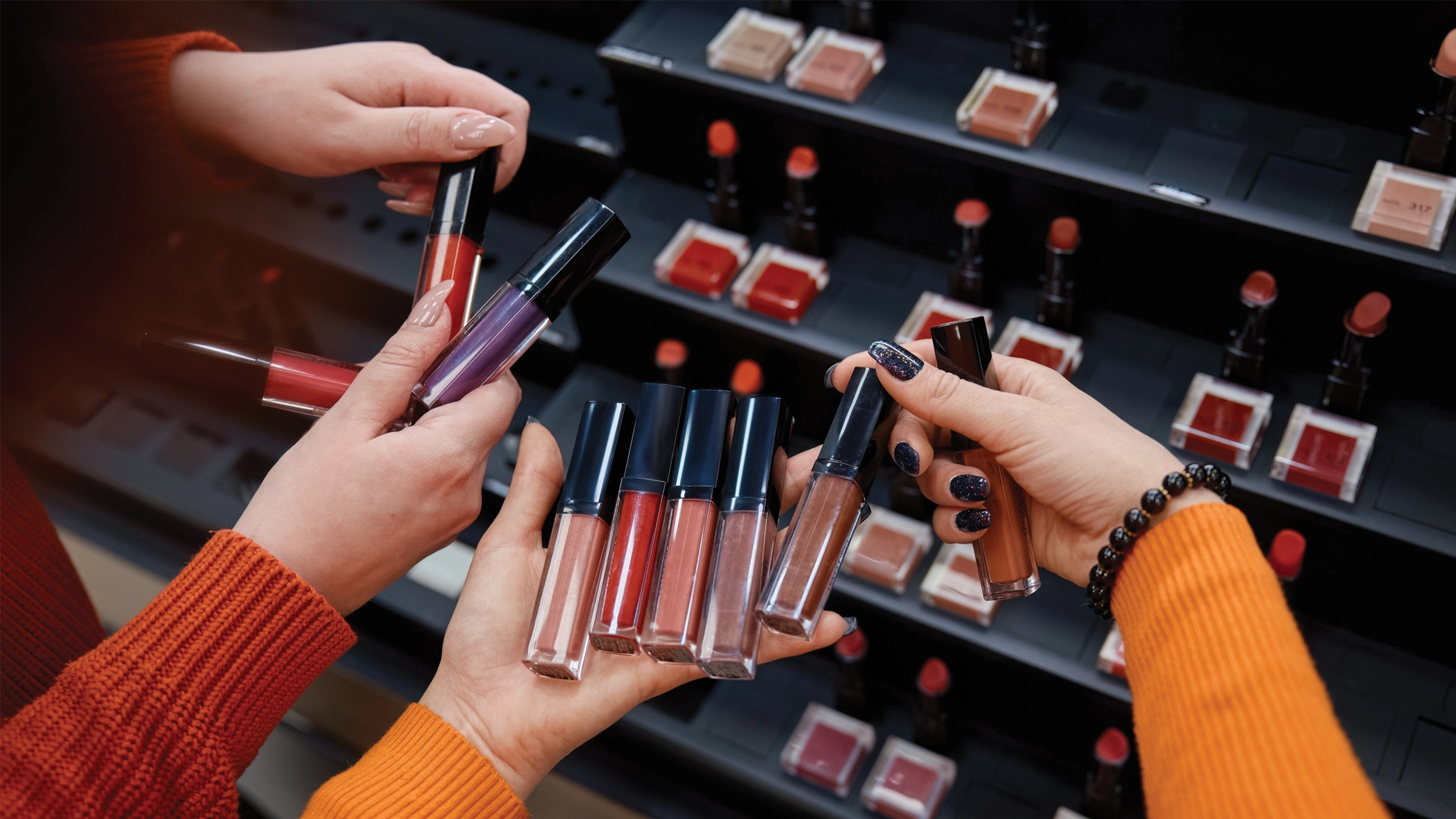
I have a confession to make: I’ve swiped a lipstick tester on my lips before.
Many of us are probably familiar with the struggle of finding the right shade of lipstick, especially when there’s a hundred different shades of pink to choose from. It was overwhelming, so I thought: what could go wrong with just a quick swipe?
Turns out, more than I’d like to admit. Or think about.
Using lipstick testers is something that many people do, and it may seem normal to some. After all, these were made for testing and trying on. But it’s actually risky, and could even be considered a health hazard. So, If you’ve ever wondered if you can get a viral, bacterial, or even infection from using lipstick testers, here’s what dermatologists say:
So, can you get herpes from a lipstick tester?
The short answer is yes, but it’s not very common, according to board-certified dermatologist Melanie Chao-Lo, MD.
One of the most likely culprits is HSV-1, also known as herpes simplex virus type 1. It’s the virus behind cold sores, and this leads to blisters filled with fluid that eventually burst and form a crust wherever the infection is. And according to Dr. Chao-Lo, this particular virus thrives in a good, moist, lipid-based environment, which, unfortunately, describes the average creamy lipstick perfectly, a formula that most of us love.
Herpes is not airborne, thankfully. Which means that you won’t catch it by being close to someone who has it. This spreads through direct contact like kissing, sharing a drink, or in this case, using lipstick testers.
She explains that many people infected with herpes may not even know that they’re a carrier of the virus as they can be asymptomatic, so when they try on a tester, they could unknowingly leave behind traces of it. It’s also not that people are intentionally spreading the virus, it’s just that some symptoms may show up later in the week, or for some who are asymptomatic not at all.
“It’s not automatic that the person will get infected right away if they make contact with a contaminated lipstick,” says Dr. Chao-Lo. “It still depends on the person’s immune system.”
How long does a virus last on lipsticks and what other things can lurk in it?
It can range from hours to days, sometimes even weeks, according to Dr. Chao-Lo.
She also says that bacterial infections can also be found in lipstick testers. A study reveals that both new and used lipsticks can harbor various bacterial species, including Staphylococcus aureus, Staphylococcus epidermidis, and Staphylococcus saprophyticus. These bacteria are commonly found on human skin and mucous membranes but can pose health risks if introduced into the body.
The research compares microbial counts between new and used lipsticks, revealing that used lipsticks tend to have higher bacterial loads. This suggests that frequent application and exposure to environmental factors can increase the risk of contamination.
That said, HSV‑1 has been shown in lab experiments to survive for up to 2 hours on skin, 3 hours on cloth, and 4 hours on plastic. Other studies on saliva-contaminated surfaces, like plastic doorknobs, found that infectious virus could still be recovered after 2 hours, though its viability drops significantly due to drying and environmental factors. A more recent study that tested fomites—objects like toothbrushes and razors—found that HSV‑1 viral counts decline sharply after just 2 hours, and approach undetectable levels by the 24-hour mark.
Is there a safe way to swatch lipstick?
Both dermatologists explain that our lips are more sensitive compared to the rest of our bodies since it is less keratinized. In other words, it’s less protected. So it’s actually more safe to swatch them on your hands instead.
“Our lips are moist and absorbent,” says Dr. Chao-Lo, “that’s why viruses can pass more easily there compared to your arm or cheek.”
They both suggest using a disposable applicator (and make sure it’s a fresh one), swatching on your hand, spraying the surface with 70% isopropyl alcohol, removing the top layer off or if possible, ask for a sealed sample. Lipstick testers are tempting, but as a general rule, never apply directly on your lips.
Lipstick testers may be tempting, but your health always comes first. So the next time you’re browsing the beauty aisles, remember: it’s okay to be a little extra about hygiene. While the risk isn’t sky high, this isn’t something that you want to gamble with. A free swipe of the perfect nude lipstick is not worth the possible infection—because beauty should boost your confidence, not compromise your health.
Frequently Asked Questions
Yes, but it is not common. HSV-1, the virus responsible for cold sores, can survive on lipstick testers for several hours. Because many carriers are asymptomatic, the virus can be left on testers unknowingly. Transmission risk depends on the individual’s immune system, but direct lip application is considered higher risk than swatching on skin.
Lab studies show HSV-1 can survive up to 2 hours on skin, 3 hours on cloth, and 4 hours on plastic. Viral counts decline sharply after 2 hours on fomites such as shared cosmetic tools and approach undetectable levels by 24 hours, though environmental factors like drying can accelerate this decline.
Research has identified multiple bacterial species in both new and used lipsticks, including Staphylococcus aureus, Staphylococcus epidermidis, and Staphylococcus saprophyticus. Used lipsticks carry higher bacterial loads than new ones, as repeated application and environmental exposure increase contamination risk over time.
Lips are less keratinized than surrounding facial skin, making them more permeable and absorbent. According to board-certified dermatologist Dr. Melanie Chao-Lo, the moist, lipid-rich environment of the lip surface allows viruses to pass more easily than on the arm or cheek — which is why swatching on the hand is considered safer.
Dermatologists recommend using a disposable applicator on the back of the hand rather than applying directly to the lips. Additional precautions include spraying the lipstick surface with 70% isopropyl alcohol before use, removing the top layer of the product, or requesting a sealed sample from a beauty associate.
Latest Stories


You might also like



To provide a customized ad experience, we need to know if you are of legal age in your region.
By making a selection, you agree to our Terms & Conditions.