

It’s been a few weeks since the Allure Beauty Congress, but the lessons I’ve learned are still living rent-free in my head. As someone who’s constantly trying to level up her makeup skills, I walked away with tips that genuinely changed the way I approach my routine.
The live makeup expert-led masterclasses, featuring celebrity makeup artists Lala Flores and Denise Go-Ochoa, makeup enthusiast and content creator Nate Javier, and professional makeup artist Booya Mocorro (known professionally as “Booya”), shared beauty techniques that have the potential to reframe the way we express ourselves.
Here are the biggest takeaways from the masterclasses that are worth trying:
1. Hot take: You don’t need foundation.
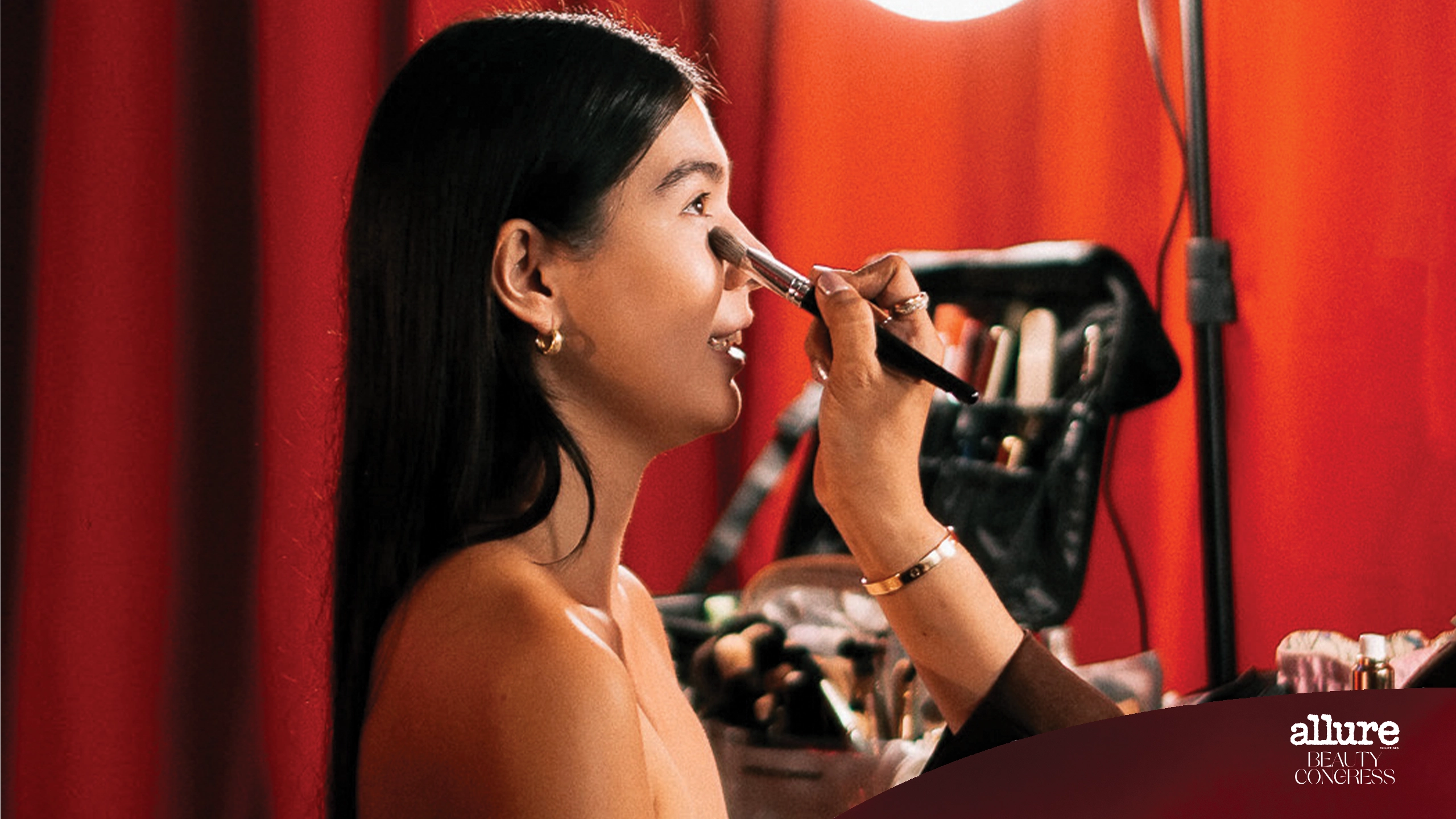
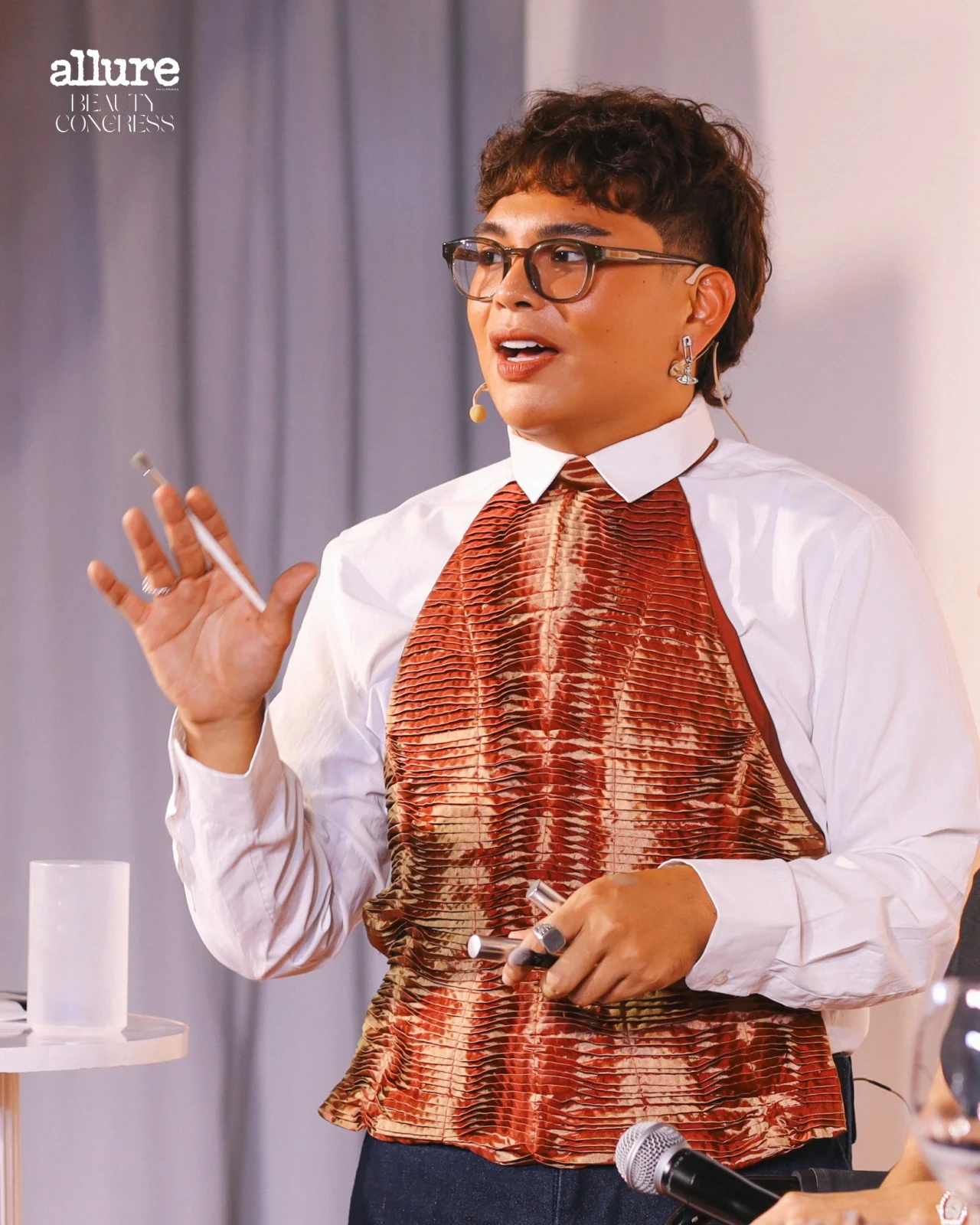
During Javier’s makeup session with muse Doreen Catacutan, he shares how he loves the beauty of Filipino skin. And he doesn’t want to cover up great skin with foundation.
“The purpose of foundation is to even out your skin tone,” he says during the masterclass supported by Colgate. But because Javier wants the skin to be the star of the show, he says that “you can also achieve [an even skin tone] by color-correcting spots with discoloration so it will become less cakey.”
If you have discoloration, he recommends referring to the color wheel to neutralize it and correcting only specific areas, so the skin still looks like skin. Once those spots are corrected, you’ll realize you barely need any base anymore.
Excel Panlaque
2. Serumizer = makeup thinner + moisturizer.
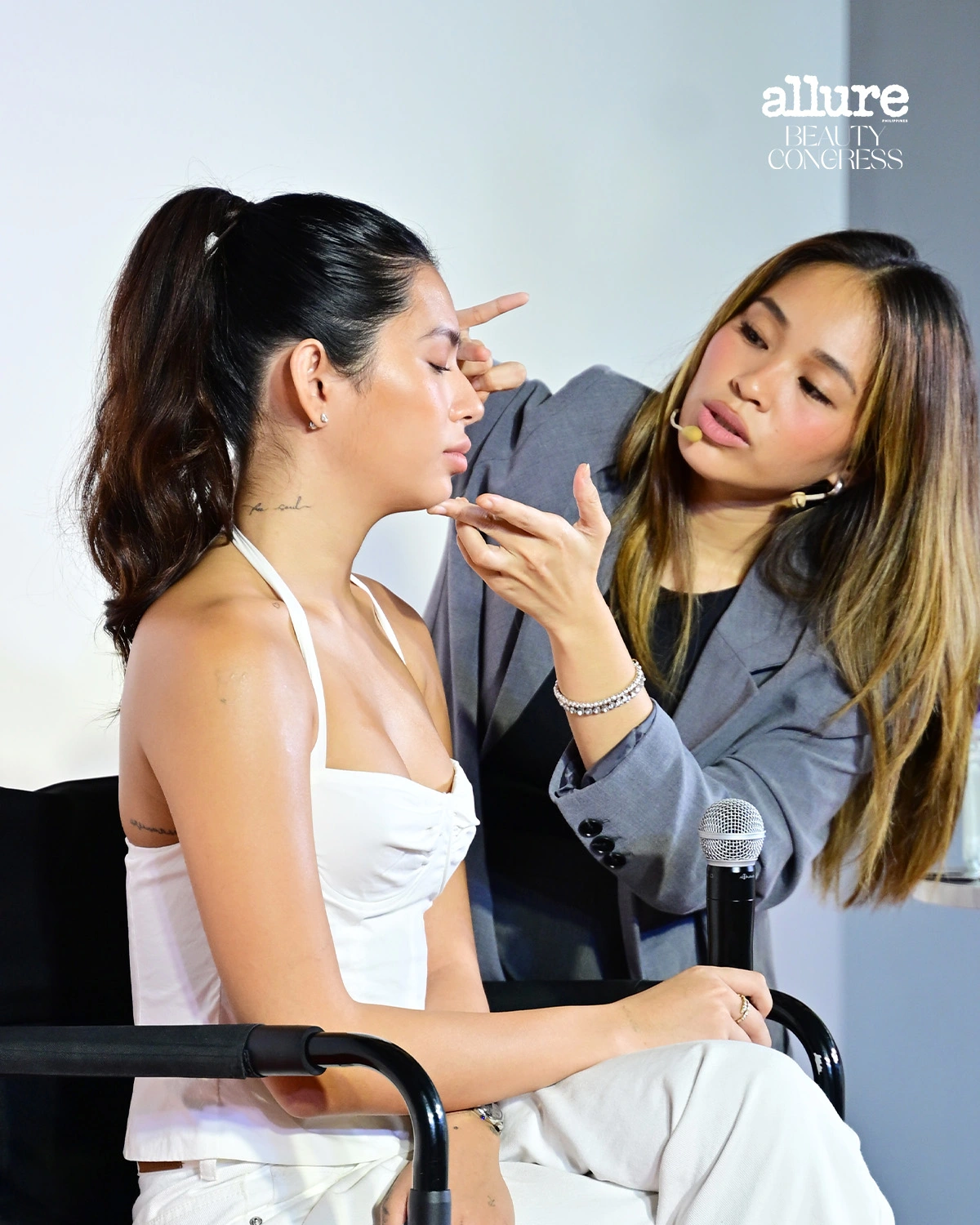
Booya’s tip to beat the Philippine heat: Keep your makeup layers to a minimum. While doing model Anshel Lim’s makeup, she advises using a serumizer, a product that works as both moisturizer and makeup thinner. Mixing it with foundation or concealer makes the base lighter, which allows makeup to last longer because it prevents oiliness and cakeyness.
Betty Uy Chan
3. Use cream products or gloss as highlighter.
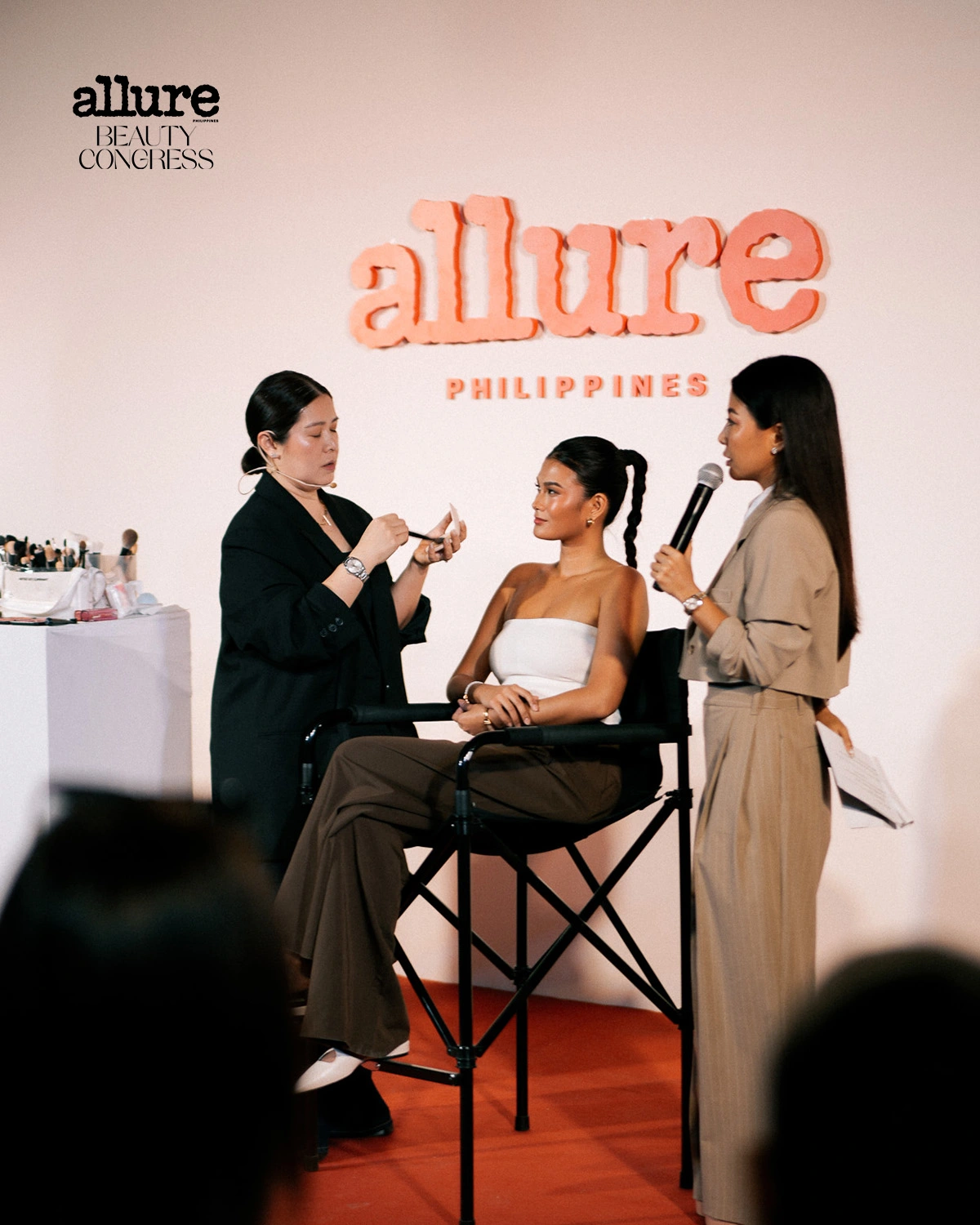
Gone are the days of glittery powder highlighters. Go-Ochoa switched to using cream products because shimmers can be hard to control, and in photos, they often create uneven bright spots. Now, she prefers cream products for a seamless, natural glow.
Meanwhile, Mocorro loves using a gloss or glass stick to achieve a dewy look. “You want to put it where the light hits the face,” she explains, noting that these areas naturally look brightest.
4. Tap, don’t slide.
According to Go-Ochoa, the secret to natural-looking highlight lies in the technique. Instead of sliding or dragging the applicator across the skin, she gently taps the product on the face of her muse, Breanna Estacio. This prevents the base from lifting or breaking apart—especially because adding a highlight usually comes toward the end of the makeup routine when the base is almost done.
Kim Santos
5. Apply a mattifying eye primer.
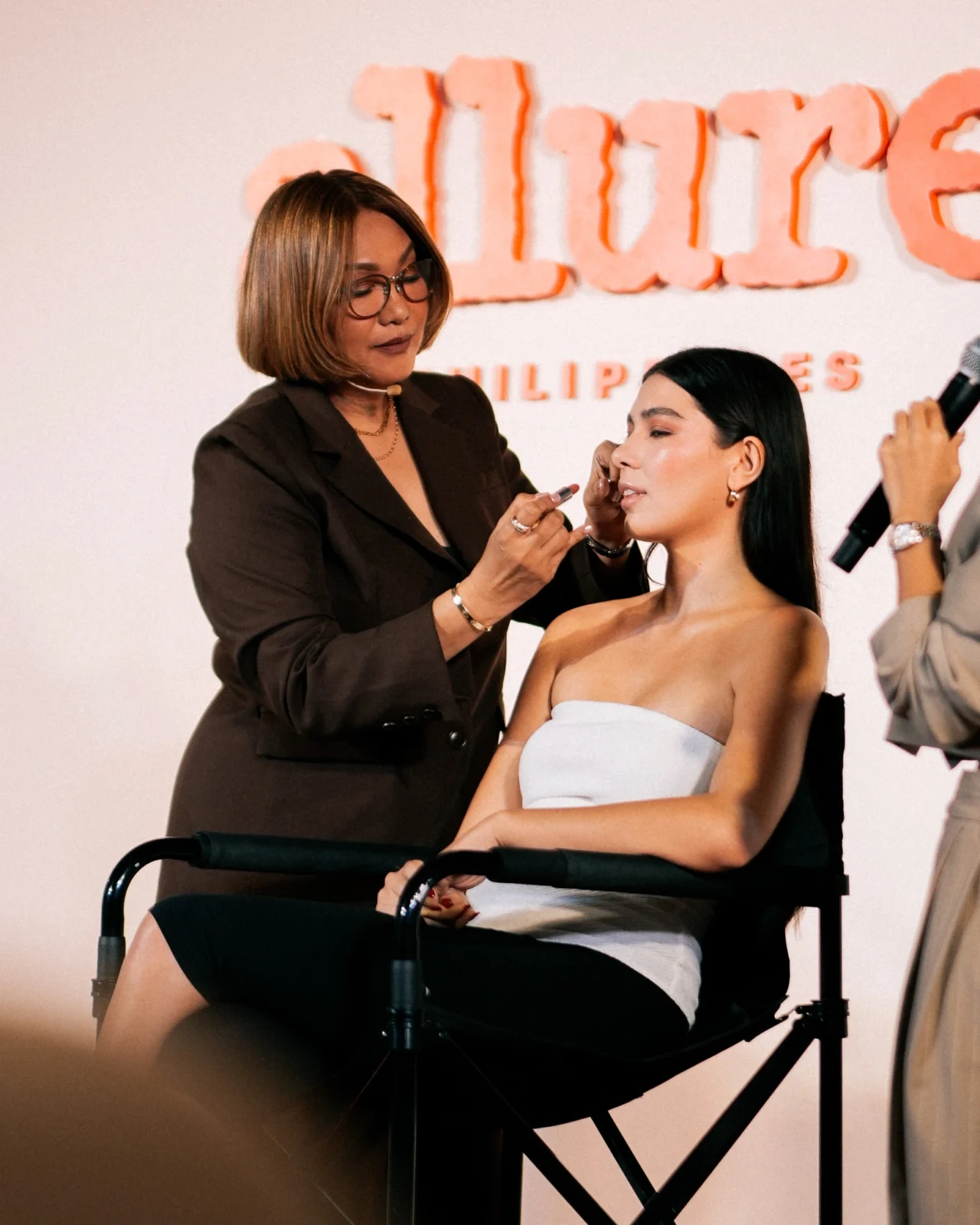
If your eyeshadow creases or vanishes by midday, Flores makes sure to apply a mattifying primerPrimerA base product applied before foundation or eyeshadow to smooth skin, blur pores, control oil, or help makeup last longer. Choosing a primer based on your skin concerns, such asGo to Primer Glossary, as it keeps the lids from oiling up and helps the shadows last longer. She also suggests avoiding the eyelid area in your skin-care routine so they don’t become slippery.
Although some people prefer to do their eyes first to avoid fallout, Flores actually saves the eyes for last when working with oily lids. “I do the whole makeup [look first], then I do the eyes last because they develop oil fast,” she shares.
Kim Santos
6. Smudge your eyeliner.
Instead of your typical winged eyeliner, Flores blends out two brown eyeliners on her muse Pam Prinster’s eyelids. This technique creates depth, builds the shape, and forms a more pigmented base. “That helps me [build] eyeshadow faster,” she says. This is especially helpful when working with palettes that aren’t super pigmented because eyeliners naturally have stronger payoff as they make the entire look bolder and more cohesive.
7. Master the complexion.
For aspiring makeup artists, Flores stresses to learn about the complexion. No two models walk in with the same canvas. They all have their own mix of skin tones, undertones, skin types, and textures. The real magic lies in knowing the skin type of the subject and choosing the products that bring out the natural glow best.
“With content creators, they always work on [their own skin],” she explains. “The challenge is that once they become [makeup artists], they haven’t mastered the complexion yet.” She also points out that creators usually work in a controlled environment, while makeup artists have to deal with various lighting thrown at them—fluorescents, outdoor sun, you name it.
More than just a masterclass
The Allure Masterclasses weren’t just a live makeup and hair demonstration—they reminded us that makeup is an art built on skills, intention, and understanding.
These lessons prove that great makeup isn’t about doing more, but working smarter. And as we continue refining our own routines, these expert insights serve as a guide to looking good, feeling good, and embracing the kind of beauty that actually lasts.
Frequently Asked Questions
Foundation is not always necessary. Celebrity makeup artist Nate Javier recommends color-correcting only areas of discoloration rather than applying full-coverage foundation, preserving the natural texture of Filipino skin while still achieving an even-toned base.
A serumizer is a hybrid product that functions as both moisturizer and makeup thinner. When blended with foundation or concealer, it reduces product thickness — minimizing cakeyness and oiliness, which helps makeup perform better in humid Philippine conditions.
Powder shimmer highlighters can be difficult to control and create uneven bright spots in photography. Cream formulas and gloss-based products deliver a more seamless, skin-like luminosity — applied by tapping where light naturally hits the face for a natural glow.
A mattifying eye primer applied before eyeshadow reduces oil production on the lids, extending wear and preventing creasing. Makeup artist Lala Flores also advises skipping the eyelid area during your skincare routine to prevent slippery product buildup underneath.
Makeup artists work across varied skin tones, undertones, types, and textures — often under challenging lighting conditions. Mastering complexion means selecting the right products and techniques for each individual’s skin, a skill that content creators who work only on their own skin may not yet have developed.
- Everything We Took Home from the First-Ever Allure Beauty Congress—Insights, Expertise, and Experience
- Mastering Hair and Makeup for the Modern Filipina at the Allure Beauty Congress
- Pro Makeup Tips We Got From Makeup Artists Lala Flores and Denise Go-Ochoa at the Allure Beauty Congress
- Angel Aquino, Iza Calzado, Pia Wurtzbach-Jauncey, and Bianca Gonzalez Intal Strip Away the Filters of Beauty