


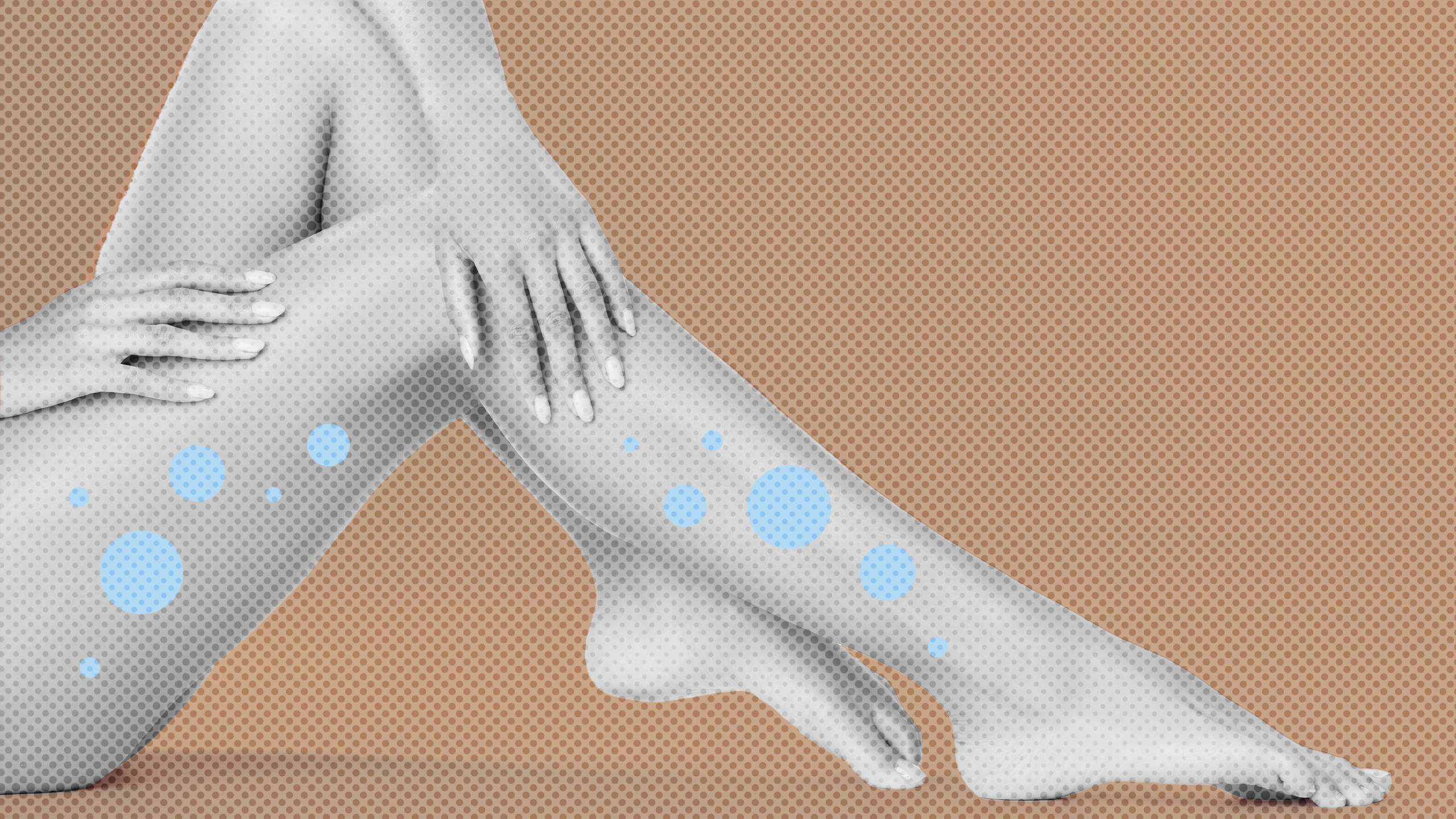
It was raised, it was red, it had a hard tip that looked suspiciously like a blister. But most of all, it was itchy. Very, very itchy.
Few things in life are more trying than an itch that you can’t scratch, and mine came in the form of this bump—and the twenty or so others that appeared more or less at the same time. At first, I thought the first few were just manifestations of my eczema—but then they continued to multiply, even after I applied my usual topical treatments. Were they insect bites? Was it some kind of rash, perhaps? They seemed different—they itched like crazy, blistered, bled, and hung around on my epidermis, for everyone to see.
When, a few weeks later, they showed no signs of healing or disappearing, I paid my family dermatologist a visit, and she promptly informed me that what I had was called prurigo nodularis.
If you’ve never heard of the skin condition, you’re not alone. It was my first time to hear about prurigo nodularis as well, and, in an effort to understand what I had just been diagnosed with, I set out to speak with the experts.
Meet the experts
Lia Nebrida-Idea, MD, FPDS, is a board-certified dermatologist and the head of St. Luke’s Medical Center – Global City’s department of dermatology.
Mariel Arambulo-Cordero, MD, FPDS, IFMCP is a board-certified dermatologist at Arambulo Dermatology Center, is certified in Functional Medicine from the Institute of Functional Medicine, and is a licensed acupuncturist from La Consolacion College.
What is prurigo nodularis?
Usually, a bump precedes an itch. But with prurigo nodularis, the itch is what causes the bump, or the nodule.
Dr. Nebrida-Idea explains that prurigo nodularis is a non-contagious secondary skin condition—meaning there is an itch caused by another factor, perhaps an insect bite, or dry and itchy skin, or even an underlying condition. It is the itch that causes the scratching, which, in turn, causes the nodules. “[Your skin] is extremely itchy,” she explains, “and the constant mechanism of scratching thickens the skin, and leads to the developing of a nodule, and later on, can lead to bleeding, excoriations or tears or scrapes, and then scarring.”
The constant scratching, she explains, affects the epidermis first, the topmost layer of the skin, but the nodules can go deep into the dermis, the second layer of the skin. The nodule, Dr. Nebrida-Idea says, “is round, thick, and very itchy. That’s when it’s become prurigo nodularis.”
What causes the itch?
Many things can be the primary cause for the itch that causes the scratching. “It can start with an insect bite, or it can start with just dry skin,” says Dr. Arambulo-Cordero. “I encountered someone who lives in Siargao and always has nik-nik bites, which give her prurigo nodularis all over her body. And then, I also encountered a medical student whose prurigo nodularis is stress-related.”
The list of causes for the itch is long and varied. “The most common cause is insect bites when they are not treated properly,” says Dr. Nebrida-Idea. “Secondly, eczemas, such as atopic dermatitis, allergic contact dermatitis, nummular eczema, and other skin conditions like psoriasis or lichen planus.” Severely dry skin on its own, she adds, can also cause prurigo nodularis.
She also lists warts, viral infections, bacterial infections, parasitic infections like scabies, folliculitis, and various autoimmune conditions such as HIV, lupus, and diabetes as causes for itchy skin and scratching. Dr. Nebrida-Idea also shares that diseases such as lymphoma, cancer, kidney and liver conditions, thyroid diseases, and even psychological disorders (such as obsessive compulsive disorders, neurotic disorders, psychogenic pruritis, among others) can possibly cause itchiness and impulsive urges to scratch that can cause the nodules to form.
Regardless of which cause it is, Dr. Nebrida-Idea emphasizes the importance of pinpointing it, so that the primary cause can be treated, and not just the secondary effects.
How is it treated?
Treatment for prurigo nodularis, according to our experts, usually comes in levels.
Dr. Nebrida-Idea turns to topical steroids first—ointments or creams that are applied directly on the skin. “You need stronger topical steroids for prurigo nodularis,” she says, explaining that she prescribes the likes of clobetasol, betamethasol, and halobetasol.
There’s a chance that the topical steroids won’t take effect, and in that case, Dr. Nebrida-Idea resorts to a shot—intralesional steroid injections. “For me, that’s the fastest solution,” she shares. “For a lot of my patients, it flattens the nodule, and the itch and inflammation are gone right away.” Dr. Arambulo-Cordero, for her part, recommends the steroid injections from the get-go. “With my patients,” she shares, “I really inject steroids.”
Both dermatologists mention the need for round-the-clock anthistamines—a critical component to relieve the severe itch, and allow healing. “Morning and night, even in the afternoon, so they don’t scratch,” adds Dr. Arambulo-Cordero.
Aside from the topicals and injections, other solutions for the nodules, as mentioned by both experts, are oral steroids, cryotherapy or freezing, and phototherapy. “Phototherapy is ultraviolet light therapy,” explains Dr. Nebrida-Idea. “You go inside a [phototherapy] cabinet in a separate, tertiary institution to help calm the immune cells that release the antihistamines.” She adds, “There are many ways of treating prurigo nodularis, but still, you have to find out the primary cause.”
Are certain skin types more prone to it?
According to Dr. Nebrida-Idea, yes, particularly skin types that are immunocompromised, such as those with atopic dermatitis or psoriasis. Other autoimmune conditions and serious diseases, such as diabetes, lupus, liver and kidney issues, and cancer, also make one susceptible to prurigo nodularis.
Dr. Nebrida-Idea also notes that people who have a lot of allergies may also be prone to prurigo nodularis, as well as those with dry skin. “With dry skin, you have micro fissures, or cracks, in it. That will easily lead to microorganisms finding their way into your skin, and developing itchiness.
Can it be prevented?
To get straight to the point, yes, it’s preventable–as long as you don’t scratch. “You will not develop prurigo nodularis if you don’t scratch,” Dr. Nebrida-Idea points out. Dr. Arambulo-Cordero underscores that “There’s an itch-scratch cycle with all types of skin diseases. Skin becomes thicker because of scratching, or even just touching or friction.”
Dr. Nebrida-Idea shares that if your skin is predisposed to prurigo nodularis—if it’s prone to developing an itch—then it’s even more important to adhere to a skin care routine that prioritizes moisturization. “That’s the purpose of the lotions and emollients—to keep the cracks in dry skin sealed, and keep skin moist.”
Hang on for the bump-y ride
If, like me, you’ve got a roadmap of these pesky, itchy, red bumps that bleed, scar, and never seem to go away, don’t fret. It may be a trial to go through the healing process, but, as our experts have explained, there are solutions to the problem, and support you can find along the way.
Frequently Asked Questions
Prurigo nodularis is a non-contagious secondary skin condition characterized by raised, round, intensely itchy nodules. It develops through a chronic itch-scratch cycle: an initial itch — from an insect bite, dry skin, or an underlying condition — triggers scratching, which thickens the skin and forms nodules that can bleed, scar, and persist for weeks or months.
The nodules are caused by persistent scratching, but the underlying itch has many possible triggers. The most common include insect bites, eczema (including atopic and contact dermatitis), psoriasis, and severely dry skin. Systemic conditions — such as diabetes, lupus, kidney or liver disease, lymphoma, and psychological disorders including OCD — can also cause the chronic itching that leads to nodule formation.
Board-certified dermatologists typically begin with potent topical steroids such as clobetasol or halobetasol. If topicals are insufficient, intralesional steroid injections are used — described by dermatologists as the fastest solution for flattening nodules and relieving inflammation. Round-the-clock antihistamines are prescribed alongside these to manage the itch. Additional options include oral steroids, cryotherapy, and phototherapy (ultraviolet light therapy).
People with immunocompromising conditions — including atopic dermatitis, psoriasis, diabetes, lupus, and liver or kidney disease — are most susceptible. Those with a history of multiple allergies and individuals with chronically dry skin are also at elevated risk, as dry skin develops micro-fissures that allow microorganisms to penetrate and trigger itching.
Yes, according to dermatologists — the nodules will not form if scratching is avoided. Breaking the itch-scratch cycle is the primary preventive goal. For skin predisposed to itching, a consistent moisturization routine using lotions and emollients is essential: keeping dry skin sealed and hydrated reduces the micro-fissures that invite itching and the scratching that follows.
Lia Cruz
Lia Cruz is a broadcaster, presenter, and writer whose expertise spans lifestyle, travel, climate, and women’s issues. Drawing on nearly two decades of experience in television and live media, she brings thoughtful storytelling and a people-first perspective to every feature. At Allure Philippines, she writes profile features that uncover the stories behind the people shaping beauty, culture, and society.
- KEYWORDS
- skin
Latest Stories


You might also like


To provide a customized ad experience, we need to know if you are of legal age in your region.
By making a selection, you agree to our Terms & Conditions.