

That Filipino culture is deeply intertwined with those of our Asian neighbors, particularly traditional Chinese culture, is historical fact. With trade relations between indigenous Filipinos and ancient Chinese dating back to pre-Spanish times, it would be difficult to deny the influence that Chinese culture has had on our own.
When it comes to wellness, the ties may run deeper than we realize. Have you ever wondered about the concept of “lamig?” How about “ventosa,” otherwise known as the practice of cupping?
Turns out that these are just a few things that run parallel to the customs of traditional Chinese medicine, or TCM. According to traditional Chinese medicine practitioner, manual therapist, and movement teacher Filb Tan, who has earned certifications from the Ateneo Traditional Chinese Medicine program, and has been trained in Ba Duan Jin Qigong & Five Animal Qigong in FangYuan Taichi in China, and Taoist Wellness Qigong & Wudang Taijiquan in Wudangshan, China, “There’s a common root between that in TCM and Filipino medicine and Filipino culture.”
Tan tells Allure Philippines that TCM is “an ancient system of healthcare that originated in China—a way of viewing the body as energy and matter, and looking at the balances and imbalances that can bring pain, injury, and disease.” But when you put them side by side, there are many commonalities between TCM and traditional Filipino wellness customs.
This Lunar New Year, we take a look at some of these similarities in an effort to understand them better. And who knows? Maybe the Year of the Fire Horse will be a year of optimal wellness for you.
Init and lamig
Envato Images
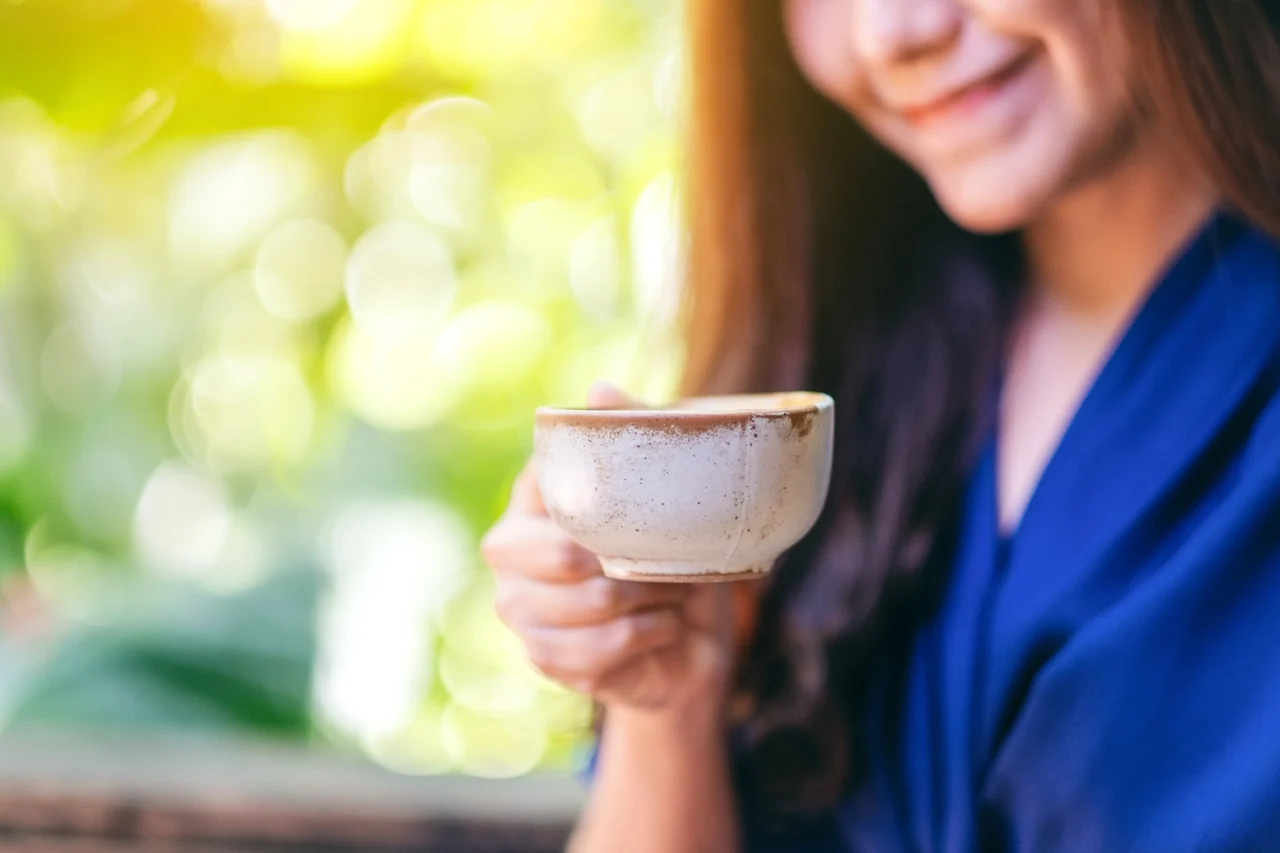
If you’re Filipino, you probably already know that you’re never supposed to 1) let the perspiration on your shirt dry on your back, 2) have cold drinks, especially in the morning, and 3) wash your hands—or the dishes—immediately after cooking.
It all boils down to the concept of “lamig.” “We have such a thing called init-lamig. In Chinese medicine, we have hot-cold patterns,” explains Tan. “TCM practices and Filipino medicine actually have a lot in common, such as looking at the body from a climate perspective.”
Tan explains the logic behind avoiding lamig: “We’re warm-blooded,” he states simply, continuing on with, “so, we need to keep warm for our circulation.” That, Tan says, is the general goal in both Chinese and Filipino medicine. “We want to keep it warm. Anytime we get cold, we have constriction, restriction, and we have stagnation.”
So if you are ever told that you need to drink warm or hot drinks in the morning, during and after meals, avoid cold food and drinks, cold temperatures, climates, and wind exposure, keep that little nugget of information in mind.
The big breakfast
Envato Images
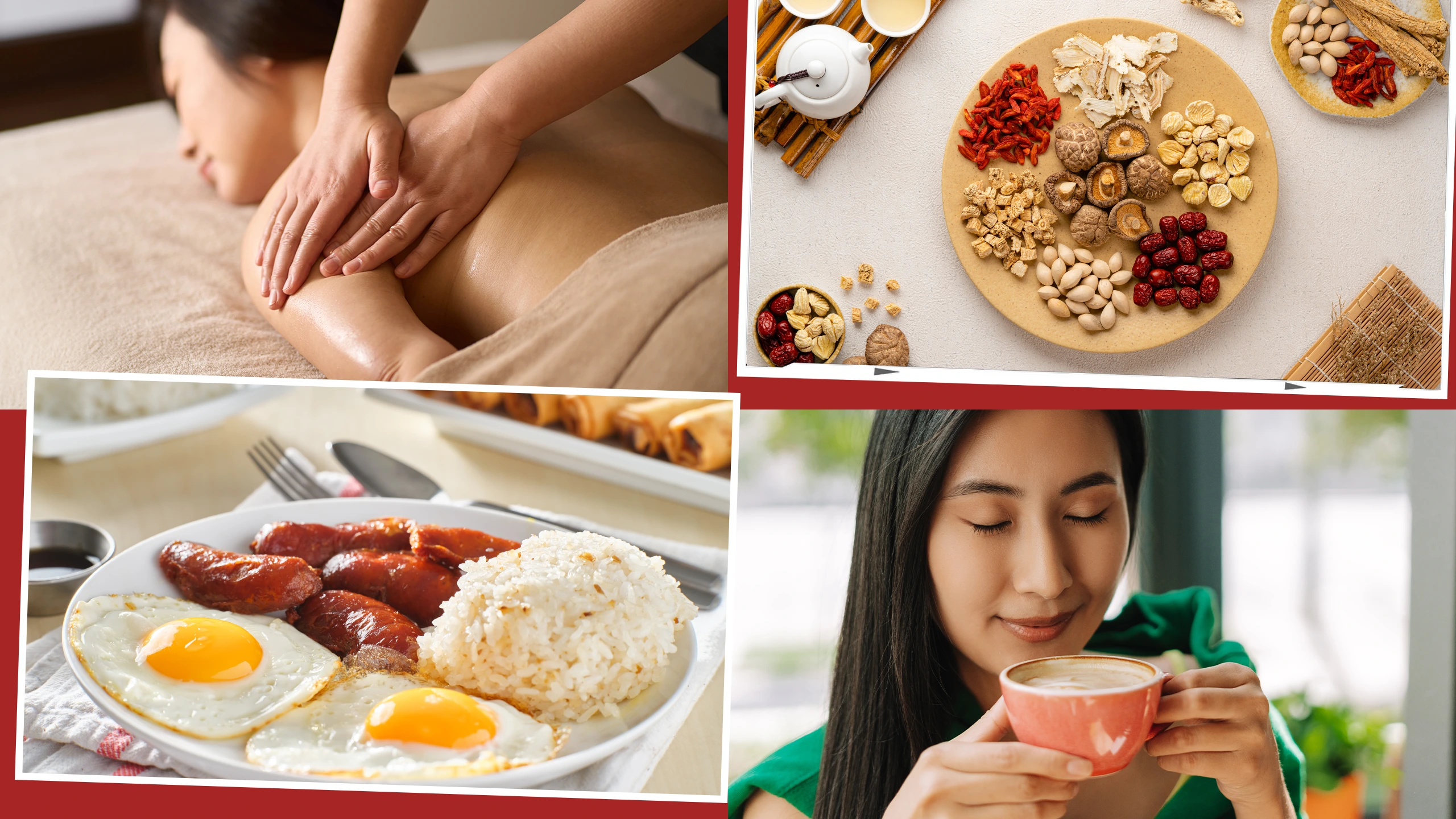
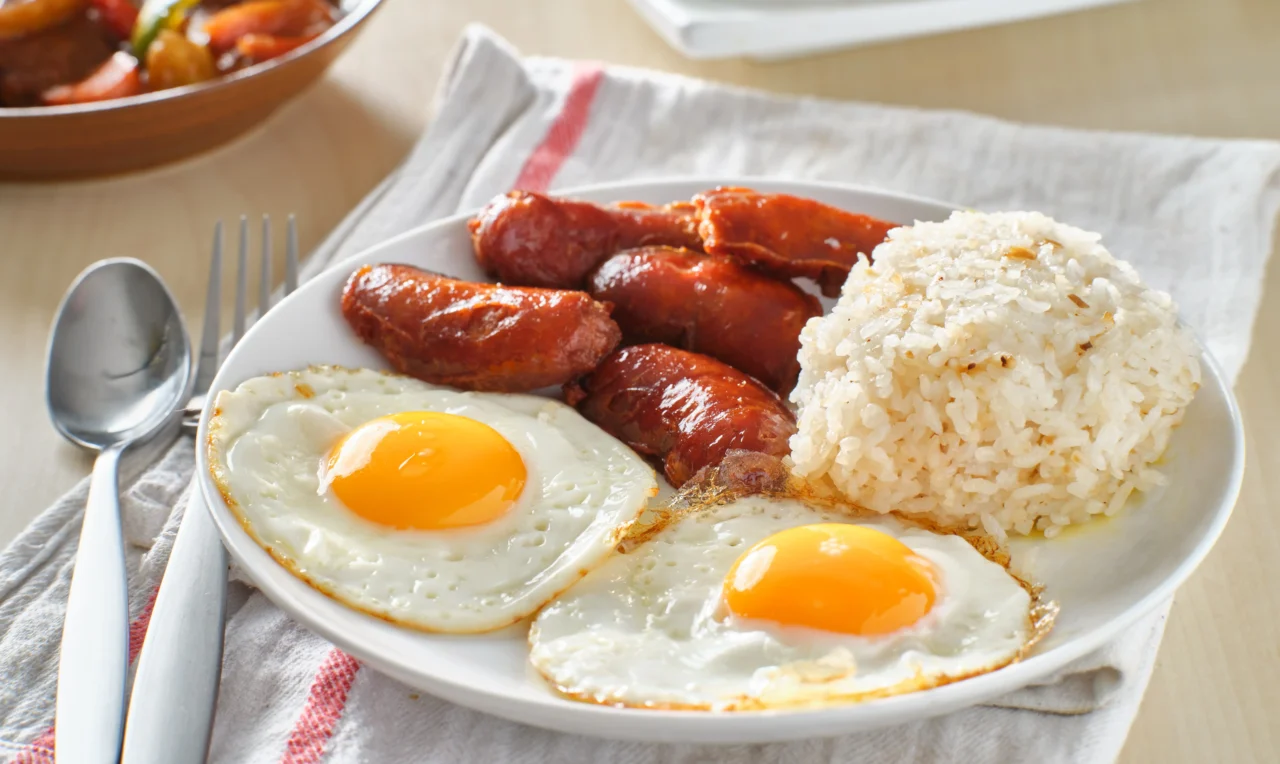
Can’t seem to start the day without your usual silog, plus kape, plus pandesal? You’ll find parallels to your big breakfast spread in TCM, too. “One of the most important and non-negotiable practices for us is eating breakfast like a king,” Tan shares. “We recommend to our patients and clients that they eat around 7 to 9 a.m., which is what we call Stomach time.”
Tan goes a step further to explain that in TCM, they also believe in eating “lunch like a prince, and dinner like a pauper. We have them eat lunch somewhere between 12 noon to 2 p.m., and dinner between 5 to 7 p.m., before the sun goes down.”
Massage therapy or hilot
Envato Images
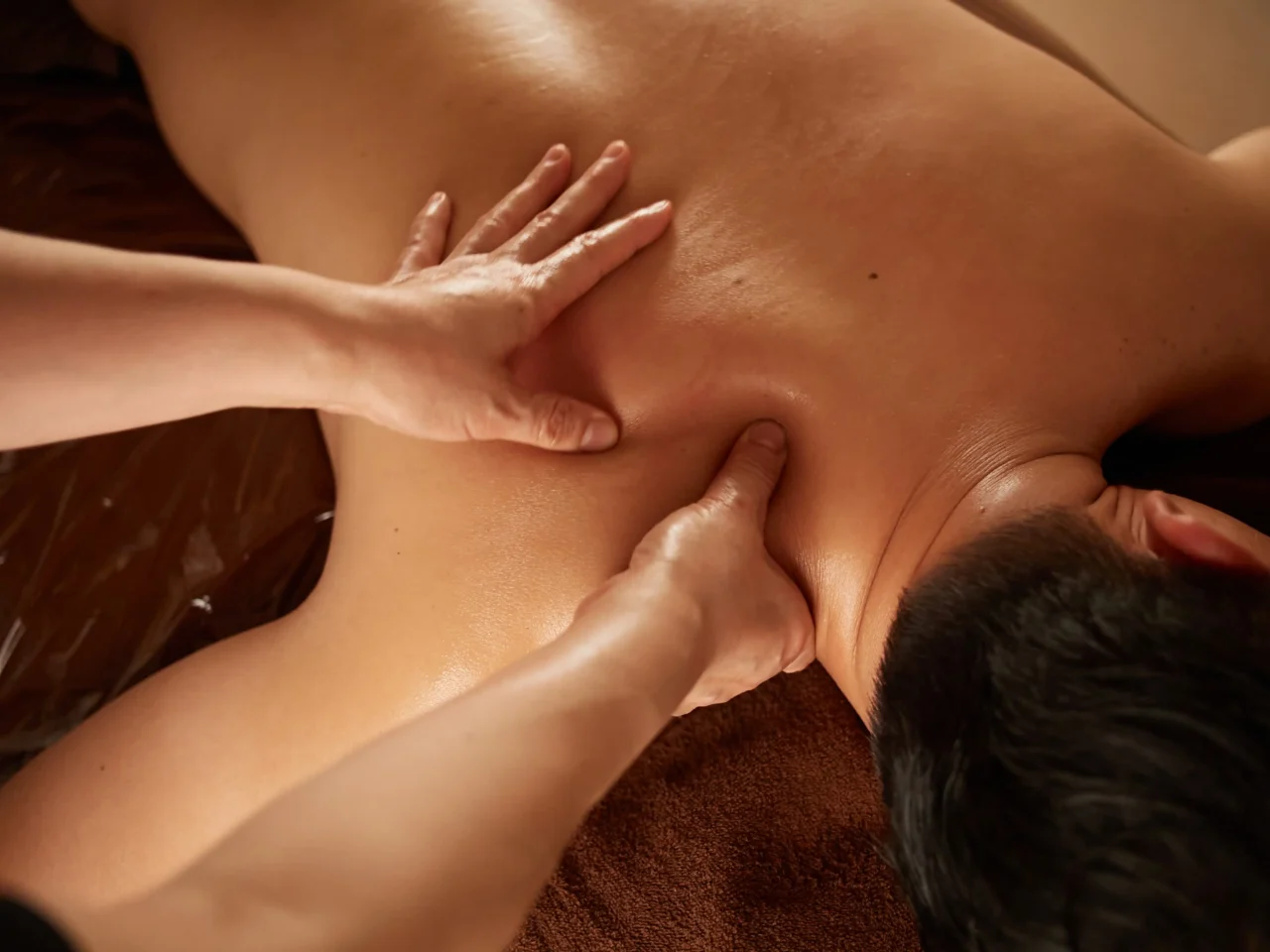
Massage therapy, or Tuina, is actually a pillar of traditional Chinese therapy, according to Tan. “There are different forms,” he says, “that can unblock and clear a lot of passages or pathways in the body.”
In the same vein, the traditional Filipino hilot is also seen as both a means of healing and a method of prevention. Didn’t your lola seem to send you to her manghihilot for every little thing, from a cold to a sprained ankle?
In addition, the Filipino practice of ventosa is known as “cupping” in Chinese culture—and they’re basically the same thing. “It’s about using heat and fire suction to draw out the cold patterns in the body to promote circulation,” explains Tan.
Herbal remedies
Envato Images
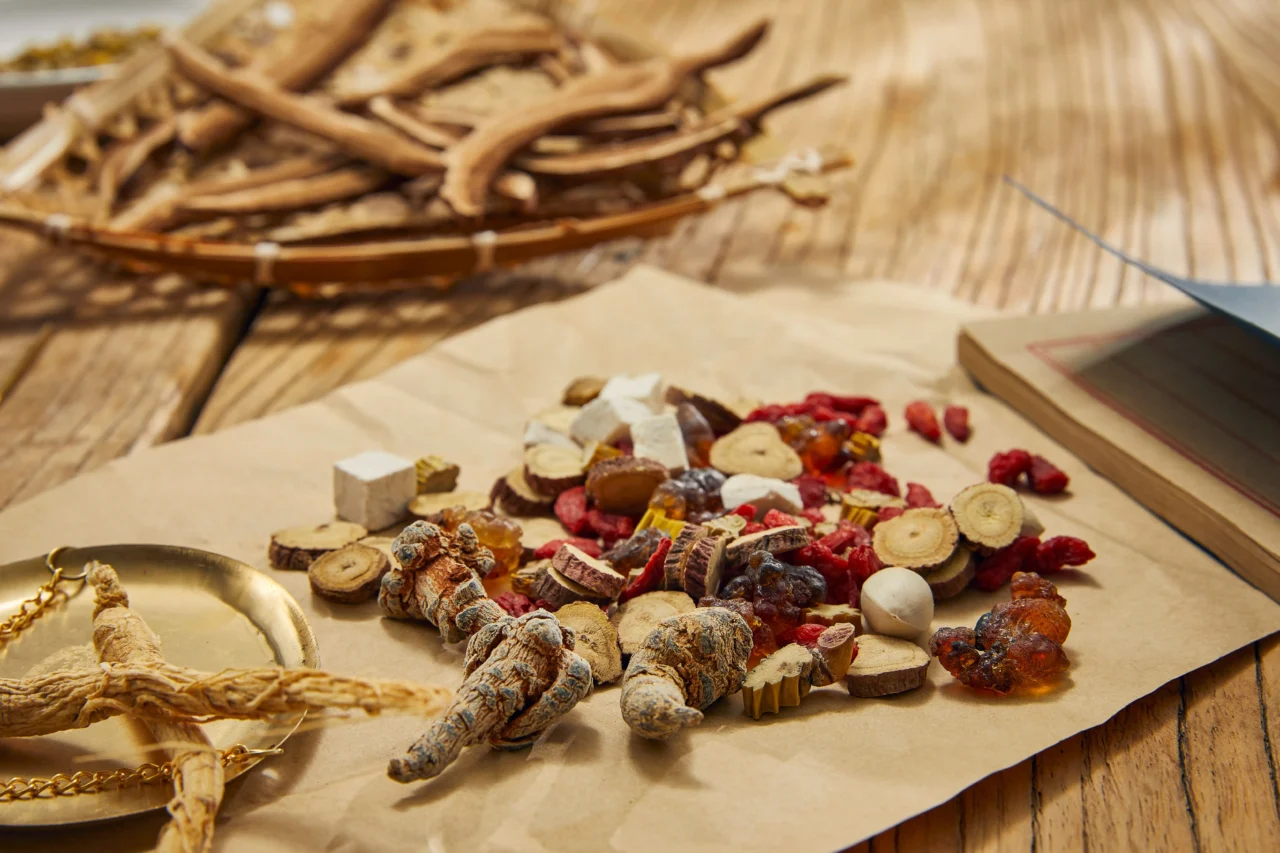
Herbal medicine is another pillar of TCM. “We use a lot of herbs and even Chinese dietetics, and look at diet or nutritional therapy as a form of medicine,” Tan shares.
In Filipino culture, the albularyo or folk healer is a strong presence, especially in the provinces, concocting all sorts of herbal tonics and medicines.
But even if you don’t regularly troop to your friendly neighborhood albularyo, you may still use herbal remedies that have been passed on through generations—such as salabat or ginger tea for anything from stomach issues to sore throats, a tea made from lagundi leaves to soothe a cough, ampalaya to bring down blood sugar in diabetics, or malunggay to promote lactation in breastfeeding mothers.
A language we all understand
Two seemingly different ancient cultures—but with many parallels in age-old customs and traditions. It’s endlessly fascinating. But beyond searching for other melting points and scanning the cracks for more pronounced differences, perhaps it’s also important to see the truth: that the quest for good health and wellness is, and always has been, universal.
Frequently Asked Questions
Both Filipino traditional medicine and TCM view the body through a climate-based lens, emphasizing warmth, circulation, and the balance of hot and cold patterns. Shared practices include massage therapy, cupping, herbal remedies, and meal timing — rooted in the common goal of maintaining internal balance and preventing stagnation, according to TCM practitioner Filb Tan.
Init-lamig is a Filipino concept describing the body’s sensitivity to temperature imbalance — avoiding cold drinks, cold wind, and allowing sweat to cool on the skin. In TCM, this maps directly to hot-cold pattern theory, where cold exposure causes constriction and stagnation in circulation. Both systems prioritize warmth as foundational to physical health.
Hilot is a traditional Filipino healing practice used for both treatment and prevention, from colds to musculoskeletal issues. In TCM, its equivalent is Tuina — a form of massage therapy considered one of TCM’s four core pillars. Both practices aim to unblock energy pathways and restore circulation throughout the body.
Ventosa is a Filipino therapeutic practice that uses heat and fire suction to draw out cold patterns and stimulate circulation. It is functionally identical to cupping in traditional Chinese medicine — both employ the same mechanism and serve the same therapeutic purpose, making ventosa one of the clearest direct parallels between Filipino and Chinese healing traditions.
Several common Filipino herbal remedies align with TCM’s emphasis on food and plants as medicine. Salabat (ginger tea) is used for digestive and respiratory complaints; lagundi leaf tea soothes coughs; ampalaya is used to manage blood sugar; and malunggay supports lactation. Each has a counterpart in TCM’s herbal and dietetic traditions, reflecting a shared botanical healing philosophy.