

In preschool, one of the first lessons students learn is how to identify different shapes. There’s the circle, the square, the rectangle, the diamond, and, oh yes, the heart—an early favorite for many children, scrawled in jagged crayon marks over oslo paper and folded and snipped into cutouts for many an art project.
In elementary, as biology concepts are introduced, students begin to learn all about the heart—as an organ, how it pumps and circulates blood through an intricate network of veins and capillaries, and sustains life.
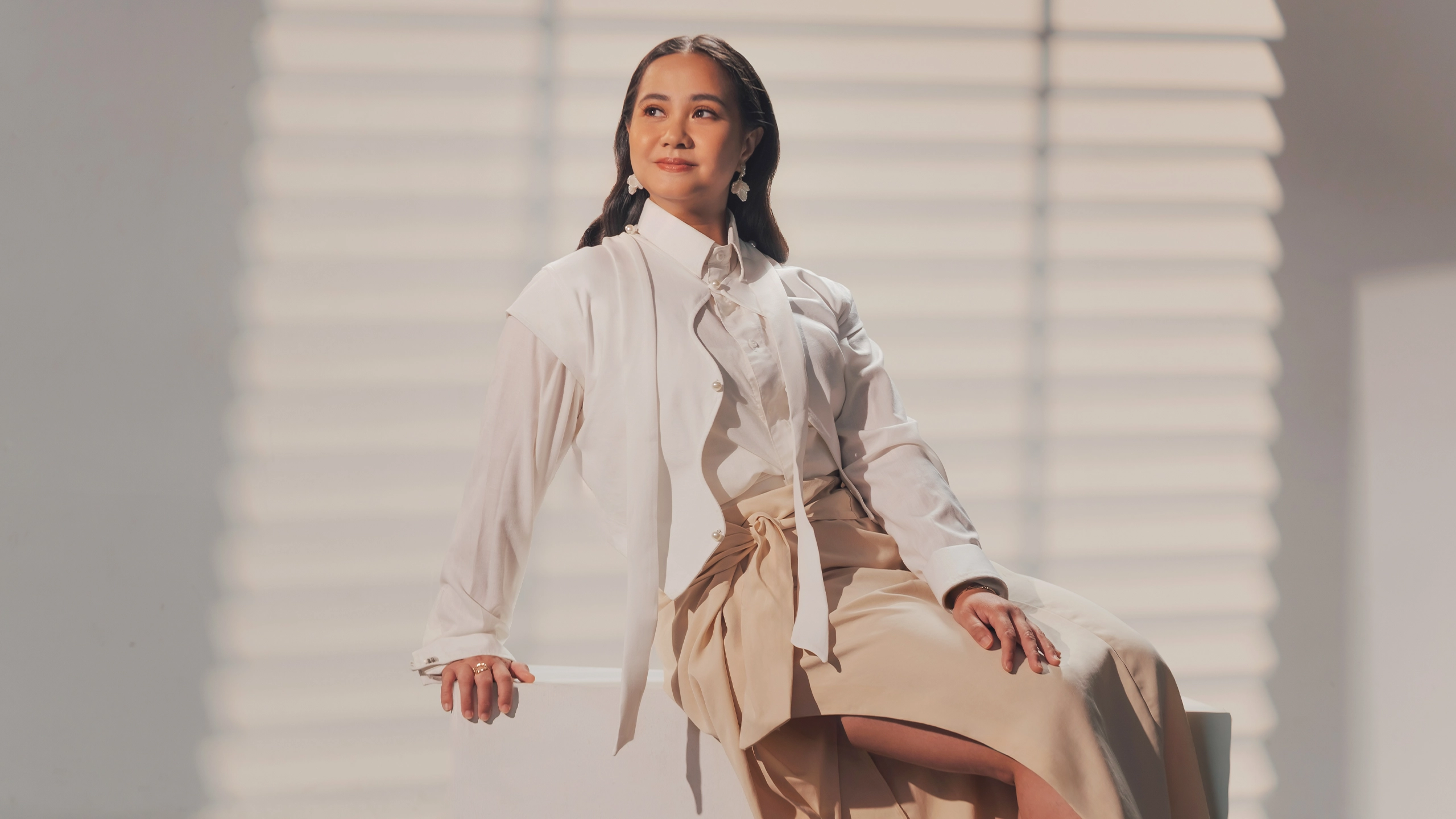
In college, if you happen to be taking up the sciences, one can delve even deeper into studies about the heart. For then-BS Biology student Sabrina Ongkiko, learning more about the heart seemed de rigueur. Yet it was while she was completing her degree at the Ateneo de Manila University, preparing to enter medical school to become a doctor, immersed in studies of the body—including the heart—that she, in a twist of fate, discovered her own.
A vocation she loves
Today, Ongkiko is an educator—a multi-awarded one, at that. But the halls of the school she walks aren’t the ones of tony universities, such as the one where she took her own undergrad. Instead, they are the much simpler, much noisier, much rowdier ones found in a public school in Quezon City.
The path of a public school teacher in the Philippines is not an easy one. Much has been said about how challenging it is: the lack of facilities, of support—financial or otherwise, of respect and, at times, just simple gratitude for the weight of the burdens our public school teachers carry on their backs. There is, as well, the fact that teachers end up opening their own hearts and lives to their students, especially those in need—and in a country like the Philippines, the sad truth is that public school students in need are numerous.
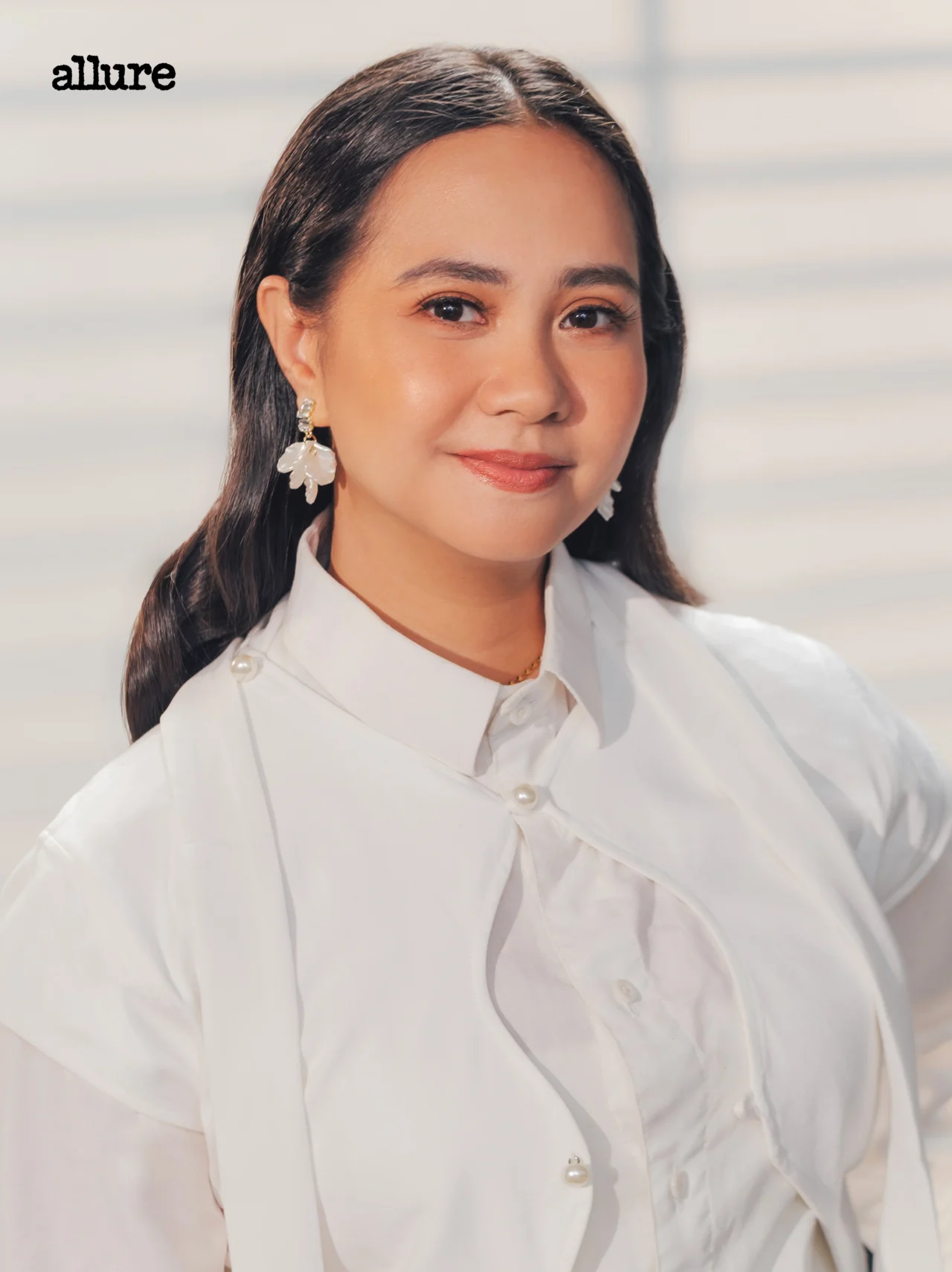
Ongkiko has been a public school teacher since 2009, spending the last 17 years teaching fifth- and sixth-graders about science. When you sit down to chat with her, it’s apparent why she decided to become a teacher. Ongkiko possesses the disposition of your favorite teacher—sunny and approachable, but also in charge, quite maternal in nature, someone who a child wouldn’t hesitate to go up to. “I love being with kids,” she shares. “It’s very natural for me to interact with children.”
She is, in all honesty, the teacher everyone wishes they had in their formative years—wise enough to provide guidance, but warm enough to want to spend time with. And Ongkiko loves what she does—living proof of the word vocation, her devotion to her calling radiating from that big heart of hers out to all the students whose own hearts she has touched.
If she had stuck to her plan, she would have become a doctor.
Andrea Beldua
A path that didn’t appear out of nowhere—but was actually always there
As she was completing her Biology degree, Ongkiko was also a student volunteer, for the Jesuit Volunteers Philippines Foundation (JVP) and Ateneo student organization Alay ni Ignacio (ANI)— getting assigned to Iloilo as a community and youth organizer and, during the summer, teaching public high school students inside her university.
It was while teaching those public high school students that Ongkiko discovered her aptitude for teaching. “Doon ko na-realize na, ‘Hey, wait, I can teach!’” she shares. “The kids understood kung ano yung pinapaliwanag ko. And then every summer, I would get an award for favorite teacher. Nagugulat din ako.”
What she meant to do, though, was to go on to medical school, to become a pediatrician. She chose not to.
“I got invited by a mentor to a meeting, and she described the kind of teacher that the Philippines needs, especially for science,” Ongkiko narrates. “I was a science major. Sabi niya, ‘someone who can break down concepts for kids, to make it simple.’ So parang ako, ‘Wait, ako yun!’”
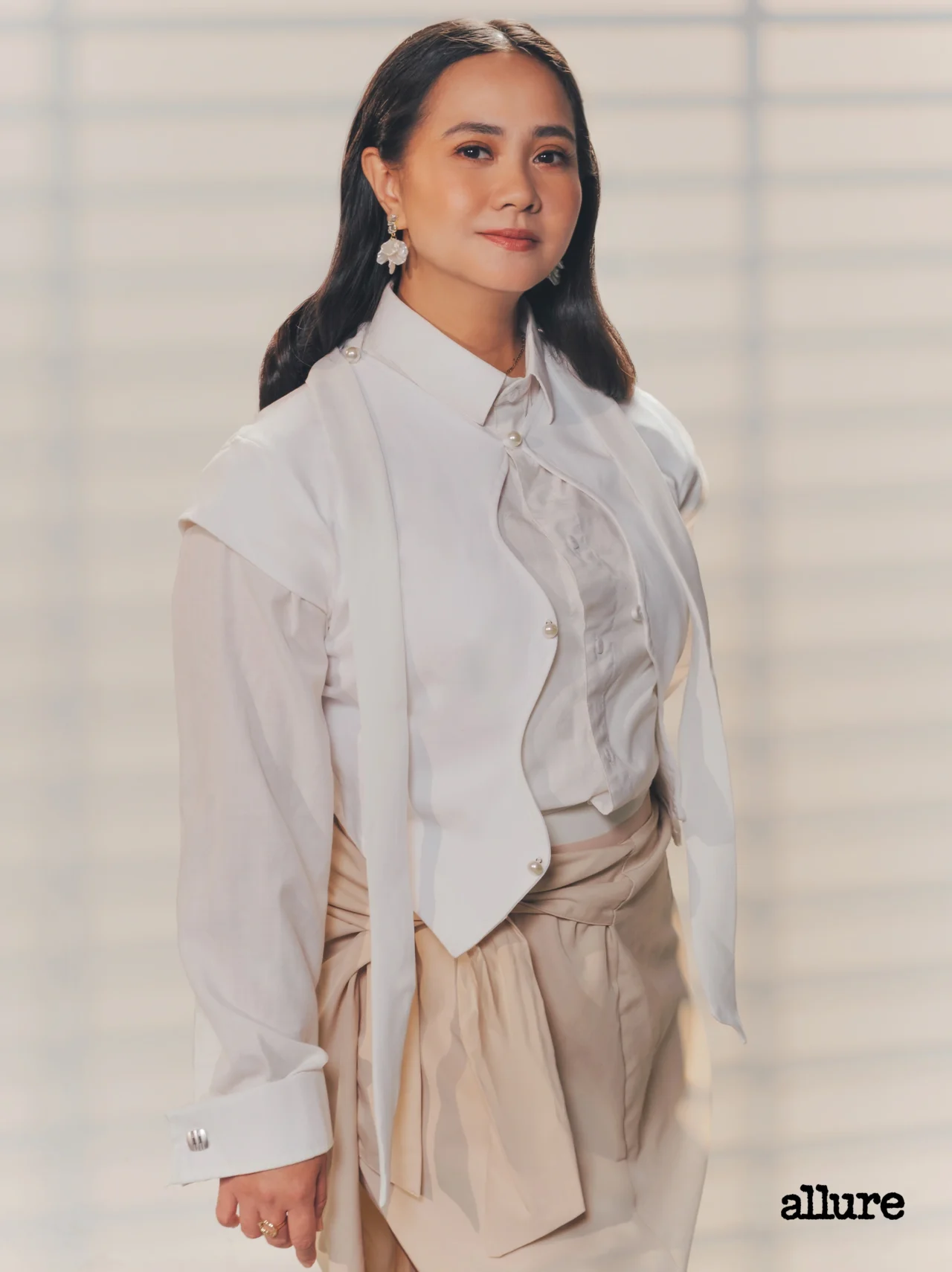
Teaching, as demonstrated by those summer classes she taught, came naturally to her. And as Ongkiko took a brave step into a world that she had never really known before, she realized she was headed in the right direction. “Sabi nga nila yung interaction ng passion, which is what’s life-giving for you, skill, what you’re good at, and needs of the world—pag nag-intersect ‘yun, that’s your vocation,” she shares. “I realized na hindi siya medicine, but it’s education.”
Andrea Beldua
The intersection where two worlds meet
It’s an interesting intersection Ongkiko inhabits—“straddling two worlds,” in her own terms. One world is one of privilege, the one where her well-to-do family sent her to study in one of the top universities in the country. The other is the world of public education—a world where she is a firsthand witness to the stark inequality and injustice that riddles our country’s systems, a world where she has learned to recognize the signs of hunger (for food, opportunity, or more) in her students, a world where she would ask to get dropped off a few blocks from the school, so that her students wouldn’t see that she and her family had a car.
“Yan ang mahirap doon,” Ongkiko shares. “Meron kang mundo na may privilege, meron kang mundo na araw-araw mo nakikita [the state of things] sa public school. Tapos nasa gitna ka. Minsan, naguiguilty ako na [I] enjoy privilege and luxury, kasi totoo naman na may gap. Pag tinitingnan ko yung mga estudyante ko noong summer sa Alay ni Ignacio, yung mga public school students, talagang curious din ako parang, bakit gano’n? Bakit hindi pantay?”
These are questions that have plagued Ongkiko repeatedly through the years, until she arrived at the answer—that the purpose of it all is “to bridge, to learn both languages,” she says. “Hindi ba dapat binabahagi mo yung magandang education na yun, sa mas pwedeng makinabang doon?” she asks. “You can put [both worlds] together, and then have them help each other. Kasi merong mga tinuturo ang mga tao sa public school dito sa privileged world na ito. At meron din pwedeng ituro [sa kanila], di ba? So, taga-kwento lang talaga ako. Feeling ko ‘yun yung role ko.”
A teacher, a dreamer, a nation-builder
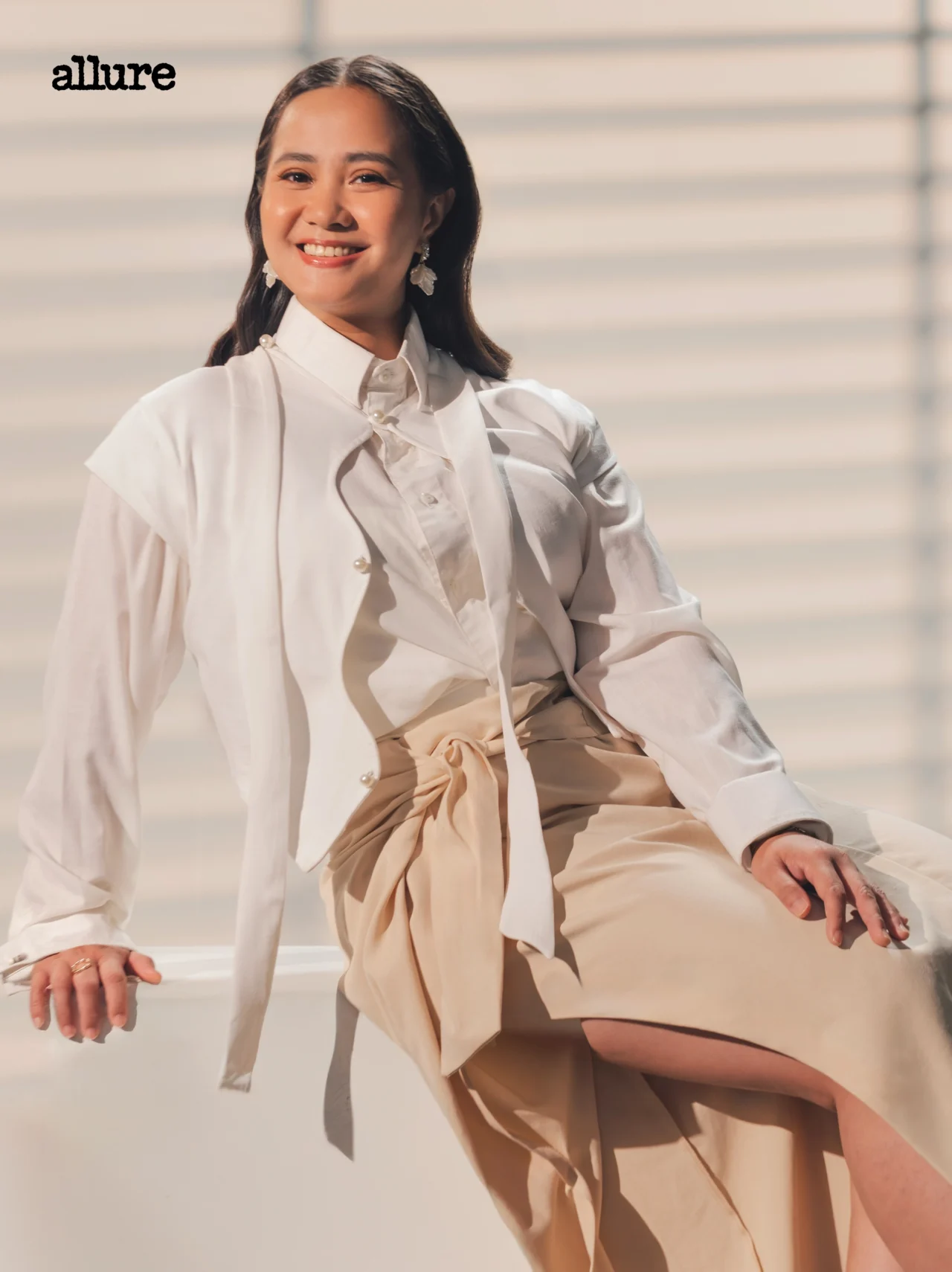
Andrea Beldua
At the time of this shoot and interview, Ongkiko shared that she has actually been on a study break from her classroom, focusing on completing her second master’s degree on Resilience in Educational Context, through an Erasmus Mundus Joint Masters program. She did her first in Australia back in 2013, on how leadership should emanate from educational institutions.
“I think [what I’m studying now is] what we need,” Ongkiko shares. “One of the things we don’t notice is well-being and mental health, which actually affects education. Ako, baka we should start from this angle. Hindi lang yung literacy, hindi lang yung numeracy, pero the well-being. And maybe, if we start from there, maybe we can [make an] impact.”
There is great responsibility in being a teacher–in shaping the next generation, and in building a nation. Ongkiko is also currently a consultant for the education commission, focusing on education of Indigenous Peoples (IPs), traveling back and forth to Palawan, interacting with the Tagbanua communities.
When she dreams of a better Philippines for all, for equal opportunities, she is not merely grandstanding from a perch in society. She knows what she speaks of intimately. When she talks about what people need, she isn’t merely speaking in abstractions—she sees these needs in the faces of her students and their families. A teacher’s job, after all, never seems to be done.
She warns, though, that the job is also a job for the heart, which, for a teacher, will carry most of the load, in tandem with the mind.
“Your heart should be strong,” she cautions, “because you will carry a lot. Teaching in the Philippines isn’t easy, because life in the Philippines is hard for most of your students.” Ongkiko, a teacher with a big heart, goes on to share, “You will carry a lot, and you will carry suffering that isn’t yours. But because your heart is big enough, if you have people who actually support you and encourage you—kasi doon lumalaki yung puso natin when people give you that and you allow yourself to be loved—then you can love more.”
Learning about the heart, it seems, isn’t a process limited to classrooms and labs. For a former Biology student, it seems that Sabrina Ongkiko, now a teacher herself, has learned most about the heart, yes, in the classroom, but really through the eyes, minds, and hearts of others.
Art direction by Nicole Almero, assisted by Sacha Mancera. Beauty direction by Sacha Mancera. Photography by Andrea Beldua, assisted by Toto Pepito and JR Baylon. Makeup by Aica Latay. Hair by Cats Del Rosario. Styling by Gee Jocson, assisted by Kassandra Gandionco and Vince Avisado.
Frequently Asked Questions
Sabrina Ongkiko is a Filipino public school science teacher based in Quezon City who has taught fifth- and sixth-graders since 2009. She holds two master’s degrees — one in educational leadership from Australia, and a second in Resilience in Educational Context through an Erasmus Mundus Joint Masters program — and has received recognition for her impact in public school science education.
Ongkiko had planned to become a pediatrician after completing her BS Biology degree at Ateneo de Manila University. While volunteering as a community organizer and teaching public high school students during summer programs, she discovered a natural aptitude for breaking down science concepts for children — and recognized teaching as the intersection of her passion, skill, and the needs of the country.
Public school teachers in the Philippines contend with inadequate facilities, limited institutional support, and significant socioeconomic inequality among students. Teachers frequently absorb the emotional weight of their students’ hardships — including hunger and poverty — well beyond the scope of academic instruction.
The Erasmus Mundus Joint Masters is a competitive European Union-funded postgraduate program that brings together students and institutions across multiple countries. Ongkiko is pursuing a degree in Resilience in Educational Context through this program, focusing on student well-being and mental health as foundational to educational outcomes in the Philippines.
Alongside her classroom work, Ongkiko serves as a consultant for an education commission focused on the learning needs of Indigenous Peoples, traveling regularly to Palawan to engage with Tagbanua communities. Her work centers on equity in education — ensuring that underserved communities have access to quality, culturally responsive learning.
- Angel Aquino on Her Quietest Battle Yet—and Why She’s Ready to Speak
- In the Depths of the Ocean, This Filipina Marine Biologist Feels Most Like Herself
- This World-Renowned Filipina Astrophysicist Forges Ahead On a Difficult Path—So That Other Women May Find Their Way
- Jamela Alindogan: Where Courage Lives