6 Morena Achievers on What Drives Them to Keep Breaking Barriers
From sports and science to broadcasting, aviation, and activism, six inspiring Filipinas share the mindsets that fuel their ambition and keep them moving forward.



Achievements aren’t done overnight—they’re built one step at a time. For some, this means staying disciplined through early-morning training sessions and stretches of self-doubt. Behind every medal, distinction, and recognition is the quiet determination to keep showing up after every setback, with no one bearing witness.
Filipina morenas have long been told, in subtle and not-so-subtle ways, what success is supposed to look like. The women on this list have built their own version of it anyway, and they stay motivated by looking at what’s next rather than dwelling on what’s already behind them.
Here are some of the morena achievers Allure Philippines has featured and the philosophies that ground them on hard days, motivating them to do better every day.
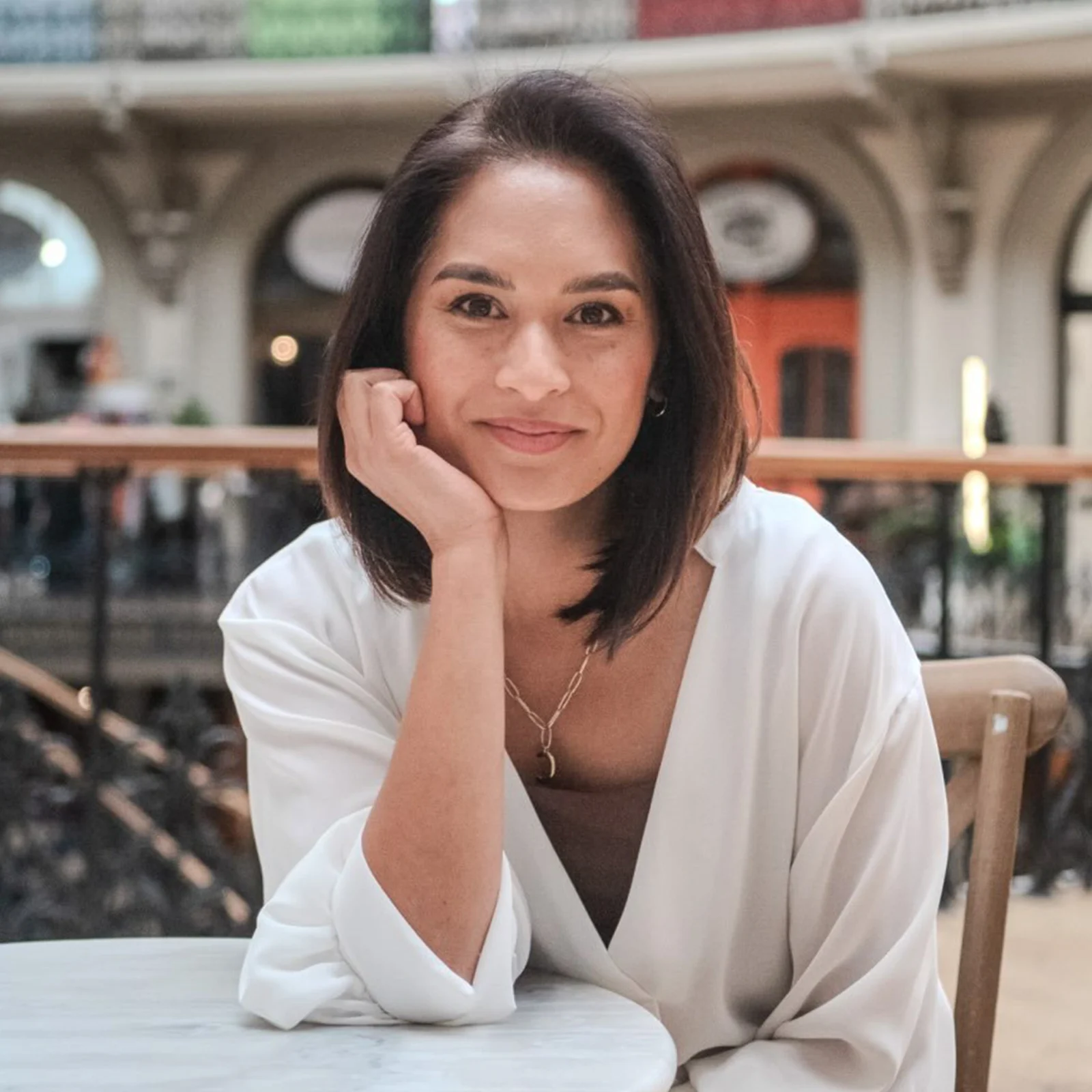
Corazon Garcia, BBC’s first Filipina weather presenter

@mi_corazon_garcia on Instagram
As the BBC’s first-ever Filipina weather presenter, Corazon Garcia is no stranger to failure. She failed to snag the position in her first attempt and was initially supposed to fill in as needed. With grit and hard work, she turned that stand-in role into a permanent place on British television.
“Getting to this point is also very much a journey of acceptance,” Garcia tells Allure Philippines. “I had to fight to get to where I am now, and I’m still pushing for more.”
That journey started long before her work on the broadcast desk—wearing contacts lighter than her natural eye color, wishing her skin and hair were lighter. Today, she no longer feels the need to change how she looks. “For once, I can just be true to myself and not have to lighten my skin, lighten my hair, wear contacts to change my eye color,” she says. Her proof that she’s come far is also her reason to keep going: “I’m a morena Filipina, and that is 1000% okay.”
What keeps her showing up each day is the weight she gives her work. Garcia treats weather broadcasting as journalism, not just as a forecast. “It looks like it’s easy to do. It’s not,” she explained. “First of all, you know, there’s a whole load of data you’ve got to look at, radar models…You’re trying to find, ‘What is the story of today?’ ‘How is that going to impact your life today?’”
For her, doing better means looking further ahead, too. “We’ve got to think about the years to come as well and our whole existence,” Garcia says.
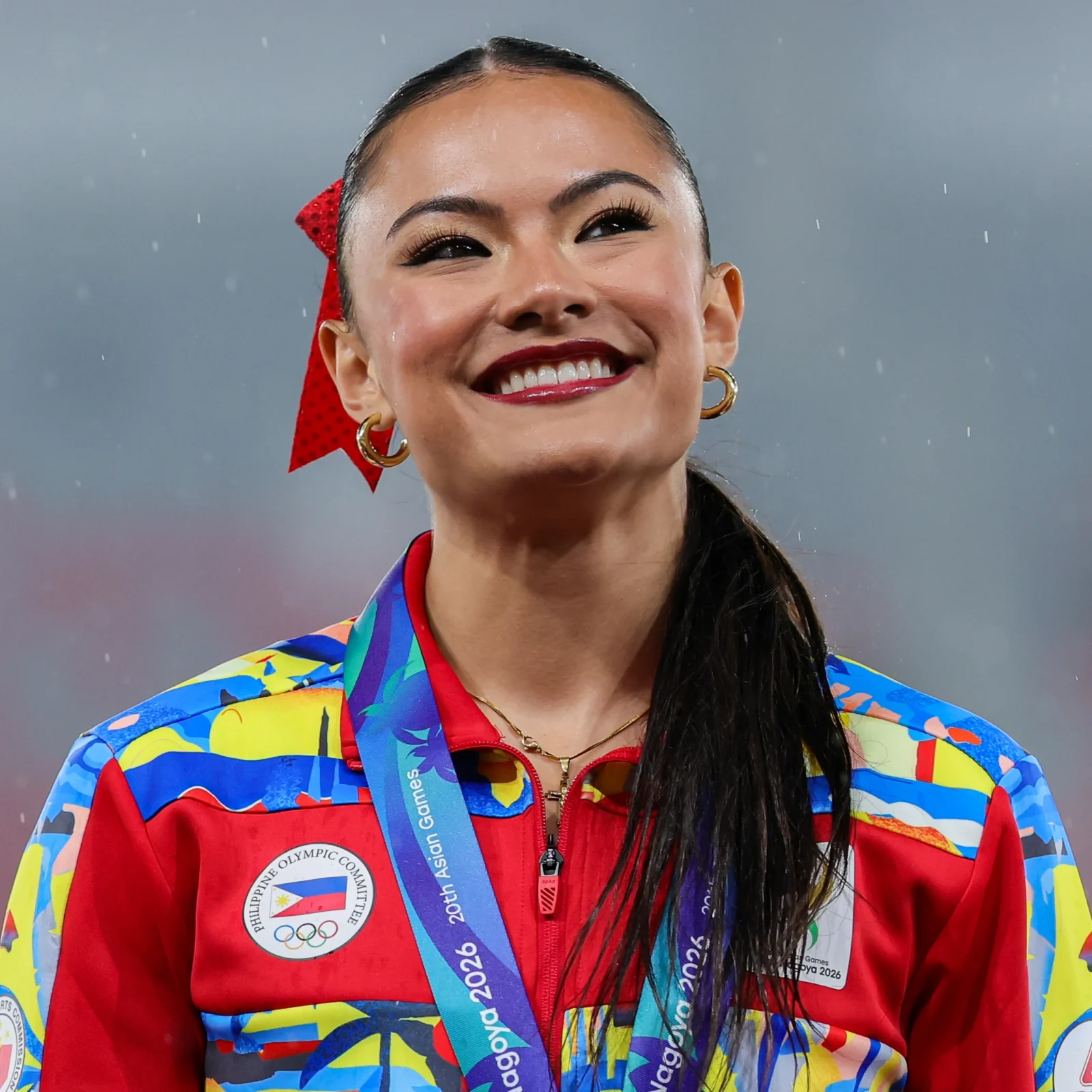
Victoria Bossong, 2026 Asian Games bronze medalist and Harvard neuroscience graduate

@victoriabossong on Instagram
Beyond her stellar track career, Victoria Bossong is a Harvard neuroscience graduate, which gives her a more technical view of what it takes to compete with the best.
“Studying the brain has made me a lot more aware of just how connected the mind and body are, especially at the elite level,” she shares in a previous interview. “How you respond to pressure, how you manage anxiety, and how you interpret physical discomfort can all have a very large impact on your performance.”
For Bossong, even a limit that “feels like a physical barrier can be influenced by what your mind thinks you’re capable of doing.” That belief is what she brings to every start line.
But what keeps her going goes beyond the clock. Asked about what she hopes young Filipinos feel when they see her on the podium, Bossong points to what representation can do. “When you’re young, just seeing someone who looks like you achieving at such a high level can make those same opportunities feel more attainable for a young boy or girl,” she shares.
She also wants young Filipinos to know they don’t have to fit a certain mold to be recognized. “You can embrace your culture, your femininity, and all the different things that make you who you are, while also being incredibly ambitious and competitive,” says Bossong. If only one young person takes that advice to heart, then it’s more than enough for her.
“Encouraging even one young girl to pursue something she might not have thought was possible for herself would mean the world to me.”
Pia Bagamasbad, Ph.D, molecular biologist, professor, and leading Filipina scientist

Artu Nepomuceno
Molecular biologist, molecular endocrinologist, and professor Dr. Pia Bagamasbad has more than a decade of experience in the life sciences, with part of that spent abroad. In the US, she was a minority in a space that expected her to be quieter and more reserved.
“There were some people that looked down on me,” she shares. She didn’t let that stop her—she used it as fuel. “I just worked hard and showed them that Filipinas can be smart,” she says. Her accomplishments, she believes, are proof of her intellect and grit as a Filipina, and her determination has helped pave the way for other women in science.
Part of what keeps her going is how she sees herself as a morena. In a culture that has indirectly favored fair skin over morena skinMorena SkinA celebration of natural brown Filipina skin tones, central to Allure Philippines' Morena Manual. Morena skin has distinct needs, including protection from hyperpigmentation, foundation shades that match its undertones, andGo to Morena Skin Glossary, Dr. Bagamasbad does not let that dictate how she carries herself. For her, confidence and competence go hand in hand.
“As long as you exude confidence and you’re good at what you do, it’s easy to get the support of people,” she says.
Juliana Gomez, the Philippines’ No. 1 women’s épée fencer

Kim Santos
If there’s one thing that Juliana Gomez hates the most, it’s losing—and yet, she’s experienced it countless times. The fencer, who took up the sport at 20 years old, started working with a sports psychologist in 2020, while trying to qualify for the national team.
“It was such an uphill battle mentally,” she shares. “From working with him [I learned] how to accept loss, how to come back stronger, how to get back up, how to keep at it.” That work, she says, changed how she viewed and understood defeat. “I actually think that winning doesn’t teach you much,” says Gomez.
“Winning, to me, it’s just an accumulation of all the hours that you put in. Losing, apart from showing you the things that went wrong in the game, it teaches you so much about yourself. It really molds your character.”
Years of being an athlete taught her to accept that losing doesn’t mean defeat forever, and that’s what keeps her going.
“I feel like losing is a blessing in disguise sometimes because when you’re just not ready to win, when you’re just not ready to be in the team yet, when it’s just not your time, you lose. And that’s okay, because the time that you spend trying to bounce back from that loss prepares you for something bigger,” she says. “It prepares you to shine when it’s actually your time. And when it’s your time, you’ll know.”
Brooke Castillo, the first Filipina commercial jet captain and airbus instructor

Brooke Castillo knew that the biggest hurdles aren’t always found outside. Even with systemic challenges in the way, she says, self-doubt is more than enough to hold women back.
“I think a lot of the barriers are [also] our own. We doubt ourselves,” Castillo shares. Her story shows that perseverance pays off, even when the path hasn’t been paved yet. Raised in a family with strong, accomplished women, Castillo drew her strength and determination from the women that came before her. She especially took after a grandmother who graduated from college in the early 1900s—it was unheard of at that time—but at the same time, she considered it her “beacon of hope.”
“They were surprised [to hear that I wanted to become a pilot], but they were very supportive,” says Castillo. This is the encouragement that fueled her ambition.
Her career then kept going: she became the first Filipina to fly a commercial jet with Philippine Airlines in 1996, then the first to captain a Cebu Pacific jet in 2003—effectively making aviation history.
Mitzi Jonelle Tan, international climate justice activist and Youth Movement co-founder

Artu Nepomuceno
Co-founder of Youth Advocates for Climate Action Philippines and climate justice activist Mitzi Jonelle Tan has always described herself as a rule-breaker, and she owes this to how her parents raised her as a child.
“My family brought me up thinking that the world is like this because the rules are written by a specific set of people,” shares Tan. “But I’ve always been a rule-breaker, even as a kid, and I was like, ‘Those are the rules, and those are the people writing the rules, and I don’t want to follow them.’ I refuse to follow a certain box, a certain guideline, just because they say that that is how people should look.”
That refusal to follow the rules is what keeps her showing up, from the outskirts of Quezon City to the parliament buildings in Europe. But for Tan, the fight isn’t about taking space alone. It’s about acknowledging her privilege every single day.
“It’s something we all need to actively practice and pursue,” she says. For her, that means using their privilege to amplify other voices, and know when it’s time to step back.
- Asian Games Medalist Victoria Bossong Is Running for More Than Herself
- Juliana Gomez on What It Takes to Become Her Best in Philippine Fencing
- How Filipina Scientist Dr. Pia Bagamasbad Is Empowering Morena Women in STEM
- Corazon Garcia Is Giving Filipino Representation a Bigger Voice as the BBC’s First Filipino Weather Presenter