
Healing the Damage: Why I Stopped Trying to Lighten My Skin
Reclaiming morena skin after whitening treatments is an ongoing process.
By Tisha Caedo


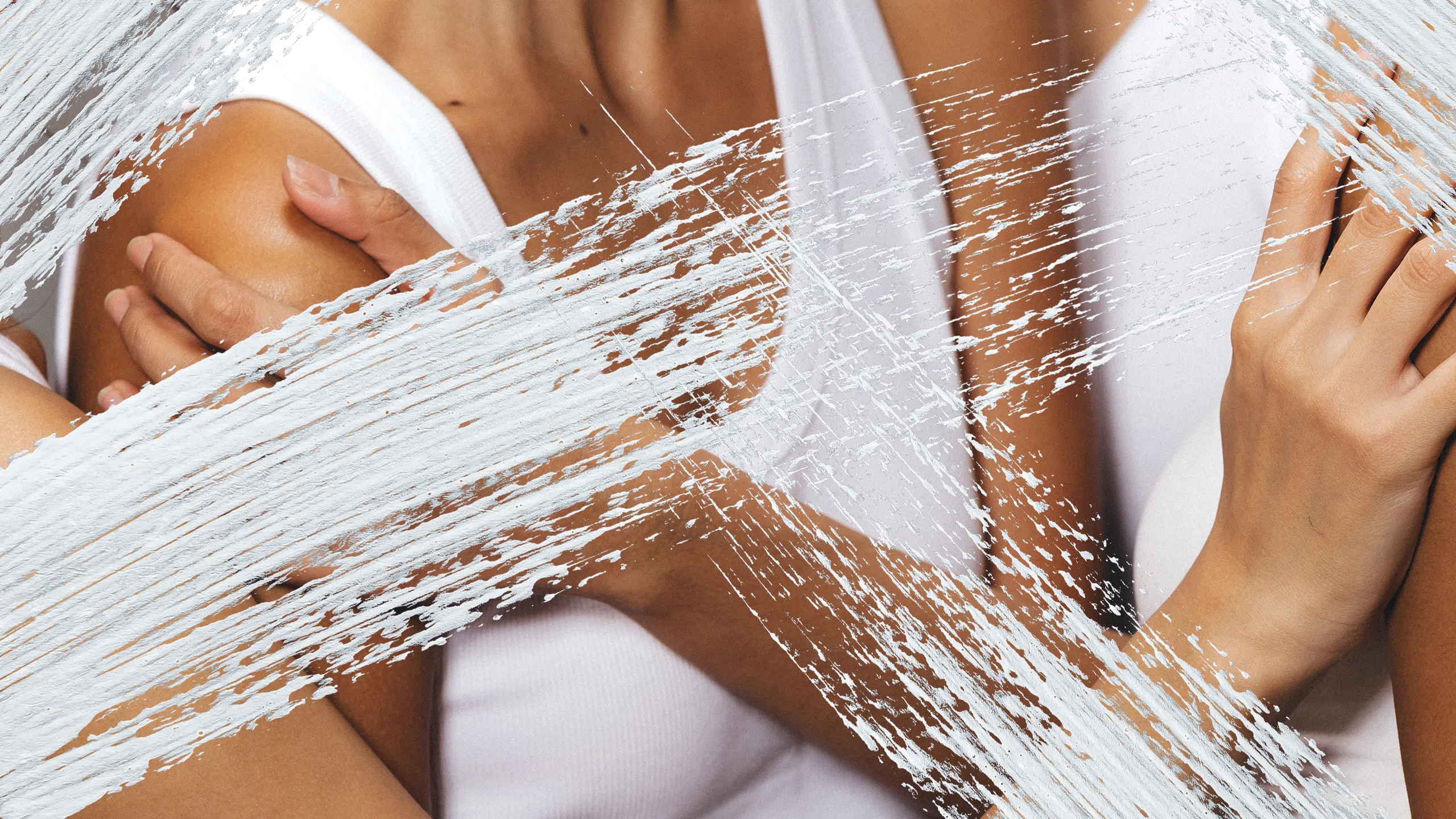
Before dermatologists, aestheticians, editors, and beauty gurus gave free skin advice on YouTube and TikTok, the only way to learn about beauty was through magazines and TV commercials. And if you were a Filipina millennial growing up in the 2000s, chances are you remember the likes of Nivea, SkinWhite, and Silka dominating glossy spreads and airtime. These brands weren’t just selling moisturizers or lotions—they were peddling a promise: When a woman achieves “kutis malinis,” AKA a fairer, lighter skin tone, she instantly becomes “more beautiful.”
Back then, beauty brands didn’t bother to learn about shade ranges or undertones. You were either light-skinned (or fair) or morena—there was no in-between. As someone who fell into the morena category, I quickly learned that my skin tone came with unsolicited comments. Relatives called me “sunog” or “black beauty.” I didn’t think much of it until those commercials made it clear: being morena was bad. Fair skin was the ideal. And as I got older, I learned that the reason why this was our prevailing beauty standard all boils down to colorism.
Colorism in the Philippines runs deep, rooted in a colonial history that spans centuries. Spanish rule and American colonization left behind more than just infrastructure, religion, and last names. They instilled a preference for lighter skin, equating it with wealth, beauty, and status.
Going into colonialism’s role in the Philippine skin whitening industry’s success, a 2017 paper from AUCTUS: The Journal of Undergraduate Research and Creative Scholarship by the Virginia Commonwealth University shares that colorism is “attributed to the mistreatment of the native population, and the subsequent development of internalized oppression, colonial mentality, and an ingrained preference for white skin.” In a 2021 TEDx talk, speaker Bianca Punzalan stated that “the sad truth of it all is that in the Philippines, having dark skin equates to being dirty, ugly, and poor.”
Skin whitening products shouldn’t be taken lightly
The societal pressure to conform to these beauty standards has led many Filipinos, including myself, to engage in skin-lightening practices, sometimes at the expense of our health. The best example would be unregulated glutathione IV drips, which are still frequently offered in skin clinics today. These so-called “vitamin drips” are not approved by the Philippine Food and Drug Administration. Board-certified dermatologist Bea Chan-Benavidez, MD, notes that while these drips are marketed as skin-lightening miracles, “there aren’t enough studies to support its efficacy and safety as a skin whitening agent.”
Board-certified dermatologist Gaile Robredo-Vitas, MD, seconds this, reiterating that “in 2019, the Philippine Dermatological Society released a statement enumerating their concerns about the use of IV [administered] glutathione for skin whitening.” She ticks off the lengthy list of issues, which include: “lack of scientific evidence; serious health risks that include hepatitis, HIV, and life-threatening allergic reactions; the proliferation of unregulated products that may be counterfeit or contaminated; and risks from unqualified administrators.”
Yet, the demand persists, with many Filipinos willing to risk “damage to the kidneys, drug hypersensitivity, and being more at risk for blood-borne infections,” as warned by Dr. Chan-Benavidez, in pursuit of lighter skin.
While I’ve never tried any form of skin whitening drip, as a pre-teen, I always had a whitening body lotion in my bathroom or a new skin whitening hack to try. I had a phase where I scrubbed my knees and elbows raw every day with a loofah because I thought they were too dark, following it up with a whitening body lotion to help “even them out.”
There was also a time I became so insecure about the dark stretch marks on my thighs that I convinced my parents to buy me an expensive whitening cream that was supposed to help reduce their appearance. I’ll never forget mixing coffee grounds with calamansi juice and scrubbing my whole body with it a few times a week. The juice stung my skin and made my eczema worse. I was always experimenting with various products and methods to see which one would be the most effective at whitening my skin. Spoiler alert: none of them were.
As I learned through recent discussions with other morenas, I wasn’t alone in these experiments. My cousin Victoria, an artist, also did a similar thing around the same age. “I used whitening soaps, lotions, and powder to whiten my face. The lotions and powders worked a bit, but obviously, my skin went back to normal if and when the sun hit me,” she says. “I think the facial powders even gave me eczema on my neck. [I continued using them because] what mattered were the mental and emotional effects, especially since I was still going through puberty.”
Justin, a PR specialist, started on lightening papaya soaps, kojic acid products, and whitening lotions as early as eight years old: “Some of these products irritated my skin, leaving me with rashes or dryness, but I kept going because I felt like I had to.”
Viv, a lawyer, also started using whitening soaps and lotions as early as elementary school and has even taken glutathione supplements over the years. “I used those products for years and never achieved the end of the ‘whiteness scale.’ I truly thought that something was wrong with me, and I just had to keep going. I’ve had some bad reactions to whitening soaps that made the skin on my body dry and sensitive,” she says. Even if they’re not IV-delivered, glutathione supplements still need to be approached with caution, since there is “not enough robust clinical evidence to support the [whitening] claims,” says Dr. Robredo-Vitas.
Looking back, it’s no wonder why my skin often had numerous eczema flare-ups and rashes. In my pursuit to have skin as fair as Snow White, I was actually damaging it.
Growing up opened my eyes
Things started to shift for me in college. In a new environment with new classmates and surrounded by people who cared more about passing classes, joining organizations, and watching the latest varsity games than whitening their skin tone, I began focusing on other things that mattered—like my grades, hobbies, and, yes, my mental health. Slowly but surely, I started to embrace my morena skin.
The global beauty industry’s evolution helped, too, especially living in the digital age. More and more, we’re seeing that “it’s important to recognize that Filipino beauty is diverse, and fair skin is not the sole standard of beauty,” says clinical psychologist Sarah Macaraeg, RPsy.
To be honest, regaining my confidence is an ongoing process, and I still have a lot of work to do. “Rebuilding confidence requires [regular] self-reflection and accepting that darker complexions are a natural part of one’s genetics,” says Macaraeg. “Engaging with people who promote self-acceptance can inspire a shift in perspective and a renewed sense of self-worth.” While I do consume more content geared towards self-acceptance now, I sometimes can’t help getting triggered when I see an ad or a billboard promoting skin whitening.
As recently as 2024, there was online buzz over SnowCaps’ L-Glutathione billboard. The static ad stated, “Ang proud morena, di na iinom nito. Sa kuntento na sa skin, wag i-try.” (If you’re a proud morena, you won’t drink this. If you’re content with your skin, don’t try this.) I felt enraged over the ad at first and even questioned if it was a legitimate billboard. “Is this still really happening in this day and age?” I asked myself. But when the smoke cleared, I saw it for what it was: advertising. The brand and their marketing team wanted eyes on their product, and they got it. Only they know whether or not this campaign was successful.
While the beauty industry has come far, as Justin accurately says, it will still take “a lot of reprogramming to unlearn the beauty biases ingrained in the Filipino culture.” These days, I’m more focused on my skin’s health than its shade. Sure, the occasional whitening ad still stings, but I remind myself nothing looks better than confidence.
Frequently Asked Questions
Colorism in the Philippines is a systemic preference for lighter skin tones, rooted in centuries of Spanish and American colonization that linked dark skin to lower status.
The Philippine FDA has not approved intravenous glutathione for skin whitening due to severe risks, including hepatitis, anaphylaxis, drug toxicity, and lack of medical efficacy.
Board-certified dermatologists caution that oral glutathione supplements lack robust clinical trial evidence to prove their safety and effectiveness as long-term skin-lightening agents.
Frequent use of harsh skin-whitening soaps and lotions can strip natural moisture barriers, causing chronic skin irritation, contact dermatitis, eczema flare-ups, and increased sun sensitivity.
Modern cultural shifts and diverse media representation encourage Filipinos to reject colonial beauty biases, prioritizing natural skin health and self-acceptance over chemical skin lightening.
Latest Stories


You might also like


To provide a customized ad experience, we need to know if you are of legal age in your region.
By making a selection, you agree to our Terms & Conditions.