A Guide to Makeup Powders: Loose, Pressed, and Finishing
From setting makeup in the Philippine heat to bringing back glow and dimension, here’s how to understand (and actually use) every type of powder, according to a local celebrity makeup artist.


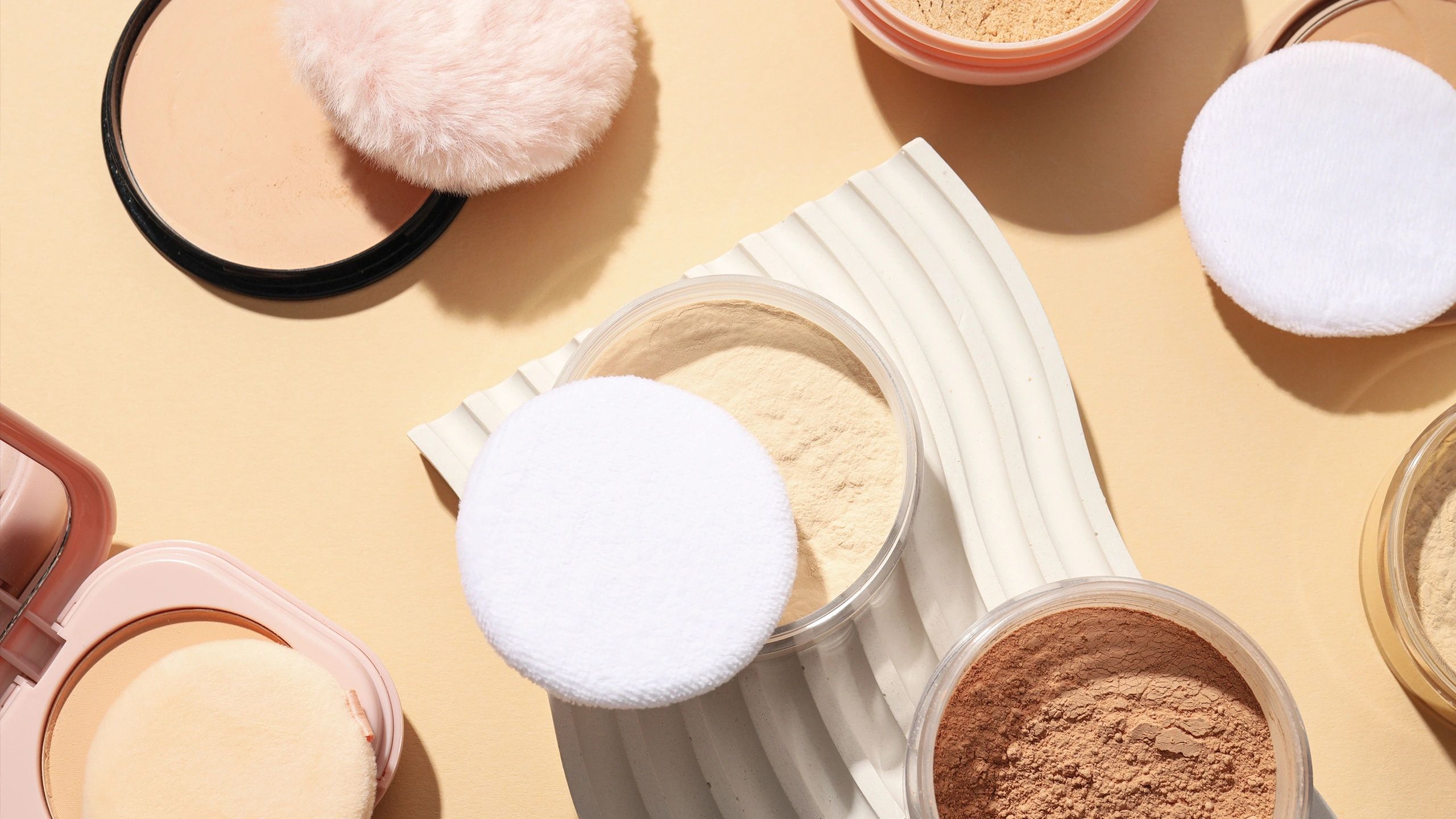
In a country where humidity can undo a full face in minutes, using powder is almost a non-negotiable step in our makeup routines. From jeepney commutes to long office hours and big family gatherings that stretch into the night, Filipino makeup often relies on powders to keep everything in place.
But makeup powders come in many forms: loose, pressed, and finishing among them. And despite how often we hear these terms, they’re not interchangeable. Each type serves a different purpose, and using the wrong one can leave skin looking flat, cakey, or overly matte.
So, Allure Philippines talked to celebrity makeup artist Angeline Dela Cruz, whose work spans red carpet glam, editorial, and everyday beauty looks. In this article, she breaks down the real difference between loose, pressed, and finishing powders, and how to use them properly, especially in our climate.
Loose powder: The base lock-in step
Loose powder is usually the first powder you reach for, and for good reason. “Loose powders [are] usually used to set your liquid base,” Dela Cruz explains. This means once you’re done with foundation, concealer, and any other liquid or cream products, this is the step that seals everything in. “The loose powder will lock in all the liquid that you applied,” she adds.
In humid weather, this step is crucial. It helps prevent makeup from sliding off by midday.
Most loose powders are translucent, which is helpful, but also something to be mindful of. “Usually, loose powder is translucent, so it kind of takes away a bit of color once you set it,” Dela Cruz notes. This is why skin can sometimes look slightly pale or flat after setting—something we can fix in the next step.
Pressed powder: Bringing color and dimension back
If loose powder sets, pressed powder restores. According to Dela Cruz, “pressed powder has a variety of shades, because that brings back color to your skin.” After translucent powder dulls things down, pressed powder helps reintroduce warmth and dimension.
Pressed powders also vary in coverage. “There’s full coverage, there’s [also] sheer pressed powder,” she says. “So it really depends on what you want to finish.” This makes pressed powder a flexible option—whether you want extra coverage for blemishes or just a light veil to even things out.
For those dealing with texture, she notes that pressed powder can help. “Usually, [this] would add coverage as well. Kapag gusto mo [na] talagang plakado na skin,” she explains.
For others who want a clean girl aesthetic, however, “they like the sheer ones because they want their freckles to be seen. Even if there’s powder,” she notes.
Pressed powder is also the most practical for everyday Filipino life, because this is the powder used for retouching, Dela Cruz confirms. It’s compact, mess-free, and ideal for quick touch-ups.
Finishing powder: The soft-focus glow
Finishing powder is often confused with setting powder, but it plays a very different role. The latter is about locking in makeup, while the former is the one that makes it look more polished.
This type of powder isn’t about oil control or coverage. It’s about the final look of the skin. “Finishing powder usually has two finishes,” Dela Cruz explains. There’s matte, and there’s also “one [that has] a sheen,” she adds.“So if you want that glowing skin, even if it’s just powder, you can achieve that,” she adds.
Finishing powder is applied after everything else: “You just layer that on top of the makeup. After the bronzer, after the blush.” Think of it as the last polish that ties the whole face together.
For Filipinos who want a healthy glow without layering on more cream products (which can melt easily in heat), finishing powder offers a lightweight alternative.
Choosing powders based on skin and finish
As always, there’s no one-size-fits-all formula. “It depends on what the skin needs,” Dela Cruz says. Sometimes, skin already looks smooth and balanced even without powder. “You can skip out on using a finishing powder.”
For dewy looks, she’s more selective. “I try to stay away from pressed powders because that has more coverage,” she says. Instead, she opts for “usually loose, and then a finishing powder that’s close to their skin tone.”
Which comes first: Loose or finishing?
Like in skin care, the order of the routine matters. Which comes first between loose and finishing? Dela Cruz is clear: “Loose, always.” The purpose of loose powder is functional—To lock in all the liquids that you applied on the skin. Finishing powder comes after, once the structure of the makeup is set.
If glow is the goal, she suggests skipping highlighter altogether. “For example, you want a more healthy glow on your skin without using a highlighter. You can use a finishing powder that has more shine to it.” The effect is subtler and more skin-like, especially flattering in natural daylight.
Powder picks: Tried-and-tested favorites
When it comes to product recommendations, Dela Cruz turns to long-time staples. “My ultimate favorite loose powder would be Laura Mercier [Translucent Loose Setting Powder]” she shares. For those who want luminosity, “I like the one from Hourglass [Hourglass Veil Translucent Setting Powder],” she shares.
She also points out that glow powders can be built gradually. “You can layer it. And then, you’ll have a subtle glow on your skin.” This controlled layering technique is key for Filipinas who want radiance without looking greasy in the heat.
In the end, powders aren’t really meant to compete with each other, they work best when layered or used for different purposes. In a tropical country like ours, understanding what each powder does can be the missing key to a reliable makeup look that stays throughout the day.