How Do I Write About Beauty Tips When My Country Is Drowning in Floods and Corruption?
When beauty feels insignificant in a country constantly drowning in crisis, what does it mean to keep writing in this beat?


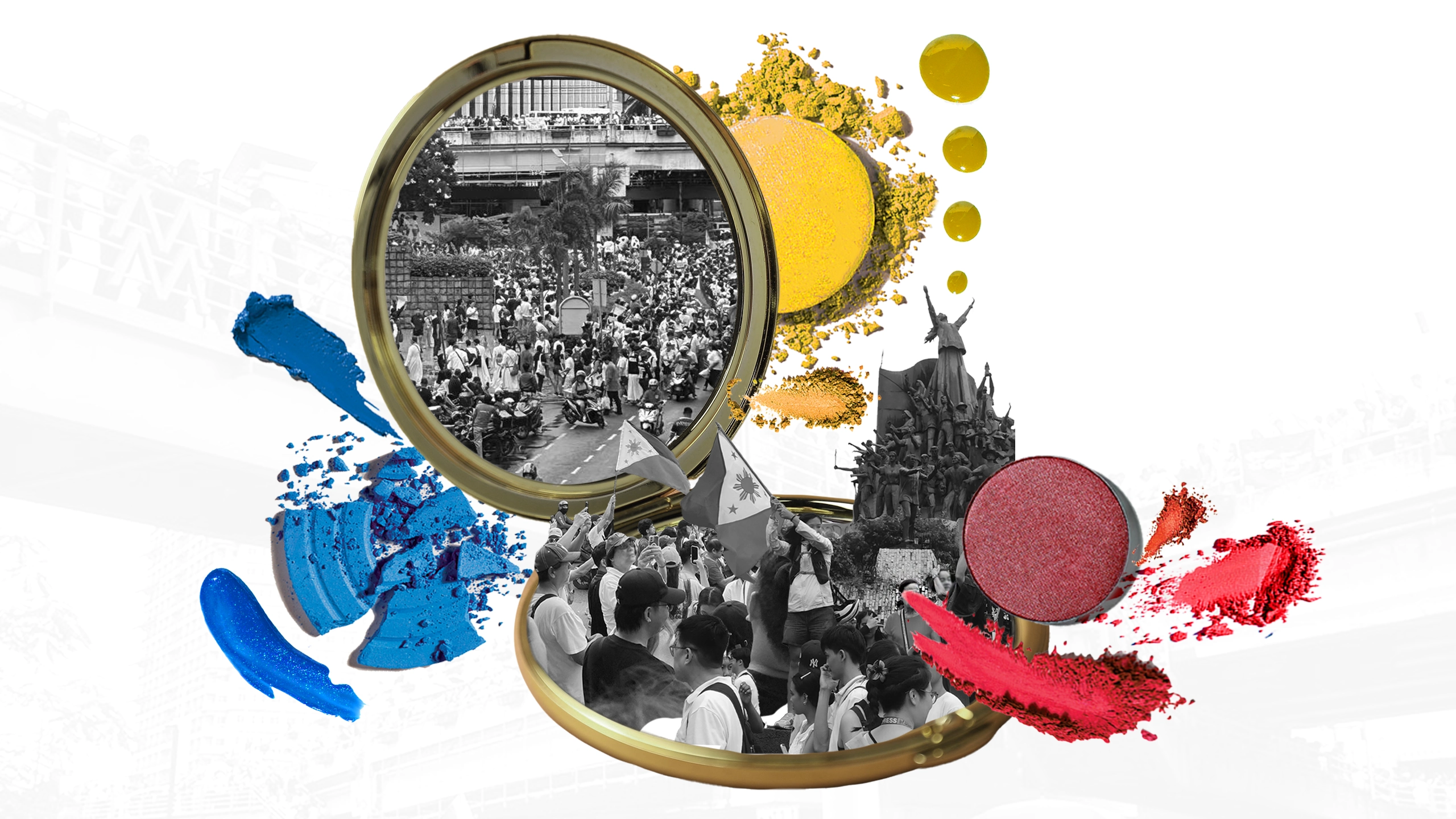
Last month, I was supposed to write a simple piece about how to nail eyeshadow when you have hooded lids. It was scheduled to be published that day. As a beauty writer, I’ve written dozens like it. Pretty easy and straightforward, to be honest. The kind I could probably finish in an hour or less.
But that same day, Typhoon Tino slammed into Cebu and nearby provinces, swallowing entire neighborhoods with a force so violent it took more than 200 lives. My feed turned into a stream of bodies clinging to rooftops, children shaking in soaked clothes, families wailing as floodwater carried away their homes, pets trembling and holding on narrow ledges, and the death toll rising every three hours.
And there I was, staring at my cursor, trying to choose the right term for the type of eyes I was supposed to write about. Is it called hooded lids or monolid? I closed my laptop. Then I decided to take a leave for two days at work. I told myself I was simply overwhelmed, but I actually spiraled into what I can only describe as a career crisis. I started asking questions about my job, and my purpose, and thought of how helpless I actually felt: Why am I doing this job? Who am I doing it for? And even more quietly, almost shamefully: Does it even matter?
My crisis wasn’t new.
Writing has always been purposeful for me. In high school, I was an editorial writer at our campus newspaper. I grew up as someone who always wanted (and maybe, even needed) her voice to be heard. I took up journalism in college, where I was taught about media law and ethics, how to write hard news articles, how to sift through a barrage of data and find a newsworthy story in it, how to investigate companies and look for any sign of corruption, and how to feature people whose voices need to be amplified.
In journalism school, we were always told that the media is the watchdog of the government and that our first loyalty is to the citizens, and so I’ve always believed in the power of—and the huge responsibility that comes with—being a reporter.
It was only in the last half of my undergraduate years that I took a liking to lifestyle journalism, and decided it was the path I was going to take. And because my university did not offer lifestyle journalism as a course, I stubbornly argued in research papers and academic essays that it was just as important as business, political, or science journalism. Because culture deserved documentation, too. Because beauty, food, fashion, travel—these were not mere distractions. They were reflections of who we were.
In 2024, while writing about Met Gala nails during the intensifying genocide in Gaza, I felt my first career crisis. Perhaps it was only right to question my stance above upon realizing that I was zooming in on Sabrina Carpenter’s manicure while journalists on the other side of the world were risking their lives to report the truth. I felt ridiculous, even delusional. Like I had placed soft-focus filters over the world and convinced myself what I did mattered. Where did I get the audacity to compare the nature of my job to theirs? How did I come up with the argument that beauty journalists and war journalists had equal importance in society?
Beauty writing didn’t fall into my lap. I chose it because I believed in its importance. Yet here I was, years later, questioning whether my own argument still held.
Crisis makes beauty feel frivolous.
Living in the Philippines means waking up to a new disaster, a corruption scandal, a government fiasco that feels like a circus, or a heartbreak every week. This is why Filipinos are so engaged during election season (as we should, if you ask me—although we obviously should do better at voting), explains political scientist Anthony Lawrence Borja, PhD, an associate professor at De La Salle University.
“Most ordinary Filipinos are powerless outside elections,” Dr. Borja previously told Allure Philippines. In short, voting becomes a coping mechanism: “A release of frustrations before retreating back to the drudgeries of everyday life,” he said. We cling to elections because they’re the few moments we feel we have a voice. But outside that, we return to our lives, and the helplessness in them.
So when disaster strikes, anything that isn’t directly about survival feels frivolous. Beauty included.
But beauty can be empowering even through the smallest corners of our routine. Like picking a lipstick color that makes us feel more confident and well-put together. Like caring for our skin not as vanity, but as part of our overall health and wellness.
Beauty writing is not blindness, unless we allow it to be.
This is not an essay about quitting beauty writing. Nor is it an essay condemning beauty magazines or lifestyle journalists. I work in this industry. I believe in it. I love it. But loving something means wanting it to do better.
Beauty writing becomes shallow only when we choose to be shallow. When we insist on existing inside a perfectly lit bubble as if the rest of the country isn’t drowning—literally and figuratively. When we pretend that overconsumption is empowerment. When beauty-related workplaces insist on meeting work deadlines instead of checking up on their employees during typhoons. When we forget the people we serve are the same people who walk through floods to go to school, who return to work a day after losing their homes, who scroll through our content not because they don’t care about the country but because they are exhausted by it.
Beauty, at its best, is care. It is expression. It is resistance. It can be culture and history and reclamation. But it can also be escapism, and while escapism is not a sin, it can be dangerous. Sooner or later, there will be no escape for you, for me, and for all of us.
It’s easy to dismiss news about corruption and floods, especially when the impact doesn’t land directly on your house or your family. But whenever we look away, we don’t just betray our countrymen or our country, we also betray ourselves and the future we hope to live in.
“Disenagaging from politics and its realities is natural response especially when things become too stressful and overwhelming,” explains Claudine Faye Tecson, a registered psychologist with a master’s degree in psychology from the University of the Philippines Diliman. “However, its sustainability is suspect as the effects of politics are too pervasive and very much felt and apparent in our day-to-day lives,” she continues.
If even disengagement has limits and repercussions, then so does indifference.
The question I keep returning to is this: Can I write about beauty while everything else burns?
And the answer I keep finding is: Yes, but not blindly.
I can explain why a moisturizer is needed even on oily skin and acknowledge the families who lost everything to a storm. I can submit a story about what oud fragrances are on a Friday afternoon and participate in a protest against corruption the next day. I can attend brand events without pretending our country’s political turmoil doesn’t shape the very lives of the people whose stories we publish. These things, I’m learning, are not mutually exclusive.
In fact, they must coexist—because Filipinos do. We grieve and joke. We protest and chatter. We rebuild our homes and then scroll TikTok. We stay in the voting lines and still ask our friends, “What fixing spray are you wearing today and why are you not hulas yet?”
Filipino life is overlapping, never one thing. So why should beauty journalism pretend it exists outside those layers?
What my work means now
My job matters when it isn’t numb. When it sees the world as it is—not just as an aesthetic. When it uplifts without ignoring. When it examines beauty as a cultural, psychological, and political force, not just a commodity. My job matters when my values align with the stories we tell and when it fights against outdated beliefs that we, as society, must dismantle: against body shaming, against rigid beauty standards, against erasure of Filipino features, against unsustainable practices that hurt the environment, against apathy, and more.
I’m not here to make the industry feel guilty or make myself feel better and superior just because I’m pondering about this. I’m here to ask: What would beauty look like if we remained loyal to the people we serve? What would it look like if we remembered to stay human first, writers second?
So how do I write about beauty tips during a crisis?
I do it with my eyes open. I do it knowing that beauty—real beauty—is not escapism but empathy. Not a bubble nor a box but an open, safe, and inclusive space. Not glossing but grounding. Not pretense and fake smiles during glamorous events, but truth and authenticity.
And I do it with the hope that my words and my articles, whether about eyeshadows on monolids or the dangers of injectable glutathione, can carry both care and consciousness. Because Filipino readers deserve both, and so do I.