This Philippine National Team Coach Uses Jiu Jitsu To Help Empower Survivors of Sexual Abuse
Former national athlete and bemedalled world champion Meggie Ochoa has long advocated for child sexual abuse survivors. Today, she focuses on helping them heal by teaching them her sport.


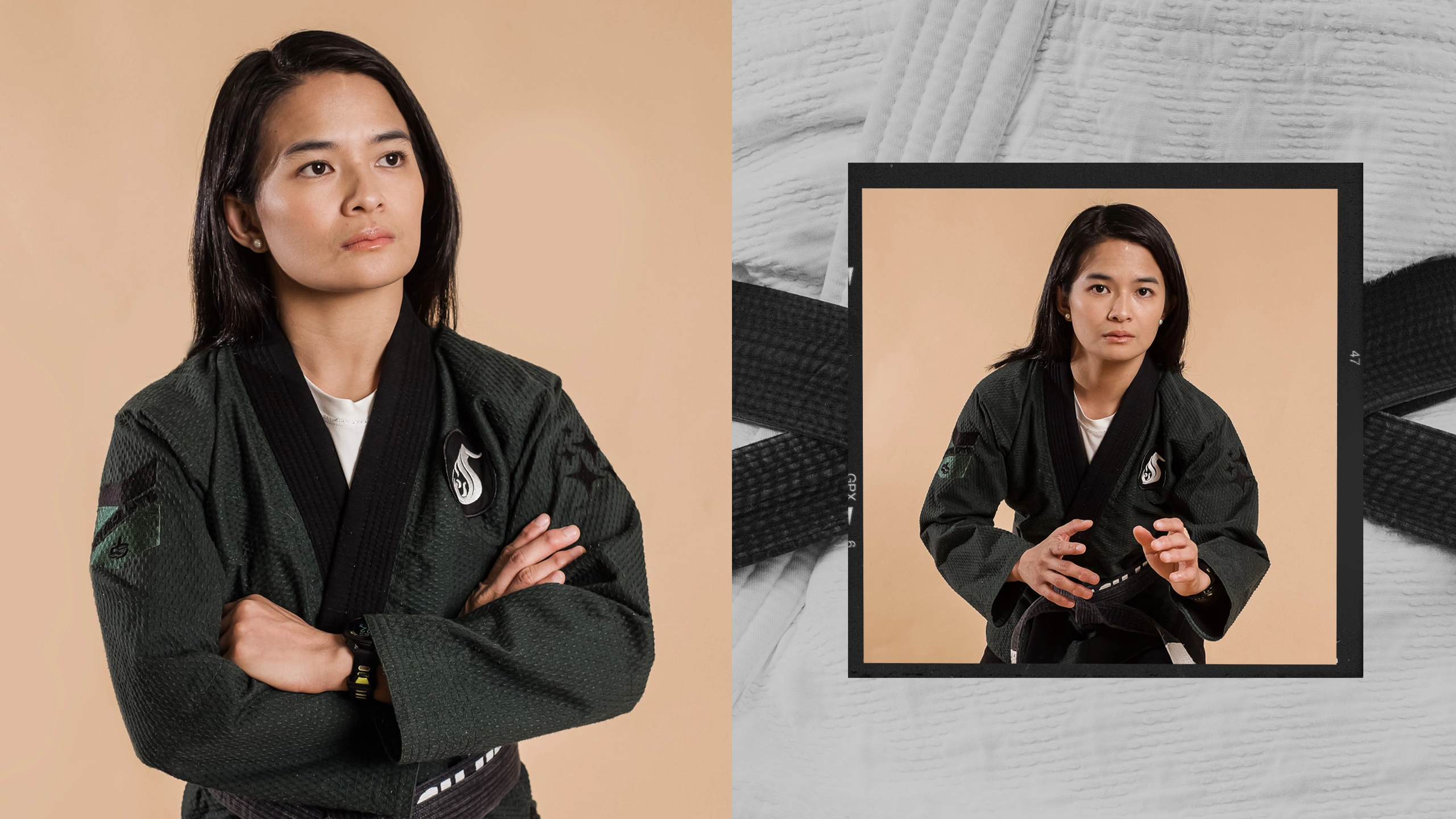
There was a time when Meggie Ochoa, then a national athlete and jiu jitsu world champion, found herself in court quite often. Not a sports court of any kind, but the kinds where hardened criminals are tried and sentenced. It wasn’t because she was involved in any case. Instead, the three-time World IBJJF Jiu Jitsu Champion, bemedalled Philippine athlete, two-time gold medalist at the World Championships, and the first Filipino and Asian to win a gold medal at the Jiu Jitsu International Federation world championships, would attend hearings to show support for the child sexual abuse survivors whom she advocated for, training them in jiu jitsu to help them overcome their trauma.
“Before, I would even attend the court hearings, because they [the child sexual abuse survivors] would gain courage doon sa sport [jiu jitsu] and with the presence of someone who helped them in jiu jitsu, having that person there [in court] also helped them in that difficult scenario that they needed to face,” Ochoa explains.
Today, Ochoa is a decorated national athlete, the coach of the national youth team, and through her gym, Solas Jiu Jitsu, in New Manila, Quezon City, continues to train child sexual abuse survivors in the sport of jiu jitsu for a multitude of reasons.
From speaking—to teaching
In 2016, after learning about the staggeringly—and nauseatingly—high numbers of child sexual abuse victims here in the Philippines and worldwide, Ochoa was moved to do something—anything. She founded Fight to Protect, a non-profit organization that aimed to draw attention to those staggeringly high numbers, and began working with different shelters to teach the child survivors jiu jitsu.
Ochoa tells us that, back then, she was so completely entrenched in her advocacy, practically fused to it in all aspects of her person, even attempting to adopt one survivor who was about to age out of the shelter—an adoption that, ultimately, failed, and affected her so profoundly that she was forced to do a reckoning of her involvement. “ I rethought everything,” she shares. “And [instead of just speaking publicly about the issue], I wanted to shift my attention to the kids. Now, I focus on teaching them jiu jitsu.”
From unbelievable trauma—to the national team
Ochoa teaches her “kids,”—all girls, the youngest aged six and the oldest ones in their teens, the survivors of the most heinous of crimes—first at her church, and then at her gym Solas, where she welcomes all kinds of students, male or female, young or old, starting at age three. The most promising of her “kids” in the classes at her church receive scholarships to Solas. And out of a handful of scholars, one of Ochoa’s “kids” has already qualified for the national youth team.
It’s an incredible achievement, one that, obviously, has Ochoa over the moon—especially when you consider what the sport itself entails, and put that together with the unbelievable trauma that these girls have been subject to. The path they are on, it seems, seems to only be good for them.
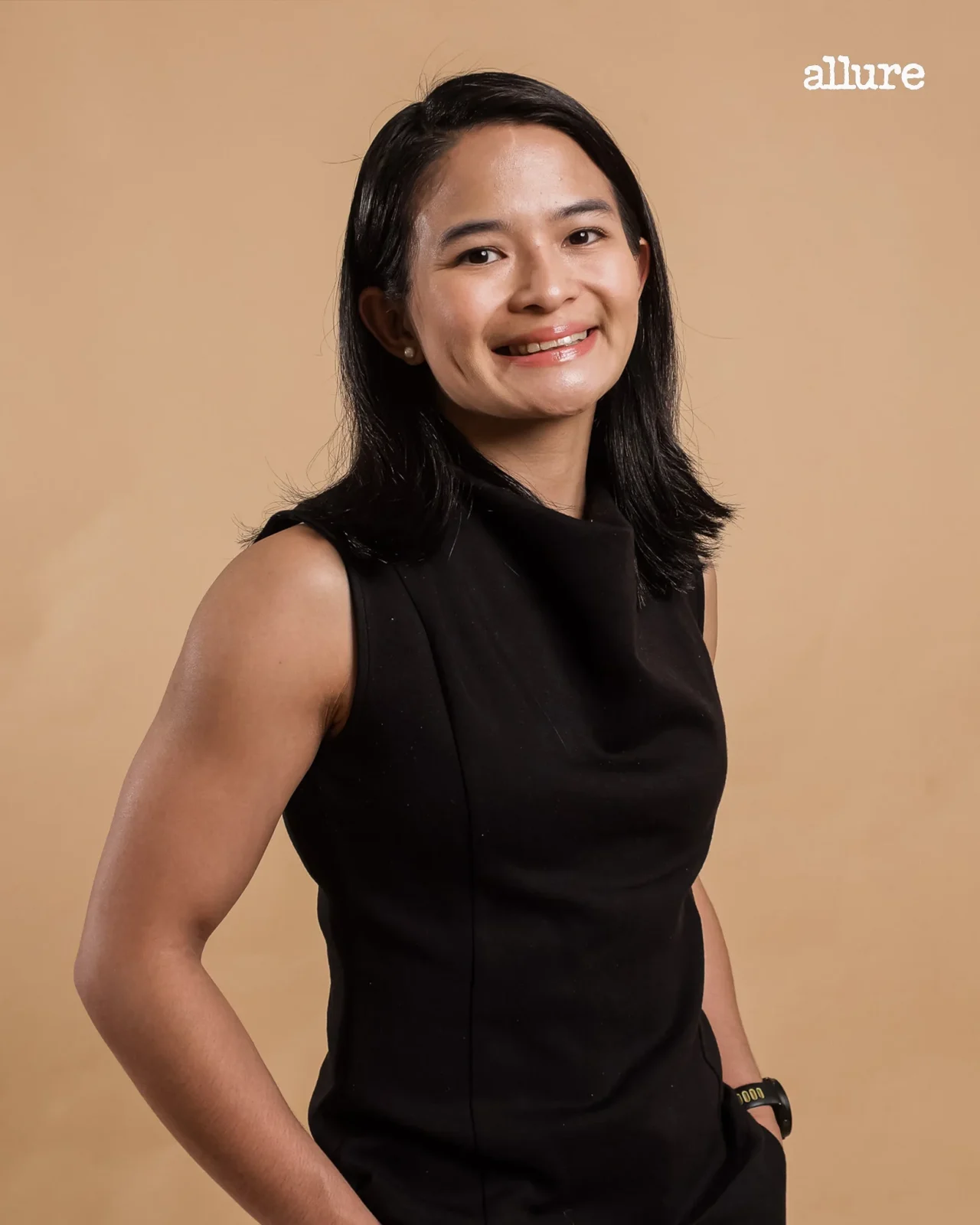
Kim Santos
Jiu jitsu as an antidote—not just for survivors, but for women everywhere
At first glance, jiu jitsu, with all of its contact, its grappling, its downright frightening positions, does not seem to be a logical first choice to expose sexual abuse survivors to. But for Ochoa, there is so much value in learning the sport, and it has deep psychological effects on the psyche of the athlete.
“Learning jiu jitsu,” Ochoa explains, “will put you in very high-pressure situations, very uncomfortable positions. But once you’re familiar with these positions, and learn how to escape them, that helps a lot. And you even learn how to reverse the situation—from being on defense, the one pinned down, to becoming the one on top, initiating the movements, that also has internal effects.”
Although Ochoa is quick to emphasize that self-defense and the sport of jiu jitsu are completely separate things, in learning the sport of jiu jitsu, “you can still learn the movements [of self-defense] with full resistance.”
The sport is, Ochoa says, especially beneficial for women. Ochoa herself is diminutive in size, and once pursued mixed martial arts (MMA) but had to stop because she was just…not heavy enough to compete. Being small and light is usually a disadvantage in many other sports, but it doesn’t have to be that way in jiu jitsu. “In jiu jitsu, you learn strategies and techniques where, despite a disadvantage in strength, you can use whatever you have and create an advantage out of it. If you are small, there are certain techniques and scenarios that can be used to your benefit. For example, me, since I’m small, I’m a little bit faster than bigger people. I can insert in smaller spaces.” Ochoa goes on to say that realizing you can actually make the most out of perceived disadvantages also leads to accepting yourself with what you have, and learning to make the most of it.
It’s an interesting tidbit to note, considering that, in general, most women will have a size and strength disparity with most men. “It’s just the biological makeup of our bodies,” Ochoa admits. “But I really want to expose women to this sport because there are so many benefits.”
A path for healing, for helping, and for hoping
But back to Ochoa’s court dates.
“I’ve seen the effect,” she says, speaking about how jiu jitsu lessons have changed her “kids.” “Before, they couldn’t speak,” she shares. “But after they started jiu jitsu, the shelters would tell us that they were able to speak in their court hearings.”
Today, after one of her “kids” made the national youth team, Ochoa has noticed a renewed focus on the sport from the others. “’Yung isang kid, she didn’t really like to spar. Rarely lang siyang mag-train. And then, just last week, that kid told me na she wants to compete. before, like, ayaw talaga niya. Pero ngayon, wow, she wants to compete. And I think that’s also because she watched her ‘ate’ na national youth athlete, compete. ‘Yan ang nakita niya, and gusto din niyang maging ganun. It just makes it all worth it.”
For Ochoa, who is, quite frankly, a jiu jitsu superstar in the Philippines, in Asia, and around the world, this—dedicating so much of herself, inside and out, to her “kids”—is not a path that she merely wants to take. Judging from everything she has poured into her cause—time, effort, resources, emotional, mental, and physical capacities—it’s something she needs to do. “For me,” she says, “it’s a privilege to be able to share these things with them, and make an impact in the lives of these, or for any of the students who come to us.”