Angel Aquino, Iza Calzado, Pia Wurtzbach-Jauncey, and Bianca Gonzalez Intal Strip Away the Filters of Beauty
From combating insecurities to learning to love what’s real, these Filipino icons open up about the pressures of perfection and what it truly means to feel confident in their own skin.


We live in a perfection-obsessed age. A casual scroll through social media can quickly spiral into self-critique–your skin texture, your asymmetric features, the tiniest new pimple, even the stretch marks on your legs suddenly feel like glaring flaws. In comparison to the curated, filtered lives online, it’s easy to assume everyone else is effortlessly flawless.
These feelings are familiar to millions: hesitating before posting a photo, endlessly swiping for “the perfect filter,” or comparing yourself to others’ highlight reels.
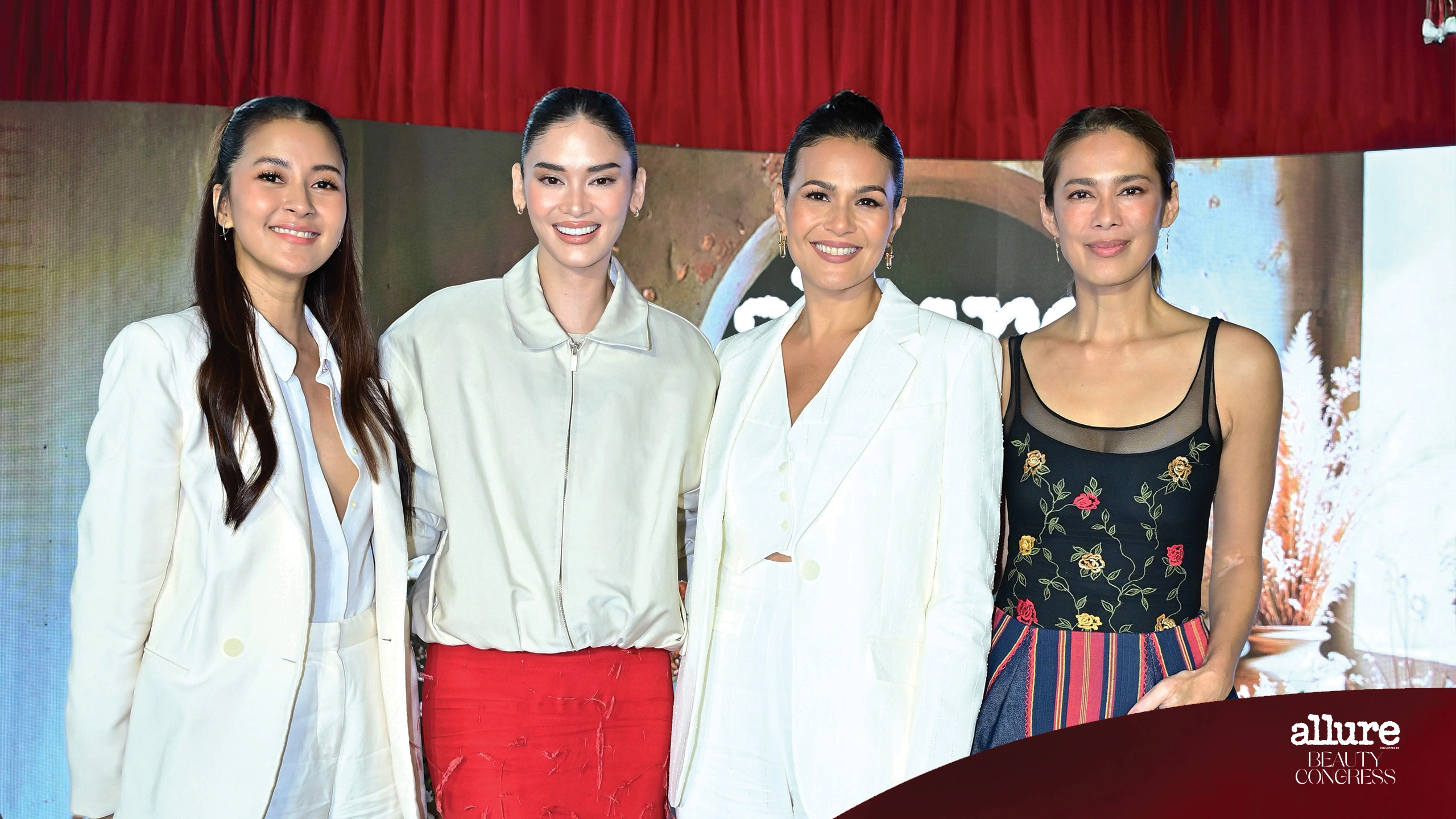
It was this tension between self-perception and public perception that framed Day 3 of the Allure Beauty Congress, in a morning conversation titled, Unretouched: Real Skin, Real Stories in the Age of Filters. The event brought together four of the country’s most admired icons to speak candidly about self-acceptance, body confidence, and authentic beauty.
Moderated by Bianca Gonzalez Intal, host and advocate for authenticity and confidence, the panel featured Iza Calzado, award-winning actress and body positivity advocate; Angel Aquino, acclaimed actress and vitiligo awareness champion; and Pia Wurtzbach-Jauncey, Miss Universe 2015 and advocate for mental health and HIV awareness.
“I’m sure some might think, ‘Ay, ang ganda ganda nila. What [could be their problems] when it comes to beauty?” Gonzalez Intal prefaces, and perhaps, she has a point: These women are often regarded as epitomes of beauty. Perfection, even.
But it’s a double-edged sword. These are the same women who are also always expected to be and feel perfect, and turns out, admiration from other people doesn’t erase the pressure. Sometimes, it even deepens the cut.
Facing the pressure of perfection
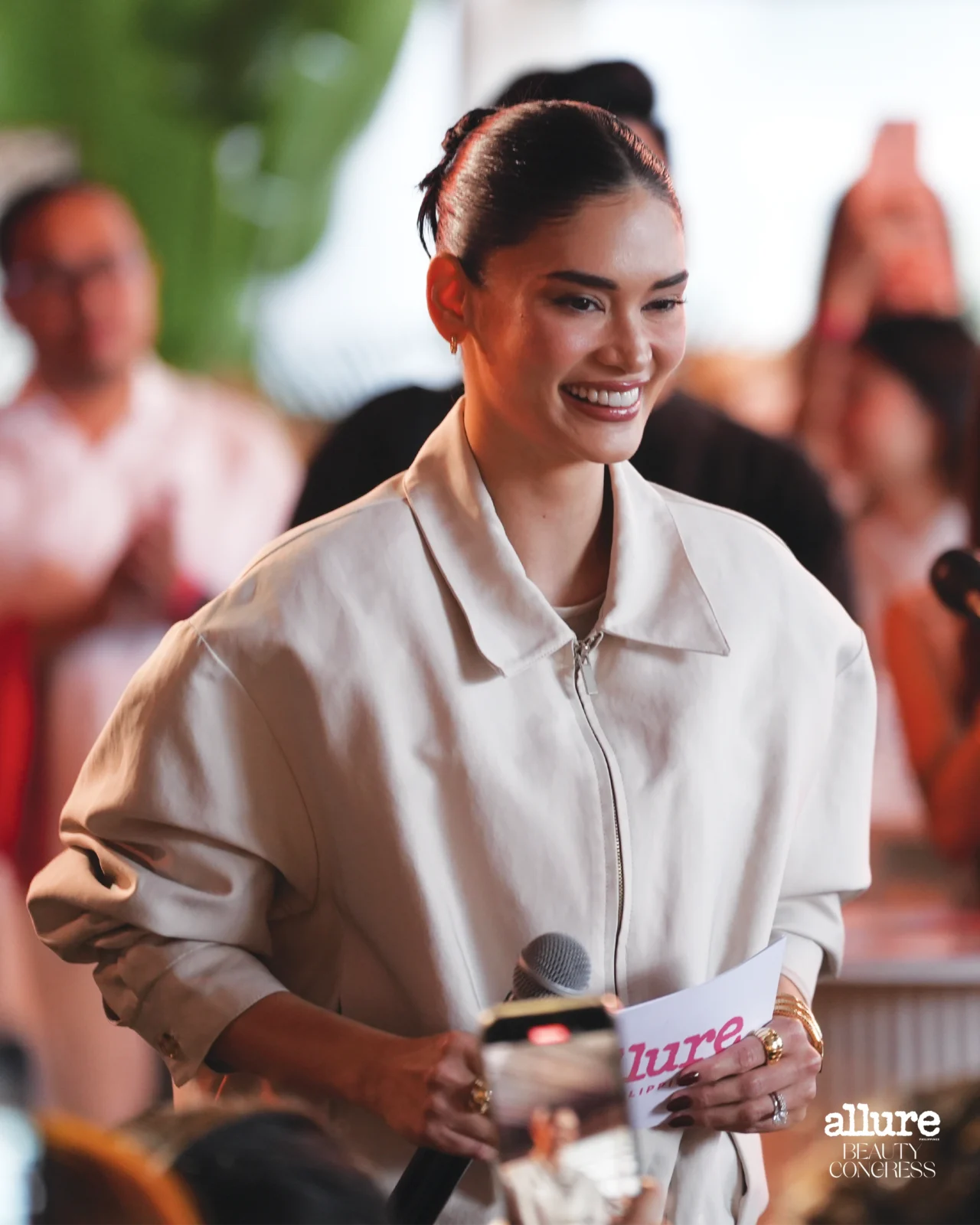
When Wurtzbach-Jauncey speaks about beauty standards, she isn’t theorizing. She’s lived inside one of the strictest molds of beauty imaginable. She comes from the pageant industry, a world built on discipline, and rules. “I come from a background [where] you gotta be this way, otherwise you won’t win,” she admits.
John Joaquin Dag-uman
The beauty queen remembers how regimented it all was: her body, her skin, her walk, even her voice. “I remember, I tried everything because they said, ‘Okay, for you to win this competition, you have to be this weight, this tall, this skin complexion, this hair, this kind of makeup, answer this way, walk this way.’ What if hindi ako ‘yon?” she asks.
It’s a question loaded with exhaustion. The kind you only recognize years after achieving the very thing everyone told you would make you whole. When she finally won Miss Universe in 2015, she assumed the pressure would ease. Instead, it simply evolved.
Years later, she found herself invited to panels like this one—to speak about authenticity and owning imperfections—yet a part of her feels the irony. “I’m getting invited to a panel to talk about embracing your uniqueness and being unfiltered, but I came from a background where I had to be filtered, I had to be perfect, I had to fit myself into that mold,” she says.
It’s a startling contrast: the queen known for confidence, now reckoning with the cost of that crown. And so she asked herself the question that has shaped her post-Miss Universe life:
“Is this really the kind of legacy that I want to leave behind?”
She’s unlearning perfection slowly, carefully, sometimes clumsily. The work is ongoing. “It’s tiring to be a certain way all the time, it’s impossible,” she says.
Her advice? “Put your phone down,” she says. “You’re looking at pictures na naka-edit or perfect kasi shinoot so may glam team ‘yan,” she continues. “[You have to] look at real skin texture, look at real bodies, look at real legs with cellulite and hair.”
No one will save you from the comparison spiral, not your glam team, not your fans, not your friends. “You gotta be able to catch yourself. You have to know when it’s feeding into the negative self-talk,” Wurtzbach-Jauncey stresses.
Acceptance that comes with time and lived experiences
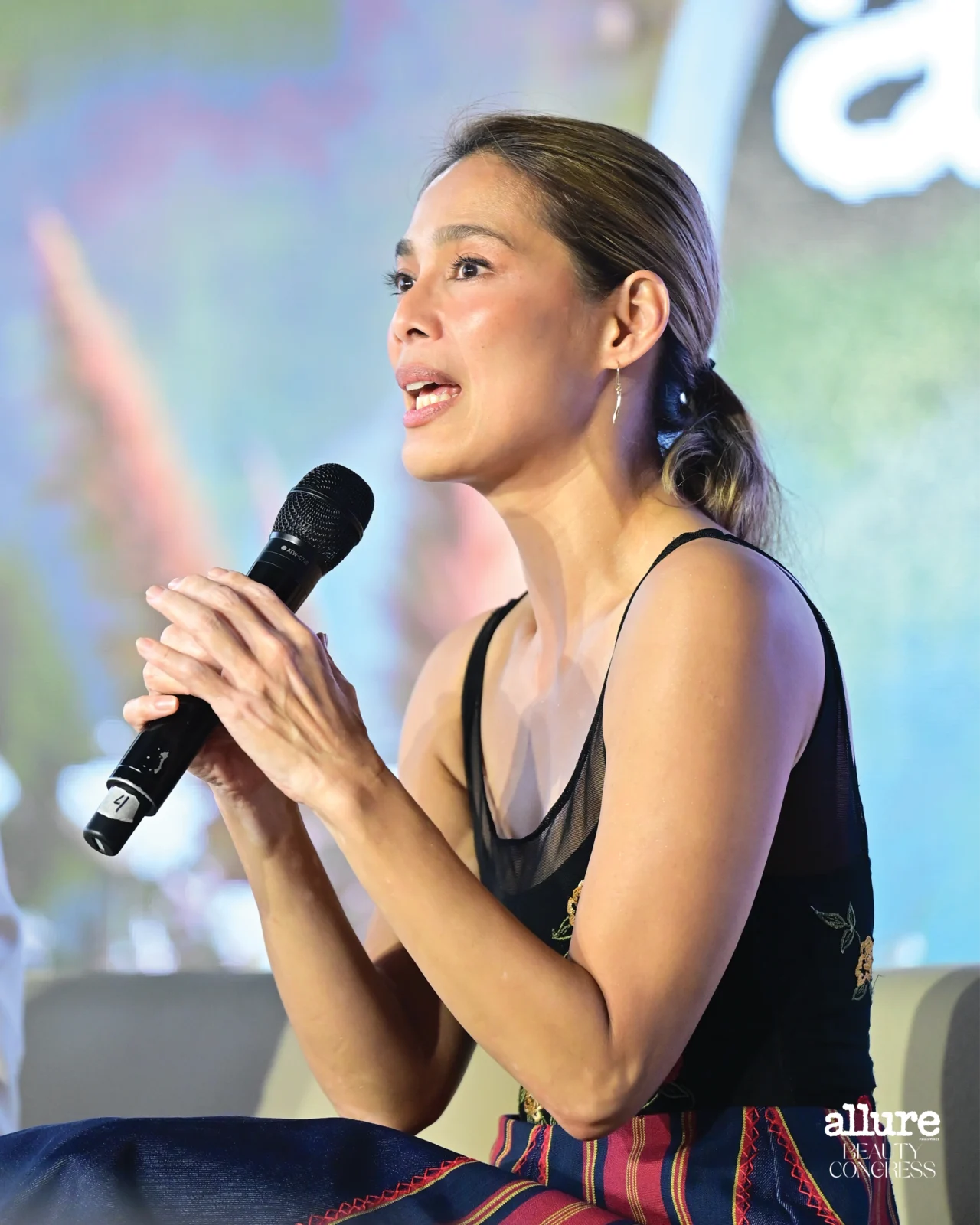
For Aquino, meanwhile, who once opened up about her vitiligo with Allure Philippines, time was the one that made her wiser and more accepting. But that doesn’t mean the insecurities completely went away.
Betty Uy Chan
“All the time,” she answers when asked if she ever spent too much time thinking about whether to post or not a photo of herself. “I’ve always been so self-critical,” she admits.
Life, nonetheless, has a way of widening perspective, and a huge factor to this shift was her age, she tells the audience. Aside from that, it was also how progressive society has been in recent years. “Society, now, is kinder and more accepting, and praises individuality and differences.”
It’s a relief, she implies, but also a reclaiming. Her definition of beauty now reaches far beyond what the eye can capture: “Beautiful, to me, is not just the face or the skin or the figure. It’s really who you are. Your essence. Your heart,” she shares.
It’s a lesson she learned late, she confesses, but one she now carries with conviction.“Sana mas nakikita niyo is their heart and how she is with other people, and how authentic she is.”
Rewriting the weight of beauty standards
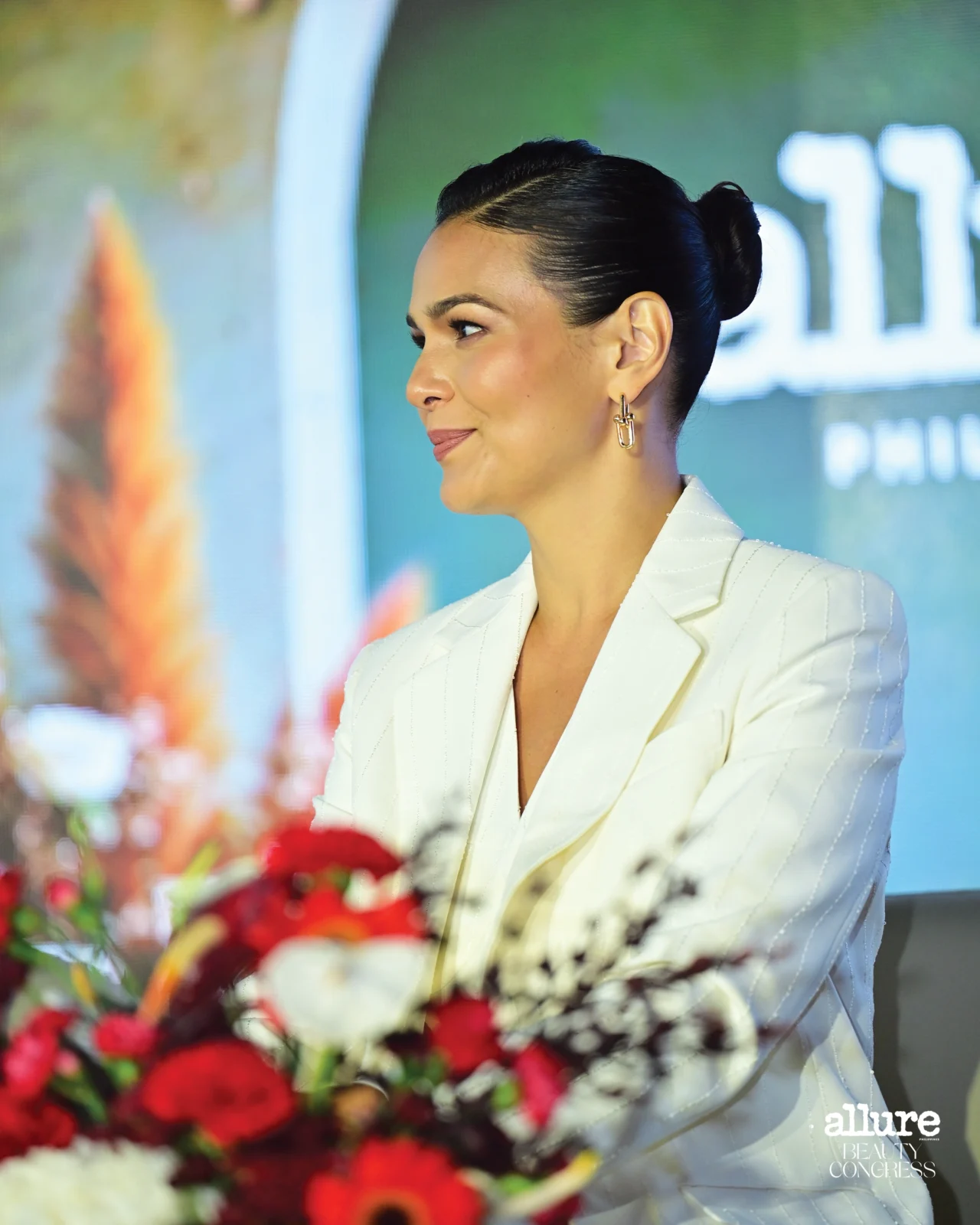
If Aquino offers wisdom and Wurtzbach-Jauncey offers introspection, Calzado brings a different kind of vulnerability, one that’s personal, because it’s rooted in childhood wounds. “For those of you who don’t know, I was obese as a child… that’s why I talk about loose skin and stretch marks,” she says.
Betty Uy Chan
When she entered showbiz at 19, her insecurities collided with an industry built on unrealistic expectations. “Napaka-insecure ko kasi everybody around me just looked like a model of perfection–perfect skin, beautiful face, thin, everything,” she recalls.
The pressure was suffocating. She attempted to fit in, to blend, to reshape herself, sometimes in ways that helped her career, sometimes in ways she still pays for. “I did a lot of tinkering around with my body. Some obviously helped me with my career, some I have to face the consequences of even years after,” she candidly admits.
The beauty myth she’s dismantling now is painfully familiar to Filipino women: “If I could redefine a concept of beauty, it is attaching beauty to one size or weight.” Calzado laughs knowingly as she describes the common Filipino greeting: “When somebody greets you, ‘Ang ganda mo, parang pumayat ka!’ It’s always like that.”
It’s the metric by which we’ve been conditioned to measure worth. And so she’s unlearning that too: “What I’ve had to rewrite for myself is to not attach myself to these comments and not to yearn for them.”
She reminds everyone: “If comparison is the thief of joy. Gratitude, I think, is a tool for joy.”
Beauty you can’t edit
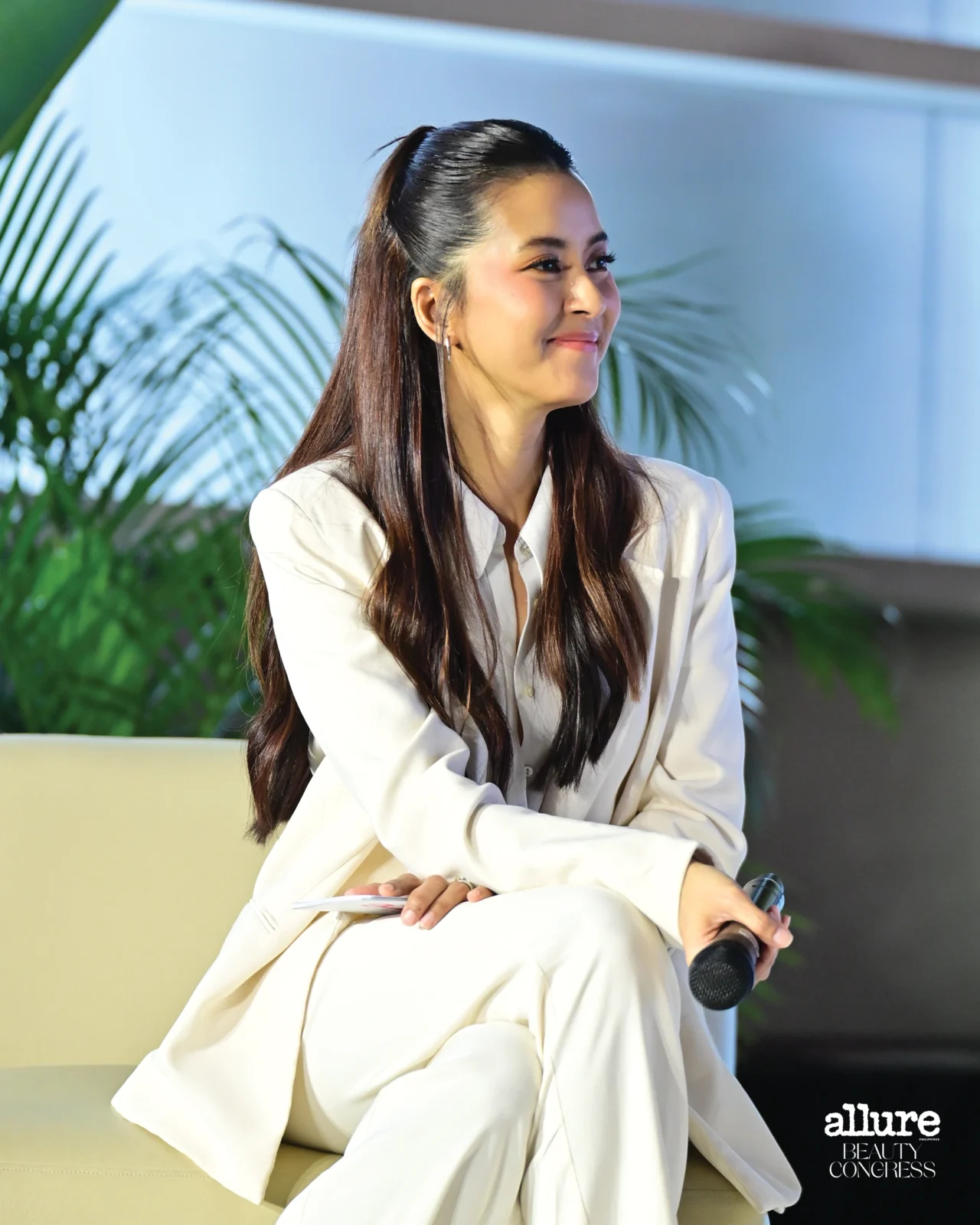
Gonzalez Intal, meanwhile, grounded the discussion with a question that cuts deeper. “At the end of the day, when you wash off all the makeup [and] you’re looking at yourself in the mirror, beauty isn’t just about what you see on your face. [Ask yourself] ‘Was I kind today?’ she says. It’s the kind of beauty that doesn’t show up on camera or mirror.
Betty Uy Chan
But even with her own realization, she also has her own insecurities: “The reason why I’m always in pants is because puro peklat ako,” she reveals. She connects this to the way young girls are raised, protected not from danger, but from imperfection. But as a mother, she refuses to let that narrative pass on.
“As a mom now, I want my kids to fully enjoy running in the mud, madadapa sila, mahuhulog sila, because aside from it being such a fun childhood, that’s also where you learn,” she concludes.
The real work is learning to see beauty in everyone–including yourself.
By the end of the panel, there was a sense of collective relief in the room. Not because the conversation fixed insecurities or resolved lifelong issues (that simply doesn’t happen overnight), but because it reminded everyone that even the women we put on pedestals struggle too.
The difference is, they’re finally willing to say it out loud. And maybe that’s the first step in reclaiming how we see ourselves: not through filters, not through expectations, but through truth. Because real beauty was never meant to be perfect. Only seen.
- What We Learned from Allure Beauty Congress’ Opening Conversation on Aesthetics and Self-Worth
- Mapping the Shades of Change and the Rise of Morena Power at Allure Beauty Congress
- Pro Makeup Tips We Got From Makeup Artists Lala Flores and Denise Go-Ochoa at the Allure Beauty Congress
- Purpose at the Forefront: What Next Gen Brand Founders Revealed at the Allure Beauty Congress