
Coach Mau Belen Is Still Changing the Game
At 30, she made history as the first female PBA assistant coach. Today, she does things on her own terms.


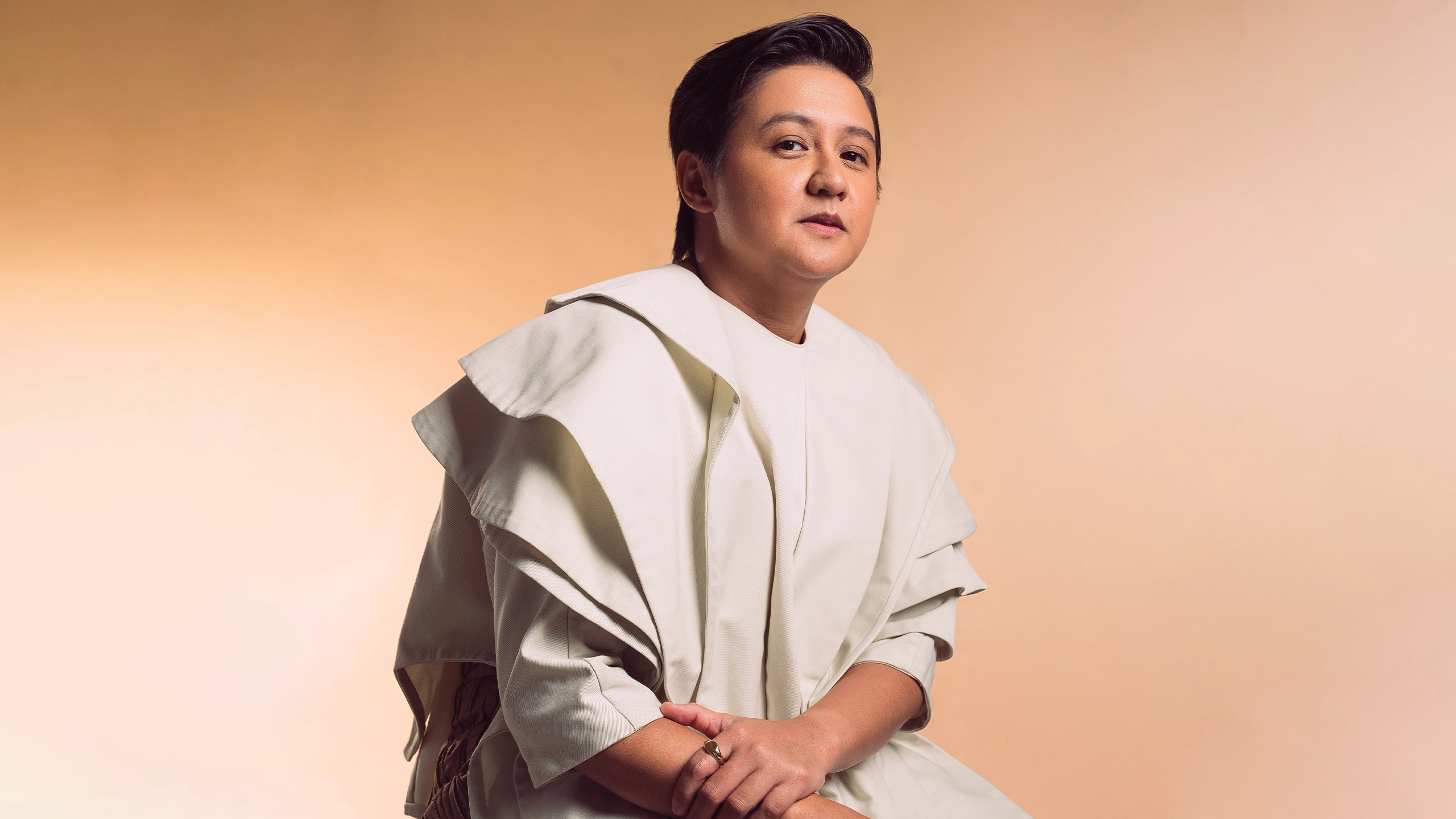
Mau Belen calls it the phone call that changed her life.
It was 2021 and she and her partner Cath were days away from moving from the Philippines to Dubai. In fact, she was at a farewell party with her friends when her phone buzzed. It was a message from Philippine Basketball Association (PBA) coaching legend Chot Reyes: “Can I call?”
Belen stepped away from her party to pick up. While she had only met him in person once, she and Chot had spent many hours together on Zoom. She had been one of the students in the coaching masterclass he conducted during the pandemic.
On the phone on that fateful night, Coach Chot said to Belen, “I don’t know if you’ve heard the rumors. I’m coming back to the PBA after nine years and I want you to come with me.”
Belen thought about the job that was waiting for her in Dubai, and the house they already made a deposit for. She thought about their bags that were packed and all the clothes and furniture they had sold. But she knew there was only one answer to this once-in-a-lifetime question: “‘Yes, definitely, Coach, yes, yes, okay.” Then she walked back to her despedida in a daze.
And that is how, at 30 years old, she made history as the first woman to become a coach in the PBA.
Falling for basketball
Belen first fell in love with basketball as a little girl, while watching her dad, brothers and cousins play the game. She never thought to join them—back then, she thought that basketball was just for boys.
But in school, in 5th grade, she finally got her chance. She ended up enjoying it so much that she abandoned badminton, which had been her first sport. “From then on, almost every day of my life, I was playing basketball.”
She became part of the high school varsity team at Diliman Preparatory School, transitioning from guard to forward. Then she was recruited to play for Centro Escolar University in college. In her second year, Assumption College asked if she’d like to join their team and she did.
Her hope was to keep playing after college. “That’s always the dream of athletes, right? To go play basketball our whole life,” Belen says to Allure Philippines.
But in her final year of college, she got injured. “It was a partial tear in my ACL (anterior cruciate ligament). I didn’t want to go for surgery because it would sideline me the whole year. I’m stubborn like that. I went to therapy for six months and tried to play with one bad knee.”
She still recalls the last game she played—a championship game in San Beda Alabang. “It was all emotions, all the hard work from the past eight to nine years came down to that one game.”
Out of commission as a player, she was still determined to stay close to the sport she loved. Her first job out of college was actually at the PBA—as a business development associate. “When I was there, I was like, is this the basketball I’m talking about? It wasn’t. It was the business side of it. I mean, it was fun, you can watch the games for free, but you’re not involved in the game.”
She found another way to get close to the action. “I ended up getting a volunteer job at Coach Eric Altamirano’s basketball camp. That’s where I started coaching. I did it every weekend, waking up earlier than I had to on days I had to go to work. It was fun. Coaching didn’t feel like work. And I loved learning the other aspects of the sports that I didn’t learn as a player.”
Leaving the country

Gail Geriane / On Mau Belen: Top: Sandro Dela Pena @sndrodelapena
At 22, Belen had a big decision to make. Did she want to move to Japan where her mom was? Or the U.S. where her dad was waiting? She picked neither. Instead, wanting to be independent, she moved to Dubai where she started working as a yoga studio manager.
“That was a very, very fun experience because my parents always cried when I talked to them,” she said wryly. “You know the lines, ‘Pinag-aral kita tapos yan lang gagawin mo sa buhay mo?’ Meanwhile, I was holding a mop. Because you’re a yoga studio manager, you do everything—cleaning, preparing the studio, welcoming the clients. I told them, ‘Okay lang yan, wait lang, I’m trying to find a job that you guys will be proud of.”
Six months later, she would join a sports events company as a sports league and events manager. “I did that for almost four years. I organized six basketball leagues and five netball leagues.”
But her passion for coaching never waned. A random trip to the park for a barbecue led her to meeting a family that was part of the Filipino basketball community in Dubai. Because of them, she started coaching people of all ages at a basketball camp, once again spending her weekends doing what she loved. “I believe people who really want to coach should teach kids who are five, seven, eight years old. It will really test your patience, so you can see if coaching is for you.”
Belen returned to the Philippines in 2017 and continued coaching—first at her alma mater Assumption College, and then for the grade school and high school teams of St. Paul College Parañaque. She also coached the women’s team of the Philippine National Police for the AFP Olympics in 2019.
Then, during the pandemic, she saw the announcement about Coach Chot’s coaching masterclass. All he wanted applicants to do was to write him a letter about why they should be chosen to be part of it.
“I probably wrote 20 drafts,” Belen said. “I ended up just writing an honest letter. I told him ‘I’m a rookie coach,’ that I’d been doing it for seven years, and I wanted to get good at it. I wanted to learn from him.”
And learn from him she did—first in their masterclass sessions, and then later as she worked alongside him in the PBA as an assistant coach for TNT Tropang Giga.
Coaching in the PBA
Coach Mau’s entry into the male-dominated world of the PBA made headlines. “It was impactful in a way I hadn’t imagined. There were articles written, and I was getting phone calls from relatives and friends I hadn’t spoken to in years—grade school classmates, people I hadn’t had contact with in 10, 15 years.”
Those guys she grew up watching play basketball–her dad, brothers, and cousins—would become her biggest fans. “They share everything I do on social media, they’re always the first to congratulate me, always the first to call. They even asked me to sign my magazine features. They’re my biggest support system. They helped shape me to be tough. They’re also the ones I ask for advice when I face challenges dealing with men in the industry. It’s nice to have that male perspective.”
During her first year coaching in the PBA, sports website Spin.ph named her ‘Sportsman Who Defied the Odds’ at its 2021 Sportsman of the Year Awards, lauding her for breaking barriers and already proving herself, just months into her PBA career.
Did she ever ask Coach Chot why he picked her? “Definitely. But he hasn’t given me an answer. Maybe he felt my eagerness to do coaching right, and to do it with passion. I’ve told him, sincerely, ‘Coach, thank you.’ Because I believe that in order for women to take up space in a male-dominated sport, powerful male figures need to open the door. He’s one of those few people who took that chance, so I’m really grateful.”
Once on the team, just a few months in, Coach Chot had another surprise for her: he wanted her to be the head coach of TNT’s 3×3 team that would be competing in the PBA’s new 3×3 league. “I asked, ‘Coach, why me? I just got here, I’ve barely set foot in the door, and you’re giving me such a big responsibility.’ He simply replied, ‘Because I know you can.’”
She added, “One of the things that I loved hearing from him is whenever he uttered the words ‘I trust you.’ When I would ask him for permission or consult him on big decisions especially when I was handling my own team, he would always ask, ‘What do you think?’ And he’ll say, ‘Okay, I trust you, let’s do that.’ He gave me a lot of room to stumble, fall and make mistakes and not every leader is like that.”
Putting in the work
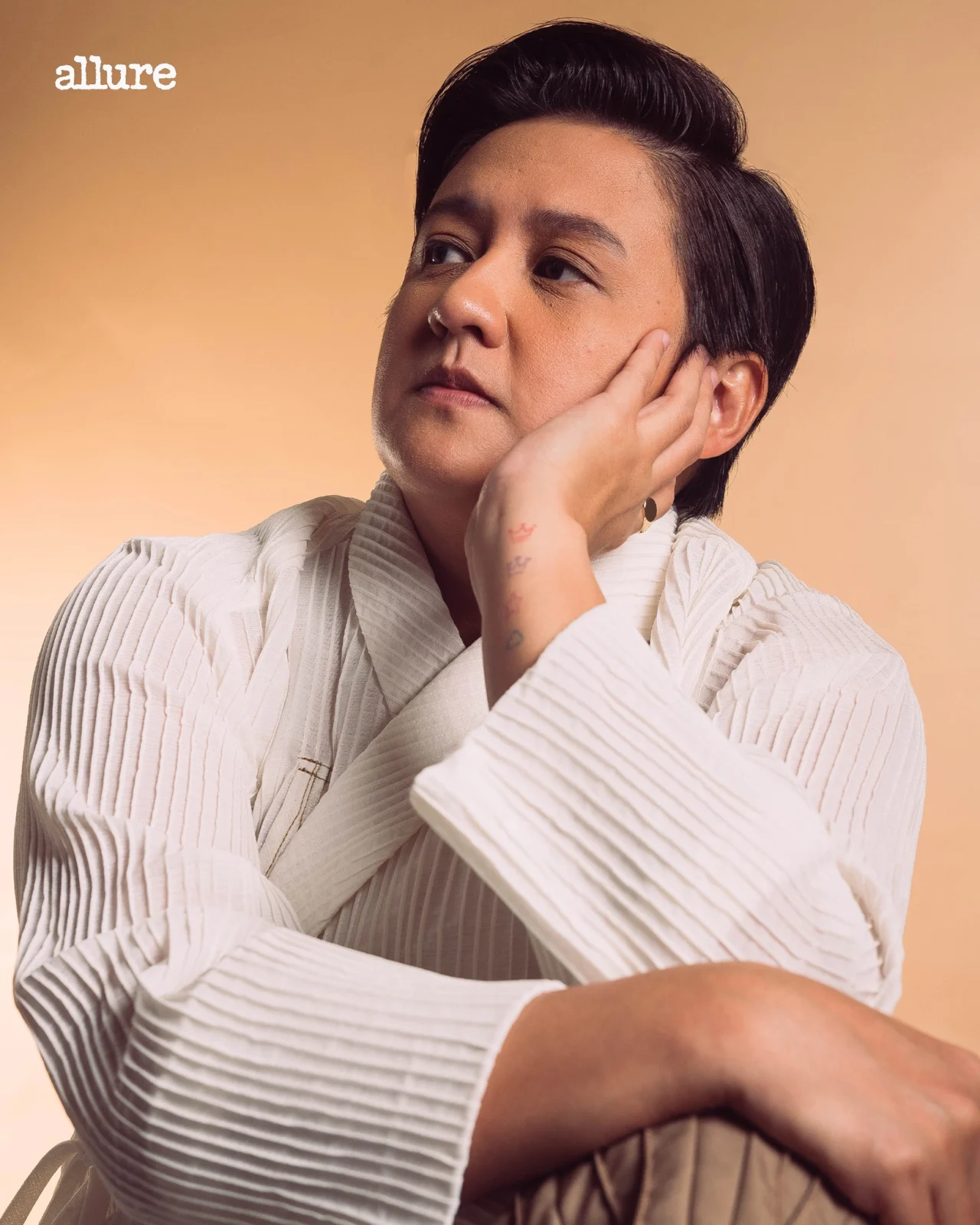
Gail Geriane / On Mau Belen: Viña Romero @vina.romero full look, Ring: Miladay @miladayjewels
She just had a couple of months to prepare the players for the new league. They would succeed, clinch multiple championships, and TNT Triple Giga would go on to become PBA 3×3’s most decorated team.
Coach Mau has a lot of championships under her belt but she cannot forget her first. “I burst into tears and just cried my eyeballs out. After that, I told myself, ‘I want to feel this again.’”
And she did. Again and again and again.
But getting there wasn’t easy, said Mau. She and her players had to come to terms with the fact that they weren’t playing the traditional 5×5 game that they all loved anymore. “Before the wins and the championships, there were a lot of struggles—questioning yourself, players not really respecting you because you don’t respect yourself, because you don’t know what you’re doing. There was a period of at least six months before we found our footing, and understood that we needed to love this. My famous line to my players was always, ‘Would you rather be doing something else? You’re playing basketball, you’re earning, you’re putting food on the table for your family, so let’s do this right and maybe something good can come out of it.”
Being a PBA coach is tough work. “You go there, you put in the work, you make sure you do your tasks. If you make mistakes, of course you’re accountable. Just like any other job, there are highs and lows,” she says.
And being a female PBA coach is even tougher. “It’s always a challenge when people encounter change. Me coming into the PBA was a big change for everyone. Having a female coach shouting at the sideline, giving instructions, telling them what to do—that’s something that not every male athlete has experienced. I think the toughest part was making them understand that yes, it’s a big change, but nothing has really changed. It’s still basketball, I’m just a coach, I’m just coaching basketball. You don’t have to look at me differently, I’m just trying to make you a better basketball player, just like I’m trying to make myself a better basketball coach.”
Coach Mau has carried the weight of these added challenges, along with the pressure of being a pioneer. “It’s all about proving what you can do as a coach, and then, at the back of that, as a female coach, and then, at the back of that, as a young female coach. They look at you and they don’t just see you as, ‘Hey, you’re a coach’ or even ‘hey, you’re a bad basketball coach.’ It’s always, ‘Oh, she’s still young,’ ‘oh, she’s a girl, maybe that’s why the boys don’t listen to her.’ Those moments hurt and break you and sometimes make you question why you’re still doing this when there are a million jobs in the world. Why stick to this? For me, to open the next door, I had to endure it. If that’s what it takes for the next generation of female sports coaches to come in, I’ll endure.”
Leaving TNT
Coach Mau left TNT in 2024. “I don’t know if this is gonna sound controversial, but I think our generation knows when we are getting valued or not, and we also know our own value. I believe that the PBA isn’t the only avenue for me to affect other people’s lives. If I really want to do something, I will find a way.”
She will always be thankful to Coach Chot. “Without him, none of this would have been possible. He taught me that the path I walk is ultimately my own. He gave me guidance, he held my hand, and brought me to the path that I’m taking now. I’m always going to be grateful for what he did.”
After her departure, Belen, along with the players she coached in the 3×3 league, founded Half Court. The PBA may have shelved its 3×3 league but they are determined to keep the game alive.
What does she love about 3×3? Her eyes light up as she says, “First and foremost, there are only six players on my team instead of 15, meaning I don’t have to deal with a lot of male egos. But seriously, it is a sport where you cannot hide your weakness. It exposes individual potential that you usually cannot see in 5×5. With so many players in 5×5, you cannot give enough spotlight to each player. In 3×3, all the players are given the chance to get better.”
At Half Court she gets to merge different things she loves: sports events, coaching, and bringing people together. They train regularly, they play international tournaments, traveling to 14 countries in 2025. They hold their own tournaments and they even have their own court that they can bring to different places.
She’s also a FIBA Coaches Instructor Level One—she’s certified to train and mentor basketball coaches under the standards set by the International Basketball Federation, helping promote the game globally. “This is one of my biggest accomplishments, to be recognized by the International Basketball Federation as a coach who can instruct other coaches.” She has recently trained coaches in Laos.
Coach Mau, of course, dedicates a lot of her time to supporting female athletes. Grassroots work is very important to her. “It’s easy to do it when you have resources or when the spotlight’s on you. But when the lights are dim and when no one’s watching, do you still want to do it? Giving back to my community is something I really value. It doesn’t take much from me, just my time and effort.”
She just finished coaching a club team in the Women’s Maharlika Pilipinas Basketball League’s Developmental League and the Maynilad 3×3 Women’s Basketball Team. “Yes, I’m not in the spotlight anymore, but after TNT, I feel like I’ve touched more lives. I think this is the time when I’ve really been able to give back to my community. At TNT, we worked nonstop and I loved it, I enjoyed every minute of it. But when I came out of it, I was better, I was more mature. I feel like I’ve grown, and right now, I’m more purpose-centered than career-driven.”
Can she imagine herself returning to the PBA one day? “I’m not closing doors. The PBA is still the top league in the country, and the longest-running professional basketball league in Asia. To be part of it is still an honor. But right now, it’s not at the top of my mind.”
At this point in her journey, her focus is on inspiring others. “I’m not trying to change the world. I’m also not trying to change the landscape of basketball in the Philippines in my lifetime. All I’m trying to do is to show the next generation that for female athletes and women who want to enter the sports industry, it will be hard, sometimes it’s almost impossible, but it can be done.”
Art direction and beauty direction by Mikiyo Ricamora. Photography by Gail Geriane, assisted by Jotham Meregildo. Makeup by Denise Go Ochoa, assisted by Frankie Bacierto and Micaela Go. Hair by Aica Latay. Styling by Jermainne Lagura and Jia Torrato of Qurator.