Your Guide to Boosting Collagen—No Powders Required
Here’s your no-fluff, derm-backed guide to firmer skin—powered by ingredients that actually work.



Over the last few months, I’ve had to take a lot of photos and videos of myself testing and swatching beauty products. And not to get all emo on a Friday morning, but after staring at the dozens (maybe even hundreds) of selfies, I’m not feeling all that great about my face right now. It’s gotten so bad that I’ve started to nit-pick every potential “wrong” thing about it, like lately I’ve been hyper-fixating on the overall dissymmetry, subtle sagging, and new brown patches of melasma.
While there’s nothing I can do about my facial anatomy in terms of symmetry (thanks, mom and dad) outside of facial filler, I do have an appointment for a post-summer laser treatment to tackle the hyperpigmentation. As for the sagging, well, here’s the thing:
“As we age, our bodies produce less collagen, which can cause our skin to lose its elasticity, creating that saggy, jowl-like look,” dermatologist Dendy Engelman, MD, previously told Allure US.
That drop-off can start as early as our mid-twenties. Ya’ll, I’m 33. And it’s becoming more and more clear to me that my collagen production is beginning to taper. The good news is that there are ways to amp up collagen development as you get older, and some of those tricks are as easy as adding a strategic ingredient to your routine. That being said, here’s how I boost collagen production in my daily skin-care routine:
Retinol
The vitamin A derivative, known for its fine line-fighting and breakout-busting superpowers, is also incredible at increasing cell turnover, which can boost collagen production. While I use Altreno, a topical tretinoin prescription, there are lots of great over-the-counter options, like Paula’s Choice 1% Retinol Treatment and the SkinMedica Age Defense Retinol Complex 1.0.
Peptides
While there are a lot of collagen serums on the market, let me be the bearer of bad news: topical collagen treatments don’t actually do much. Instead, look for peptides (chains of amino acids), like “dipeptide,” “tripeptide,” and “hexapeptide” on the ingredient label. “Peptides are not as extensively studied as retinoids, [but] they are a great option for those with sensitive skin who may not be able to reach for something like retinol,” dermatologist Courtney Rubin, MD, previously told Allure US. My current favorite peptide-spiked serums are SkinCeuticals’ P-Tiox Wrinkle-Modulating Peptide Serum and Naturium Multi-Peptide Advanced Serum.
Sunscreen
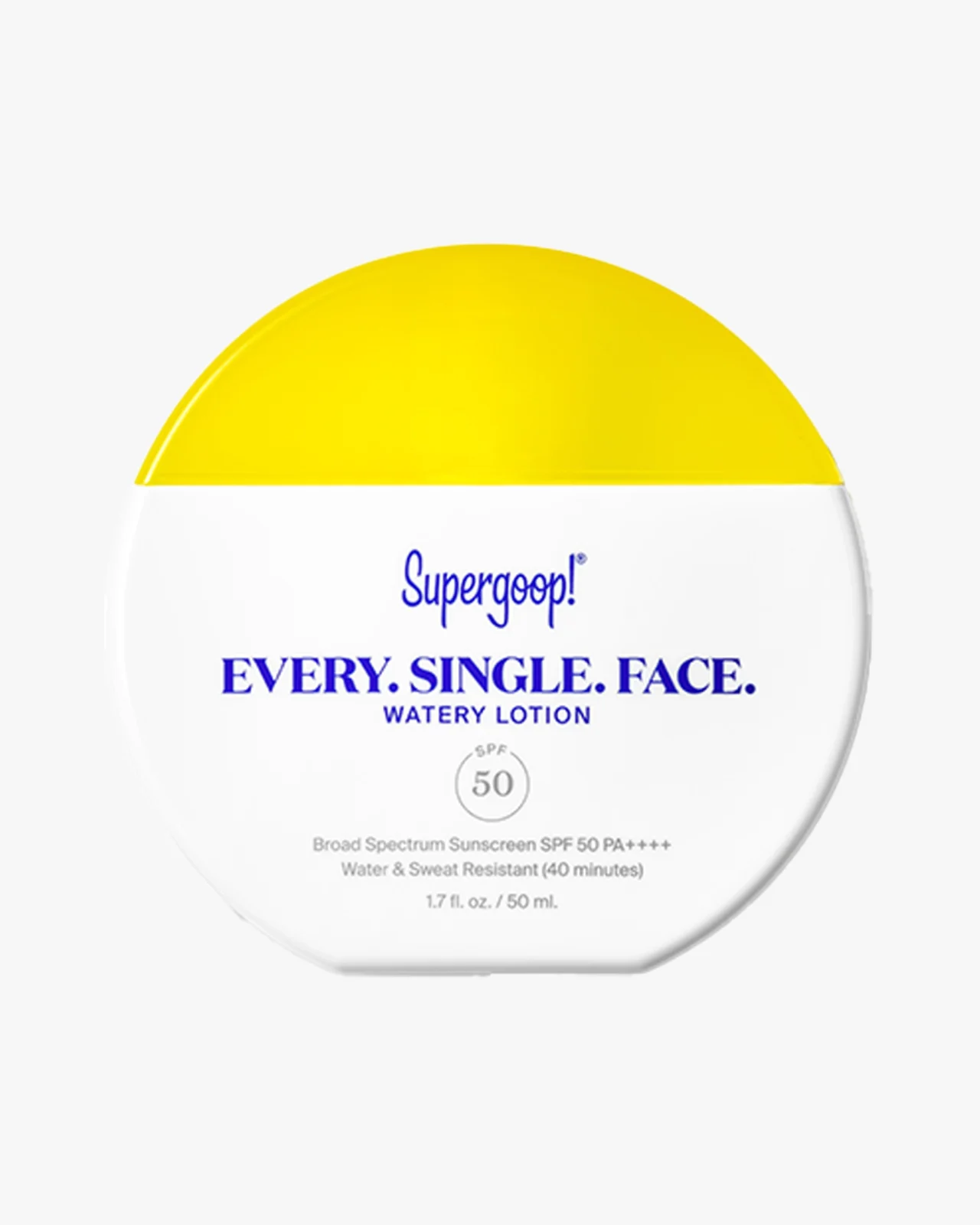
“The most important action to prevent the breakdown of collagen is to always apply sunscreen,” dermatologist Sherry Ingraham, MD, previously told Allure US. You don’t have to tell me twice. I’m constantly reapplying SPF throughout the day (and as much as I ca
n while wearing makeup without making a mess). I go through tubes of Supergoop Every. Single. Face. Watery Lotion SPF 50.
These are just three of the ways I keep collagen production top of mind when it comes to my skin-care routine. And in the meantime, I’m going to work on being kinder to myself—and my reflection.
While we’re on the topic of boosting collagen production, I’d be remiss if I didn’t mention the growing number of ingestible powders on the market today that claim to do just that. The thing is, though, there’s simply no data to prove these add-to-water concoctions actually boost anything.
And even if there was some sort of scientific evidence that guzzling daily DIY skin-firming cocktails worked—which, again, there’s not—”[collagen] doesn’t know where to go in your body—it’s not like that,” dietician and nutritionist Keri Gans previously told Allure. Meaning, that even after you’ve chugged your drink, the alleged benefits wouldn’t immediately spring to your face.
So skip the powders, and instead, add a topical retinol to your skin-care routine.