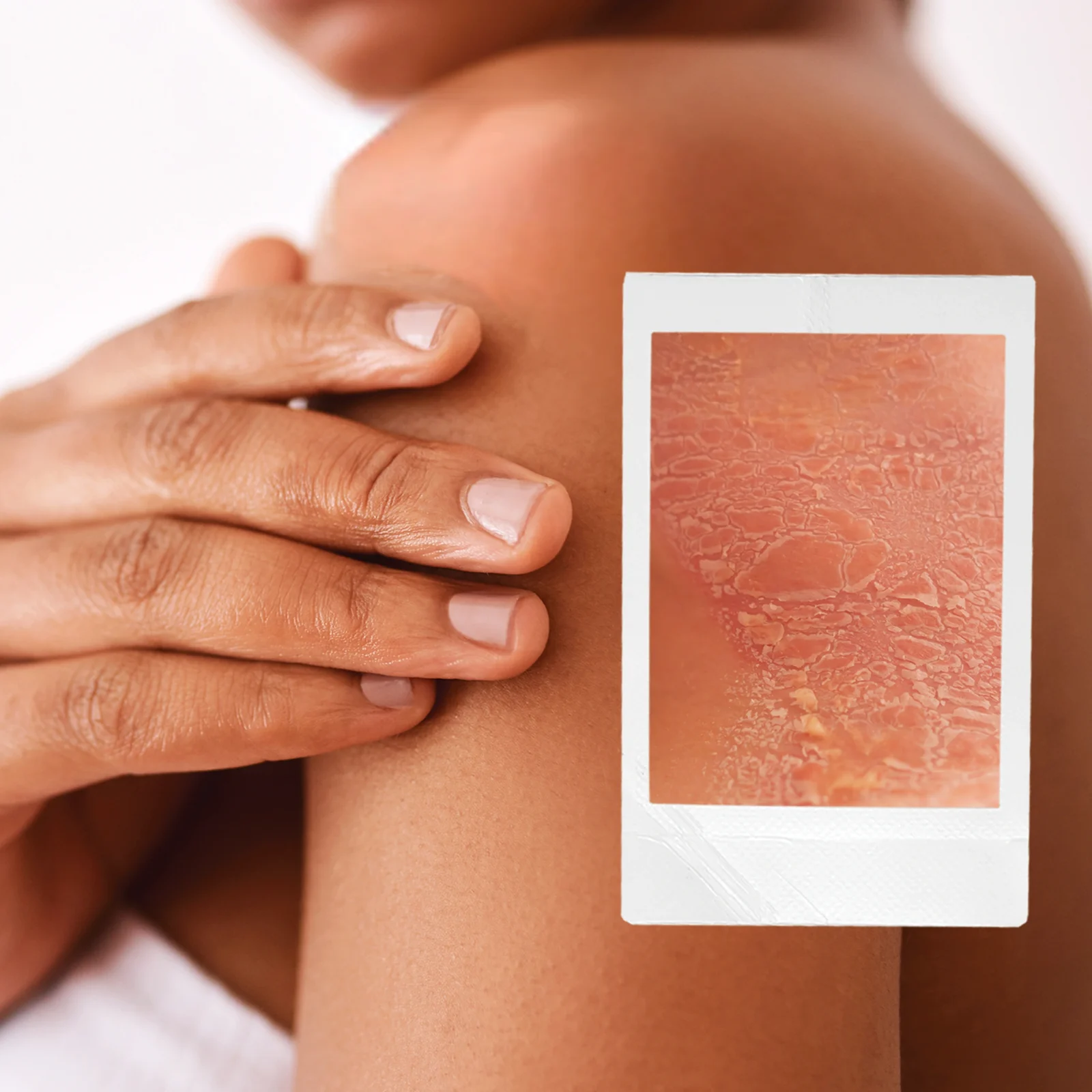
Does Virgin Coconut Oil Clog Pores? A Dermatologist Debunks the Myth
A dermatologist explains why the Filipino staple often labeled “comedogenic” may actually help repair the skin barrier, fight microbes, and hydrate the skin.


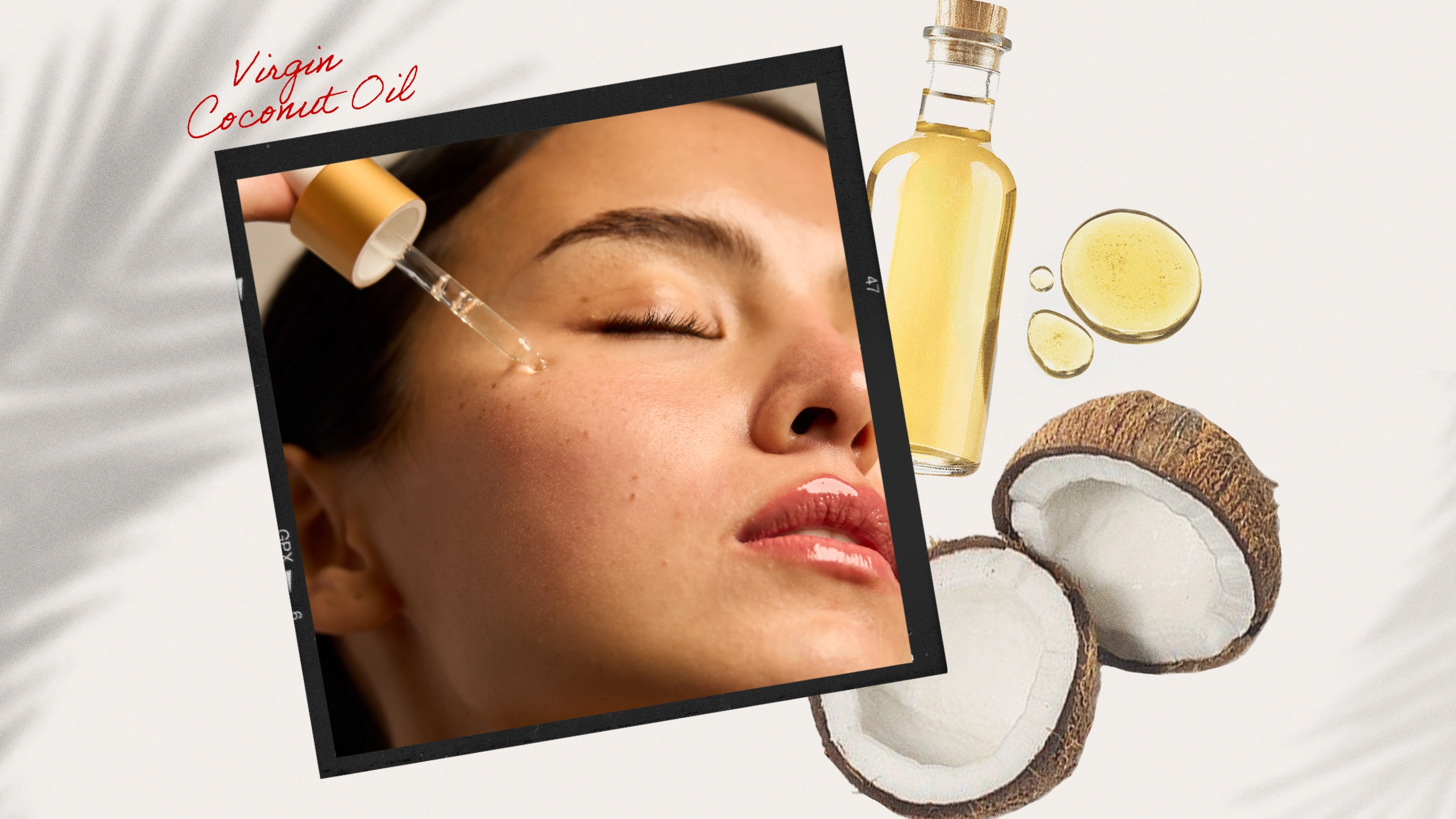
For many Filipinos, virgin coconut oil is practically a household essential. It’s something you’ll find in the kitchen, in traditional remedies, in hair care routines passed down through generations, and even on shampoo or conditioner bottles and advertisements. Ask almost anyone about coconut oil and hair, and you’ll likely hear glowing reviews about how it strengthens strands and adds shine.
For skin care, however? It’s a different story. Despite coconut oil’s long-standing presence in Filipino homes, many people hesitate to put it on their face.
Somewhere along the way, the ingredient developed a reputation for being comedogenic, a label that immediately makes acne-prone skin types run in the opposite direction. But according to board-certified dermatologist, dermatopathologist, and photodermatologist Vermen Verallo-Rowell, MD, FPDS, FDPS-PDS, FAAD, FASDP, HIM-ADA, that reputation might be more myth than fact.
A multifunctional oil for the skin
Rather than being a simple moisturizing oil, virgin coconut oil actually performs several roles that support overall skin health. Dr. Verallo-Rowell describes it as a “multifunctional oil,” explaining that its structure allows it to break down into fatty acids once applied to the skin.
“It’s absolutely very good for the skin for many reasons,” she says. “When you eat it or apply it it breaks down into its individual fatty acids and those fatty acids are what repair cell membranes that are destroyed either by the environment or using a very strong makeup or atopic dermatitis or psoriasis.”
These fatty acids help restore damaged skin cells and support the integrity of the skin barrier, the protective layer responsible for keeping moisture in and irritants out.
Its benefits extend beyond typical dryness or barrier repair. “I have a lot of patients who come to see me for rosacea, for photosensitivity—not just to outdoor sun but also to the computer visible light that comes to them,” Dr. Verallo-Rowell explains. “They use their computers, their telephones, their iPads for as long as 12 hours in a day. That visible light reacts with the skin, and so therefore I see people like that coming in to repair that skin. I give coconut oil very often, and they come back brimming with pride that their skin is back to looking gorgeous.”
The surprising antimicrobial benefit
Another lesser-known benefit of coconut oil is its ability to fight microbes. Dr. Verallo-Rowell explains that the oil functions as a broad-spectrum antimicrobial, meaning it can act against multiple types of microorganisms that may irritate the skin. “It is what we call a broad spectrum antibiotic,” she says, noting that its saturated structure allows it to interact with microbial cell membranes.
Unlike traditional antibiotics that target enzymes inside bacteria, virgin coconut oil disrupts the membrane of organisms such as bacteria, fungi, mites, and even certain viruses. Because of this mechanism, microbes do not easily develop resistance to it, something that makes it particularly useful for compromised skin.
A powerful occlusive without clogging pores
Moisturization is another component that is valued in skin care. Virgin coconut oil performs this function particularly well. “It’s a very good occlusive for the skin but without clogging the pores,” Dr. Verallo-Rowell explains. “It’s fantastic,” she adds.
This occlusive effect forms a protective layer over the skin, helping prevent moisture from evaporating while shielding the barrier from irritants.
Where the “comedogenic” myth began
If coconut oil has so many benefits, why has it spent years being labeled pore-clogging? Even Dr. Verallo-Rowell acknowledges that the origins of this belief are somewhat unclear. “I can’t remember now why people started to think of it as being comedogenic or producing pimples,” she says.
Part of the confusion may come from decades-old warnings about saturated fats. Coconut oil is often grouped with other saturated oils, but its composition is quite different. “People started talking about ‘saturated is bad,’ but there are different kinds of ‘saturated’ and coconut oil is totally different,” she explains.
Another major factor traces back to a laboratory experiment conducted in the early twentieth century. In that study, coconut oil was applied to rabbit ears in extremely large amounts for two weeks. The results suggested clogged pores, and the ingredient was labeled comedogenic. But the conditions of that study were far removed from real-world skin care.
“It was done on a rabbit’s ear and a lot of coconut oil was placed on it for two weeks,” Dr. Verallo-Rowell recalls. “Then they said it was comedogenic because it clogged the pores, but it was done in a very not properly studied way.”
What more recent studies show
Later research involving human subjects has painted a different picture. Dr. Verallo-Rowell conducted her own comedogenicity study comparing several oils–including soybean oil, mineral oil, coconut oil, and others–to see whether they produced whiteheads or blackheads. The results were revealing.
“None of the natural oils did it except for one, and that was almond oil,” she says. “So it is definitely not comedogenic.”
Earlier research in the United States had also suggested coconut oil was not pore-clogging, though the sample size was small. Dr. Verallo-Rowell expanded that work by studying a larger group of participants. “Our study was on 30 patients to be sure to show how non-comedogenic coconut oil is,” she explains.
Choosing the right type of coconut oil
Of course, the kind of coconut oil you use matters. For skin care, Dr. Verallo-Rowell recommends virgin coconut oil that is organic and cold-pressed. This method extracts the oil directly from coconut meat without heat, preserving the compounds responsible for its benefits.
“Virgin means that it is right from the meat of the coconut,” she explains. “I like coconut oil that is virgin, from coconuts that are organic, grown in an organic farm,” she adds.
Cold-pressed coconut oil, meanwhile, is made by squeezing oil directly from coconut meat without heat. The oil naturally separates from the water, allowing it to be collected in its purest form. Because this process avoids high temperatures, the oil retains the nutrients and other components that help repair the skin barrier and support overall skin health.
It’s about time we give virgin coconut oil its well-deserved credit.
For something so deeply rooted in Filipino culture, virgin coconut oil might be one of the most underestimated ingredients in skin care. Its ability to repair cell membranes, strengthen the skin barrier, protect against microbes, and lock in moisture gives it far more potential than its humble reputation suggests.
And if anyone still doubts its benefits, Dr. Verallo-Rowell offers perhaps the most convincing proof–her own skin. “Would you like to touch my hand and touch my legs?” she says with a laugh. “This is all because of coconut oil. I don’t apply anything else… and my skin is really nice and soft for an 87-year-old woman.”
True to her words, her skin remains glowing and clear, and she gives all the credit to virgin coconut oil.