

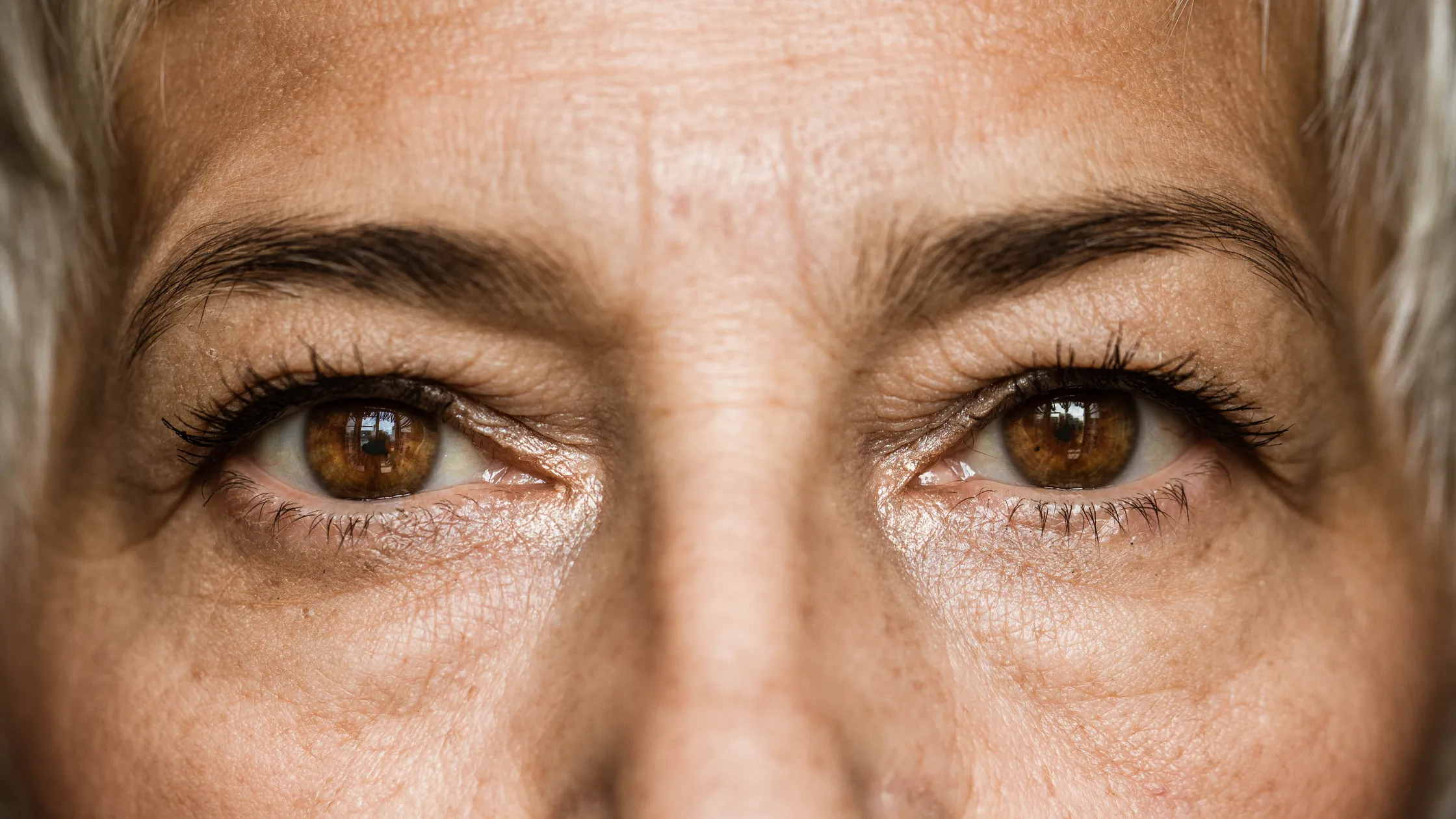
When we talk about aging eyes, we tend to mention crow’s-feet, dark circles, bags…. But what about your actual eyes?
We notice collagen loss around the eyes first, because that is where our skin is thinnest. Crow’s-feet usually start to appear in the early 30s, sometimes earlier. But collagen loss also results in changes to the eyeball itself, which can lead to everything from permanently tired looking eyes to ectropion, or “inside-out eyelids,” in which the lids don’t quite adhere to the eyeball like they used to and flip outward (think: Droopy the dog).
Fortunately, the Cleveland Clinic reports that ectropion only occurs among 2.9 percent of the population—the over-60 population, specifically—but ectropion isn’t the only thing that can age your eye sockets. Between ophthalmological and dermatological intervention, however, there’s plenty you can do to appear more bright-eyed.
Meet the experts
- Inna Lazar, OD, an optometrist based in Greenwich, CT.
- Usiwoma Abugo, MD, a board-certified ophthalmologist based in Norfolk, VA.
- Rachel Mistur, MD, a board-certified dermatologist based in Cleveland, OH.
What happens to eyes as we age?
“If you see a patient in their 80s or 90s, their eyeballs may look smaller and more sunken,” says Inna Lazar, OD, an optometrist based in Greenwich, CT. That’s because collagen loss doesn’t stop at the rims of your eyes. The white part of the eye, or sclera, also loses collagen.
Loss of collagen is also a “huge contributor to dryness,” Dr. Lazar says. Even if the skin laxity caused by collagen loss isn’t severe enough to lead to ectropion, starting around age 60, “the lower eyelids can become so loose that they stop lubricating and protecting the eye as they should, resulting in dry eye,” explains Norfolk, VA-based board-certified ophthalmologist Usiwoma Abugo, MD, who serves as a spokesperson for the American Academy of Ophthalmology.
The sclera and conjunctiva (the thin, clear membrane that protects your sclera) may also develop a gray or yellowish tint largely due to UV damage (although smoking can also cause discoloration of the eyeballs).
But the most common visibly aging condition to the eyes is dry eye, which makes your eyes red, itchy and tired-looking—the very opposite of youthful. Research estimates that it affects 16 million people in the US.
What causes dry eye?
There are several reasons people may end up with dry eye. “We have glands that surround the eye and in the eyelid that lubricate the eyes,” says Dr. Abugo. With age, these glands decrease in size, leading to dryness.
When we don’t blink enough, we can also suffer from dry eye. The primary culprits for not doing so are working at a computer, reading, or watching television. Dr. Abugo recommends setting a reminder to take a break every 20 minutes by looking away or shutting your eyes for 20 seconds. “If you’re not blinking enough, the oil from those glands just sits there and doesn’t move across the eyeball,” Dr. Lazar explains.
Dry eye can also be caused by the inflammation resulting from a lack of tears—another essential eyeball lubricant. This is more likely to happen as we age, since the amount of tears produced by the lacrimal gland naturally reduces over time, says Dr. Lazar.
A trained eye doctor is the only one who can diagnose whether your dryness is being caused by a lack of oil or tears. For severe cases of dry eye, your ophthalmologist may suggest blocking your tear ducts using tiny silicone or gel plugs (called punctal plugs). This makes your natural tears stay in your eyes longer. These plugs can be removed later as needed. Your ophthalmologist could also recommend surgery that permanently closes your tear ducts, making you natural tears stay in your eyes longer.
However, for most people, who are just feeling the early effects of dry eye—whether lack of oil or tears are to blame—less extreme measures suffice.
“I usually recommend hyaluronic acid drops for these cases,” Dr. Lazar says. “Try a few until you find the one that works best for you,” Dr. Abugo says. But if you are using them more than six times a day, it’s probably time to seek an expert’s advice. Dr. Lazar also treats some of her dry eye patients with a strong dose of omega-3 supplements (usually about 300 mg a day) to lessen inflammation.
How to look alert well into old age
It’s important to remember that “good vision doesn’t mean a healthy eyeball,” Dr. Lazar says. To that end, the American Academy of Ophthalmology recommends a complete eye exam at least once in your 20s, and twice in your 30s, Dr. Abugo says. (Adults over age 40 with no risk factors or ongoing eye conditions should be screened every two to four years between the ages of 40-54.) If you’re a contact lens wearer, though, it’s recommended to get an exam every year.
Beyond that, the best way to prevent premature aging of the eyes isn’t any different from what you’d do for your skin. “Protect them from UV damage. I can’t stress this enough: Wear a hat and sunglasses,” Dr. Lazar says.
Lifestyle changes can also help, including investing in a high-quality air filter at home, or using a humidifier to add moisture to dry air. Putting warm compresses on your eyes to help release oil in your eyelids’ glands is also helpful, Dr. Abugo says.
“Lastly, remember to blink often when working at a computer, reading, or watching television. Setting a reminder to take a break every 20 minutes by looking away or shutting your eyes for 20 seconds is a good way to get in the habit of blinking and naturally lubricating your eye,” she says.
How a dermatologist can aid aging eyes
“Symptoms of dry eye can cause unwanted behaviors like eye rubbing, which can have negative impacts on eyelid skin, including fine lines and wrinkles,” says Rachel Mistur, MD, a board-certified dermatologist based in Cleveland, OH. “And the friction from rubbing can aggravate underlying blood vessels, making dark circles appear more prominent.”
There are in-office options to treat both fine lines and dark circles. “We can safely do radiofrequency microneedling under the eyes to stimulate collagen and elastin production and tighten the lids,” Dr. Mistur says. It can also be used for mild cases of ectropion, according to Dr. Lazar. “Certain fractionated lasers can also be used safely under the eye, with proper precautions, for firming and discoloration purposes.” But Dr. Mistur says that before consulting a dermatologist about any procedures around the eye, it’s important to get clearance from an eye doctor to ensure that conditions like rosacea and psoriasis aren’t causing your dry eye (yes, you can get them in your eyeballs).
The holy grail of fine-line smoothers, retinol, may also be safely used around the eye to help bolster collagen production, though Dr. Mistur recommends ramping up slowly. “Often, when introducing retinols, I have my patients mix them with their moisturizer to dilute the formula a bit,” she says.
Lastly, treat your eyes with extreme caution. “Be super gentle with that area when you wash, using fragrance-free formulas around the eyelid, and be sure to blot rather than scrub when removing your makeup,” Dr. Mistur says. This will help you prevent further degradation of the collagen in and around your eyes as well as avoid redness.
All these things add up to changes you can see with, well, the naked eye.