The Beauty of Drag: How the Looks of Manila’s Drag Performers Have Evolved Over the Years
Allure Philippines charts the evolution of drag makeup in the country—from Hollywood impersonations via subtle glam in the 1970s, to mimicking real-life figures through political satire in the 1990s, all the way to the larger-than-life beauty looks of today’s drag queens streamed to us through screens.


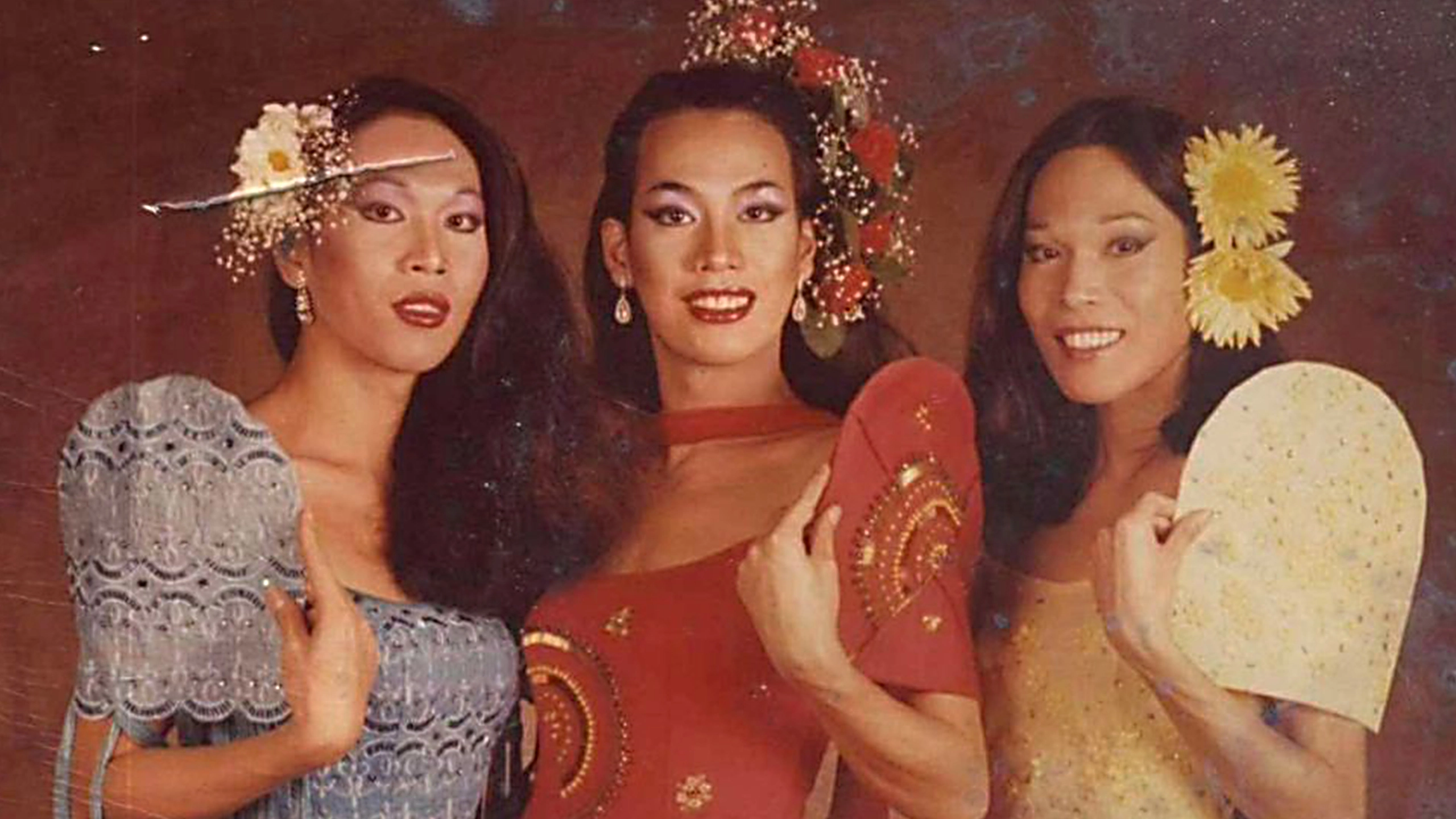
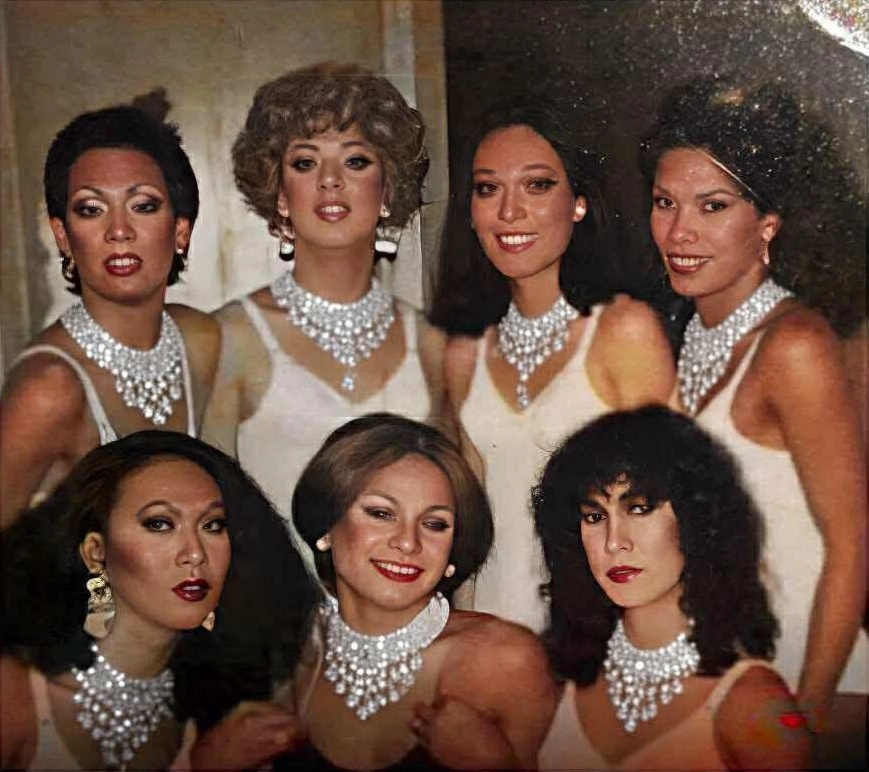
In the mid- to late 1970s, every night except on Sundays, you could catch a show at a place called Cabaret Royale. Inside a building in Makati, where the first floor housed a disco, a bar, and a coffee shop, the second floor opened up into a stage area, where live bands would play.
But the bands were not the main act of the evening. The real show would start with an ensemble production number from musicals such as “My Fair Lady” or “West Side Story.” It would then move into solos, duos, or trios, interspersed with more ensemble numbers and the quintessential Liza Minelli song, all leading up to the finale of a scene from “Funny Girl,” in which Barbra Streisand’s character performs as a pregnant bride.
But the Babs, Liza, Maria, and Eliza of the evening were each not played by your typical starry-eyed ingénue. Instead you had the Paper Dolls, the era’s foremost group of female impersonators—who would otherwise be known as drag performers today—whom many consider the pioneers of the current local drag scene.
Drag has had a long and storied history globally and in the Philippines, its roots going as deep as ancient times. In the modern era, drag has long flourished underground, before very recently coming up to establish itself as a new pillar of pop culture.
Today, you’d be hard pressed to find anyone who isn’t familiar with the idea of drag queens, as well as their celebrated looks—layers of base and heavy contour, thick and perfectly arched brows, bold lashes, dramatic eye makeup, overdrawn lips, basically anything that helps outwardly express and draw out a chosen persona—that have come to harness so much power and influence over the mainstream.
But that look hasn’t always visually defined drag in the Philippines. There have been more than a few iterations of drag beauty in the country. Drag, and its looks, in fact, are topics so broad and encompassing that it would be close to impossible to capture the wealth and breadth of stories that can be told about them.
Allure Philippines spoke with three central figures in the local drag scene, each one enmeshed in the thick of things at different points in time, to chart the evolution of the beauty looks of drag queens through the years. We begin inside Cabaret Royale, with the looks of the groundbreaking Paper Dolls.
Act One: The Paper Dolls and their Hollywood impersonations
Courtesy of Henri Calayag
“We were called female impersonators, not drag queens,” shares Henri Calayag, esteemed hair and makeup artist, proprietor of Henri Calayag Salon, and, back in the day, one of the members of Paper Dolls, alongside Fanny Serrano, Micky Tanaka, Klakling, Edcel Reyes, Xaviera Petelle, Peter Estocado, Boots Babushka, Angel Bautista, Biba Varona, Benny Gamboa, and Mari Boquer.
Drag back then wasn’t necessarily drag as we know it today, with the exaggerated makeup looks and original characters. Instead, Calayag explains, it was all about masquerading as celebrated Hollywood icons and pop music superstars, such as Marilyn Monroe, Sophia Loren, Dionne Warwick, or Marlene Dietrich, whom Calayag was tasked with bringing to life. “We mimicked them in all the small things, even hand gestures, the smirking of the lips, and through makeup also. We had to be more effeminate.”
Throughout years of performances in the 70s, which included private performances for former first lady Imelda Marcos and a coterie of international guests (“We’d have a chauffeur for that evening! And then we’d have to hit the road by 11 or something because there was martial law, at may curfew. Naka-taxi na lang kami!”) and a four-year stint as in-house performers at Goodwood Park in Singapore (“From Singapore, we did shows in Kuala Lumpur, Penang, and then Thailand, Indonesia, hanggang as far as Surabaya yata. Naging roadshow na kami talaga.”), the Paper Dolls went for glamorous, ultra-feminine beauty looks, embodying what Calayag says were the beauty standards of the time.
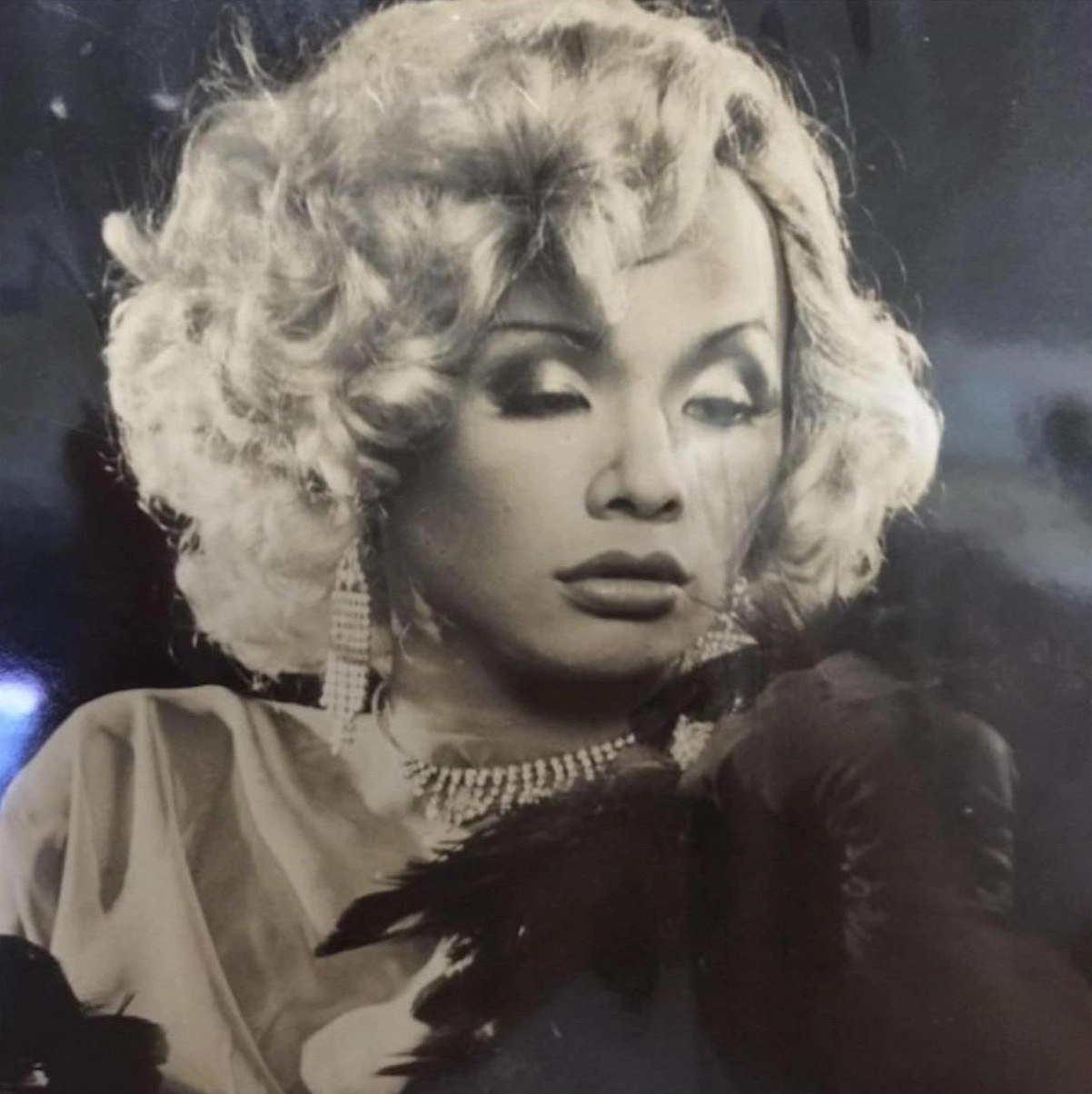
Henri Calayag as Marlene Dietrich. Courtesy of subject
Beauty by pancake
The looks put together by the Dolls’ makeup artist Oscar Santos and the Dolls themselves, started not with your regular base, but with the contour. “At the time, contouring came before foundation,” Calayag shares. “So when the light or spotlight hit you, the contour would come from under your skin tone. Your skin tone would be your main foundation. It would look more natural. I think ginagawa pa rin nila yun up to now.”
Next step would be the aforementioned skin tone, using cake foundation. “My God, there was only Max Factor at the time. And Beautifont and Kokuryu,” Calayag recalls. “It was all cake foundation, so matte lahat.”
Calayag launches into a narration of the different building blocks of their looks: “The good thing about matte is when you’re under a spotlight, para ka talagang nasa black and white MGM [movie set] kasi walang shine. But if you needed a little shine, there was Lumina of Beautifont, which we’d put on the brow bone. And then, of course, that popular cake eyeliner ng Max Factor na brown and black.”
Cake foundation and eyeliner both had to be applied wet, with water dabbed on the pancake with a sponge, and Calayag says with fond nostalgia, “Mas kumakapit siya. There’s more definition kapag water-based, kasi you can layer and layer. Ngayon mas cream eh. But the thing with water-based cosmetics, you can have a really nice, fine blending, which is what we needed to look softer, and maging babae.”
Calayag took all the beauty tricks and tips he learned from his time with the Paper Dolls and built a formidable career in hair and makeup after his performing days.
“Ang laki ng tulong sa akin ng Paper Dolls. ‘Yan [the experience] ang in-apply ko sa salon practice ko,” he says, explaining how he applied the little things they did to look more feminine during editorial shoots. The quick look changes they had to do backstage helped him during fashion shows for the likes of Inno Sotto and advertising campaign shoots, such as the one he did with photographer Neal Oshima and model Tina Maristela Ocampo.
One day, years later, long after he’d put away his Sophia Loren bouffant, actress and stand-up comedian Tessie Tomas brought Calayag a young actor, fresh from the University of the Philippines, for his first trial makeup run, “kasi Tessie wanted to do a one-act female impersonation show, like Ate Vi,” Calayag recalls.
That young performer turned out to be the one to usher in the next era of drag in the country—Jon Santos.
Act Two: Political satire with Jon Santos
Courtesy of Jon Santos
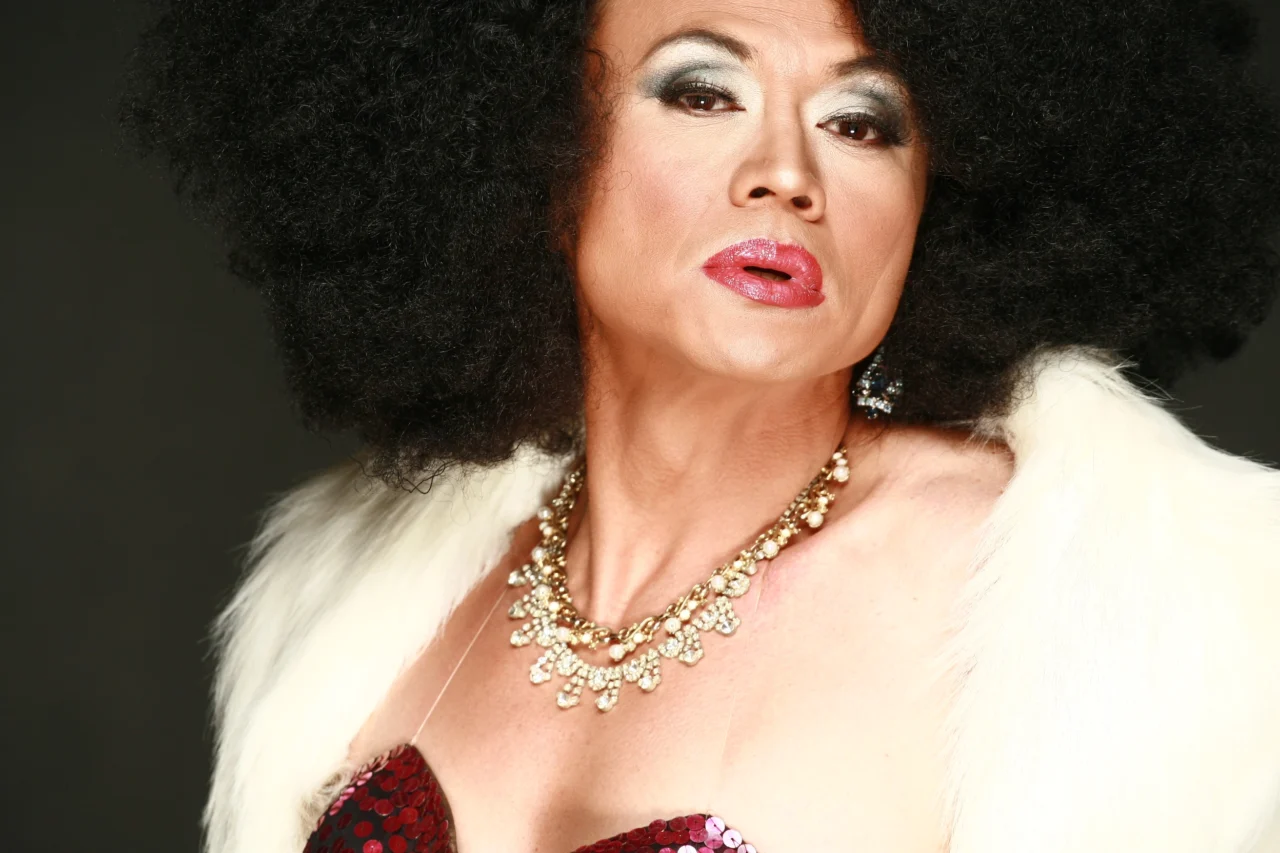
“Tessie Tomas and Willie Nepomuceno were my mentors,” Santos tells us today. “After the first EDSA Revolution, they both became very, very free with political satire.” But even as a post-Martial Law nation clamored more for political satire in mainstream media, Santos recalls that drag itself hadn’t come into its time just yet.
“The challenges of my time were the producers,” he explains. “They would say [about drag shows] ‘Who would watch that?!’ Drag was kept in the ‘Quezon City nightclub’ category, or the comedy club genre. It wouldn’t have made it to Resorts World today, or the Maybank or Samsung theaters.”
And so Santos, at the time an actor just beginning his career, put his dreams of musical theater on hold and leaned into the celebrity impersonation fold.
He quickly gained acclaim impersonating countless big names, with his most popular acts including actor Vilma Santos, Senator Miriam Defensor Santiago, Kris Aquino, and every single Philippine president who served while he was performing, from Cory Aquino up until Rodrigo Duterte.
“In my case, I was lucky, because of my repertoire, “ he says. “My performances were about people you saw in the news that you wanted to rebel against by laughing at.” Santos calls himself “that comedian who would point out things everyone knew, but didn’t say out loud.”
It was, in fact, the mimicry of these household names who were making the headlines—whose accents, mannerisms, eye shapes, and facial moles that Santos relentlessly mirrored—that opened the figurative and literal doors of places like Music Museum and Resorts World—high-stakes venues in which Santos would go on to headline his own shows.
Finding beauty (looks) in current events
To nail the looks of these big names, Santos began by following current events to study them. “I was doing political satire, where you do what’s in the news. You research in the morning, and then it’s your nightclub act at night,” he says, explaining his work process. “If midweek, something explodes in the headlines, I would study Sara [Duterte] or Digong or [former associate justice Antonio] Carpio or Imee [Marcos], because they were in the news.”
The look, of course, had to be ultra-realistic and accurate, as impersonation was the name of Santos’ game. He mentions the importance of skin care to keep his skin in top shape for all of its reincarnations, adding “we actually do a lot of shaving to hide a multitude of sins before the first layers of primer and foundation go on.”
Brows have been crucial for Santos’ technique. “I would erase my brow, and then create a new brow about an inch above for the persona I was doing. And then I would extend the lashes.”
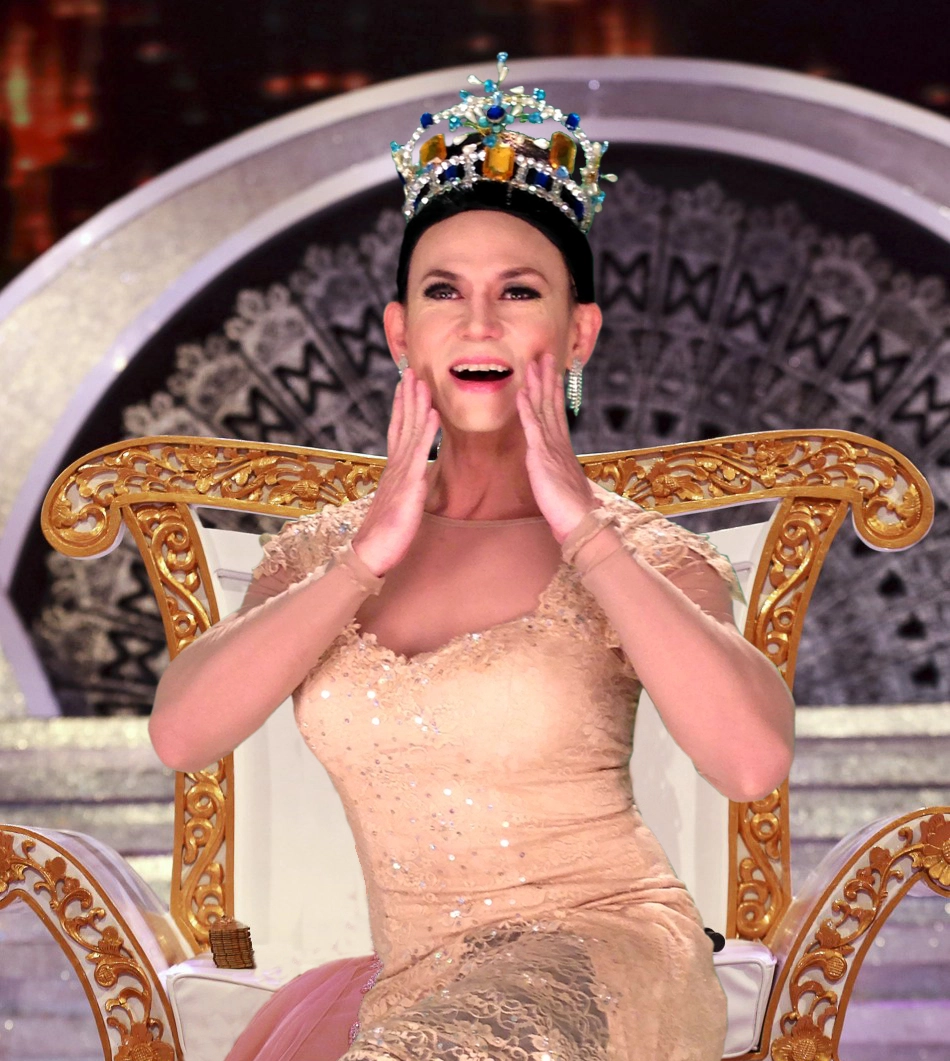
For Santos, performing in drag was all about the eyes. “Oh, eyes, eyes, eyes,” he stresses. “Eyes that really help a performer, like Liza Minelli, Judy Garland, Lady Gaga, Madonna, Bette Davis,” he enumerates.
He points out that they all have a specific eye look. For him, this has remained the defining characteristic of drag makeup through the years: “Those drag queen eyes—big eyelids, big lashes, and a very high brow.”
Courtesy of Jon Santos
Trickling into the mainstream: noontime shows, ad campaigns, and the gamechanger that was streaming
Even as Santos was the rare unicorn who made it out of the comedy club genre at the time, that “Quezon City nightclub” scene kept thriving, outrageous looks and all. And at one point, after the 90s had turned into the new millennium, other impersonators, artists, and comedians suddenly found themselves thrust into the mainstream spotlight as well.
Calayag and Santos mention Vice Ganda and Paolo Ballesteros as two personalities who helped bring drag into the mainstream, into the likes of noontime shows and fast food commercials. But nothing changed the game for drag quite like the advent of streaming and a little show called RuPaul’s Drag Race.
It wasn’t long before the local iteration, Drag Race Philippines, arrived on our shores, which tapped Santos as one of the judges. And in its first season was a contestant named Eva Le Queen.
Act Three: The reign of the Queens
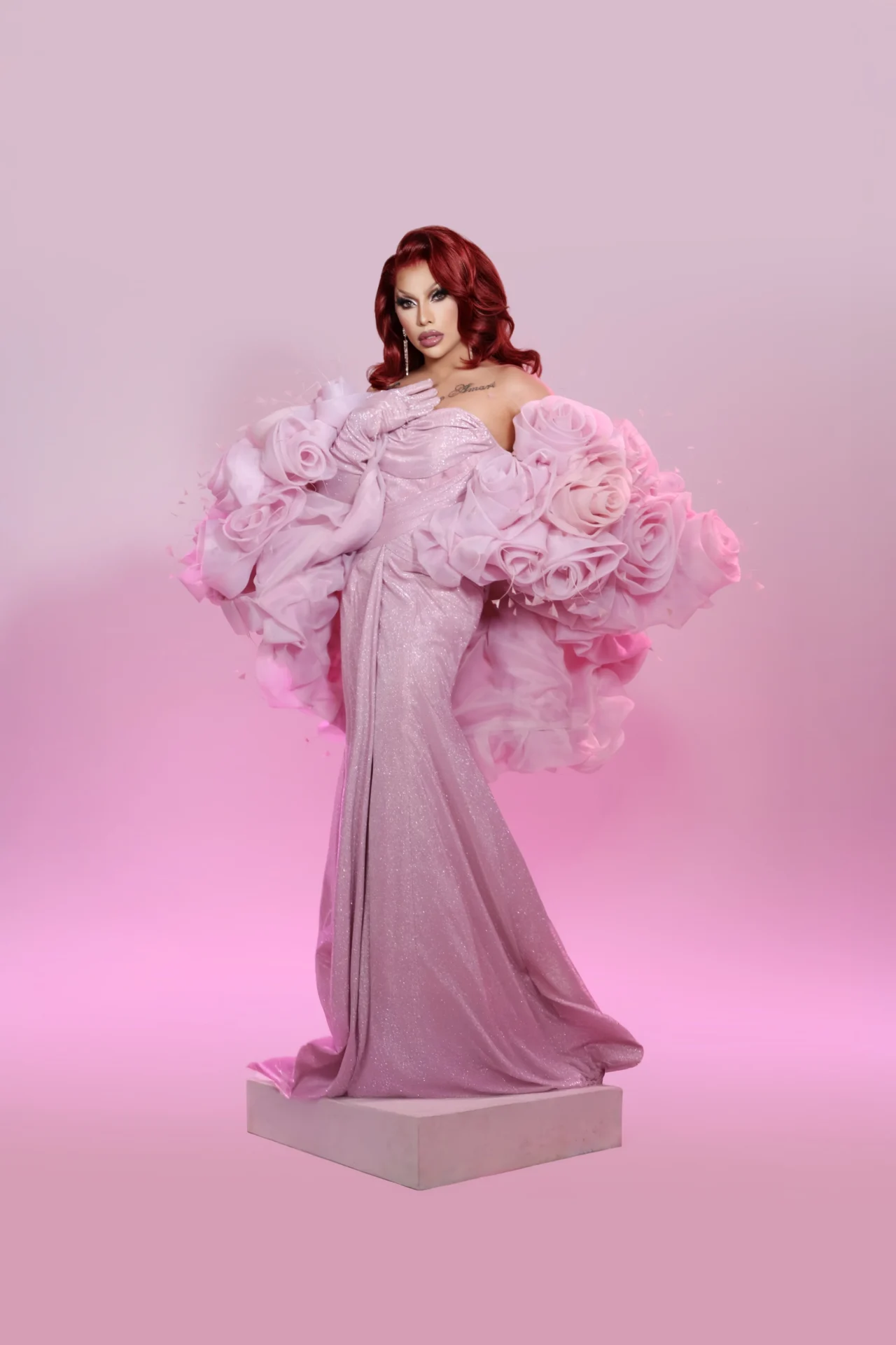
Courtesy of Eva Le Queen
“It was a whirlwind,” Eva Le Queen says of joining Drag Race Philippines in 2022, recalling that “it happened in a span of eight to ten weeks.” Eva had previously lived and worked in Singapore, where she would do drag performances with friends for fun, eventually being cajoled into joining an amateur drag competition, where she placed first runner-up.
“They always say it’s love at first drag,” she says. “The first time I saw myself transform, I just knew that [drag] was something that I could not not have in my life.” Eva finished tied at third place with fellow queen Xilhouete, and went on to compete in the first season of RuPaul’s Drag Race Global All Stars, placing tenth overall.
“My name is Eva Le Queen, a play on ‘evil queen,’” she says. “I’ve always been drawn to and fascinated by dark female energy, very villainous, very ‘Maleficent,’ so when I started I was really more like a spooky, scary queen.”
She has since branched out to mainstream entertainment, and is the CEO of The Playhouse, a drag entertainment company—both career moves a testament to how far drag has come.
For Eva, drag today is both deeply personal and political. “Drag is a gender-bending art form that mocks the patriarchal society,” she explains. “It’s always been political.”
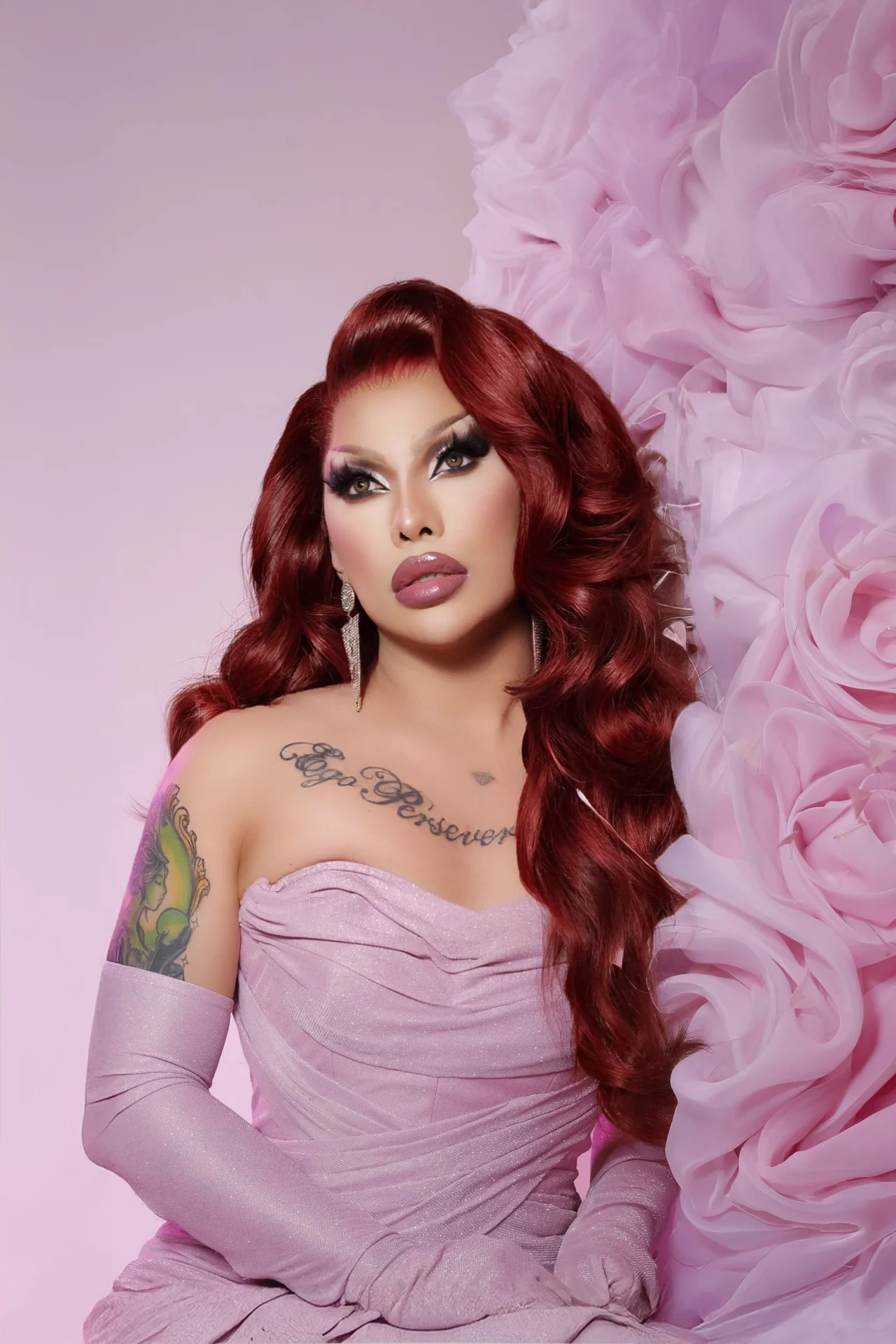
Courtesy of Eva Le Queen
The look of drag today: The faces of rebellion and self-expression
Eva, who recently broke down the components of her signature drag look for Allure Philippines, goes on to share that the typical drag look that we know today—the extreme, exaggerated, painted-on faces almost bordering on frightening—was created as a caricature, in line with “raising that middle finger to the patriarchy.” “The look,” she says, “was absurd, a mockery of gender stereotypes.”
“There are queens like Trixie Mattel, Bianca del Rio, Kim Chi na ‘yung proportions of their makeup, hindi conventional or humanly beautiful, because they are caricatures,” Eva shares. “And it’s not meant to be pretty,” she continues, “because it’s stage makeup. Our drag scene started with female impersonation, so the goal was to look like the person we are impersonating. Sa malayo, kamukha niya si Mariah Carey, pero pag nilapitan mo, sobrang harsh ng mga lines.”
But there has been a shift, Eva notes—one that she herself has felt and has applied to her look. Drag, she says, is essentially about selling a fantasy, and in recent years, has become all about freedom of expression.
“I feel that drag is something that is very personal. So the visuals outside, for me, say a lot about my state of mind at that point in time.” From a caricature, she says, “the look is now more humanizing, so parang nagiging mas babae yung look, na mas malapit na sa kung sino yung gusto namin maging sa fantasy namin. Mas personal na siya.”
Eva herself has changed the way she does her own look, sharing, “I used to draw my eyebrows ridiculously high or strong, but now I’ve changed it to something flattering for my face.” The look of drag, it seems, has evolved again, and continues to do so.
Act Four: Where to next?
From the fringes and the underground, drag is now front and center. “I think drag will continue to influence, and be influenced by, mainstream culture,” Eva muses. And since drag, essentially, cannot be separated from its looks, drag beauty is now also at the forefront.
Eva waxes enthusiastic about how it seems that the newest makeup products are already made with the rigors of a drag show in mind, “drag-proof,” if you will—eyeshadows with the densest pigments, primers and setting sprays that really keep makeup in place. “If it’s good enough for a drag show, then it will definitely last a bride the whole day,” she chuckles.
It’s interesting to see how drag has shimmied into the zeitgeist. Today, as Eva points out, it’s expanded beyond just a form of entertainment or expression. “It’s a business model now,” she says. “It’s aspirational. We have fans, people are inspired by what we do, and it’s become a means for more queer kids to embrace themselves.”
Calayag is buoyed by the attention and expansion. “It’s good,” he effuses. “Today, they want to be known as themselves, as artists. They want their own identity, and they get their own act, and their own voice.”
Santos, on the other hand, thinks that the drive, the passion, and the creativity that we see in today’s drag performances and looks have always been there, throughout the generations.
“It’s fueled by the need to transform,” he says. “You know, who we are has not always been met with approval. But the ability to be someone else, and escape into another person’s identity for a while and thrall an audience—that has fueled the creativity.”
From the looks of international superstars to local politicians to the dreamed-up personas dredged from the depths of one’s soul, the beauty of drag is not only found in the unique contouring techniques, or the practiced flicks of eyeliner, or the burst of colors and character on the face.
The beauty of drag, it seems, is also found in its ability to entertain, educate, inform, and influence. And there will definitely be many more looks to come.