An Adult’s Guide to Getting Braces
Everything you need to know about straightening your teeth.


I spent many hours of my childhood at the orthodontist’s office. Thanks to my cleft palate, I wore braces on and off for about 10 years. Although I never had braces as an adult (I finished my treatment during my junior year of high school), I know that getting them is a big decision that affects nearly every part of daily life.
As a preteen, when my parents and I were deciding which type of braces to get, there weren’t many options to choose from, so I went with the classic metal ones.
While in-clinic teeth-straightening plans continue to gain popularity, we’ve seen the rise and fall of at-home teeth-straightening plans over the last five years or so.
These shifts in the dental industry drive home an important point: Moving teeth isn’t a casual, one-size-fits-all process and requires expert oversight, in person. As at-home aligners become less available, it’s crucial to understand the specifics of in-office treatments, including the financial commitment and time investment.
Joanne Marañon, DMD, president of the Association of Philippine Orthodontists, says there isn’t much difference between adolescents and adults when it comes to what kind of orthodontic treatments they can get. What counts is how they receive the treatment.
Dr. Marañon talks about the “camouflage strategy” used in adults, which masks dental discrepancies instead of correcting them surgically. “This enhances aesthetics and function within the constraints of the existing skeletal structure,” she explains.
Another factor to consider: Adults require further examination, considering their more complex needs. “Treatment planning considers factors such as the patient’s expectations, periodontal [the structure or the tissue surrounding the teeth] and restorative conditions, bone density, and the presence of restorations or missing teeth,” she adds.
Below, we’ve not only outlined a comprehensive guide to getting braces as an adult, but also covered the current state of affairs regarding DIY treatments.
Meet the experts
Jordan Cogan, DMD, is an orthodontist based in Philadelphia.
Erin Fraundorf, DMD, is an orthodontist and founder of BOCA Orthodontic and Whitening Studio in Clayton, MO.
Marina Gonchar, DMD, is an orthodontist and owner of Skin to Smile in Morristown, New Jersey.
Karin Grinbaum, DDS, is an orthodontist and owner of Smiles and Grins in New York City.
Sharon Huang, DDS, is a dentist and the founder of Les Belles NYC in New York City.
Madeline Pitz, DDS, is a board-certified orthodontist in Brooklyn.
Joanne Marañon, DMD, is the president of the Association of Philippine Orthodontists.
A note about pricing
To get the price ranges mentioned in this story, Allure Philippines checked in with different clinics. However, these prices aren’t fully accurate as it still depends on the complexity of the case as well as the duration of treatment, according to Dr. Marañon. “It’s difficult to provide exact fees for orthodontic treatment because these depend on several factors, including the difficulty of the problem and the type of orthodontic appliance preferred by the patient.”
In most clinics, payments don’t have to be made in one go, thanks to monthly payment options. Filipinos may also seek cost-effective alternatives for orthodontic care as there are numerous dentistry-focused schools in the country that offer dental and orthodontic services as part of the students’ training. “These programs provide care from licensed dentists undergoing specialized training, supervised by experienced faculty,” explains Dr. Marañon. “Although treatment may take slightly longer due to the academic setting, patients can expect high-quality care at significantly reduced fees.”
1. Traditional and ceramic braces
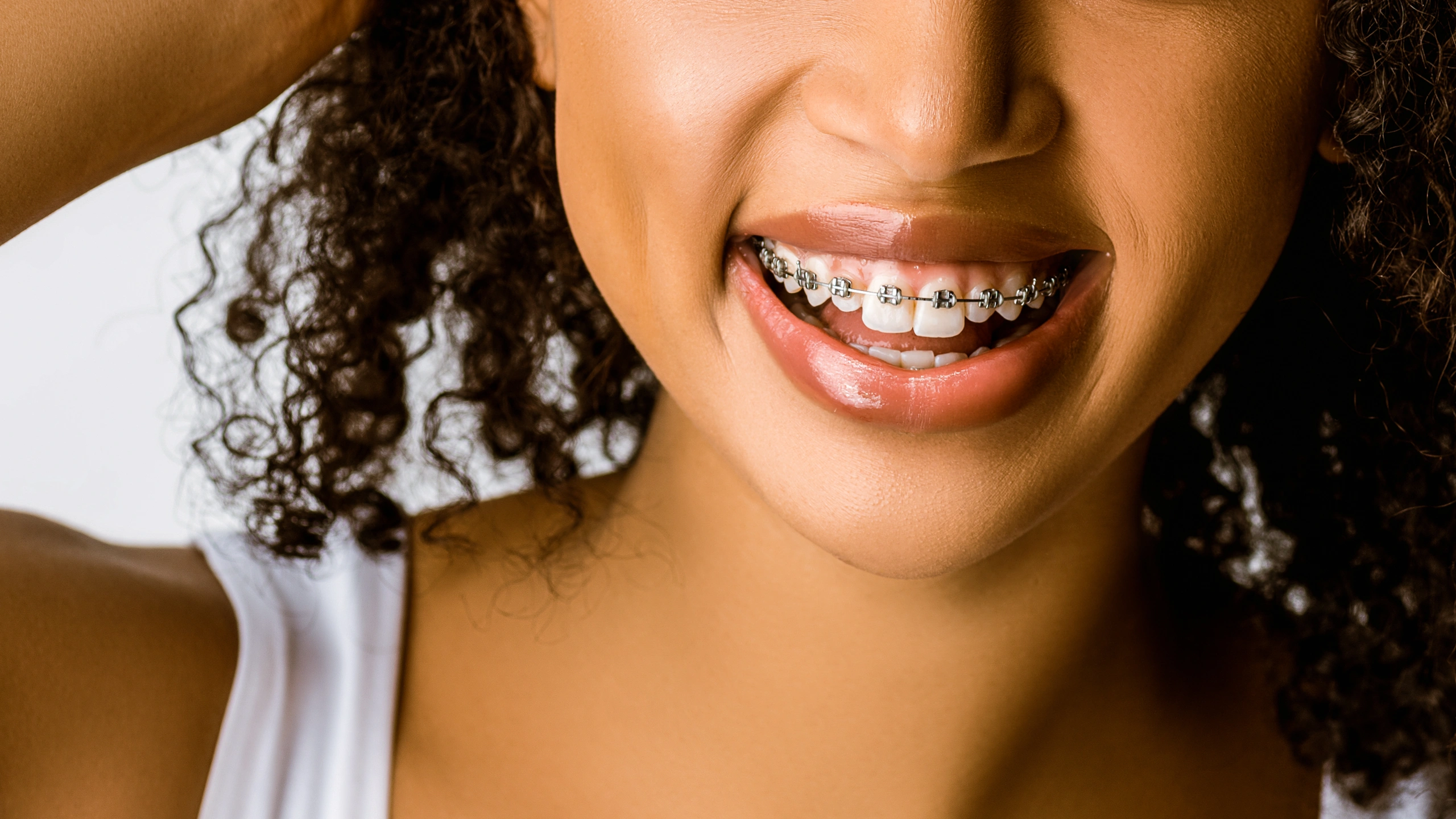
These are probably the most recognizable symbols of orthodontics. “Both are equally effective in moving teeth and achieving treatment goals,” says Dr. Marañon.
“They (traditional braces) have a long history of successful treatment and are great at correcting many oral issues,” says Jordan Cogan, DMD, a Philadelphia-based orthodontist. “That’s why metal braces continue to be the top orthodontic treatment for patients of all ages.”
Traditional braces involve tightening and shifting metal brackets that are affixed to the teeth with a wire. “The wire runs from one bracket to another, and the orthodontist has advanced training and knowledge to change the shape and curvature of the wire to move your teeth in the right direction,” says Dr. Cogan. “Bends in the wire provide different types of pressure on different teeth.”
Ceramic braces follow a similar process, but are more popular among patients who prefer a less noticeable look as these blend with the teeth’s natural color.
Who it’s best for
The ideal candidate for traditional braces is someone who has crooked or overlapping teeth, or someone with gaps of all sizes. If you have a misaligned bite, you also might be a good candidate for traditional braces.
“Traditional braces are best for young children undergoing phase I orthodontics [Editor’s note: That’s early-intervention orthodontic care for those who are between seven and 10 years old], teenagers, and adults who believe they will not be compliant with aligners,” explains Madeline Pitz, DDS, a board-certified orthodontist in Brooklyn. She adds that those who’ve had prior orthodontic treatment and experienced slight relapse might find traditional braces to be a quicker solution than others. “They can be placed the same day a patient comes in for a consultation.”
Who should avoid this treatment
According to Dr. Pitz, traditional metal braces are not ideal for those children or young adults with heightened sensory disorders, as they are more sensitive to the feeling of the brackets.
She also says that those who’ve had more extensive work done in their mouths—like the addition of multiple crowns, veneers, fillings, or implants—might not be the ideal candidates for traditional braces, as the braces are more likely to break. A similar concern rings true for ceramic braces. “Ceramic braces, in particular, are less durable and may not be recommended for patients with deep bites or habits like teeth grinding,” explains Dr. Marañon.
Pros
Traditional and ceramic braces offer several advantages, especially for patients with complex orthodontic needs. “They’re highly effective for complex tooth movements and bite corrections,” explains Erin Fraundorf, DMD, an orthodontist and founder of BOCA Orthodontic and Whitening Studio in Clayton, Missouri.
She adds that because they’re bonded directly to teeth, they’re always working. Also, there’s no need to remember to remove or reinsert them (like you would with clear aligners).
Cons
On top of food restrictions (no sticky, crunchy, or hard foods during treatment), both Dr. Marañon and Dr. Pitz stress the need for stringent oral hygiene, as food debris and plaque can easily accumulate around brackets and wires. You’ll also have more frequent appointments compared to other orthodontic options. Depending on the stage of your treatment, you’ll be seeing your orthodontist every four, six, or eight weeks.
Pricing
Although the price of traditional wire braces will vary depending on the complexity of your orthodontic needs, how long you have to wear them for, as well as where you live, they typically cost anywhere between PHP 30,000 and PHP 120,000 for the entire treatment without insurance.
That’s not exactly cheap, but metal braces tend to cost less than other options because they don’t require some of the more complex technology or expensive equipment that newer treatments do, according to Dr. Cogan.
2. Clear aligners
The history of clear aligners goes back to 1945, when tooth positioners were introduced to refine the final stages of orthodontic treatment after traditional braces were removed, according to a 2014 article in the New York State Dental Journal. In 1997, two Stanford students founded Align Technology (a clear aligner system), which, in 1999, became Invisalign, one of the most recognized clear aligner companies.
“Clear aligners are customized appliances created by the aid of sophisticated 3D imaging and animation tools that enable virtual simulation of tooth movements,” says Dr. Cogan. “Tooth movements resemble a filmstrip, and each frame or stage corresponds to a set of clear plastic aligner trays. As each tray is worn by the patient, it slowly pushes the teeth to their proper positions.”
Unlike traditional metal braces that are very visible, clear aligners are made with smooth, transparent plastic and don’t have sharp edges that can irritate your mouth. (Score!) However, you will need to switch out the plastic retainers every week. (Okay, it’s a little annoying, but you can’t win them all.)
Clear aligners may also be worn either before or after traditional braces. Combining both treatments may be necessary in certain cases in order to achieve optimal results, according to Dr. Marañon.
Who it’s best for
Clear aligner technology has been improving, making it more accessible and versatile, explains Dr. Pitz. “Clear aligners are best for responsible teenagers, those who may play any contact sport, and adults looking to improve their smiles in the most aesthetic way possible,” she adds.
“Clear aligners are a removable and aesthetic alternative to braces, ideal for patients with mild to moderate orthodontic problems,” Dr. Marañon says.
Who should avoid this treatment
Those with severe misaligned bites that require complex tooth movements aren’t the best candidate for clear aligners, as Dr. Pitz and Dr. Marañon explain. “Anyone who may lose or forget to wear aligners, and those with severe space closure issues requiring root movement are probably not the best candidates for this treatment,” says Dr. Fraundorf.
Pros
Having the ability to remove the appliance enables the patient to maintain peak oral hygiene and not have any food restrictions throughout treatment. “Despite small tooth-colored attachments being placed on the teeth to anchor the aligner and aid in tooth movement, aligners can be almost undetectable,” explains Dr. Pitz.
A few other pros, according to Dr. Fraundorf, include the fact that clear aligners are more comfortable to wear and offer more flexibility around in-clinic visits (you won’t have to come in as often and your appointment might even be quicker).
Cons
“I always say that the pro and the con of clear aligners is that they can be removed,” says Dr. Pitz. Sure, you won’t have to worry about food restrictions, but you do have to keep track of your aligners every time you take them out—and you’ll have to take them out every single time you decide to eat or drink anything other than water. (Eating with aligners can damage them, and drinking with them could cause teeth-staining or cavities.) If you’re prone to misplacing things, clear aligners may not be for you.
Also, your results depend on you and your compliance with the treatment, thus, Dr. Marañon does not recommend this for patients “who may struggle to wear the aligners consistently for 20 to 22 hours a day.” “The aligners do not work when they are in someone’s pocket or purse,” adds Dr. Pitz.
Pricing
Similar to traditional braces, treatment fees for clear aligners can range from PHP 65,000 to PHP 400,000, sometimes depending on the brand. “Certain [clinics] may have higher fees for aligners due to a larger laboratory bill associated with the product,” explains Dr. Pitz. “Treatment time can vary, but it’s usually in six-month increments. Mild treatment is six to 12 months, comprehensive treatment is 18 to 24 months.” Obviously, the longer you have them, the higher your bill.
3. Lingual braces
Lingual braces are thin pieces of braided metal wire that are adhered to the back (the lingual side) of the teeth. They work in the same way that traditional metal braces do, gently applying pressure to your teeth to slowly shift them into position.
Who it’s best for
Lingual braces are best for those patients who are still concerned about aesthetics but do not want to be responsible for remaining compliant. “[This is] ideal for patients who need fixed appliances, but want a completely invisible treatment option, since these are attached to the back (lingual) surfaces of the teeth,” Dr. Marañon says. (Understandable: It’s easy to forget to put your clear aligners back in every time you eat or drink something.) “Lingual braces are for mild to moderate cases, usually a patient with crowding,” explains Dr. Pitz.
Who should avoid this treatment
Lingual braces are not the best fit for those with significant overbites. “Due to the depth of the bite, the lingual brackets may break off more frequently, leading to more emergency visits,” explains Dr. Pitz.
Dr. Marañon does not recommend these braces for “patients with very small teeth, severe crowding, or those who may have difficulty with speech adaptation,” which Dr. Fraundorf also echoes, “Lingual braces are not a good fit for patients who are concerned about changes to their speech—especially with ‘S’ and ‘T’ sounds—or patients who are sensitive to tongue irritation or have a strong gag reflex.”
“It’s also not a good option for patients who don’t want to experience tongue soreness or abrasion.” Because of all this, Dr. Fraundorf is not a fan of lingual braces and does not offer them in her practice.
Pros
The pros of lingual braces are that they are constantly working because they are fixed to the teeth, but they are hidden, making them less noticeable.
Cons
Although lingual braces may be less noticeable, they can be slightly more uncomfortable than other treatment options during the first few weeks of treatment. “They may also cause initial tongue discomfort and can be more challenging to clean,” Dr. Marañon adds.
It will take time for your tongue to adjust to the brackets behind your teeth, and you might find new canker sores forming as it rubs against them. Your tongue should adjust over time, but you can use wax if discomfort persists.
Pricing
“Similar to Invisalign and other treatment options that require more complex technology and expensive equipment, [lingual braces] will typically cost more than traditional braces.” You can expect to pay anywhere from PHP 80,000 to PHP 150,000 for your treatment, which can take anywhere from six to 24 months.
4. Permanent retainers
Once you’ve completed your teeth-straightening treatment plan, your orthodontist might want to insert a permanent lingual retainer on the inside of your teeth to prevent them from moving around. “They are bonded to the inside surfaces of the front teeth,” explains Dr. Cogan.
For adult patients, “long-term retention is strongly recommended to ensure lasting results,” says Dr. Marañon. Permanent retainers are also sometimes coupled with removable retainers.
Permanent lingual retainers are not the same as lingual braces. “A permanent retainer is a thin wire bonded to the back of the teeth (usually the lower front six teeth), and they don’t apply force or move teeth. They are purely for retention/maintenance,” says Dr. Fraundorf. “Lingual braces are full brackets and wires bonded behind all teeth, used for active tooth movement.”
Although these orthodontic devices are colloquially known as permanent retainers, neither Dr. Pitz nor Dr. Fraundorf loves the term because it isn’t really permanent. “At the end of the day, the retainer is not truly permanent as it is adhered to the teeth with dental composite that, over time, will wear away and potentially break,” says Dr. Pitz. “I like to call these retainers fixed or bonded retainers to allow the patient to know they are glued to the teeth and not removable, but that they will have to be replaced approximately every five to 10 years.”
Who it’s best for
According to Dr. Pitz, fixed retainers are best for those who started with significant spacing or crowding. “There is a large muscle called the frenum that lives between the two front teeth that loves to pop that space right back open,” she explains. “The fixed retainer acts like a belt and suspenders to aid in keeping that space closed.” Fixed retainers are also recommended for those patients who started with severe lower anterior crowding, to truly hold those teeth in place that are the most prone to relapse.
Who should avoid this treatment
“Fixed retainers on the upper arch are not ideal for those who finish treatment with a deeper bite as they get in the way of the occlusion and are more prone to breakage,” explains Dr. Pitz. “Fixed retainers are also not ideal for patients with poor oral hygiene. Keeping fixed retainers clean is very important; otherwise, plaque can accumulate behind the retainer and cause inflammation.”
Pros
The pros of permanent retainers are that they offer peace of mind that you won’t experience any unwanted movement or relapse. “Fixed retainers are usually used in addition to removal retainers,” says Dr. Pitz.
Cons
While they’re hidden and ensure that all the time and money you’ve invested in your smile doesn’t go to waste, Dr. Cogan says they do have some drawbacks: They can make flossing and routine oral hygiene more challenging. Also, you’ll need to get your retainer replaced or repaired periodically.
Pricing
Permanent retainers are usually added on at the end of treatment, on top of the comprehensive orthodontic fee. They can range from PHP 4,000 to PHP 25,000, with these prices “depending on if they’re made by a company that will 3D print and fabricate the retainer to be better adapted to the dentition,” says Dr. Pitz.
A note about direct-to-consumer teeth-straightening plans
Accessibility doesn’t always equate to safety. With less expensive plans and easier accessibility, it’s no wonder that at-home teeth-straightening companies in the U.S. like SmileDirectClub, Byte, and Candid surged in popularity in the last decade.
Meanwhile in the Philippines, DIY braces, made out of unsafe materials, have turned into fashion statements for many without really knowing what effects it may bring. Unfortunately, as many dentists and orthodontists had warned, at-home treatment plans with little to no in-person dental supervision often fail to straighten smiles (and sometimes make them worse).
When aesthetic overlaps with health, many are willing to seek “treatment” just to achieve this desired look. Dr. Marañon warns about these DIY or counterfeit braces offered by unlicensed individuals. “These unauthorized practices can result in infections, tooth damage, and long-term complications. Braces are classified as medical devices, and their unsupervised use violates consumer safety laws and established health regulations,” she stresses.
Knowing which practitioner to approach is also important as Dr. Marañon explains. What distinguishes orthodontists from dentists is the added two to three years of specialized training, after which they must pass the board exam administered by the Philippine Board of Orthodontics.
“Orthodontic treatment requires accurate diagnosis, careful planning, and ongoing supervision—none of which can be safely delivered by DIY methods or unqualified individuals,” she adds.
Going the DIY route with your orthodontic plan may lead to more dental and financial woes in the future. “While at-home aligners might appear to be less expensive upfront, they could cost more than traditional braces since it is likely you’ll still need to seek out professional treatment at an orthodontist,” says Karin Grinbaum, DDS, an orthodontist and owner of Smiles and Grins NYC. Dr. Huang echoes this, adding that chronic inflammation, gum recession, bone loss, long-term joint discomfort or pain, and even tooth loss can also result from at-home straightening treatments.
“Today’s orthodontic options are more accessible, discreet, and tailored to adult lifestyles than ever before. The best first step is to consult a certified orthodontist,” Dr. Marañon says. “A healthy bite and confident smile are timeless investments in your overall well-being.”