Here’s What Happens When You Get a Mammogram
Need to get checked, but wondering how it will go? We asked an expert to walk us through what happens during a breast mammogram, one of the most important safeguards in early detection for breast cancer.


If you’re like me, and you’re a little bit wary about practically any medical procedure, it can help to have things explained thoroughly beforehand. Personally, it makes me feel a little bit more in control of a situation that can be unfamiliar, uncomfortable, and sometimes even downright scary. It also gives me a sense of order, and helps me map things out in my head.
October is Breast Cancer Awareness Month, designated so to spread awareness on early detection, risks, and prevention. And one of the most important steps one can take in the crusade for early detection is, if you’re of a certain age, to get a regular breast mammogram.
If you know you need to get a mammogram, but are feeling a bit iffy about the whole thing, allow us to ease those frazzled nerves. We asked medical oncologist Marvin Mendoza, MD, MCMMO, FPSMO, FPCP, of the St. Luke’s Medical Center and National Kidney and Transplant Institute, to walk us through the entire process. “A mammogram,” Dr. Mendoza explains, “is sort of a simple low-dose X-ray test that allows the doctors or physicians to look for possible early signs of breast cancer.”
Here’s what goes down
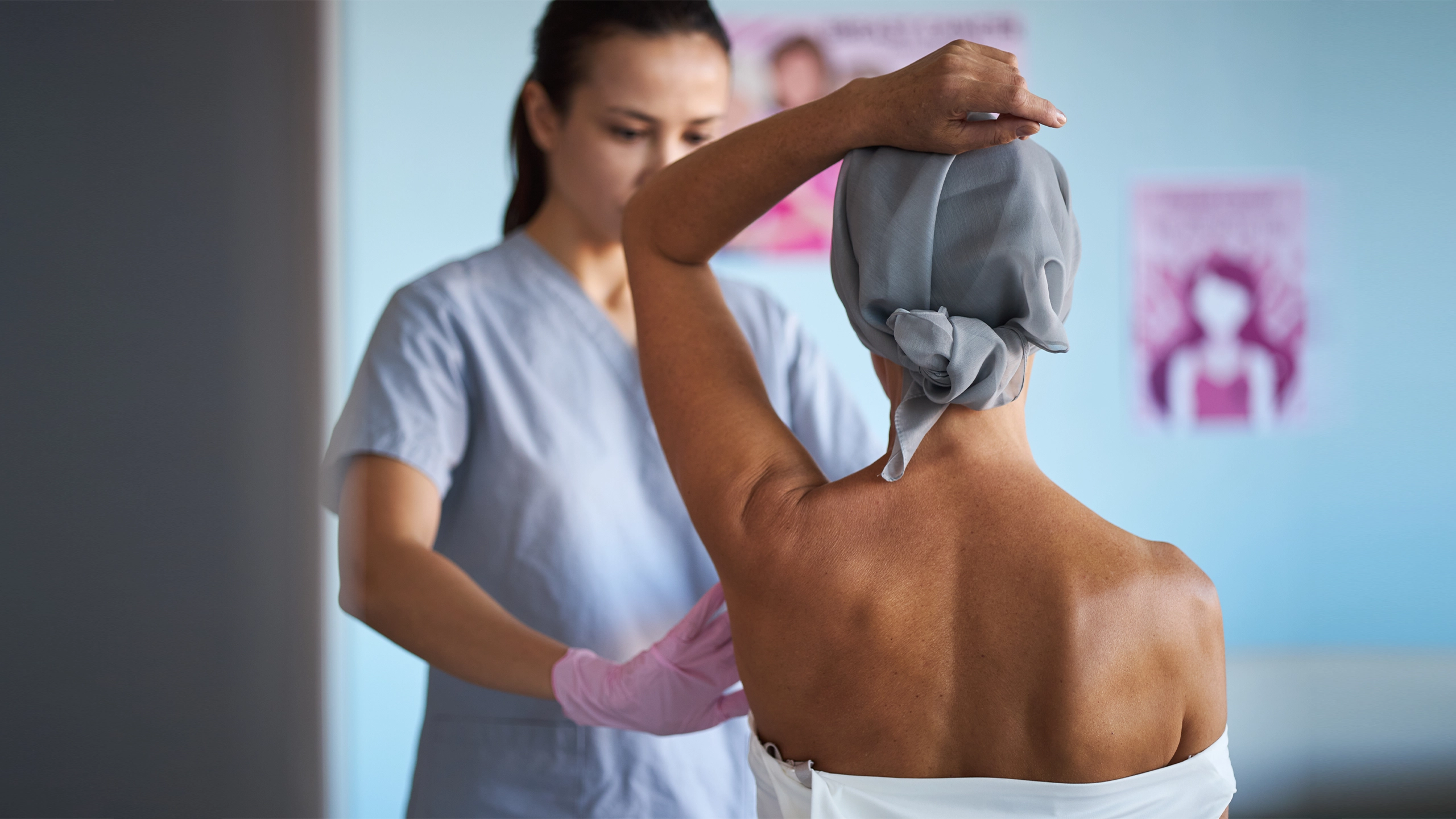
- When you arrive, you’ll be asked to undress from the waist up and put on a gown.
- A trained radiologic technologist will then usually position one breast at a time on a mammogram machine’s flat surface. The machine has two metal plates, and your breast will be gently but firmly compressed between these two plates for a few seconds. This pressure is needed to spread the tissue to get a clear image, while keeping the radiation dose at a low level.
- The technologist will then take images from different or various angles.
- The entire procedure may take about 15 to 20 minutes. The compression of your breasts may feel uncomfortable but it shouldn’t really be that painful.
What you need to know
There are 2D and 3D mammograms available now.
A 2D mammogram is the traditional one, which takes two flat images of each breast—the top to bottom view and the side view. The 3D mammogram, or tomosynthesis, is a single snapshot showing all the breast tissue layered together. It takes multiple image slices of the breast from various angles and reconstructs them into a three dimensional view. A 2D mammogram is more widely available, and is the basic kind of mammogram that you will be asked to get.
Your results will be graded in categories or readings.
These results, written by radiologists, are usually called BI-RADS, which stands for Breast Imaging Reporting and Data System. The categories start at 0 (zero) and go all the way up to 6. A 0 (zero) reading means the scan was incomplete, and may need a redo or comparison with previous scans. Dr. Mendoza explains the BI-RADS readings below:
- BI-RADS 1 to 2, according to Dr. Mendoza, mean “in the simplest terms, all good. Just continue with regular screenings.”
- BI-RADS 3, he says, means a mass has been spotted, but is likely safe or benign. This will require a follow-up check up usually after six months.
- BI-RADS 4 to 5, he says, mean there is a suspicious abnormality in the breast, or a mass that is possibly malignant. A biopsy is usually recommended afterwards.
- BI-RADS 6 means that the mass detected is already cancer.
For women with no family cancer history or comorbidities…
…annual screening and mammograms are recommended to begin between the ages of 40 to 44 years, and even up until 45 years of age. These screenings should be done regularly up until the age of 74, either annually, or every two years.
For women with a family history of cancer or genetic predispositions…
…screenings may start as early as 30 years old, Dr. Mendoza says, “and often with additional tests, such as a breast MRI. He also adds that if your mother had breast cancer, then you should begin screening “10 years before the age that she was diagnosed. So, for example, she was diagnosed at age 38, then you should start regularly screening at age 28.”
Reminders before you go for your mammogram
- Dress appropriately—that is, wear separate pieces of clothing, since you will have to remove your top.
- Avoid applying deodorant, powder, or lotions under the arms or on your breasts on the day of the test. “They can be captured as white spots on the X-rays,” Dr. Mendoza explains, since the mammogram uses low-dose X-rays.
- Inform the doctor or radiation technologist if you are pregnant, breastfeeding, or have breast implants.
- Schedule your mammogram seven to 10 days after the first day of your period, “because during that time,” Dr. Mendoza explains, “your breasts are less tender.”
- If you’ve already had previous mammograms done, bring the previous results or images to the facility for comparison.