
I’m 41, and I’ve Been Flossing Wrong My Whole Life
After years of sensitive, bleeding gums, a hygienist finally showed me the correct flossing technique that actually keeps my gums healthy.


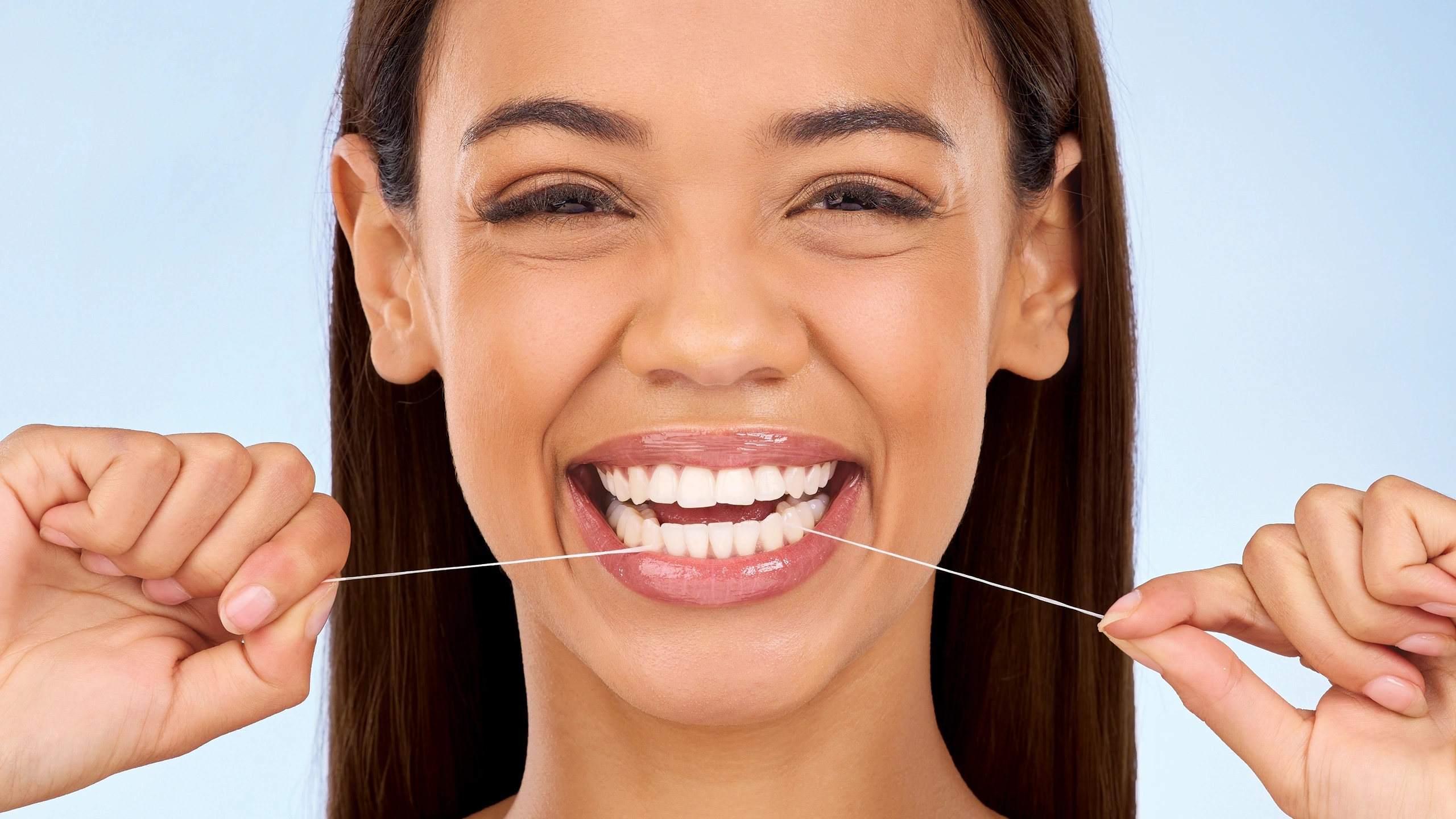
Going to the dentist has never thrilled me. To be honest, I would rather be anywhere else than sitting in the dentist’s chair with a mouthful of sharp metal objects.
That might partially be because, for as long as I can remember, I’ve always been a bleeder at the dentist’s office. Right up there with chest-in-throat anxiety once the tools go in is my concern over the color of the drain when I’m told to rinse and spit. Am I the only one who tries to hide the built-in chair sink with body contortions so my hygienist doesn’t see it tinge red and judge my flossing habits even more? The whole ordeal is pure torture.
Until dentists find a way to make the entire experience more Jetsons, with gleaming, squeaky clean, pearly whites at the touch of a button, I’m just not interested. Although truth be told, I’m also not interested in receding gums or tooth decay, so back I go every six-ish months.
Recently, I switched dentists and found myself up to my old tricks: rescheduling my visit week after week until they threatened to ban me from the practice. Visions of my mother’s childhood dentist office trauma flashed before my eyes. Her parents took her to a school for dental hygienists in training which was arguably much cheaper without insurance and arguably much more terrifying. My insurance-covered, highly recommended new dentist was nowhere near that level of scary, so what exactly was my deal?!
Don’t get me wrong, I floss. Not daily, but enough (or so I thought). I’ve just always had sensitive gums, teeth, you name it, that unleash the crimson wave once they encounter floss. So, when my new hygienist Angela Gromko asked me to show her how I floss, I sighed and begrudgingly accepted the challenge, warning her that I was in fact, a bleeder.
“Ah, that’s why,” she quipped once I reached the upper right side of my mouth. I was only seconds into the ordeal and already doing it wrong? “You’re fine when you’re flossing your front teeth but once you get to the part you can’t see, you lose your technique,” she replied.
Taking over, she handed me a mirror and placed the waxy string in between my teeth. “Healthy gums do not bleed! Bleeding when flossing is actually your body using blood to try to assist in removing the tiny bacteria that gets trapped in between the teeth,” she said, gliding the floss around with knit one-purl-two motions. The key to healing the gums, she said, is to avoid smashing the floss into the gum tissue. Instead, she instructed me to slide the floss along one side of the tooth, gently cleaning the surface as you reach the top, then to slide it back down (still hugging the tooth, not the gum) and up the other side, creating a V-shape with the floss.
Okay, so I’ve literally been doing this wrong my whole life, I thought. My mentality had always been get in, get out, and go as high up to dislodge whatever was causing the bleeding. According to Gromko, this was a) totally wrong but b) common.
Marc Lowenberg, DDS, a cosmetic dentist and partner at LLK Dental in New York City, agrees. Healthy gum tissue has a V-shaped point between each tooth called a papilla, he explains “In order to keep your gum tissue clean when you floss, you should slide the floss underneath the papilla, gently moving it up and down, hugging the tooth as you floss,” he says. “Then flip to the other side and repeat the same action.”
He also added that you should ideally floss once a day, but the healthiest mouths are those who floss after every meal. Goals. I made a mental note to do better since I’m definitely a night flosser, not a floss post-lunch kinda girl.
“A common misconception is that the floss’s sole purpose is to remove food particles in between the teeth so many people put the floss in between their teeth and in their search for food, beat up the gum tissue, causing trauma and bleeding,” adds Gromko. But this can actually result in cutting the fibers that hold the gum tissue to the root of the tooth, resulting in gum recession and pain because the gums protect the tooth structures and bone beneath the gum line.
Thinking back to all my years of dentists, dental office visits, cleanings, and reprimands about my bloody gums, I realized I never had anyone break down what exactly I was doing wrong. At least not like this. I was always told to floss more to reduce the bleeding. Why had I not been given clear directions as to how to floss to stop the floodgates?
Back home, I found myself oddly excited for my homework. Now that I had this whole V-shaped thing down, I was committed to my new plan. Even when approaching the deep dark corners of my mouth that I couldn’t see, I stayed dedicated, moving the floss up one side, down beneath the gum without jamming into it, and up along the other side of the adjacent tooth. And whaddya know, not a drop of blood was shed.
Validation. Thank god I realized the error of my ways before entering the gingivitis zone. But I had one more question: regular floss, or picks?
“For any floss to be effective though, it has to be used in the first place,” says Dr. Lowenberg. (Touché.) “Traditional floss is way better than floss picks, but for people who find flossing difficult or lack the dexterity to floss properly, they may find it useful to buy and use a floss holder.” For people who have difficulty flossing, he recommends waxed floss, like Oral-B Glide Pro-Health Dental Floss, which glides more easily.
Both Gromko and Dr. Lowenberg also co-sign the use of Waterpiks because all you do is hold the device, and it does the hard work for you. For her part, Gromko uses a water flosser in the shower prior to brushing.
Still, if you hate flossing and don’t see yourself getting on board with any of these suggestions, you can consider DIY’ing a hydrogen peroxide/baking soda mixture, which Dr. Lowenberg credits with killing bacteria, reducing plaque, relieving pain, and decreasing bleeding. As Allure has previously reported, you can mix baking soda with a small amount of hydrogen peroxide until it forms a thick paste that you can use to brush your teeth gently for one to two minutes.
Or, try oil pulling. This trend isn’t new by any means, but it is effective according to Dr. Lowenberg, who says it’s been shown to reduce inflammation by combining the fat-soluble toxins found in the mouth (a byproduct of bacterial dental plaque) with coconut oil.
The following week, at happy hour, I broached my new favorite topic of conversation with one of my best friends, braced for her reaction. I was expecting, “Who doesn’t know how to floss at 40?” Instead, I was met with, “Oh, are you kidding? I’ve been flossing wrong my whole life, too. In fact, I just had gum surgery to prevent periodontal disease and have to use super floss now.” (That’s floss with a thicker texture and hardened tip that allowing you to slide it between teeth and underneath a permanent retainer.)
Turns out, we’re all on our own dental hygiene journey—but at least we’re on it. With that, I finished my vodka soda (light-colored alcohols equal less teeth staining, Dr. Lowenberg reminded me) and went home to floss.