Love Your Daily Gua Sha Ritual? Here Are Five Benefits You’re Getting Out of It.
PSA: It’s not just about de-puffing.


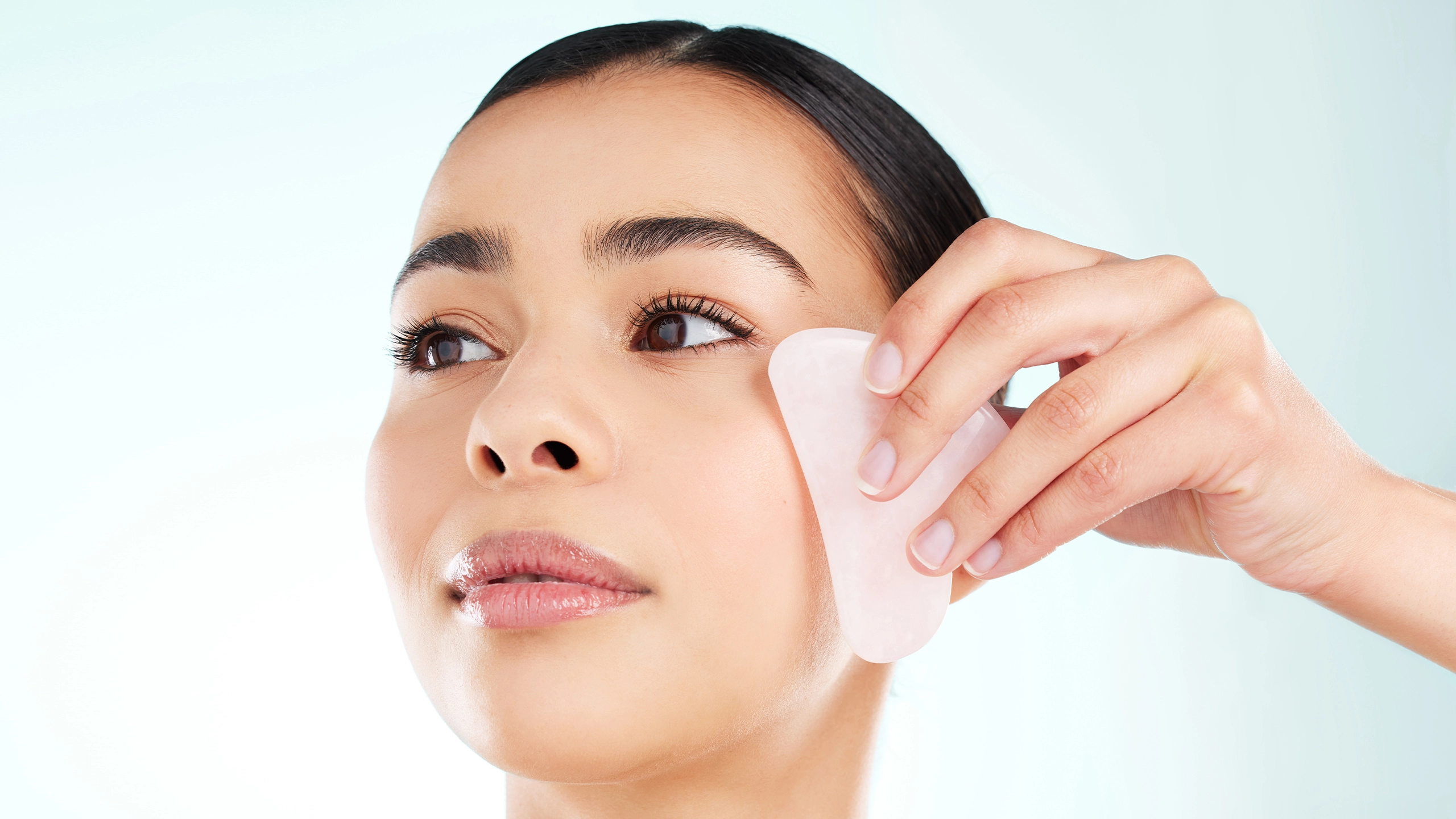
When it comes to beauty rituals, one of the most popular and widespread today is gua sha. After all, what can be better than a relaxing ceremony that can be done any time of day, requires only a simple hand tool, and promises a slew of benefits that will help you both look and feel great?
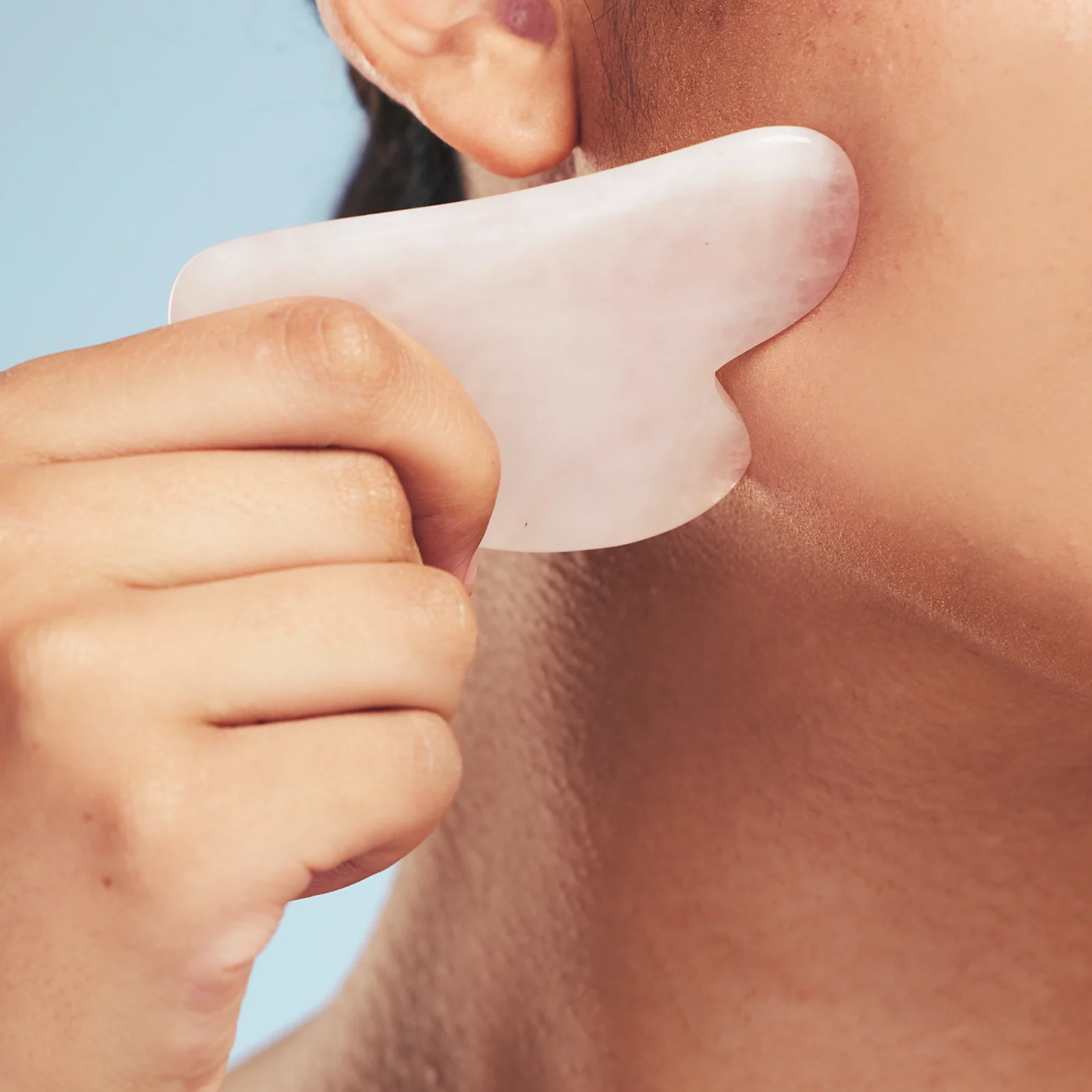
Trish Tan, a traditional Chinese medicine practitioner who has earned certifications from the Ateneo Traditional Chinese Medicine program, and has been trained in Taoist Wellness Qigong & Wudang Taijiquan in Hubei, China, shares that gua sha is actually a traditional Chinese medicine practice (TCM) for both the face and the body. To practice gua sha is to utilize a smooth-edged tool to scrape the skin, to “relieve pain or tension and improve blood circulation,” according to Tan.
Improving blood circulation and relieving pain or tension already sound like two fantastic reasons to begin a gua sha practice, but Tan says there are other benefits aside from those. If you’re one of the many who has taken to using a gua sha on their face daily—perhaps in an effort to de-puff or to bring out the natural contours—we’ve listed the benefits—both skin– and health-wise—that your ritual can bring you.
The many good things about gua sha
In a previous interview with Allure Philippines, Tan explained the proper way to use a gua sha, emphasizing that the angle you hold your tool at, and the speed and the pressure you slide it across your skin with, matter. She also clarified that the practice of gua sha can be done on both the face and the body, hence, the many benefits listed below.
De-puffs and gives a brightening effect
As most gua sha enthusiasts know, this is one of the main reasons for gua sha’s popularity. Tan concurs. “It’s very good for de-puffing the face,” she says, “and it also gives some sort of brightening effect.” Be sure to follow her tips on using gua sha the right way to maximize results.
Contours the jawline and cheeks
When used on the face, Tan says, gua sha serves more of a cosmetic purpose, but be sure to use light pressure only. “It’s very good for contouring the cheeks or the jawline,” she shares.
Improves blood flow or blood circulation, or qi
“The main purpose of gua sha,” Tan shares, “is to remove stagnation.” Basically, that means, it should keep things moving, “promoting more movement and flow of qi, or the vital energy in TCM.” The movements made during the gua sha practice improve blood flow in general.
Perks up the immune system and drives out pathogens
Because of how gua sha promotes blood flow, it also helps keep your immune system going, removing pathogens or toxins in the process. “It can expel pathogens and stimulate the immune system,” Tan confirms.
Improves general health in the area you practiced on
Since gua sha can actually be practiced on the body, and not just on the face, Tan shares that the areas you practice it on will probably see an improvement in general health and function. “You’ll generally feel a feeling of warmth and relaxation in the body,” she advises, “and then improved function in the area you did gua sha on.”
An ancient ritual in today’s modern world
The practice of gua sha, Tan shares, has a state of balance as its goal—promoting flow, removing stagnation or blocks in your energy, blood, or cheeks, just like any other TCM practice. “It’s a very good practice in terms of putting you into [a state of] wellness, because wellness is basically having you in a state of balance,” Tan explains.
There are many tools that one can use to achieve a state of balance, and gua sha is one of them. And with wellness nowadays at the forefront of daily life, there’s an abundance of other modern practices and techniques that can be used alongside an ancient practice to help us on the way to a state of balance, or feeling—and looking—truly well. Gua sha, Tan says, is definitely “one of the tools that you can use to keep you healthy.”
- This Is the Proper Way To Gua Sha, According To an Expert
- Ayurvedic Beauty “Trends” Completely Miss the Point of Ayurveda
- Interested in Eastern Healing Practices? Here’s a Quick Guide to Traditional Chinese Medicine
- East Side: Four Ways That Filipino Wellness Customs and Traditional Chinese Medicine Are Alike