
Why Balance Training Is Just as Crucial as Cardio or Strength
Experts explain why balance is the overlooked foundation of strength, posture, and injury prevention.


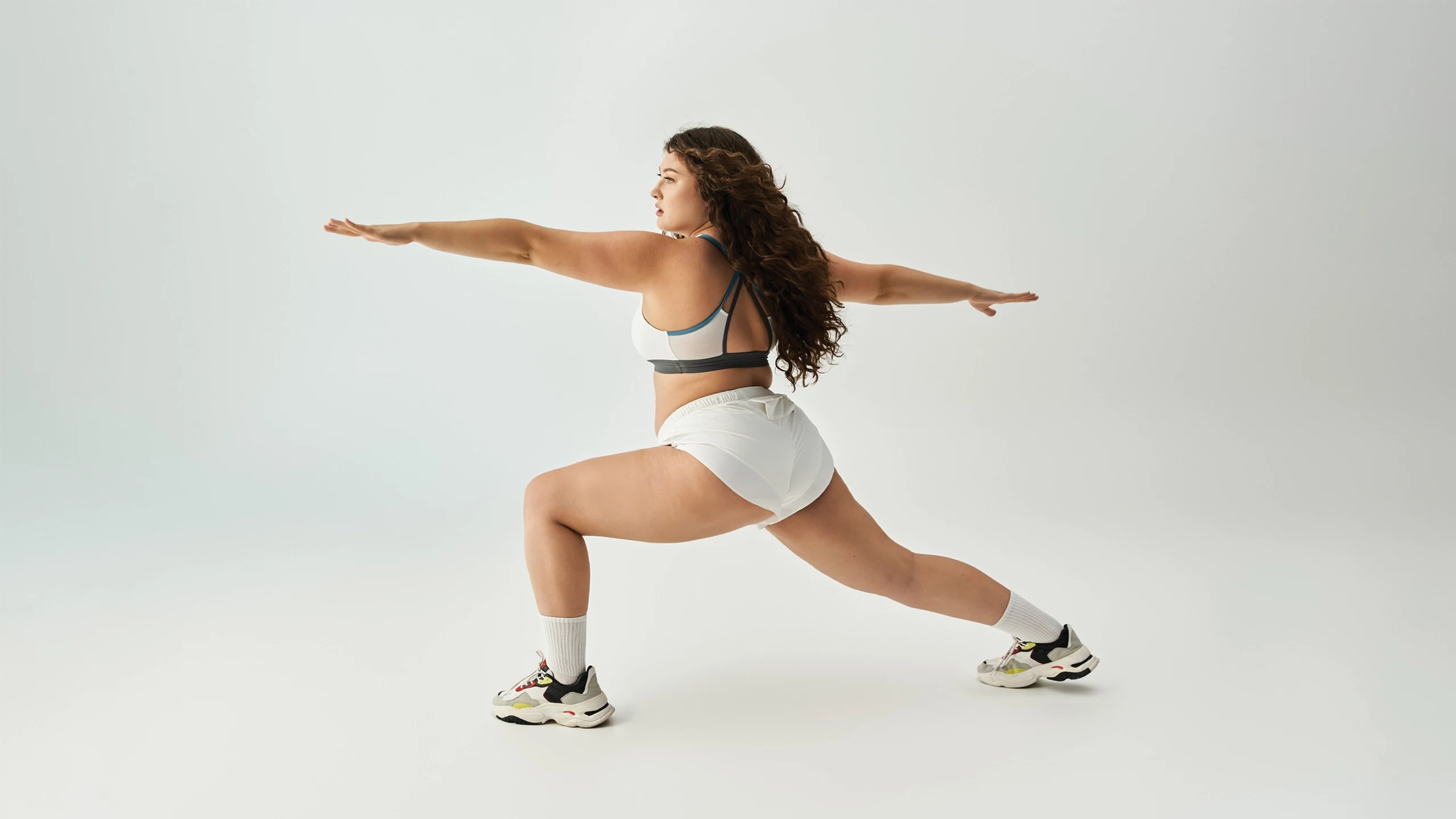
Balance is the first thing we lose as we age, and the one thing most people ignore in fitness.
It was probably during my sixth repetition of a single leg deadlift, which was supposed to work on, not only my strength, but especially my balance, that the question popped into my head: “Why am I working so hard on my balance anyway?” It’s not like working on my balance increases my longevity and lowers risk of disease like cardio does, or makes me stronger overall like strength training (well, it does, but indirectly—I mean, you get my point). Bottom line is, I was beginning to wonder why the phrase “good for your balance,” seemed to hit my ears on repeat every time I hit the gym.
Whether you hire a personal trainer, join any sort of fitness classes, subscribe to a program online, or just work out on your own, you’ve probably been told that it’s important to work on your balance. If like me, you’re wondering what purpose such strong and refined balance serves in your everyday life—aside from walking the fine line between standing up for yourself and being aggressive—then consider this an investigation done on your behalf.
We spoke to the physical fitness experts, namely licensed physical therapist Charmaine Geronimo, PTRP, RPT, founder of Re-Hub Physical Therapy Clinic, and Chappy Callanta, head of the University of the Philippines’ High Performance Department of the Office of Athletics for Sports Development and a strength and conditioning specialist certified by the National Strength and Conditioning Association, and asked them about the role balance plays in our overall health and fitness.
What does balance do for us, and why is it important?
Both Callanta and Geronimo define balance in physical fitness and sports science as the ability to maintain your center of gravity, either in a static (when you’re not moving), or a dynamic (when you’re moving) position. “Simply stated,” Callanta explains, “it’s the ability of our bodies to maintain our ground and hold our position while overcoming external forces, which is normally gravity.”
Callanta points that we use our balance in multiple, mundane tasks every single day. “When we stand up from our beds, walk to the bathroom and get ready for our day, our balance is at play,“ he says. “More so when we start engaging in sports where we are put in different positions while trying to hold our ground. Since we use it daily, it’s good to work on our balance.”
Geronimo also points out that one of the main functions of good balance is injury prevention. “if we are able to maintain a good balance, it saves us from injuries, like those caused by falls” she explains. “That’s important, especially since our balance declines as we age.” Beyond preventing falls, good balance also translates to how we carry ourselves every day—from standing heels, carrying multiple bags, to walking with ease.
What happens when you have poor balance?
“Normally, people with poor balance can get through the day fine,” Callanta says, before adding, “but when there is a time when balance will be required, like when you suddenly have to shift your weight to avoid a bicycle while crossing the street, that’s when poor balance will not be good for you.” The idea of training for balance, he explains, beyond the strengthening of your base of support, “is more for being able to use it when you need it, which quite frankly, might end up saving your life in extreme circumstances.”
Geronimo adds that poor balance also affects our posture, since it affects our ability to maintain our center. “When you have poor posture because of difficulty balancing, other muscles will compensate, and other muscles will become tight or weak,” she says.
What are the best ways to work on our balance?
Although our balance is controlled by a whole host of body parts and senses, including the brain, spinal cord, inner ear, and our proprioceptors, which are responsible for our awareness of our body in any space, Callanta shares that it’s best to train your balance by strengthening what he calls “your base of support.” “We do this with resistance training, and mixing up your base of support from a parallel stance, to a split stance, to a single leg stance,” he says. “We can train the muscles to be stronger by holding our ground and positions.”
Callanta is not a fan of training your balance on uneven surfaces, such as a stability ball or bosu ball, “because there’s low evidence of those kinds of situations being applied in the real world. It’s much better to get stronger in different positions,” he says. He mentions the squat as an example—which you can do in different stances or positions, such as parallel stance, split stance, lateral, rotational, or single leg, to get stronger in multiple planes.
Geronimo shares that when it comes to the motor or muscle systems that affect balance, it’s important to work on the hips, knees, and core. She also suggests that you try doing an exercise with eyes open, and then with eyes closed, as balancing, and movement in general, becomes more challenging without visual support. She also underscores the importance of doing exercises that are both static, such as isometric holds, and dynamic, such as standing lunges.
Keeping fit for a reason
For most people, when we start a fitness regimen, it’s with an end goal that has to do with looks in mind. It’s only throughout the journey that we realize the significance of working on and strengthening certain physical aspects and qualities that have little aesthetic value—or none at all—but are so crucial in helping us function on the daily. As it turns out, balance is one of those things, helping us do everyday movements and tasks, and protecting us from frequent and serious injury. It takes us back to the reason we invest in our fitness in the first place—not only to look good, but to feel good, be good, and live our lives to the fullest.