
Amy Perez, Once a Victim of AI Deepfake, Now Vows to Fight Misinformation on Women’s Health
A manipulated AI video used the face and voice of veteran host Amy Perez to sell a menopause supplement she never endorsed. What followed was not just damage control, but a deeper fight for women’s health, media literacy, and truth itself.


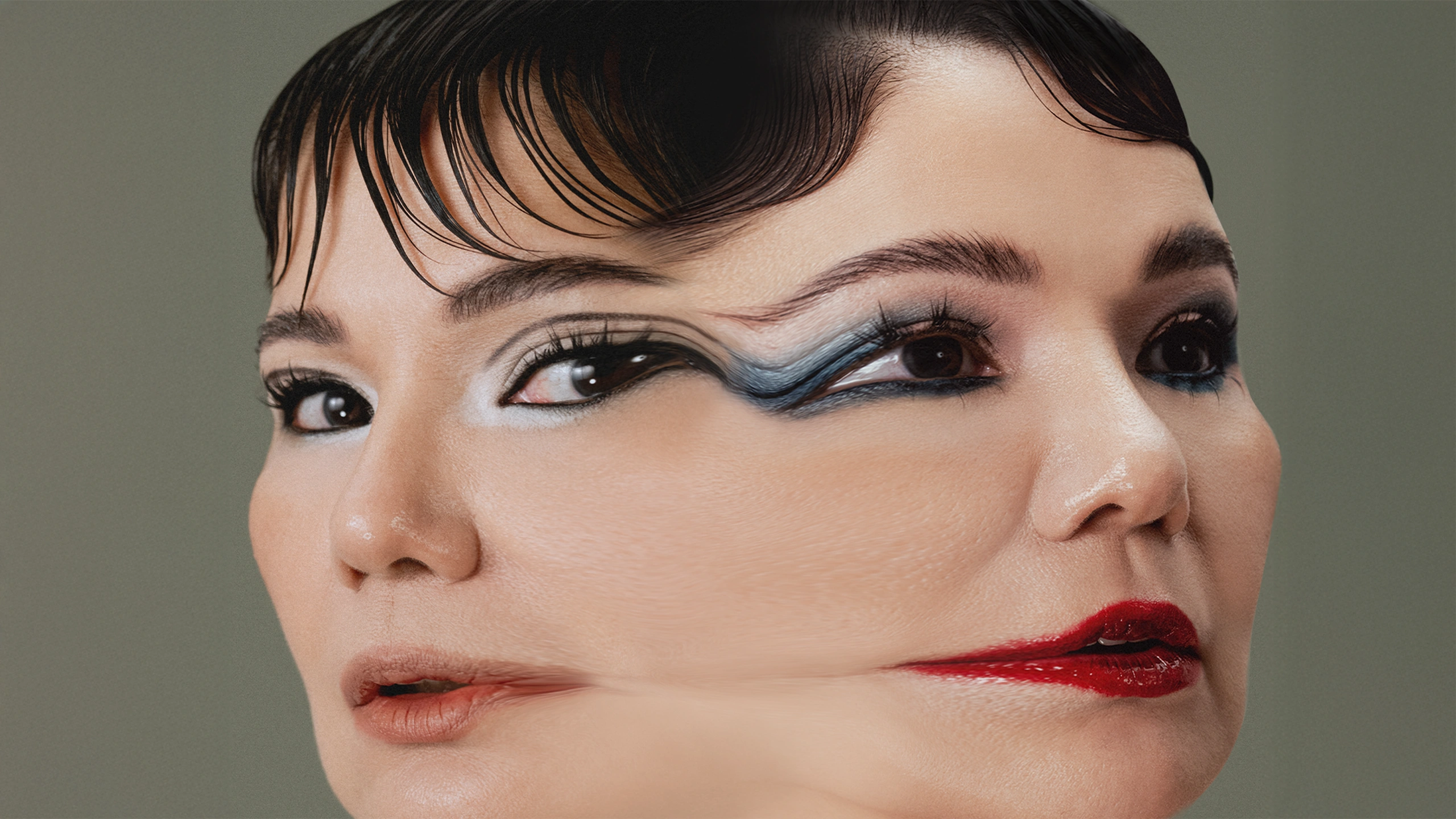
Nearly seven years ago, in one of our first-year college media courses, my classmates were reporting on deepfake technology in the future tense. We studied it as a looming threat, something that could eventually distort journalism, manufacture fake news, and weaponize credibility here in the country. Their case studies came from the United States, from faraway scandals, and hypotheticals. It felt distant and abstract…at that time, at least.
In just a few years after that, it stopped being theoretical in the Philippines.
A prime example? In 2024, a video of veteran Filipina television and radio host and actress Amy Perez, “Tyang Amy” to generations of Filipinos, apparently endorsing a menopause supplement circulated online. In the video, her face was unmistakable. Her voice, uncannily similar. She spoke with the warmth and authority viewers had trusted for decades, and if you didn’t know better, you would believe it.
That, unfortunately, was the point: to deceive people.
“It was actually after the pandemic,” Perez tells Allure Philippines, recalling when she realized how deeply the manipulated video of her had permeated social media. “That was the time I realized that I was all over social media talking about menopause.”
Prior to that video, she had talked openly, consistently, and responsibly about a stage of womanhood that is rarely explained and often dismissed. Long before the deepfake incident, menopause had become a topic that held personal, political, and urgent value for her.
“From the time that I [started] menopause, I’ve been very active talking about it,” she explains. “Because all of us, actually, when we got our first period, that was explained to us by our mothers. When I got pregnant, it was explained to me also. But when I reached menopause, nobody was telling me, what is that?”
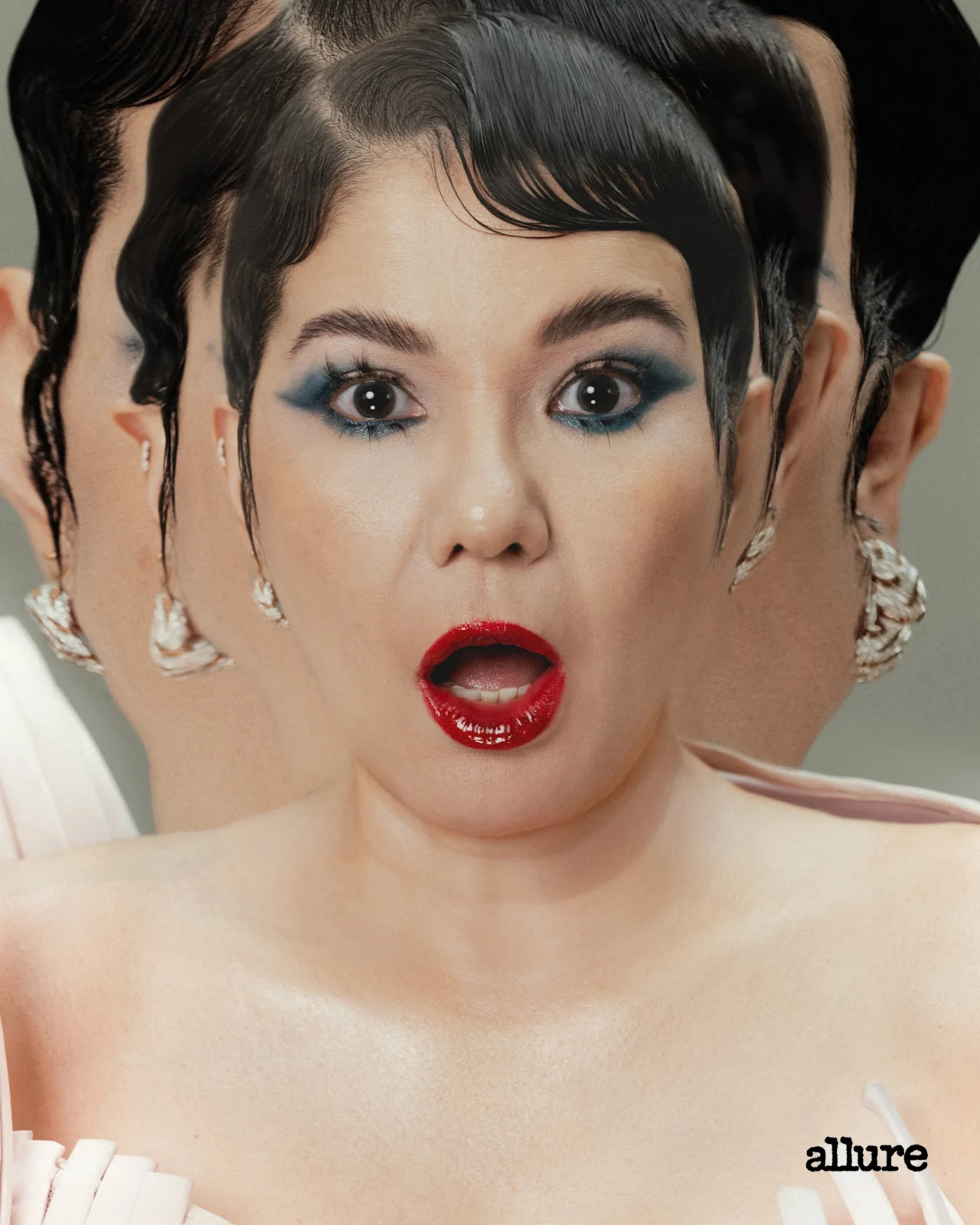
Photographed by Charisma Lico-Santos. Maic Atelier asymmetrical dress. Miladay diamond earrings and diamond ring.
Turning a platform into public service
It was this advocacy that pushed her to use her platform, particularly her morning DZMM TeleRadyo show at the time on ABS-CBN called Sakto, to invite doctors and experts regularly. “I’m going through menopause and I really want to educate a lot of women about it na it’s not the end of your journey,” she stresses.
Every other week, she would invite experts to talk about menopause, perimenopause, post-menopause, the symptoms, emotional shifts, and the things women feel but rarely hear validated.
“I used the program, I used the platform, I used the TV show as a way of informing the Filipino women,” she says. “Because really, we don’t have the right education and the right campaign,” she continues, with conviction and a pressing tone. In fact, she even got in touch with the Department of Health because she “really wanted to help in that campaign.”
Years after the show ended, fragments of those very interviews were repurposed without her consent–manipulated to deceive unwitting women into buying a sketchy product marketed as a “menopause supplement.”
“Three years after the show was canceled, my video was circulating over Facebook and some platforms like Lazada, like in Shopee,” Perez says.
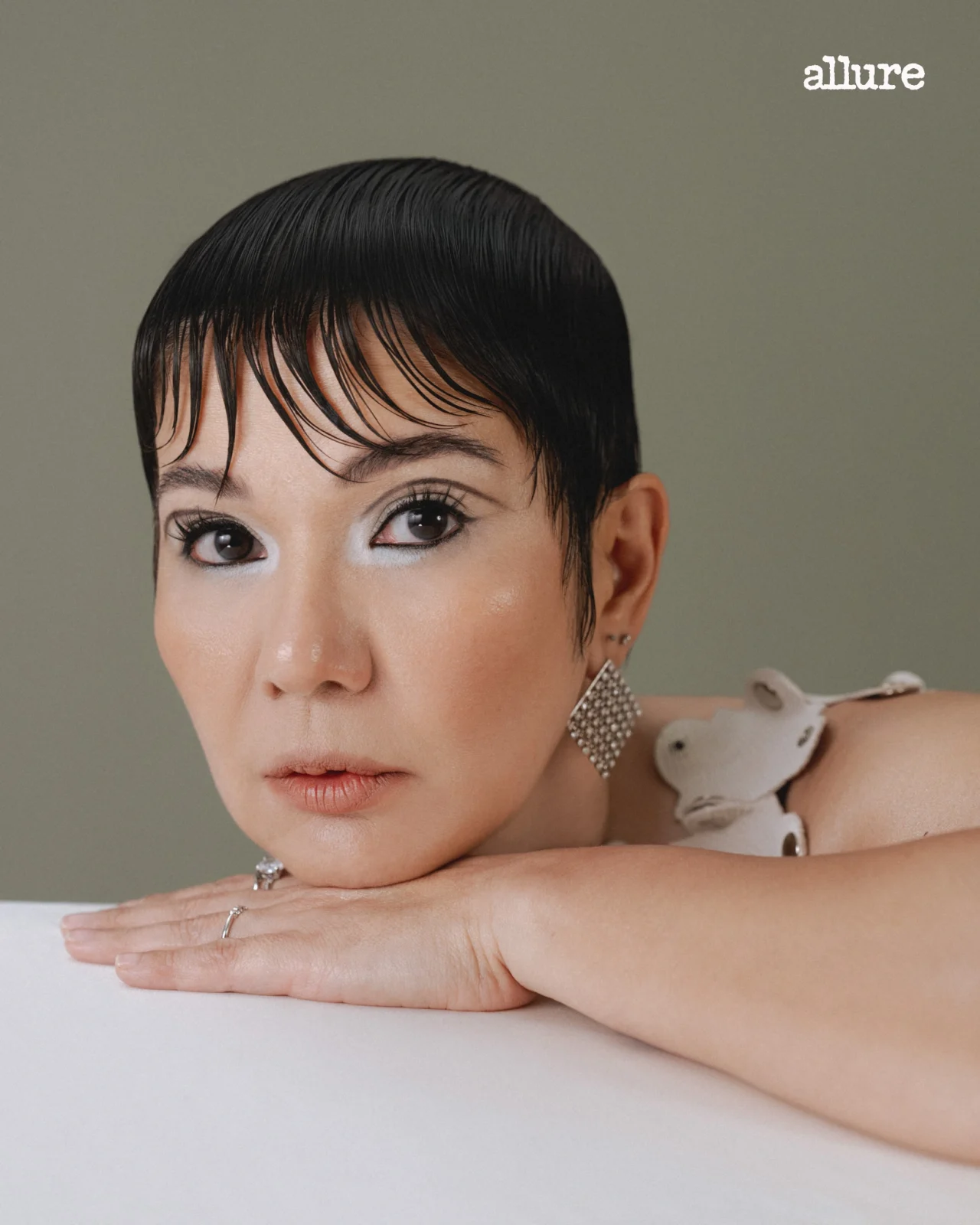
Photograhed by Charisma Lico-Santos. Yen Kyla white leather Puzzlework dress. EEM by Elmar Pascua Kabsat – Mar skirt. Miladay dangling diamond earrings.
The anatomy of a deepfake
In the manipulated clip, her AI-generated voice appeared to promote a supplement she had never used, researched, or even approved. “If you’re just going to play the video and just listen to it, you will think that it’s my voice talaga. Actually, yun yun eh. Na AI nila, my voice,” Perez explains.
And of course, she had every right to be appalled and concerned at the same time. When you spend time and dedication informing women with facts and research, it’s natural to feel a surge of urgency when you see a manipulated version of yourself doing the exact opposite of what you’ve always stood for.
It didn’t help that the manipulated video targeted women aged 40 and above, with many already vulnerable and searching for relief. They were her fellow women–the very audience that trusted her–and the same women she had long dedicated her advocacy to.
And although she was a victim, too, and it wasn’t her fault, she still carried the weight of accountability and paid the price of being easily trusted as a credible personality.
“They really thought that I was campaigning for it… They thought I was the brand ambassador for that medicine,” Perez recalls. She pauses, then clarifies what truly frightened her. “My concern really was yung mga kababaihan na bumili ng lahat ng gamot na yun and ano yung pwedeng side effect?” she asks.

Photograhed by Charisma Lico-Santos. Yen Kyla white leather Puzzlework dress. Miladay dangling diamond earrings, diamond bracelet.
Damage control, and the limits of it
Perez immediately worked with her manager, legal team, and digital team. They issued public statements across platforms: that she was not connected to the product, that she wasn’t endorsing it, and that she was not involved with the brand in any way.
They also prepared to take legal action, hoping to trace where the deepfake video originated. But when the IP address led back to Vietnam, the trail went cold. It felt futile to pursue further, especially with no local source to hold accountable.
For Perez, however, what mattered more was warning the public.
The issue quickly revealed itself to be bigger than one video, and one woman. “Madami na kaming na-biktima sa mga ganyan,” Perez says, naming other public figures whose likenesses were similarly manipulated. The scale was alarming enough that ABS-CBN News produced an investigative report to expose the deepfake network and explicitly warn viewers.
Still, the damage, if not done, was already in motion.
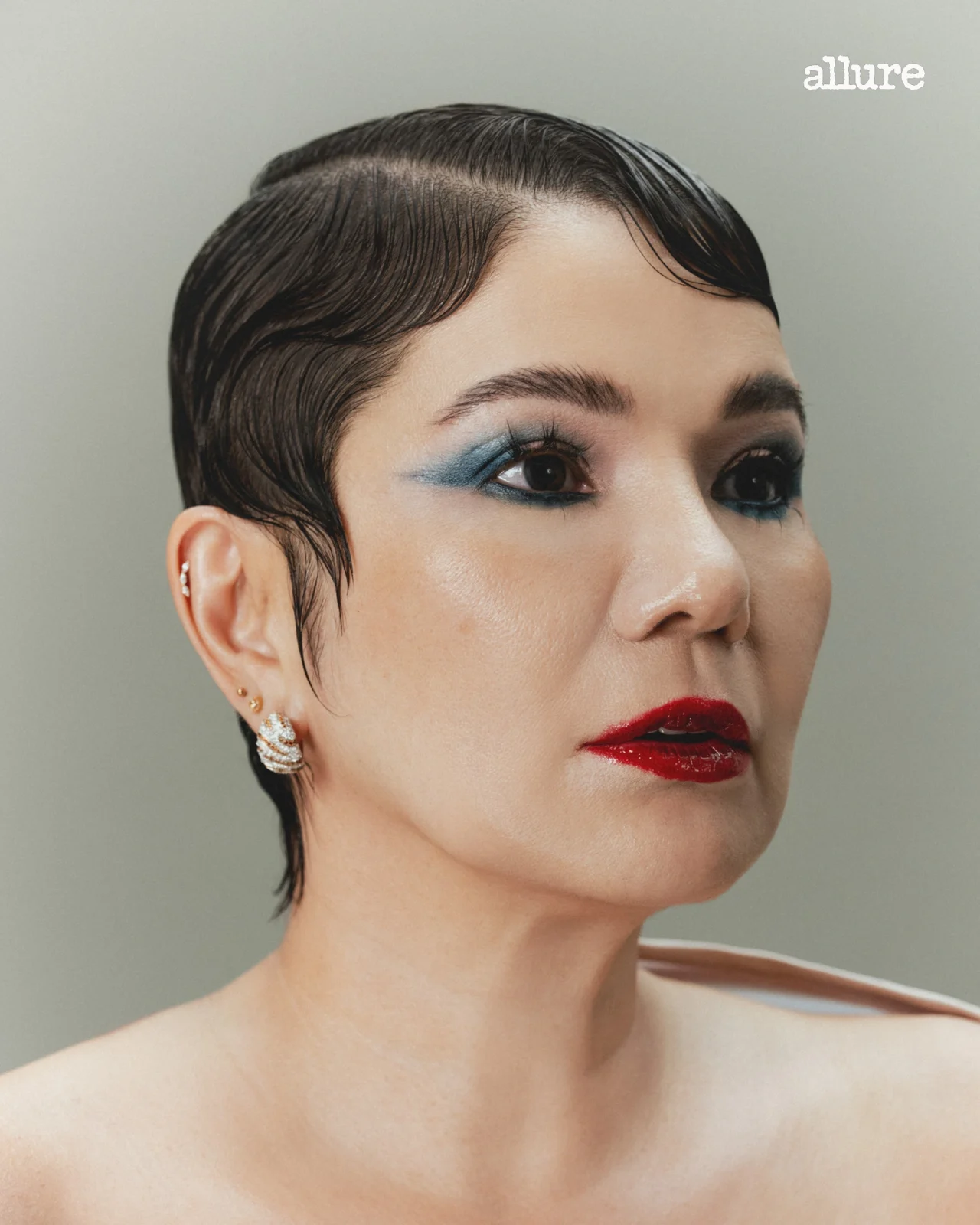
Photographed by Charisma Lico-Santos. Maic Atelier asymmetrical dress. Miladay diamond earrings.
The new literacy: skepticism
“[It’s] super dangerous,” Perez answers quickly when asked how convincing these AI-manipulated videos have become. “Not just for the senior, ha? Because yung seniors, they have a tendency to just play the video and not really look at it.”
She talks about lips that almost sync. Teeth that almost move naturally. Just almost, but still good enough to deceive. “Marami [ang] nagiging victim of all those fake campaigns. Kaya talagang nakakatakot,” she says.
This is where her frustration sharpens, shaped by decades of experience in using her voice to deliver the truth. “For someone who works sa radio for a long, long time, it’s really difficult,” she says. “It is something that you have to remind your viewers, your listeners every day.” And more importantly, “It’s something na dapat hindi mapagod ‘yung mga nasa radio at yung mga nasa TV in explaining and reminding and telling the people na fake news ito,” she continues.
Don’t get tired. Don’t stop explaining. Don’t stop correcting. And don’t underestimate how easily misinformation spreads, even inside homes.
“Even with the people that you’re with at home,” she says, “you also have to educate them, your ates, your drivers.”
Perez describes feeling like a police officer in her own life, constantly correcting narratives, constantly pulling people back to verified sources.
Be a journalist, too.
At the end of the interview, she offers practical advice, spoken half like a reminder, half like a scolding auntie. “Rely on yung mga broadcasting networks na talagang certified in bringing the news talaga,” she says.
“You look at the video, you listen to it, and then you fact-check,” she continues. “Do your share also. Be a responsible journalist din.”
She laughs, but she means it. Everyone has to act and think like journalists now–or at the very least, follow the same rigor in verifying facts–whether they like it or not.

Photographed by Charisma Lico-Santos. Maic Atelier asymmetrical dress. Miladay diamond earrings and diamond ring.
The advocacy doesn’t switch off.
Later that day, after the cameras are packed away, the Allure Philippines team gathers with Perez in the glam room for light-hearted kwentuhan. The shoot is done. The interview is done. Perez isn’t, though. She keeps talking about women’s health, about fake news, and responsibility.
On television, particularly on the country’s arguably most popular noontime show, It’s Showtime, Tyang Amy often plays the archetypal Filipino tita who is warm, nosy, and caring. It turns out, it’s not too far from who she is off-camera. The warmth stays. So does the care. The advocacy, after all, doesn’t switch off when the lights do.
Trust, reclaimed
Perez has built her career on credibility, from noontime variety shows to serious conversations, from comedy to advocacy. That very credibility, however, was borrowed without permission and used as bait.
It was a good thing that she knew how to take it back by telling the truth. Again, and again, and again.
If malicious deepfake technology thrives on trust, then maybe the only way to fight it is to keep earning trust the old-fashioned way: by showing up, telling the facts, educating people, and refusing to stay quiet.
Seven years ago, AI deepfake was a classroom warning. Today, it is a lived reality for many Filipino personalities, one that preys on trust, on health, and on women who are simply looking for answers. And in the process, it also victimizes the very women—like Perez—trying to provide those answers.
Art direction by Nicole Almero. Beauty direction by Leira Aquino. Photography by Charisma Lico-Santos, assisted by Yhana Imutan, Erwin Arda, Antonio Baylon Jr., Mark De Castro. Makeup by Zee Ghielmetti. Hair by Glenda Eugenio. Styling by Gee Jocson, assisted by Kassandra Gandionco and Vince Avisado.
Frequently Asked Questions
A manipulated video used Amy Perez’s face and an AI-generated imitation of her voice to falsely promote a menopause supplement she had never used or endorsed. The video circulated on Facebook, Lazada, and Shopee. When her team attempted to trace its origin, the IP address led to Vietnam, making legal accountability effectively impossible.
The deepfake exploited Perez’s established credibility as a public advocate for menopause awareness. Having spent years inviting medical experts onto her DZMM TeleRadyo program to discuss menopause, perimenopause, and women’s health, her association with the topic made her likeness a convincing vehicle for selling an unverified supplement to women aged 40 and above seeking trusted guidance.
Amy Perez advises viewers to watch for near-synchronization of lips and teeth — convincing but imperfect movement is a marker of AI generation. She recommends cross-referencing content against certified broadcast networks, using fact-checking tools, and treating social media health claims with the same skepticism a journalist would apply before publishing. Relying solely on visual similarity is no longer sufficient.
Victims may file complaints under the Anti-Photo and Video Voyeurism Act, the Cybercrime Prevention Act, and data privacy provisions under the National Privacy Commission. As of 2024, proposed Senate measures specifically addressing AI-generated deepfake content were under deliberation. Perez’s case illustrates a critical gap — when the source is offshore, existing legal channels offer limited recourse.
Perez notes that while menarche and pregnancy are typically explained to Filipino women by family or healthcare providers, menopause is rarely addressed with the same clarity or support. She used her broadcast platform to normalize the conversation, inviting specialists regularly and engaging the Department of Health on a public health campaign — advocacy she continues regardless of whether cameras are present.