

Getting a fresh new set of nails is one of the joys we beauty girlies live for—there’s something about clean, manicured nails that just makes everything feel more put together. But beyond your monthly trip to your favorite nail artist or the occasional at-home fix, your nails are doing more than just sitting pretty.
They’re quietly recording information about your health—and most of us haven’t realized it.
Let’s say you’ve noticed some discoloration or that stubborn white spot on your nails. These aren’t just cosmetic quirks that come and go; they can be clues to nutritional deficiencies, imbalances, or health conditions that have nothing to do with your hands at all.
To understand more about our nails, Allure Philippines asked three board-certified dermatologists—Mae Ramirez-Quizon, MD, FPDS, Criselda L. David-Javier, RN, MD, DPDS, DPADSFI, and Anna Palabyab-Rufino, MD, FPDS—to break down what our nails are trying to tell us, which changes are harmless, and which ones are worth a trip to your a board-certified dermatologist.
Meet the Experts

Images courtesy of subjects
- Mae Ramirez-Quizon, MD, FPDS is a Clinical Associate Professor at the University of the Philippines-Philippine General Hospital, an Active Consultant at the St. Luke’s Medical Center Global City, and a Medical Specialist III at the Rizal Medical Center.
- Criselda L. David-Javier, RN, MD, DPDS, DPADSFI is a board-certified dermatologist with a specialization in acne and acne scar treatment, nail diseases (fungal infections, discoloration, deformities, and ingrown nails), and more.
- Anna Palabyab-Rufino, MD is a board-certified dermatologist and founder of Beautique MD and a diplomate of the Philippine Dermatological Society (PDS).
Nails as a “health diary”
If you’re a keen observer, you might have noticed that your nails grow slowly. And that’s a useful tidbit! Dr. Mae Ramirez-Quizon explains that because they grow gradually—taking weeks or even months—changes in the nail plate can provide clues to illnesses or events that occurred weeks or even months earlier. But these should be interpreted with the context of the person’s medical history.
“For example, some children develop nail changes after hand, foot, and mouth disease. The infection may temporarily interrupt the activity of the nail matrix—the ‘factory’ that produces the nail plate,” she explained.
Dr. Criselda David-Javier backs this up with actual data: “A systematic review published in the British Journal of Dermatology found that specific nail changes like clubbing had 92% specificity for pulmonary and cardiovascular disease, while Beau’s lines showed 81% sensitivity for systemic stressors like severe infections or chemotherapy.”
In her own practice, she shared that she’s picked up on iron deficiency, thyroid dysfunction, and early psoriasis just by examining her patients’ nails first—before they even said anything.
Dr. Anna Palabyab-Rufino adds that this “diary effect” isn’t limited to nail-specific issues. “It is true that nails can tell us a lot about our current state of health. They show us early signs before we become symptomatic, and they give us clues in the diagnosis of certain diseases and conditions not necessarily limited to the nails or the skin around them,” she explained.
That said, this doesn’t automatically mean that your nails are a telltale mirror of your health. All three dermatologists were firm when they said that nails aren’t a stand-alone diagnosis. As Dr. David-Javier puts it, “Think of your nails as one chapter in your health story, not the whole book.”
One weird ridge may mean very little on its own. What matters is how it fits into the larger context of your health.
The difference between “normal” and “see a dermatologist”

Envato Images
Of course, not every chip or quirk deserves an anxious Google search. According to Dr. Ramirez-Quizon, most harmless changes share the same traits: mild, stable, painless, and caused by at least one of the following—aging, smoking, minor trauma, or frequent gel manicures.
If you’ve noticed fine vertical ridges that appear as you age, small white spots after a manicure, or peeling at the tips—these are often harmless and will grow out on their own. But the ones worth paying attention to usually follow their own pattern. Dr. Ramirez-Quizon flags a few specifics to watch for:
- A new or changing dark streak,
- Unexplained discoloration,
- Nails lifting from the nail bed (onycholysis)
- Changes in shape or texture,
- Abnormal growth, or
- Inflammation or irritation.
Dr. David-Javier adds a relevant detail for Filipinos: brown or black vertical lines are a normal, harmless variation for people with medium to dark skin tones—a function of natural melanin that’s not a red flag. This is called racial melanonychia.
As a rule of thumb, trauma-related marks tend to grow out and move toward the tip. Anything that stays put, spreads, or is painful is another story—and is one worth an actual appointment with your doctor.
What your nail color is actually telling you
White spots
Envato Images
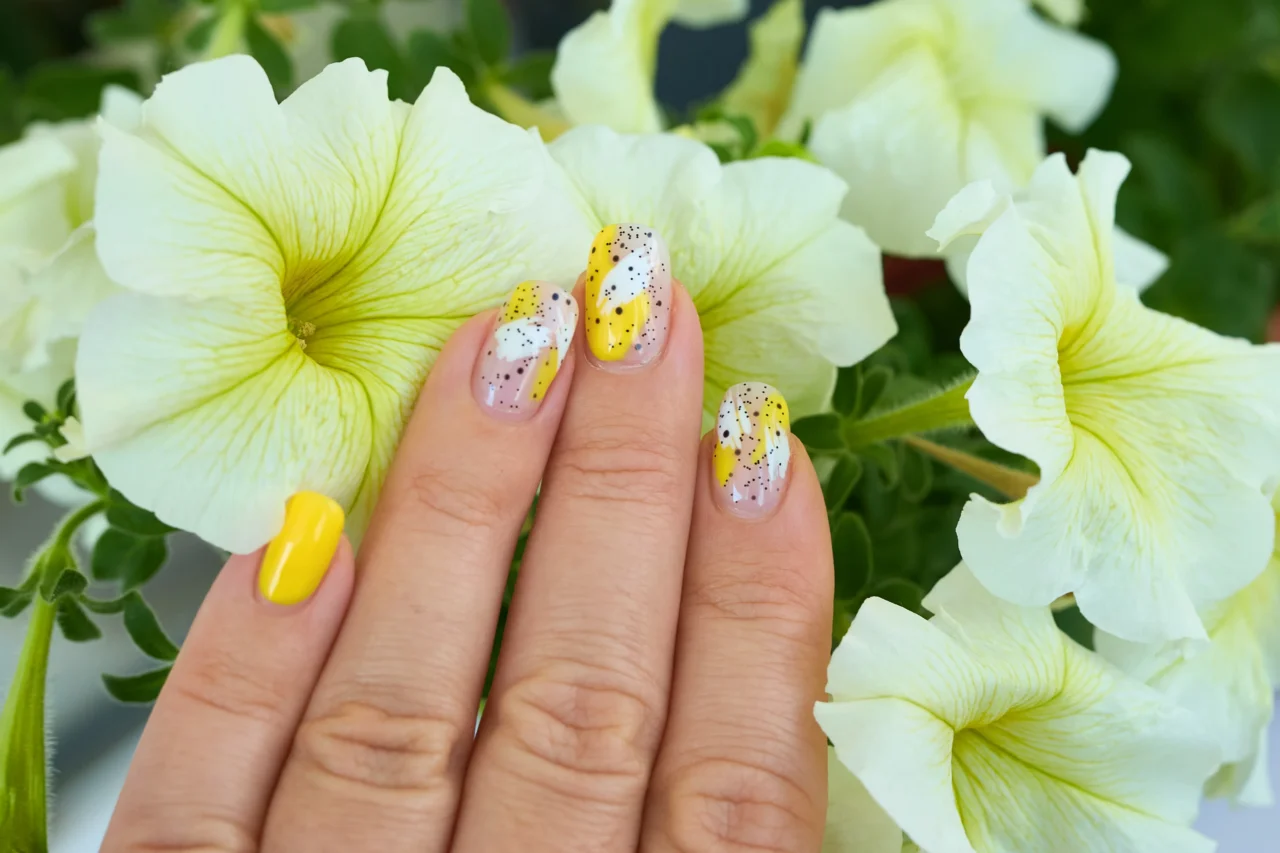
Everyone’s heard of the calcium myth at this point—the one about those small white spots on your nails? No, it’s not calcium deficiency, and they’re usually quite harmless.
Dr. Ramirez-Quizon says it plainly: “Small white spots, medically called punctate leukonychia, are generally not a sign of calcium deficiency. They most commonly develop after minor trauma to the nail matrix—the area beneath the cuticle that produces the nail plate. Biting, picking, bumping, or aggressively manicuring the nails can all cause them,” she explained. Here’s a telltale sign that it’s harmless: the white spot moves towards the tip of the nail as the nail grows and can easily be clipped off.
Yellow nails

Unsplash
Yellow nails, on the other hand, fall into two different categories. The common version is just staining—from tobacco, dark polish, or artificial nail products—which moves outward as it grows while the rest stays normal. The more serious version, Dr. Ramirez-Quizon notes, is when a nail turns yellow or white and becomes thick and brittle, or starts lifting. This may indicate onychomycosis, or a fungal infection.
“However, several conditions can resemble nail fungus, so the diagnosis should ideally be confirmed using a nail scraping or clipping examined through microscopy, culture, special staining, or molecular testing,” she adds.
Dr. Ramirez-Quizon also notes that there is a rare possibility in which several nails turn yellow-green, curve, and grow unusually slow. “This is called yellow nail syndrome. It is associated with respiratory problems and swelling caused by lymphedema.”
Dark discoloration

Envato Images
This is where things become genuinely useful to know. A bruise-like patch under the nail, which may appear dark red, purple, or black, is often a subungual hematoma—or a collection of blood from an injury. This typcially grows out.
Brown or black vertical bands, however, are a different story. While Dr. David-Javier said that these bands can be normal in people with medium to dark skin tones, Dr. Ramirez-Quizon says that a band becomes concerning when it appears on just one nail, widens, or the pigment starts spreading to the skin.
“A dark streak should be examined promptly when it is new, widening, becoming darker or irregular, affecting only one nail, damaging the nail plate, or accompanied by a bump, bleeding, splitting, or pigment on the surrounding skin,” she explained. “Pigment spreading from beneath the nail onto the cuticle or adjacent nail folds is called Hutchinson’s sign.”
The pattern to remember: if it moves with your nail as it grows, it’s generally less concerning. But if it stays put or changes over time, that’s when you should have it checked.
As Dr. Palabyab-Rufino points out, “If you notice recent changes on your nails, you can start re-evaluating your habits to check if anything you’re doing or not doing is contributing to these. It’s also good to be able to document changes so you have a basis for comparison in the future.”
At the end of the day, your nails aren’t necessarily trying to sound an alarm—a white spot from a slight bump, a bit of yellow staining from your previous manicures, or a streak that’s part of your natural pigmentation can all be harmless.
What’s important is knowing what questions to ask: does the mark move as the nail grows? Is it on one nail or on several nails? Did it change? Once you get those answers, you’ll know when a chip is just a chip and when it’s actually time for a trip to your dermatologist.
But color is only half the story. Your nail’s actual shape and texture—the ridges, curves, and brittleness—can also point to something else going on in your body.
Frequently Asked Questions
Contrary to popular belief, white spots (punctate leukonychia) are not caused by calcium deficiency. Dermatologists explain they typically result from minor trauma to the nail matrix—biting, picking, or aggressive manicures—and grow out toward the tip with the nail, often disappearing within weeks.
See a dermatologist promptly if a dark streak is new, widening, changing color, appears on only one nail, or is accompanied by bleeding, splitting, or pigment spreading onto the surrounding skin—known as Hutchinson’s sign, a warning marker dermatologists take seriously.
Not necessarily. Dermatologists note that brown or black vertical bands, called racial melanonychia, are a normal, harmless variation in people with medium to dark skin tones. It becomes concerning only if it appears on one nail, widens, or spreads pigment to nearby skin.
Yes. Because nails grow slowly, changes in the nail plate can reflect illnesses or events that occurred weeks or even months earlier. Dermatologists have identified iron deficiency, thyroid dysfunction, and early psoriasis by examining a patient’s nails before symptoms were reported.
Staining from polish or tobacco moves outward as the nail grows while the rest stays normal. A fungal infection (onychomycosis), by contrast, causes nails to thicken, become brittle, or lift from the nail bed and requires lab confirmation via scraping or culture.