Bretman Rock: Queer, Filipino, Unstoppable
“The Filipino now is so diverse, somebody who is resilient, somebody that truly embodies the beauty of being Filipino. It starts in our work ethics and in our home.”


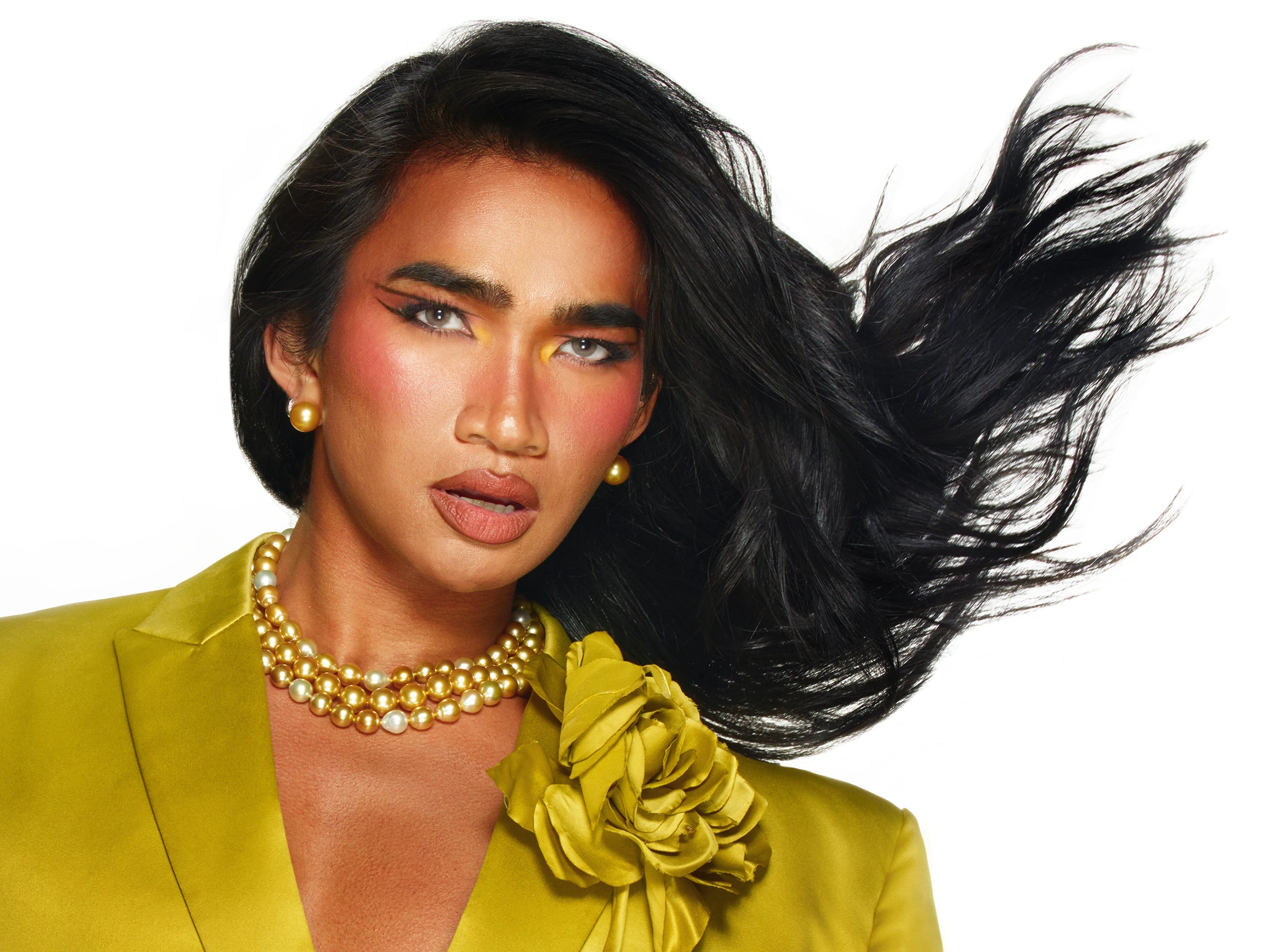
There are tears pooling at the edges of Bretman Rock’s eyes. He has just wrapped up his cover shoot for Allure Philippines, and he is talking about his beloved grandmother Lilang, and the emotions—and tears—eventually overrun him to the point that he has to pause the interview.
“My grandma means so much to me,” he says, dabbing at his eyes with a tissue. “I became her shadow from the ages of two to seven. I would always watch her put on makeup before church.” As someone who got his start as a beauty influencer, these moments with his grandmother, who was so openly accepting of her gay grandson, would prove to be pivotal. Bretman writes in his memoir, You’re That Bitch, that his first taste of makeup was when Grandma Lilang dabbed his cheeks with some red blush. To this day, he remembers her and “her blush and three Revlon lipsticks,” when doing his own face.
“I think I’m like this,” he says, explaining the tears, “because I am home. Home-home.” Home, for Bretman, has been Hawaii since he moved there at the age of seven, but home-home is still here in the Philippines.
Bretman Rock Sacayanan was born on July 31, 1998 in Sanchez-Mira, Cagayan, into a typical close-knit Filipino clan, in a typical rural Filipino home filled with chickens, pigeons, and quail. His mother and two siblings moved to Hawaii when he was three, leaving him in the care of his father, grandmother, and extended family. His childhood was idyllic, rooted in local traditions and customs, and, most importantly, an affirmation of acceptance from a loving family. From the beginning, they quietly accepted the fact that Bretman was gay, never questioning it or ostracizing him. It was on this unconditional acceptance that the unapologetic confidence that Bretman Rock would eventually go on to be known for, was built.
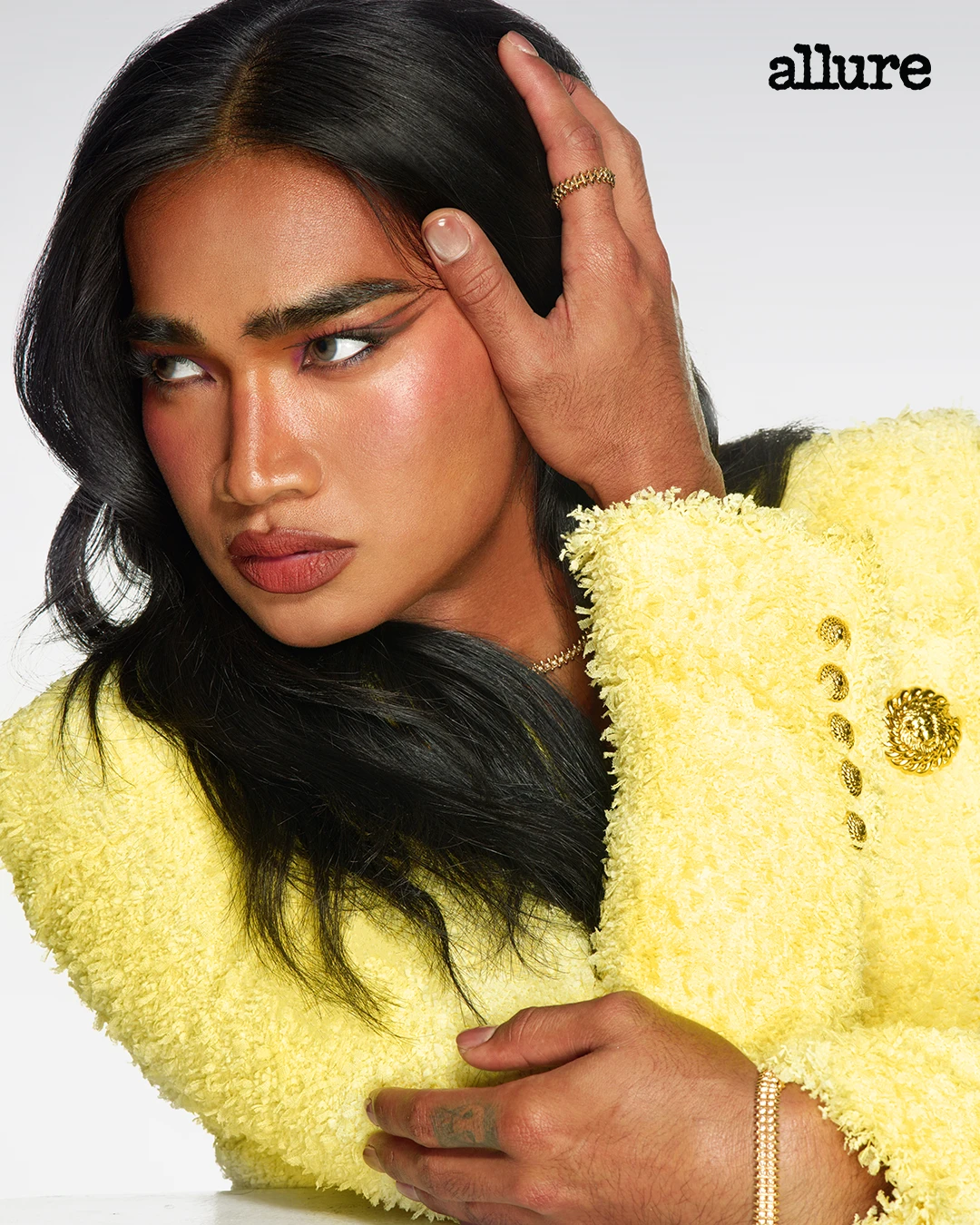
Photographer: Mark Nicdao
The distance though, between Hawaii and Sanchez-Mira, would prove to be too much, and in an explosive whirlwind of infidelity, violence, and vengeance that poor little Bretman was a firsthand witness to and details in his memoir, the family would be broken for good. His father fled to the mountains with his mistress, the housekeeper, and his mother would take Bretman, then seven, to Hawaii.
The immigrant experience is quite common for Filipinos. For Bretman, moving abroad meant that although life now had the backdrop of the “land of opportunity,” at its core, at home, it was simply an extension of the Filipino culture and norms that they brought with them overseas. “We speak Ilocano at home,” he shares, relaxing in his chair in the glam room, his eyes now dry. “In my head, my thoughts are English-Ilocano.” He says that the most valuable trait he inherited from his parents is the Filipino work ethic. And with Filipinos everywhere in Hawaii, Bretman never felt the need to assimilate. “The gift of Filipinos is that there’s a community everywhere you go, whether it’s online or in person.”
Being Filipino remains at the heart of Bretman’s identity, but he doesn’t just speak to Filipinos. Bretman is an icon who transcends boundaries. He is a champion of the queer community, an immigrant and person of color subject to prejudice like so many others. At a time where the term representation has become a byword, Bretman represents many minorities who draw strength from the power he radiates at the forefront, in a space he has worked so hard to claim as his own.
“I feel that in the beginning, I was just hired so brands could feel good about fulfilling a diversity quota,” he says. Things have obviously changed. His accolades are numerous—Time’s 30 Most Influential Teens, Forbes’ 30 Under 30 Asia, a People’s Choice Award for Beauty Influencer, Variety’s Power of Young Hollywood, an MTV reality show, a YouTube Originals series, a Playboy cover, a Nike campaign, copious lines and collaborations with beauty and fashion brands, even a stab at voice acting and a new podcast entitled Da Baddest Radio. “Now,” he says, “I’m not just a last-minute addition so the campaign looks diverse. I’m the first one they think of. A lot of us Filipinos are taught to make ourselves smaller for others. But you got to shove your way to the front, and say ‘Look at me.’”
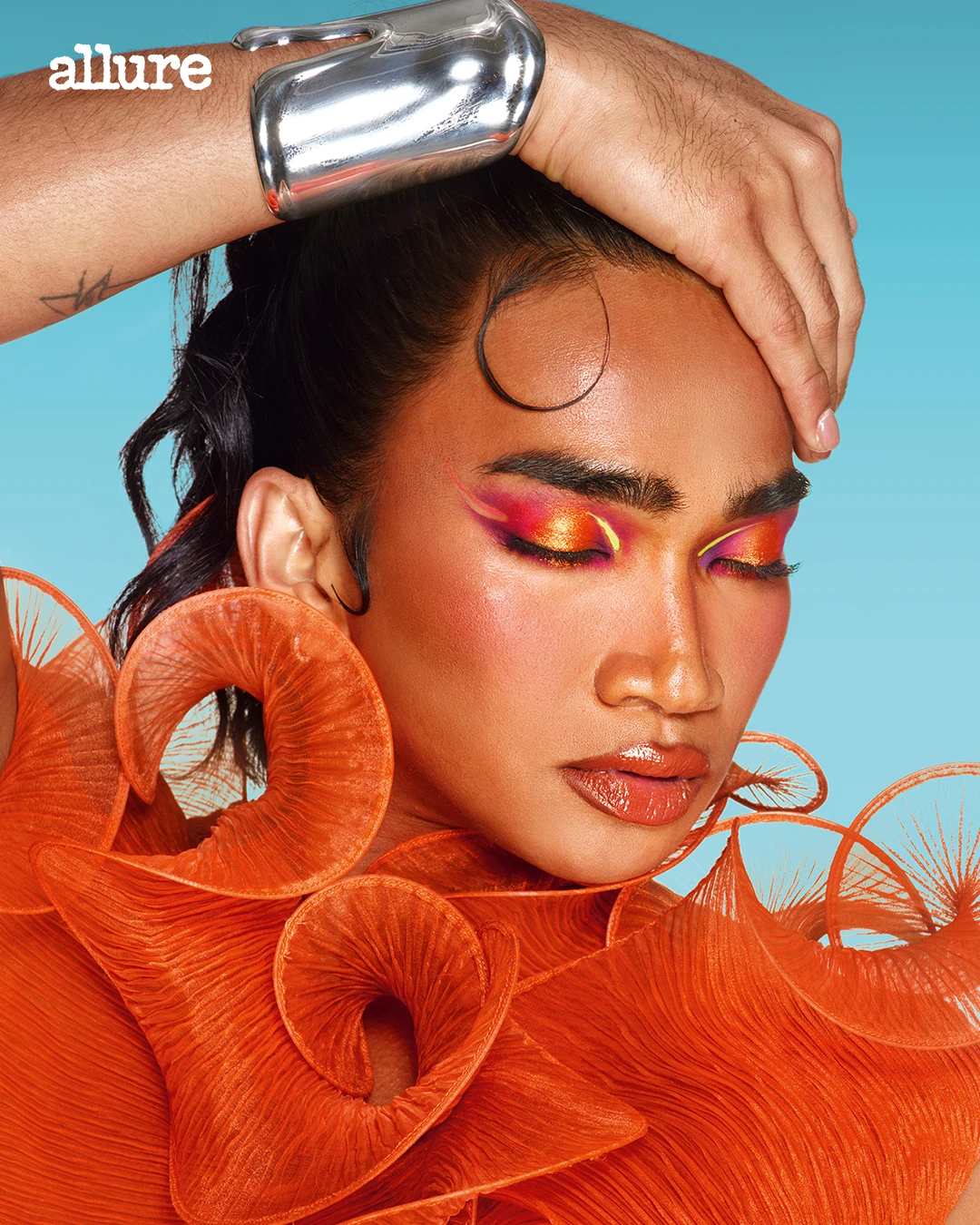
Photographer: Mark Nicdao
And the world is looking. Bretman is an icon, someone at the forefront of the movement for inclusivity and representation. For Filipinos all over the world, he has become a source of pride, and a shining example of the heights one can achieve. But in breaking boundaries and effecting radical change, he doesn’t overthink it. Nothing is calculated. “I don’t think I intentionally push boundaries. I just am.”
He is Bretman Rock. He is queer. He is an immigrant. He is a person of color. And he is Filipino. On the global stage, each component of his identity should have been a strike against him. And yet, he says that these supposed drawbacks are where he draws his power. “I’m so tired of thinking that what made me different were setbacks. I have influence, because I am gay. I have influence, because I’m brown. I’m moreno and I’m Filipino. Those are my superpowers.”
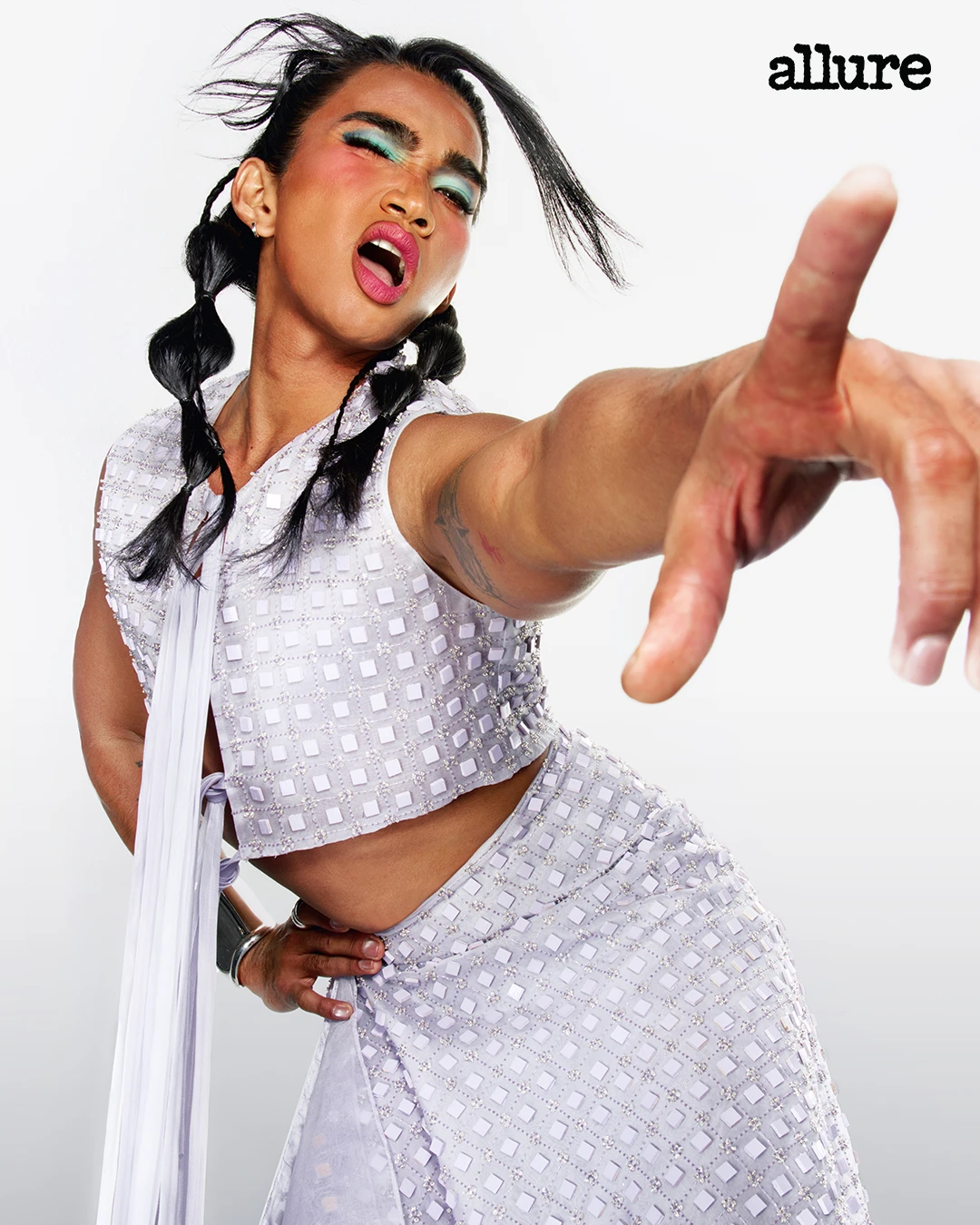
Photographer: Mark Nicdao. Fashion direction: Daryl Chang. Fashion assistant: Kurt Abonal. Beauty direction: Andrea Ang. Makeup: Booya. Hair: JA Feliciano. Fashion styling: Brian Meller.