The Ultimate Guide to Permanent Makeup
Here’s everything you need to know about tattooing cosmetics onto your face.


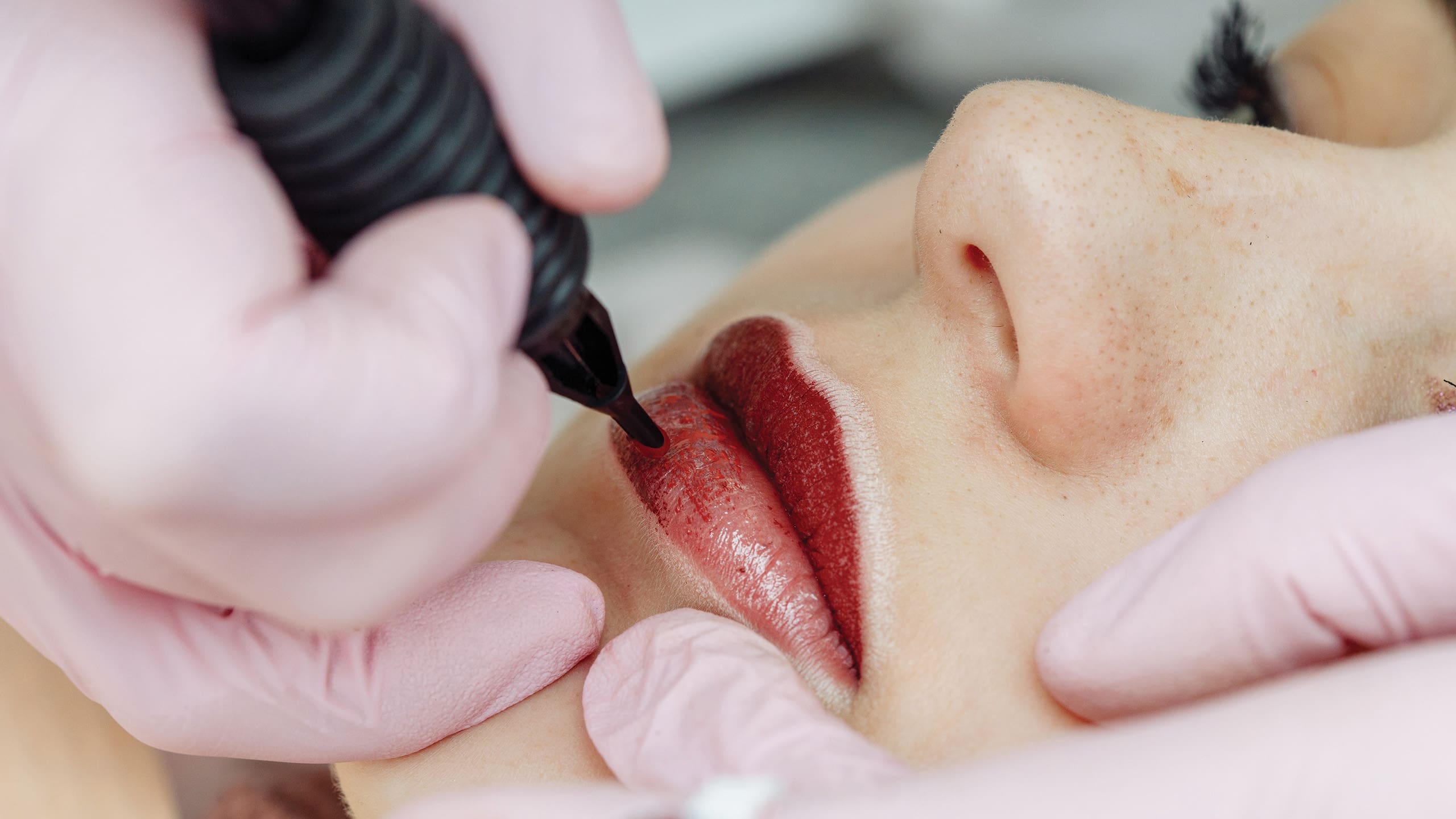
Have you ever wished a flawless face of makeup could remain intact, so that when you wake up you can just roll out of bed ready to go? Thanks to permanent makeup, that wish could become a reality.
Permanent makeup refers to cosmetic tattoos that help you recreate your favorite makeup looks in a semi-permanent manner. Chances are, you’ve already heard of microblading. Thanks to an exponentially exploding interest in brows over the past few years, the eyebrow-tattooing technique has gone mainstream. But brows are just the beginning. You can also get just-bitten pink lips or sharp-lined eyes.
Dermatologist Kaycee Reyes, MD, founder of Luminisce in Bonifacio Global City stresses the semi-permanent aspect of permanent makeup. “Maintenance is often required, and longevity is dependent on factors like technique, pigment quality, skin type, and environmental exposure,” she explains. If you want your professionally-done makeup to last, “proper aftercare and periodic professional check-ups are essential.”
Still, it’s important to remember that even something semi-permanent will last for a few years.
“Clients come in and say, ‘I’d never get a body tattoo,’ and in my mind, I’m like, ‘You know you’re tattooing your face right now,'” laughs Kendra Bray, owner of New York City salon Better Brows & Beauty.
So before you commit to aesthetic tattoos to amp up your makeup game, we’ve outlined some of the most essential things you’ll need to know before seeking the most popular permanent cosmetics treatments. (It’s also a great idea to chat with your doctor about whether these treatments are a fit for your body.) From how it works to how long it lasts, here’s exactly what you need to know about microblading, lip tattoos, and eyeliner tattoos before the moment that needle hits your face.
Meet the experts:
Dr. Kaycee Reyes is a board-certified dermatologist, preventive medicine physician, and founder of Luminisce Holistic Skin and Laser Medical Aesthetic in Bonifacio Global City.
Dr. Tricia Pontejos-Canivel is a board-certified dermatologist at Skin MD in Pasig City.
Momoi Supe is a Manila-based eyebrow specialist and the CEO of Strokes Beauty Lab.
Kendra Bray, owner of Better Brows & Beauty salon in New York City.
Ava Shamban MD, a Los Angeles-based board-certified dermatologist and the co-founder of med-spa SkinXFive in Los Angeles.
Melissa Pruett, founder of Melt By Melissa studio in Scottsdale, Arizona.
Dana Pellegrino, a licensed esthetician, brow artist, and co-owner of The Haven Wax Lounge in Scarsdale, New York.
Adriana Lombardi, MD, a board-certified dermatologist and founder of Skin Cancer and Cosmetic Surgery Center of New Jersey.
Microblading
What is microblading?
Microblading, which is a fancy name for a permanent eyebrow tattoo, is probably the most popular permanent makeup treatment out there. Using a fine needle, the artist deposits pigment directly under the skin to mimic the strokes of natural eyebrow hairs to recreate fuller, natural-looking brows.
“The microblade tool has very fine needles. You would use this tool along with implanting the ink to create each hair stroke,” brow artist and esthetician Dana Pellegrino explains. “Once a client says they don’t want them to look too dark or too big, I know they want this method. Microblading fills in the sparse areas of an already full brow or gives the gift of a brow for some.”
You may also hear names like brow feathering or microshading. “People will claim different techniques for marketing purposes,” says Bray. Other techniques still fall under the umbrella of natural-looking hair strokes. The important part is to study examples of your artist’s work and make sure you’re a fan before booking an appointment.
Who should get microblading?
“If you have [sparse] brows or if you want to have semi-permanent tattooed eyebrows, go for microblading,” says Momoi Supe, eyebrow specialist and CEO of Strokes Beauty Lab. But before going for it, talk to your dermatologist to make sure your skin is amenable to a tattoo. Tricia Pontejos-Canivel, MD, who practices at SkinMD in Pasig City, cautions that people who have diseases that may inhibit proper wound healing, such as uncontrolled diabetes, and people who are immunocompromised should avoid the service, or any permanent makeup procedure. Heavy smokers, she adds, may also be subject to poor wound healing as well. “And since there are no studies on microblading in pregnant women regarding safety,” Dr. Pontejos-Canivel shares, “it’s best to avoid it while pregnant.”
Another thing to consider is that there are cases where the semi-permanent pigment doesn’t completely fade. If you eventually decide to get a surgical browlift or facelift, Pontejos-Canivel says to expect your microbladed eyebrows to change in shape and appearance, together with your skin. “When getting Botox too, the position of your microbladed brows may change, depending on the injecting technique used,” Dr. Pontejos-Canivel adds. “But since Botox only lasts three to four months, that may not be permanent.”
And if you’re getting laser treatments, Dr. Pontejos-Canivel says to be aware that pigment lasers may fade microbladed eyebrows if they are accidentally treated.
How long does microblading last?
Like any tattoo, microblading does (for the most part) fade over time. “Microblading is a very natural way to achieve fuller-looking brows without the huge commitment,” Pellegrino says. “These brows can last from one to three years depending on one’s skin type and lifestyle.” If you use lots of exfoliating skin-care ingredients or don’t shield your brows from the sun, you may notice them fading quicker.
Exactly when to come back for a touch-up is up to you. “The pigments are designed to slowly fade over time, so it’s a personal preference when to come in for maintenance once the color starts to lose concentration,” says Bray. “Some people fade a little bit and they want more; others let it almost all fade out before they come back.” At a maintenance appointment, the artist will add color concentration to the existing work.
What are the potential risks of microblading?
Infection is a potential risk for any permanent makeup tattoo (as well as just about any type of body tattoo). Board-certified dermatologist Adriana Lombardi, MD, explains, “anytime the skin barrier is disrupted during a procedure there is a risk of bacteria entering and causing an infection.”
Dr. Reyes adds that these infections are more likely to occur if proper sterilization techniques are not followed or if aftercare instructions are neglected. Her advice? “Make sure that only sterile, single-use tools are used and that there are strict hygiene protocols.”
Dr. Lombardi chimes in and says the best way to avoid this sort of risk is “to go to a reputable office and have it done under a clean technique.” Dr. Pontejos-Canivel suggests, “Ask the brow technician questions such as, ‘Are you using sterile blades or needles? How do you disinfect your tools?’”
Your artist should open the single-use tool in front of you. Since infection can occur if you don’t follow the proper aftercare, says Bray, you have to keep the area dry after and stay out of the sun for about 10 days. Your artist should also schedule a follow-up appointment after six weeks or so to ensure the skin has healed properly and that you’re happy with the results.
Don’t forget to check the background of your artist, too. The artist should be a holder of a microblading certification, which means that they underwent the proper training course to perform the procedure. Ask to see the certificate, or ask about the school that they went to–if it’s licensed by the FDA, or where the instructor was certified.
Aside from the medical risks, there’s also the chance that you’ll be unhappy with the finished work and stuck with brows you don’t love for over a year. The only way to truly avoid this is to research your artist to ensure their work resonates with your personal style.
How much does microblading cost?
PHP 5,000 to PHP 45,000, depending on the studio or clinic and the level of expertise of the artist.
Lip Tattoos
What are lip tattoos?
Lip tattoos may bring to mind the image of a fancy grande dame with permanent lip liner who never seems to actually fill in her lips, but, according to Bray, the technique has been refined to its current form. Also known as lip blushing or lip tinting, a lip tattoo is a simple wash of sheer color across the entire lip.
“This semi-permanent cosmetic tattoo builds consistent color and defines your shape for fuller lips without filler and a more polished pout,” explains Melissa Pruett, founder of Melt By Melissa studio in Scottsdale, Arizona.
For example, Bray works with her clients’ natural lip shade to add a slightly deeper layer of pigment. The finished result should look like a just-bitten, blurred lip—the type of subtle lip color that looks like you’ve just enjoyed a make out session.
One thing Bray notes is that lip tattooing is a “more intense” process compared to other permanent makeup tattoos. “Since the skin on the lips doesn’t retain pigment as well as the rest of the skin, some clients require two or three touch-ups.”
Is it painful?
“People [think] it’s very painful, but it’s not, because there’s a continuous application of numbing cream and numbing gel,” Supe points out. “The only problem with a lip tattoo is the aftercare. A lot of things are prohibited—like seafood and chicken for seven days, because it will trigger swelling and sometimes blisters,” he adds.
Who should get a lip tattoo?
If you’re looking for a blurred-lip look with a slight boost in color every day, a lip tattoo could be a great option for you. However, you also have to have a pretty high pain tolerance. “Lips are a lot more sensitive than the other parts of the face, so people do experience pain and swelling,” says Bray.
Expect to leave your appointment a little puffy and to spend a week looking like you just got fresh lip injections.
How long does a lip tattoo last?
Once you’ve been through the multiple touch-up appointments needed to first achieve your desired look, the color will last about a year. “This treatment always includes two sessions spaced six weeks apart,” says Pruett. “Results typically last three to five years, so we recommend coming back whenever the color needs a boost.”
What are the potential risks of a lip tattoo?
Dr. Shamban, a Los Angeles-based board-certified dermatologist and the co-founder of med-spa SkinXFive in Los Angeles, admits that she “isn’t crazy” about lip-blushing tattoos. “There is a higher incidence of allergy to red pigment in the tattoo,” she warns.
Dr. Reyes agrees. “Red inks are linked to chronic inflammatory reactions. It can be delayed, appearing weeks, months, or even years after the procedure.” She says to watch out for symptoms of an allergic reaction such as itching, redness, swelling or the formation of papules or nodules. Allergies can also be triggered by sun exposure, laser treatments, or even just the pigment’s degradation over time.
It’s crucial to do a patch test before any procedure, which is what Dr. Reyes recommends for those with sensitive skin or a history of allergies.
In the unfortunate event that you do develop an allergy, be aware that there’s no easy fix. “When a correction laser is done to remove the red pigment, it almost always turns black,” Dr. Shamban says. “Expertise, artistry, proper care, and advanced knowledge of the skin will give the patient the lowest risk of complications.”
How much does a lip tattoo cost?
PHP 6,000 to PHP 68,000, depending on the studio or clinic and the level of expertise of the artist.
Permanent Eyeliner
What is permanent eyeliner?
There are a variety of eyeliner tattoos people can get based on their needs and personal aesthetic. There’s the lash line enhancement, which is a “very thin line” along your lash line that creates the illusion of a thicker lash line, according to Supe. “If you’re not wearing makeup, a lash enhancement will just leave you looking like you have fuller lashes,” says Bray.
There’s also semi-permanent eyeliner, which can be applied above the lash line, creating some of your favorite eye looks from a cat-eye to a soft, smoky wing. However, Supe doesn’t recommend this. “You can always add wings [with liquid and pencil eyeliners] if you want,” he says.
Who should get permanent eyeliner?
If lining your eyes is a part of your routine every morning, then permanent eyeliner can offer you similar results without the daily hassle.
How long does permanent eyeliner last?
According to Pruett, results can last up to one to three years, “so we recommend coming back whenever the color needs a little boost.” Six weeks after your original appointment, you’ll likely want to come back for a touch-up.
What are the potential risks of permanent eyeliner?
Just like with cosmetic brows and lips, the most prominent risk is an infection. However, Dr. Shamban approves of eyeliner tattoos, saying that they can be an “ideal” treatment for extra lash definition in some cases.
How much does permanent eyeliner cost?
PHP 3,000 to PHP 25,000, depending on the studio or clinic and the level of expertise of the artist.
Is permanent makeup for everyone?
In a nutshell, no. Dr. Reyes doesn’t recommend these procedures if you have “sensitive skin, keloid-prone skin, a history of hyperpigmentation, and if you have eczema, rosacea, psoriasis, vitiligo, or acne in the area you want tattooed.” You also need to think twice if you have diabetes, lichen planus, lupus, or a weakened immune system, in general. If you do decide to get permanent makeup done, make sure your health and safety are just as lasting.