


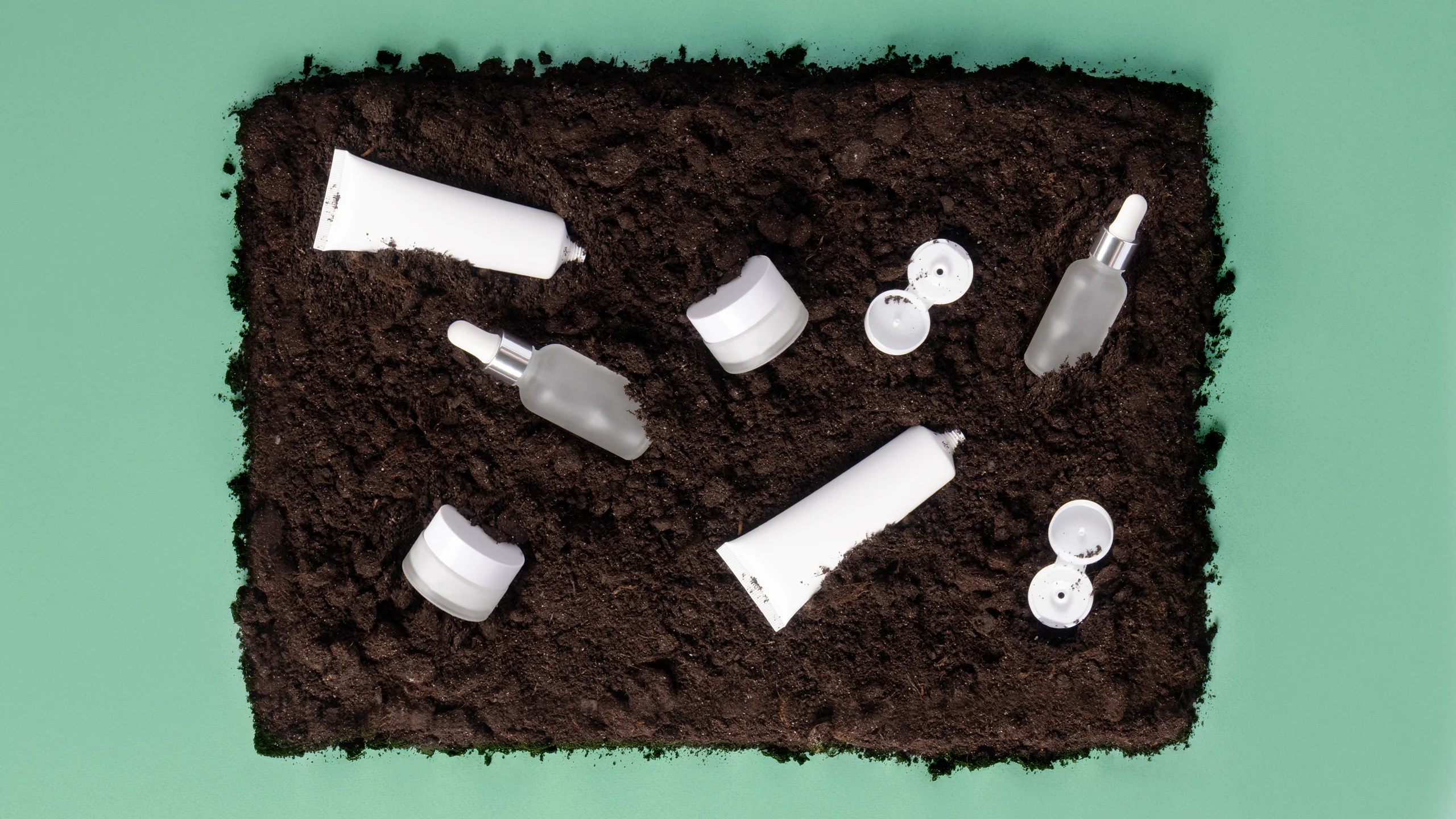
You pinch the last drop of serumSerumA lightweight, concentrated treatment applied after cleansing and before moisturizer to target specific concerns, such as dark spots, dehydration, or fine lines. Because serums are potent, introducing one at aGo to Serum Glossary from a glossy jar, press the final mist from your aluminum deodorant spray, and pump the last drop from your plastic shampoo bottle. You glance at the tiny “chasing arrows” symbol on the packaging—often mistaken as a promise of recyclability, when it actually refers to the type of plastic used—and toss all your empty containers into the same garbage-lined bin. In the late evening or early morning, a truck from the local government hauls the garbage bags away.
But there is no such thing as “away.”
The ideal path: where our waste should go
The path of empty beauty packaging starts in your home. The tiny chasing arrows symbol does not mean something is recyclable – it refers to plastic type. For an item to have a chance at a second life, it must be cleaned of all residue, dried, and taken apart. The plastic label around the bottle and caps must be removed and the springs from the pumps separated because metal is treated separately from plastic. These must be placed in a separate bag, away from other waste like food scraps or mixed materials.
From outside your home, it should go to the barangay’s Materials Recovery Facility (MRF). This is where trash is sorted. Recyclables are further separated by kind (glass, metals, plastics) then sold to dealers and recyclers. Once they reach the recycling factories, they’re turned into raw materials for new products. What cannot be recycled or are difficult to recycle are brought to sanitary landfills, a disposal facility where wastes are compacted and covered at the end of each day.
The reality: where our packaging really goes
Reality is far messier. Consumers don’t usually clean used packaging or separate their parts. Waste of all kinds are thrown in the same bin. When the garbage collectors come, all bags are tossed in the same truck. If no MRF exists in the barangay, the collected waste go straight to the landfill.
The Philippines’ Ecological Solid Waste Management Act was passed in 2001 with the aim of reducing waste generation. More than two decades later, the volume continues to grow. According to the 2023 Performance Audit Report published by the Commission on Audit (COA), the total estimated waste generation in the Philippines soared by over 33.36 percent between 2015 and 2020, with an average annual increase of more than 5.56 percent. Data from the Department of Environment and Natural Resources projects that these numbers will continue to rise.
A 2020 study commissioned by WWF Philippines estimates that 35 percent of plastic waste leaks into the open environment. “A significant portion of post-consumer cosmetic waste in the Philippines still ends up in landfills or leakage into the environment,” confirms Zed Avecilla, Program Director for the Philippine Alliance for Recycling and Materials Sustainability. Only about nine percent of plastic waste is recycled. “While many cosmetic packaging materials are technically recyclable, the actual recycling rate is hindered by several factors: lack of proper segregation, contamination, limited collection infrastructure, and material complexity.”

Envato Images
The Performance Audit Report by COA states that by 2021, the Philippines only had 11,637 MRFs servicing only 39 percent of barangays, while sanitary landfills served only 29 percent of cities and municipalities. For the majority of the country, waste management infrastructure doesn’t exist.
Not all packaging is created equal. The general rule of thumb is that the more types of materials, the more difficult it is to recycle. Multi-layer materials like sachets have layers of plastic and aluminum fused together. Pumps, sprayers, and droppers contain a mix of materials like rubber, plastic, and metal. Colored and opaque plastics are harder to reprocess compared to clear plastics due to their pigments.
When an item has little to no recycling value, the chances of it being collected and recycled are lower–which means the chances of it ending up on our streets and seas are higher. In practice, this means items like lipstick bullets with metal bases or glass droppers are rarely recycled—and almost always end up in landfills.
A polluted paradise
As an archipelago of over 7,000 islands, the Philippines has a unique challenge. Waste management is significantly harder in small and isolated islands where there are no facilities and no regular garbage collections by boat. In these islands, waste is often buried, burned, or thrown directly into the shore or water.
\When waste leaks, it continues to travel. “Once there’s rain or strong winds, waste from streets or even mountains end up in rivers, being the lowest point in catchment,” shares Dr. Pamela Tolentino, a fluvial geomorphologist and river scientist. During water quality monitoring, she has seen sachets, glass jars, discarded makeup boxes, and plastic bottles hitching a ride with the current towards the sea.
The impact goes beyond what we see. “Fish and other animals feed on plastics, thinking that they’re food,” Dr. Tolentino explains. “There’s also a risk of animals being entangled or trapped if the packaging is large.”
Efforts that matter
Josephine Blomdahl, a marketing specialist and avid scuba diver, hasn’t lost hope. “I empty, wash, and sort everything by material. My Sunday afternoon routine usually involves a trip to a waste collection point to drop off everything. For trickier items like old makeup, I look for specialized collection bins or keep an eye out for local initiatives,” she shares.
Her motivation is seeing plastic debris while exploring beautiful reefs. “I’ve been on my Project Pan journey for about two years now,” she adds, referencing a beauty trend that aims to use up makeup and skin care products entirely (“hitting pan”) before buying replacements. “It takes effort, but the impact is too important to ignore.”
Blomdahl’s daily, consistent actions are reflected by larger systemic changes. Efforts to reduce waste are growing. Cities and municipalities are working together to build more waste infrastructure and coordinate collection efforts. In 2022, the government passed the Extended Producer Responsibility Act, compelling large companies, including beauty and cosmetic companies, to reduce their plastic footprint annually until an 80 percent reduction is achieved by 2028. This boosted private sector efforts.
Avecilla cites examples: “There are brands shifting to refillable packaging, incorporating recycled plastics to reduce use of virgin materials, simplifying packaging designs, and setting up take-back programs for their empty packaging.”
The path after the last drop is long, complex, and imperfect. But with better infrastructure, stronger brand accountability, and consumers who refuse to look away, it is a journey that can still be rewritten.
Frequently Asked Questions
According to a 2020 study commissioned by WWF Philippines, only approximately 9% of plastic waste in the Philippines is recycled. The low rate is attributed to insufficient waste segregation at the household level, contamination of recyclables, limited Materials Recovery Facility (MRF) coverage, and the material complexity of many packaging types.
The chasing arrows symbol on plastic packaging does not indicate that an item is recyclable. It identifies the resin type of the plastic used — a classification system, not a recyclability guarantee. Whether a given item can be processed depends on local infrastructure, material composition, and whether it has been properly cleaned and separated before collection.
The Extended Producer Responsibility Act, passed in 2022, requires large companies operating in the Philippines — including beauty and cosmetic brands — to reduce their plastic footprint annually, with a target of 80% reduction by 2028. It has accelerated private sector initiatives including refillable packaging, take-back programs, and the incorporation of post-consumer recycled materials.
Beauty packaging frequently combines multiple material types — rubber, metal, plastic, and glass — in a single unit. Pumps, sprayers, and droppers contain mixed components that must be disassembled before any part can be processed. Multi-layer sachets fuse plastic and aluminum in ways that make separation technically unfeasible at most Philippine recycling facilities, sharply reducing their chances of diversion from landfill.
Waste that is not collected or properly contained moves through the environment via rain and wind, entering waterways as the lowest point in drainage catchments. Fluvial geomorphologist Dr. Pamela Tolentino, who conducts water quality monitoring in Philippine rivers, has documented sachets, glass jars, makeup boxes, and plastic bottles traveling through river systems toward the sea — a pathway accelerated by the country’s archipelagic geography and the absence of waste infrastructure on many smaller islands.