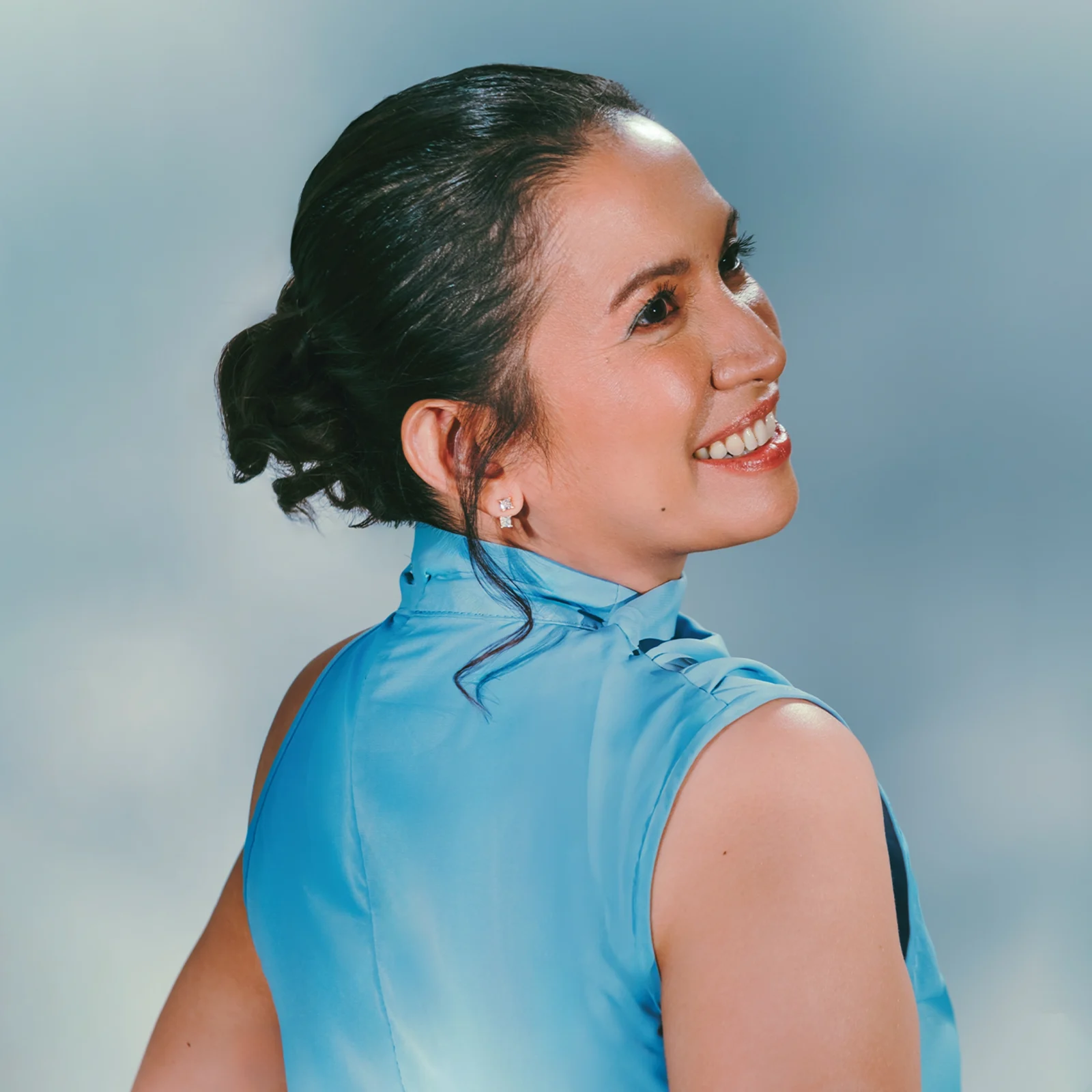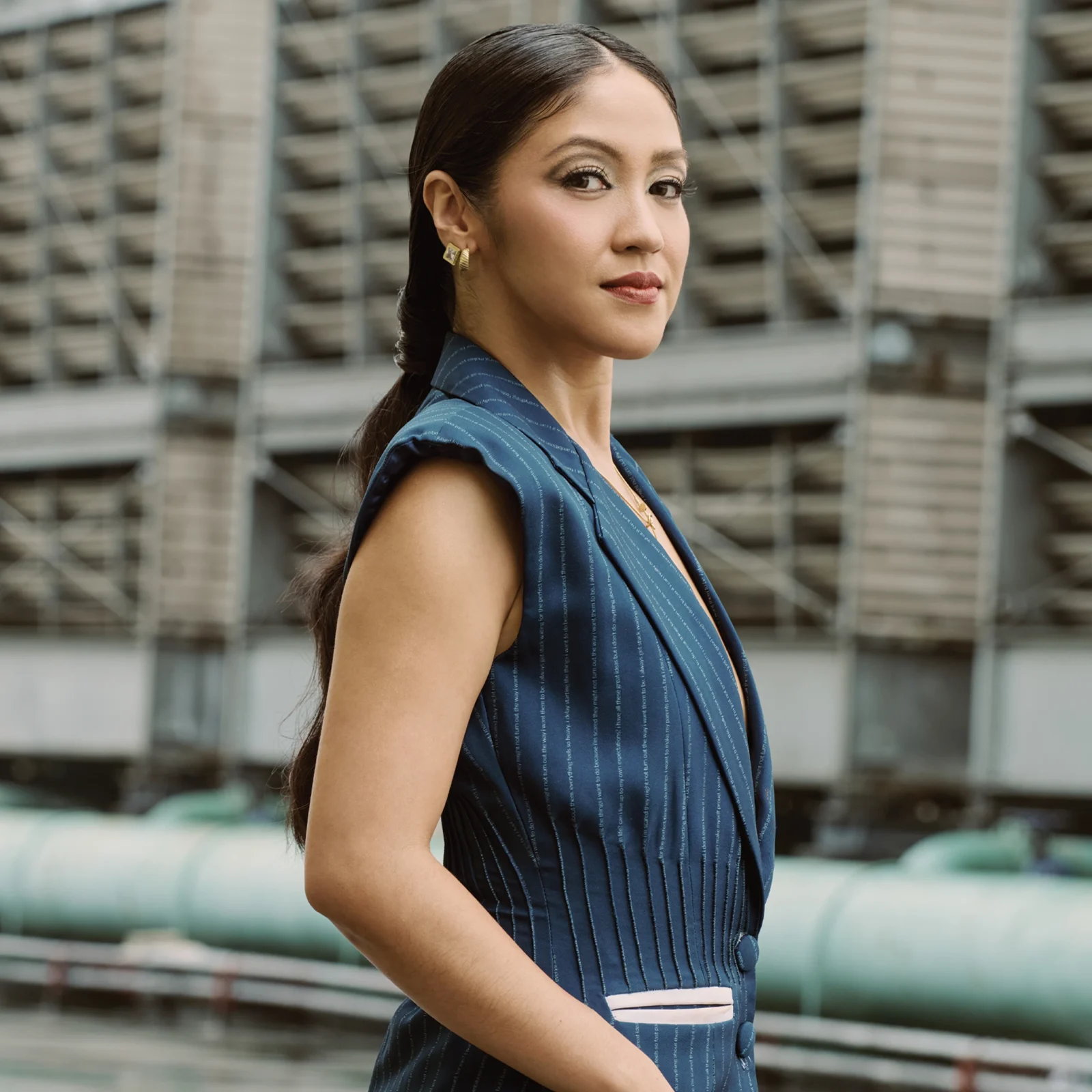
This World-Renowned Filipina Astrophysicist Forges Ahead On a Difficult Path—So That Other Women May Find Their Way
For Dr. Reina Reyes, director of the Space Science Missions Bureau at the Philippine Space Agency, astrophysics is not a hard subject to comprehend. Instead, it’s a tough road to walk—but it’s one that she chooses to stick to.



When you first meet Reina Reyes, Ph.D. in person, you’re not quite sure what exactly to expect. After all, it isn’t every day that you meet an astrophysicist—one who has earned international recognition, at that. Will she be stern and maybe a tad bit condescending? Will she allow the Allure Philippines team to instruct her on how to pose for her photos? Will she agree to answer the interview questions? And will she be anything like famous astrophysicists throughout history—Albert Einstein, perhaps, or Neil deGrasse Tyson, or Carl Sagan?
When she arrives, Dr. Reyes, Filipina scientist and educator, and director of the Space Science Missions Bureau at the Philippine Space Agency (PhilSA), puts all those questions to rest. For one thing, she is open and cheerful, confident and secure in herself that, despite the gravitas that comes with her occupation, she doesn’t mind getting glammed up, dressed up or photographed. She is more than forthcoming in sharing her story and views—even gamely agreeing to write an article about the challenges of being a woman in science, technology, engineering, and mathematics, or STEM. And, upon meeting her, there are no discernible shared traits—apart from obvious brilliance—with Einstein, deGrasse Tyson, or Sagan, primarily because Dr. Reyes, renowned astrophysicist, is a woman.
A woman in STEM

Andrea Beldua
Much has been said over the years about being a woman in STEM—that the gender disparity between men and women makes it difficult for women to walk this path and succeed. Dr. Reyes, Princeton University-educated for her doctorate in astrophysics, who made international headlines for proving Einstein’s theory of general relativity right, concurs. “There are some fields that have more of a balance between men and women, but in [other] fields like physics or engineering, it’s still male-dominated,” she says, before going on to add, “Even in the [Philippine] space agency, in the technical teams, the engineering teams, it’s still male-dominated, [as well as] in my former institutes, in the community in general.”
It’s not a new story. But what Dr. Reyes can give us is an inside look at that disparity—not just here in the Philippines, but anywhere in the world. “Inevitably, the culture is different,” she shares. ”There is, of course, the entrenched machismo culture, especially with the older generation still in leadership positions.” The effects, she says, range from unconscious bias, “all the way to blatant discrimination and bullying, harassment, including sexual harassment,” she explains. And it does happen, she clarifies, “and it drives away many talented and deserving women from the field because there’s no support mechanism.”
Eyes to the stars, feet planted firmly on the ground
When she was in fourth grade, Dr. Reyes asked her parents for a telescope for her birthday, and through it, would watch lunar eclipses with her father in the balcony of their home. The daughter of Filipino-Chinese entrepreneurs who ran a hardware store in Metro Manila and were always supportive of their daughter’s interests, Dr. Reyes, although always intrigued by the cosmos, faced the usual search for purpose that one faces in youth. First, she wanted to become a lawyer, then an architect, and then an entrepreneur like her parents.
It wasn’t until she came across actual scientists and researchers while at Philippine Science High School that it clicked: she could pursue a passion and interest as a career. After graduating summa cum laude with a degree in Physics from the Ateneo de Manila University and earning a diploma in high-energy physics at the Abdus Salam International Center for Theoretical Physics in Italy, she walked the hallowed halls of Princeton, where legends such as Einstein, John Wheeler, Eugene Wigner, and Jim Peebles once roamed, eventually landing a post doctorate research fellow position at the University of Chicago.
Her love for her field of expertise runs deep. “As an astrophysicist, we study the universe, essentially,” she explains. “Things that, when we look up in the sky at night, for example, you see—stars, galaxies if you have a telescope, other planets. We study all these different things.”
Yet after several years working abroad, living a life that one can only describe as a dream, Dr. Reyes chose to return home to the Philippines, as the next step in what she calls an “awakening.”
She explains that most of the scientists she looked up to, such as Einstein and Richard Feynman “were actually all old white men, living in these advanced societies. That’s why I pursued graduate studies abroad, to follow their footsteps, in Princeton, where Albert Einstein worked and lived the last years of his life.” Most of what she learned about science as a career, she admits, took place in the U.S. Her awakening, she shares, was that science was not something to gatekeep—“that this shouldn’t be just for white men, right? Science is for everyone. And part of my decision for coming back [to the Philippines] is to contribute to that, to bring the good news, the opportunities,” she shares.
Science is for everyone—especially for Filipinos
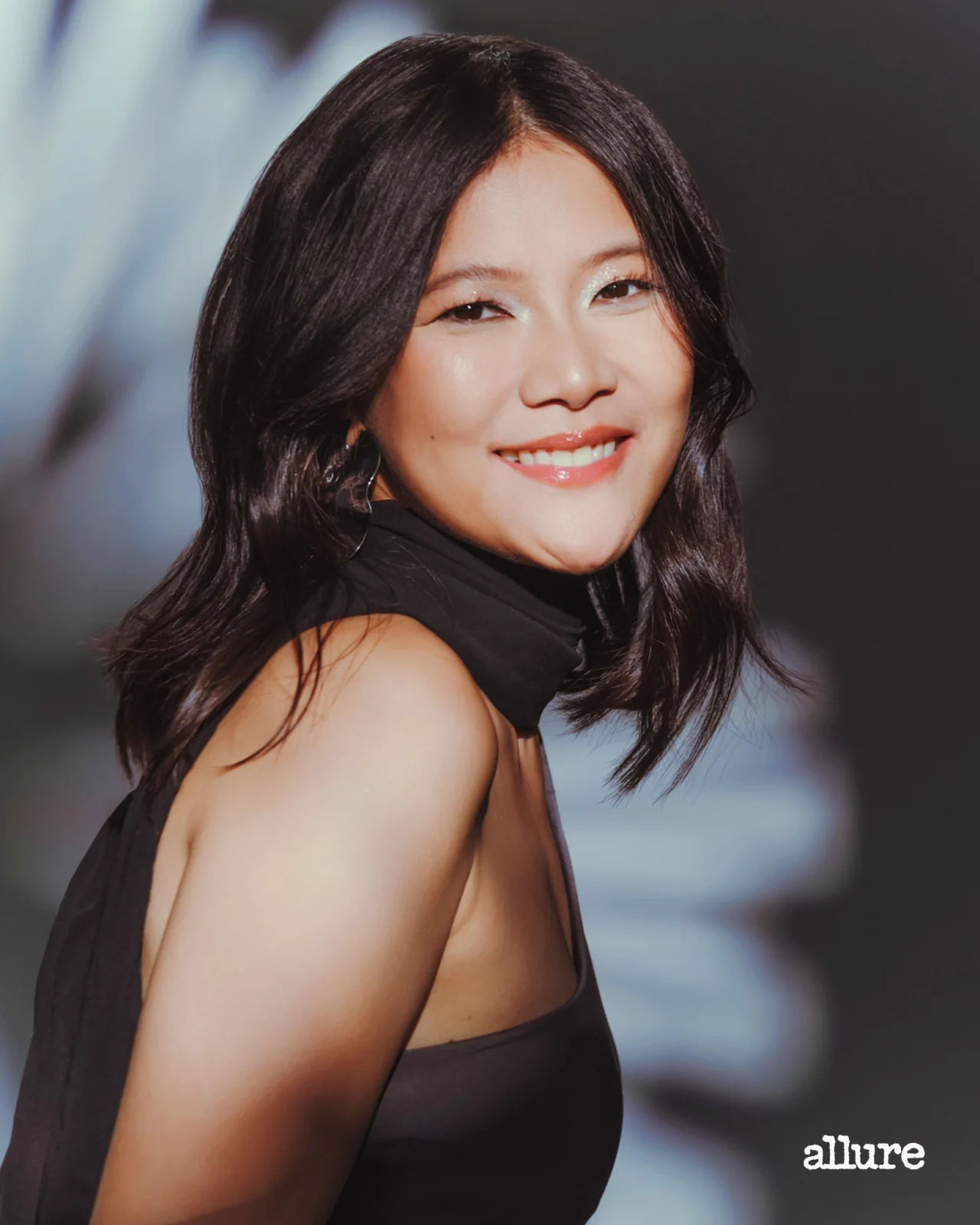
Andrea Beldua
Although she is someone lauded for her cerebral abilities, once you meet her and speak with her, it becomes apparent that Dr. Reyes is excellent at—and very keen on—human connection. Her work revolves around theories and celestial objects, yet it shows that the world she chooses to inhabit is the one where the rest of us mere mortals reside. In returning home to the Philippines, Dr. Reyes aimed to grow the science community, to build bridges where there were none and clear the path for future generations.
She repeats the phrase “for the next generation” so often during our interview that we ask if she has specific young ones in mind that keep her so focused on her goal. Dr. Reyes, a former associate professor at the National Institute of Physics in U.P. Diliman, and former lecturer at both her alma mater Ateneo de Manila and Rizal Technological University, as well as a former host of Science Says, a television show about science for children on the Knowledge Channel, answers, “I have mentee students, who I consider academic progeny. And it’s their futures and careers that we want to build.” She goes further, sharing, ”I also have nieces, nephews, a grandniece who is showing potential [in becoming] an engineer or an inventor maybe. She’s five now, and we want to build a world where they would all feel welcome, where they can thrive in that field.”
Whatever she does nowadays, future generations are top of mind. In her work at the Philippine Space Agency, practical things such as the use of space science and technology for disaster response and monitoring natural resources are prioritized. But there is also room for the future—for the Philippine astronaut program that she plays a role in, for analog space missions starting this year, and with utilizing an internationally thriving local health industry and community to provide knowledge and support for the space industry—where building blocks are put into place to support the next generation of Filipino scientists.
There is also the community that she has built and continues to build—a community called Pinoy Scientists on social media, which has a new guest scientist taking over the accounts every week. “People can follow and learn from Pinoy scientists from around the world, but at the same time, it’s also a community of the scientists themselves,” she says. “We get to connect and compare notes, and that’s where the support group comes in, because we also have shared challenges.”
She is very aware of the power of a community, and the support it brings. Astrophysicists are often one with the stars, but Dr. Reyes, while keeping her eyes on the heavens, is very much tethered to earth, to her community, to humanity.
Science—where every perspective counts, even a woman’s
And it’s a community that includes women—despite the fact that history would like to make us think otherwise. Dr. Reyes counts herself as one of the few women who have, in her words, “quote-unquote survived. There are so many of my peers who could have been in this field but are not, because one thing or another has led them away.” She talks about the need for support groups for women in her field, with the few women still there ranting to each other about problems and hurdles.
Although Dr. Reyes remains steady and levelheaded, much in the manner of a scientist, while referencing the many challenges that women in STEM face, her frustration is evident. “It’s a vicious cycle,” she says, “The women who are determined enough and have already overcome the barriers needed to enter the field, they leave. And then we lose that diversity of talent and perspectives that we need to accelerate or sustain changes in culture.” And that, in itself, is humanity’s loss.
Science, Dr. Reyes points out, relies on many perspectives, many viewpoints—even a woman’s. “To make innovations, to do good science, you need more people, you need more diverse perspectives and talents,” she says. Because science and all of its innovations, she says, reflects who it is done for, and its benefits become more inclusive and impactful when many voices chime in. “The more representative you are of the real world, the more distributed also its impact in the world,” she explains.
Thankfully, the world is changing. Dr. Reyes looks forward to a tomorrow where more women are present in the sciences, and where the younger generations of Filipinos have opportunities that can rival those available in the west. And although progress may be slow, Dr. Reyes says that “with men and women working together, we can challenge the culture, and advocate for safer, more inclusive spaces for everyone.”
Art direction and beauty direction by Sacha Mancera. Photography by Andrea Beldua, assisted by Toto Pepito and JR Baylon. Makeup by Janica Cleto, assisted by Jandrey Cleto. Hair by Cats Del Rosario. Styling by Gee Jocson, assisted by Kassandra Gandionco.