The Road Back to Me: How These Cancer Survivors Began the Healing Journey Back to Themselves
Battling the Big C really taxes you physically, mentally, and emotionally. We asked these cancer survivors how they began to pick up the fragments of themselves after completing their treatments.


Chemotherapy is a treatment for cancer that destroys cancer cells, where drugs are usually given through an IV, directly into a vein. Although it may be a portal to healing, its effects on the bodies of cancer patients are notorious. For one thing, it also kills healthy cells. It can cause hair loss, nausea, diarrhea, mouth sores, concentration and memory issues, immune system problems, among others. It can also cause infertility, heart damage, bone loss, and lung problems, apart from damage in other organs. For cancer patients, it’s an ordeal in itself.
It’s difficult to fathom the amount of bravery a cancer patient needs to face these kinds of treatments—surgery, radiation, chemo, and more—that are supposed to heal, apart from the toll the disease itself takes—mentally, emotionally, physically. Where do you pluck the extra courage from, to face difficult treatments with terrible side effects, that may or may not be your pathway to continuing your life?
When the last round is done, and the treatment is complete, what does a cancer patient feel or think? After all of the pain, risk, and uncertainty, how do they begin to rebuild their lives, their bodies, and themselves?
Allure Philippines spoke to four cancer survivors, to find out how, after their treatments, they began the long process of finding themselves again.
Kara Magsanoc-Alikpala
Documentary filmmaker, broadcast journalist, cancer patient advocate, co-founder of ICanServe Foundation
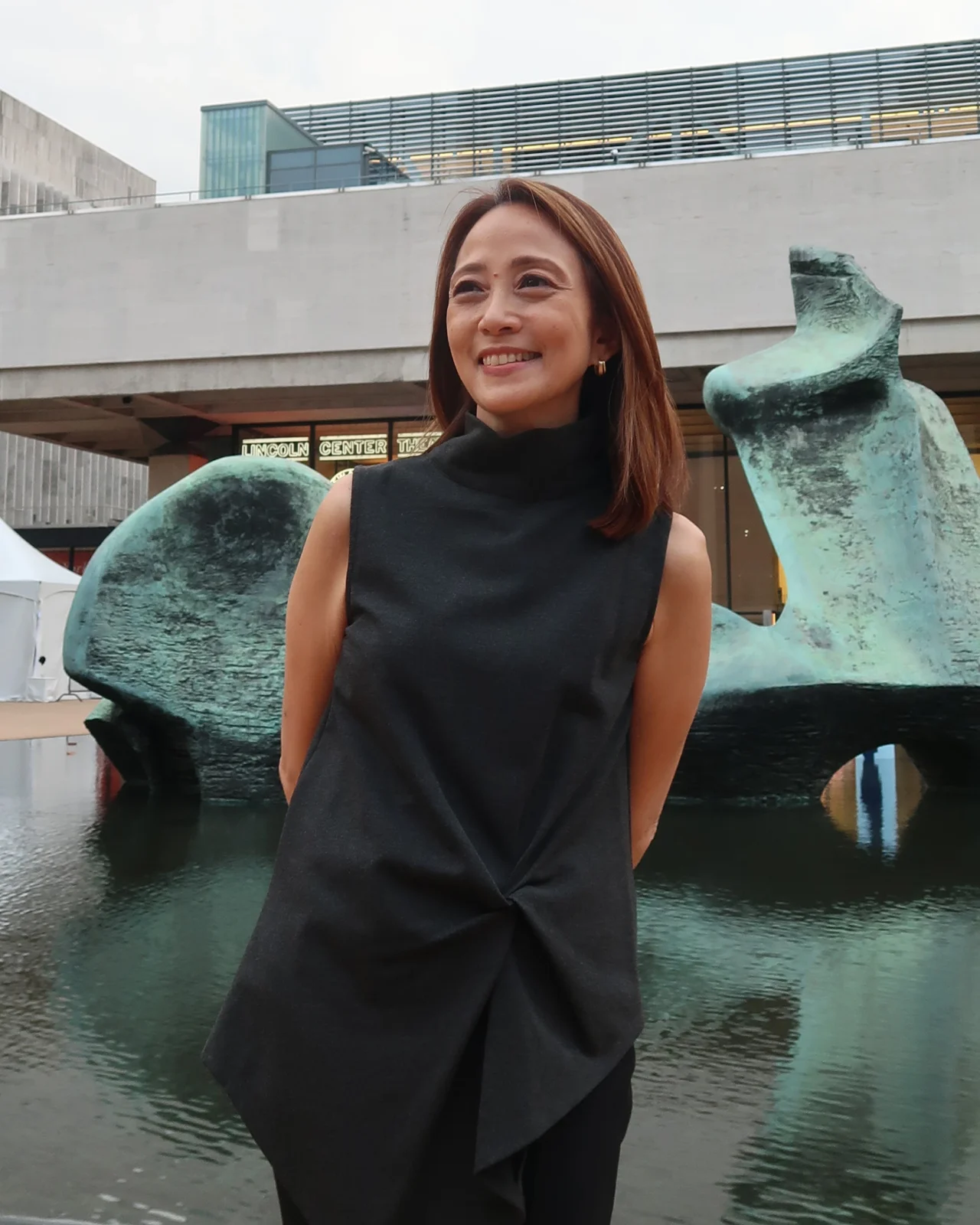
Courtesy of Kara Magsanoc Alikpala
Kara Magsanoc-Alikpala’s cancer almost went undetected. Back in 1997, the perpetually busy broadcast journalist and documentary filmmaker was en route to an interview when her subject called to cancel. By some stroke of fate, she found herself outside a hospital upon hanging up, and decided to head inside to get a lump that had been growing in her breast for months checked.
The initial results from two screenings came back negative, but Magsanoc-Alikpala’s father, himself a doctor, insisted on a biopsy, which revealed that she, indeed, had breast cancer. After flying to Stanford University Hospital in the United States for a second opinion, she underwent a lumpectomy, chemotherapy, and radiation—extremely grueling treatments for mind, body, and soul.
But for Magsanoc-Alikpala, the cancer experience didn’t break her, but instead “planted the seeds for my journey into cancer patient advocacy.” Together with fellow cancer survivors Crisann Celdran, Becky Fuentes, and Bet Yap, she co-founded the ICanServe Foundation almost 26 years ago. What began as a way for survivors to counsel other survivors evolved into a full-fledged advocacy group that has not only spread awareness about early cancer detection, but has also worked with local governments on breast cancer control programs, and helped push for the National Integrated Cancer Control Act in 2019.
Magsanoc-Alikpala, who was able to attend a patient support group in the U.S., as well as experience care under a team that even included a social worker, shares, “There’s a different kind of connection among those who walk the same path. There’s an instant bond. You see it in their eyes—knowing eyes that say ‘I get it.’” As it turns out, establishing the ICanServe Foundation to help others heal scars not visible to the eye was healing as well for Magsanoc-Alikpala. She shares with Allure Philippines the other ways she found herself.
What was the single most difficult thing about an extraordinarily hard experience?
Having cancer, or the possibility of dying young, never bothered me. But when my doctors at Stanford told me I would never have children after chemotherapy, that killed my spirit. My mom’s sister, Tita Nats, told me to keep praying and believing, and I clung to her promise like a lifeline. Her words calmed me. I kept the faith. (Note: Magsanoc-Alikpala has since given birth to a daughter.)
The other tough part about having cancer was watching how deeply it affected my loved ones, especially my parents. On the outside, they tried to keep their composure, but I knew they were crumbling inside. It was a time of silent suffering for them. Their lives felt paused, as if they were holding their breath until I reached remission. And even now, I know they continue to carry me in their prayers every single day.
How did you feel—physically, mentally, emotionally—after completing the treatments?
I felt relief and immense joy when my treatments were finally over. But more than anything, I was happiest for my family. I saw them exhale. For the first time in a long time, their smiles returned. They could finally enjoy the things they once loved without the constant weight of worry. We celebrated at my favorite restaurant, a simple but meaningful moment of victory.
Still, I was exhausted. Fatigue was one of the lingering side effects of treatment. Suddenly, it was just me again—no more regular check-ins, no more doctors to lean on. I had to find my way back to wellness, to figure out my “new normal.”
What are the things that you did to begin to feel like yourself again (in all aspects) after completing treatment?
I had to rebuild my strength slowly. I returned to the gym, gradually eased myself back into a fuller workload. I never actually stopped working during treatment, and in many ways, that helped distract me from the inconvenient, and sometimes brutal, side effects of chemotherapy.
I decided to live every moment with intention. To be mindful. To say yes to every opportunity to love, to serve, to be present. One thing that comes naturally to every cancer survivor is this deep, enduring sense of gratitude. You carry it with you, always.
I knew I couldn’t eliminate stress, but I could change how I responded to it. I learned to brush it off, to meet it with grace instead of fear.
This spiritual journey is something my family and friends also experienced. No patient can go through the Big C alone. You go through it with a community. We always say, ‘we had cancer, we are healed.’
My cancer journey reminded me that prayers were always answered in ways greater than I could have imagined, and so the prayer “Thy will be done” became my anthem.
Tell us about the moment where you began to feel like yourself again, or if not, when you felt like you were finally beginning to heal.
Many people can pinpoint the moment they began to feel like themselves again after cancer. But for me, that was never really an issue. I never felt like I lost myself. It was my body that got sick, not my sense of self. I think I trained my mind to believe that.
During chemotherapy, I experienced countless side effects, like heightened anxiety, restless sleep, vivid dreams that magnified my stress. There were waves of sadness. But the thing is, I really wasn’t feeling sad. So I made a conscious effort to separate what my body was feeling from how I really felt in my heart. I always reminded myself, this isn’t me—it’s the medication, it’s the cancer drugs playing tricks on my mind.
That practice of detaching my identity from what my body was going through, helped me stay sane. And maybe that’s why I never felt like I stopped being myself, even during the worst of it, or while healing.
Christina Dy
Artist
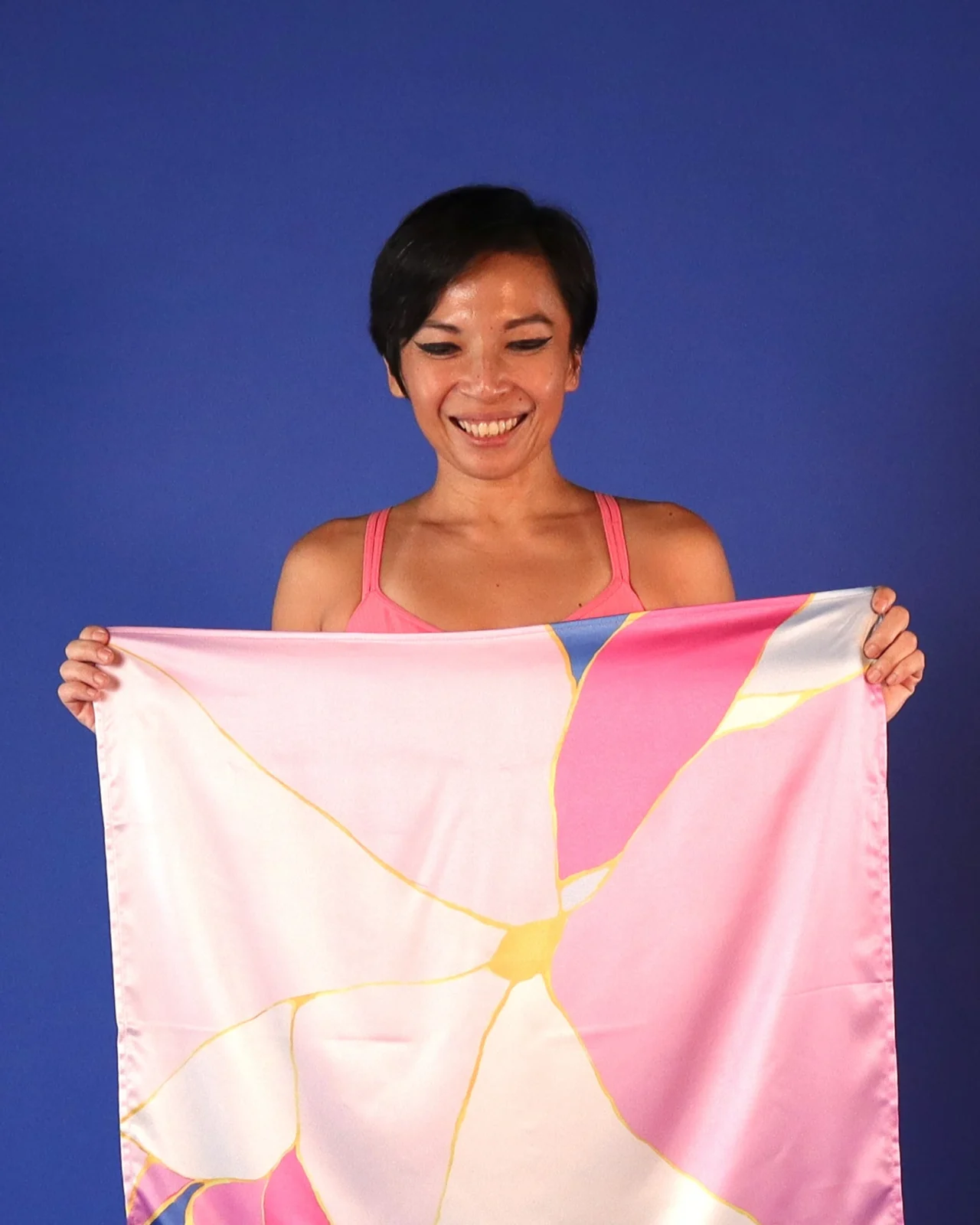
Photo by Myla Santiago
It was, in fact, an ad from one of the campaigns of the ICanServe Foundation that led Christina Dy to do a breast self-exam, which led to the discovery of a lump. “It was 2018. I was 42, super fit, and my family did not have a history of cancer, so when I saw an ad by ICanServe telling women to do regular self breast exams, I thought, ‘Well, nothing to lose,’” she says. The lump didn’t worry her doctors, but a mammogram, and then an ultrasound, and then a biopsy, revealed stage 1 breast cancer.
Within a week, Dy had a lumpectomy done, which was followed by radiation. For Dy, an artist and the founder of Polecats Manila, dance—or in the beginning, the promise of returning to it—played a big role in her recovery. Initially forbidden to dance for a year after her surgery by her doctors, and then forbidden to carry anything heavy with her left arm, since the lumpectomy was done on her left breast, for sixty days, Dy returned to her studio on the 61st day, to dance with only her right arm. “It really helped me out of my depression,” she shares. “And my doctors told me that if I wasn’t so fit, it would have taken me longer to recover from it. I learned I was strong, I could overcome difficulties, but only with the generosity and kindness of other people.”
Dy shares more with us below on her recovery, and the moment she finally began feeling like herself again.
What was the single most difficult thing about an extraordinarily hard experience?
Looking back, it doesn’t feel so bad anymore, because everything is always easier in hindsight. But I would say the most difficult thing at the beginning was grappling with mortality and the uncertainty of life.
How did you feel—physically, mentally, emotionally—after completing the treatments?
I was so tired after surgery and radiation. But I was also relieved and hopeful. I thought, “Yay, it’s done, I can go back to my life.” It did not happen that smoothly, though. And then, I felt anxiety, asking myself, “What now?” Every time I get my mammogram and ultrasound, all these feelings come back again. It’s a yearly cycle.
What are the things that you did to begin to feel like yourself again after completing treatment?
Physically, I danced. The moment I was given clearance to dance, I went straight to the studio! I couldn’t dance the way I used to, and I was resentful at first, but looking back, it was good for me. It helped me develop my own dance style. I got a haircut, put on red lipstick more often.
Emotionally or mentally, I took up other hobbies like cooking—I was not good, but it was fun. Painting desserts—I would paint on macarons and cakes. I spent more time with family and friends—always a good choice, even without cancer.
Spiritually, I started listening to the Waking Up meditation app and spending more time outdoors just sitting under trees, looking at flowers, or listening to birds.
Tell us about the moment where you began to feel like yourself again, or if not, when you felt like you were finally beginning to heal.
It was when I first set foot back into the pole studio and danced. I was so happy and I felt hopeful again, that maybe it wasn’t the end. It certainly wasn’t!
Cheche Moral
Journalist and editor
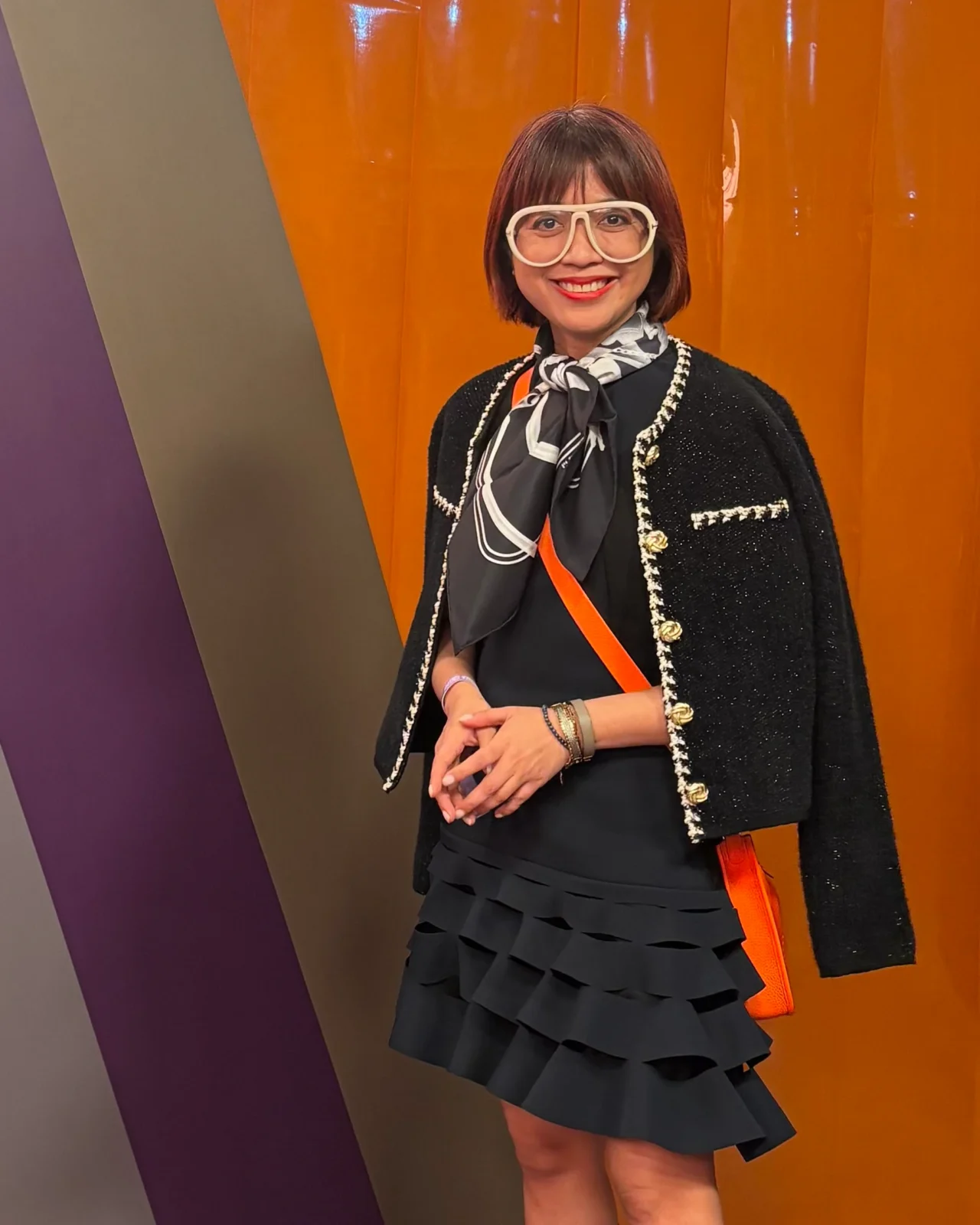
Courtesy of Cheche Moral
If Cheche Moral hadn’t been doing some late-night scrolling through social media one weekend, she would never have come across a video—“probably leftover content from Breast Cancer Awareness Month”—explaining how to do a breast self-exam. She would never have listened to the random urge to try out the steps herself. And she would never have discovered a lump under her right breast.
“First thing Monday morning, I went straight to my OB-GYN,” Moral recalls. “He examined me and immediately sent me for a mammogram and breast ultrasound. A biopsy soon followed, and it confirmed what the scans suggested. It was stage 2A breast cancer.” Moral underwent 33 cycles of radiation, but was spared from chemotherapy because of a genomic test called Mammaprint, which showed that she had a 93 percent chance of remaining cancer-free for at least five years, even without chemotherapy.
Cancer, although terrifying, taught Moral many things about herself. “I learned that I’m stronger than I ever imagined—not in the loud, heroic way, but in quiet resilience. I also learned that it’s okay to not have it all figured out. I learned to trust myself, to listen to my instincts, and to choose what felt right for me,” she shares. Most unexpected for Moral was discovering that she could find meaning and stillness in the middle of chaos. “I’ve never thought of myself as spiritual, but facing mortality made me reflect more deeply, slow down, and appreciate being here. Just being became enough. Cancer didn’t just test me—it revealed me.”
Below, Moral shares more about, not only her cancer journey, but her journey back to herself.
What was the single most difficult thing about an extraordinarily hard experience?
The hardest part, by far, was learning I had cancer, especially because no one in my family had ever gone through it. It truly felt like a death sentence.
Later on, I realized this reaction is incredibly common. Other newly diagnosed patients would ask me, “What was it like when you first found out?”—because they were feeling the exact same fear. And I won’t sugarcoat it: It was terrifying. So much so that I kept it a secret from my parents at first, just to spare them the worry.
There was also a lot of confusion. I consulted multiple oncologists and ended up more overwhelmed than certain. I struggled with the decision: Should I go with a lumpectomy, which removes only the tumor and a small margin of surrounding tissue? Or go straight for a mastectomy, which removes the entire breast and often requires drainage tubes and a longer recovery?
I was afraid of the cancer coming back if I chose the less aggressive option. But I also couldn’t picture myself going through the physical and emotional toll of a mastectomy. In the end, I trusted my instincts and chose a lumpectomy—and I have no regrets. The path wasn’t easy, but it was mine.
How did you feel—physically, mentally, emotionally—after completing the treatments?
Even before surgery, I was already bracing myself for chemotherapy. I had heard stories—that some patients couldn’t eat, that the side effects could be brutal. So I started preparing early: I tried liquid meal replacements to get used to the idea of a soft or no-solid diet. I also mentally prepared for the possibility of losing my hair.
Thankfully, I didn’t have to go through chemo.
But radiation came with its own challenges. It wasn’t painful—not in the way you’d expect—but it was physically draining. Toward the end of my 33 daily sessions, my skin began to peel, which was rather uncomfortable. What really wore me down, though, was the sheer routine of it: traveling to the hospital every single day for over a month. That kind of exhaustion isn’t just physical, it’s emotional, too.
What are the things that you did to begin to feel like yourself again after completing treatment?
After completing treatment, I had to slowly relearn how to feel like myself again.
I focused on rest and recovery. Radiation left me exhausted, and I honored that fatigue by giving myself permission to slow down (I went on medical leave from my demanding job as a newspaper editor). I tried to nourish myself in every way, through food, sleep, and simply breathing in fresh air. I spent more time with my dogs, who were my life savers.
Emotionally, it was harder. Even after treatment ended, the fear lingered—fear of recurrence, of the unknown, of whether I made the right choices. What helped was connecting with others who had gone through the same thing. Hearing “I felt that, too” was incredibly powerful. It reminded me that I wasn’t broken—I was healing.
Even though I’m not a particularly spiritual person, facing my own mortality changed me. It made me reflect more deeply on what truly matters. I didn’t suddenly become religious, but I did find peace in quiet moments. I started to pray in my own way, to sit with the uncertainty, and to trust the process of life a little more. That shift—however subtle—was part of my healing, too.
Tell us about the moment where you began to feel like yourself again, or if not, when you felt like you were finally beginning to heal.
There wasn’t a single moment when I suddenly felt like myself again—it was more like a slow unfolding. But if I had to name a turning point, it was after my last radiation session. Walking out of that hospital for the final time, knowing I wouldn’t have to come back the next day, brought a deep sense of relief. (Flew to Boracay the next day and stayed there for a week.)
That’s when I realized I had survived something huge.
I was still tired, still processing everything, but I could finally breathe. I started to feel a little more like myself—not the exact same person as before, but someone who had endured, and was beginning to heal.
Healing wasn’t just physical. It was emotional and even spiritual—and that surprised me, because I’m not usually spiritual. But facing my own mortality forced me to slow down, reflect, and appreciate life in a way I hadn’t before. It didn’t happen overnight, but little by little, I began to feel whole again.
Cherry Ermita-dela Cruz
Finance and insurance broker, and mom of two
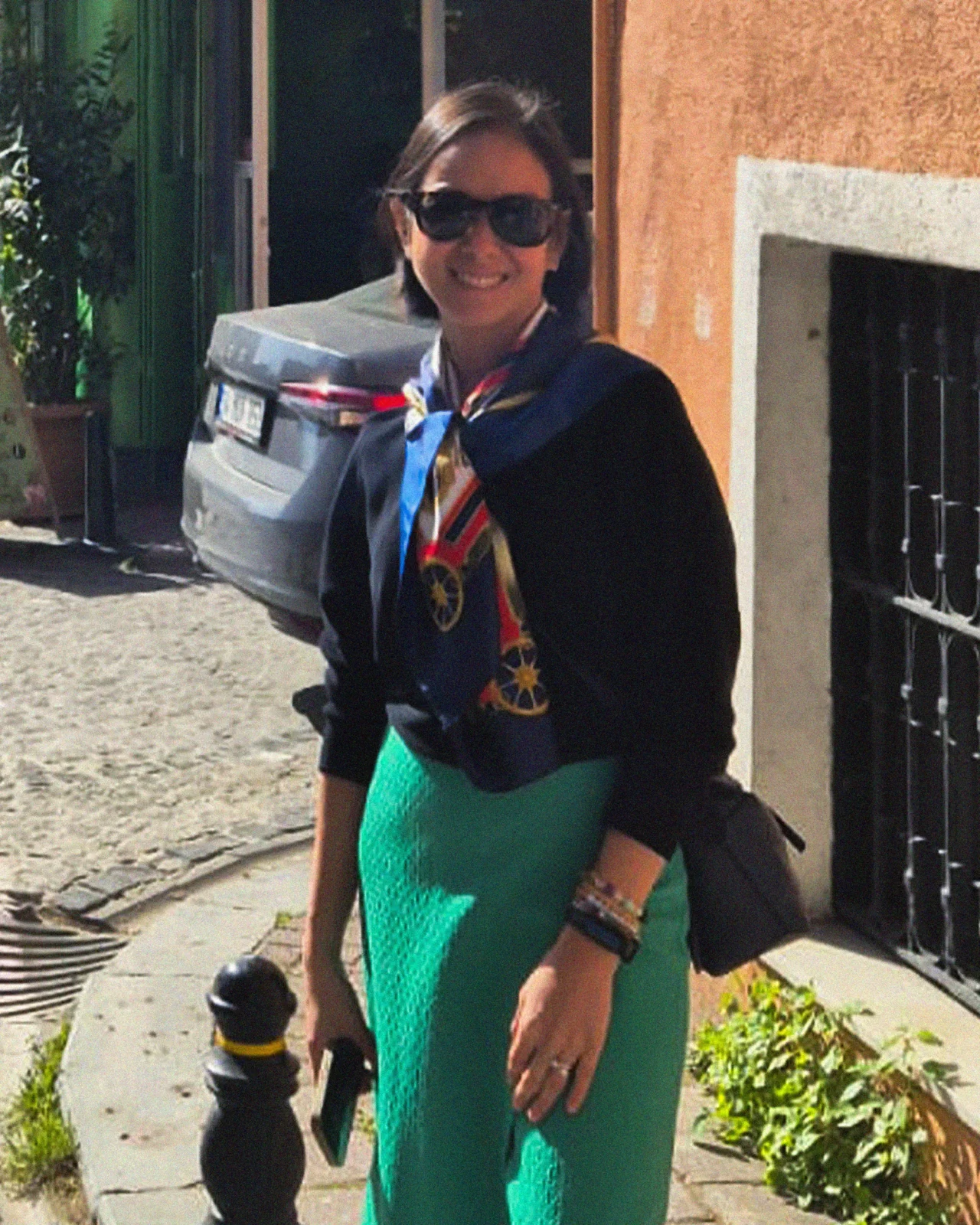
Courtesy of Cherry Ermita-dela Cruz
In 2023, Cherry Ermita-dela Cruz gave birth to her second child via C-section, and was sent home routinely from the hospital after three days. Five days after arriving home, she developed a fever and was given antibiotics. However, midway through the antibiotics cycle, her fever still hadn’t abated, and a swollen lymph node had also appeared at the base of her neck. Tests, including a biopsy, revealed fluid in her lungs and a mass in her chest, which turned out to be Stage 2B Hodgkin’s Lymphoma.
“The moment they told me my cancer was malignant, my life flashed before my eyes. I thought I was going to die. And I realized that I had so many regrets, so many things I still wanted to do, things that I wished I could change,” Ermita-dela Cruz shares. “But I also learned that I am strong, and I have the power to inspire others to be the same, the power to inspire others to live a better, more meaningful life.”
Ermita-dela Cruz went through chemotherapy, and had the fluid drained out of her lungs. For her, sharing her story and talking about what she feels has turned out to be her way of coping. Below, she shares more about her time recovering from childbirth and a C-section and having a newborn, and at the same time, getting treated for cancer—and how she has moved beyond that.
What was the single most difficult thing about an extraordinarily hard experience?
That’s a tough question, but it was probably the thought of dying and leaving my family—and my husband with our two little girls.
How did you feel—physically, mentally, emotionally—after completing the treatments?
Physically, I felt great! I was relieved! Although I lost all my hair, and I felt ugly, I also felt great. I was excited to be cleared to travel with my family a month after I finished chemo.
Mentally, I was determined to live healthier post chemo, and make better choices. I was also determined to share my story with my friends, and I did.
Getting health insurance also became my advocacy, since it helped me and my family so much during my cancer journey.
Emotionally, I was just really happy at that point. I was ready to make the most out of my time here on earth.
What are the things that you did to begin to feel like yourself again after completing treatment?
I went back to CrossFit three months after treatment. I also started exploring functional medicine. My husband and I finally went on our long overdue honeymoon five months after treatment
Just being around family and friends made everything better. In this journey, I realized what and who truly mattered to me and I focused my time and energy on those.
I also just kept my faith and trust in the Lord at all times. That really kept me fighting and hopeful the entire time.
Tell us about the moment where you began to feel like yourself again, or if not, when you felt like you were finally beginning to heal.
It was maybe five to six months after completing treatment, when I was back to working out, and my hair began to grow back.
Building back—but better
For most of us, “finding ourselves” is a journey of discovery that we embark on for most of our lives. But for a cancer survivor, and for others who have gone through similar ordeals, hopping back on this train is a process of rebuilding. Rebuilding anything is difficult, as you pile block upon block of broken piece, gluing, pasting, and sticking things together haphazardly. But in rebuilding, you are also afforded the privilege of creating something new—perhaps a better, more beautiful version of yourself, this time anchored by true strength, and cloaked in courage.