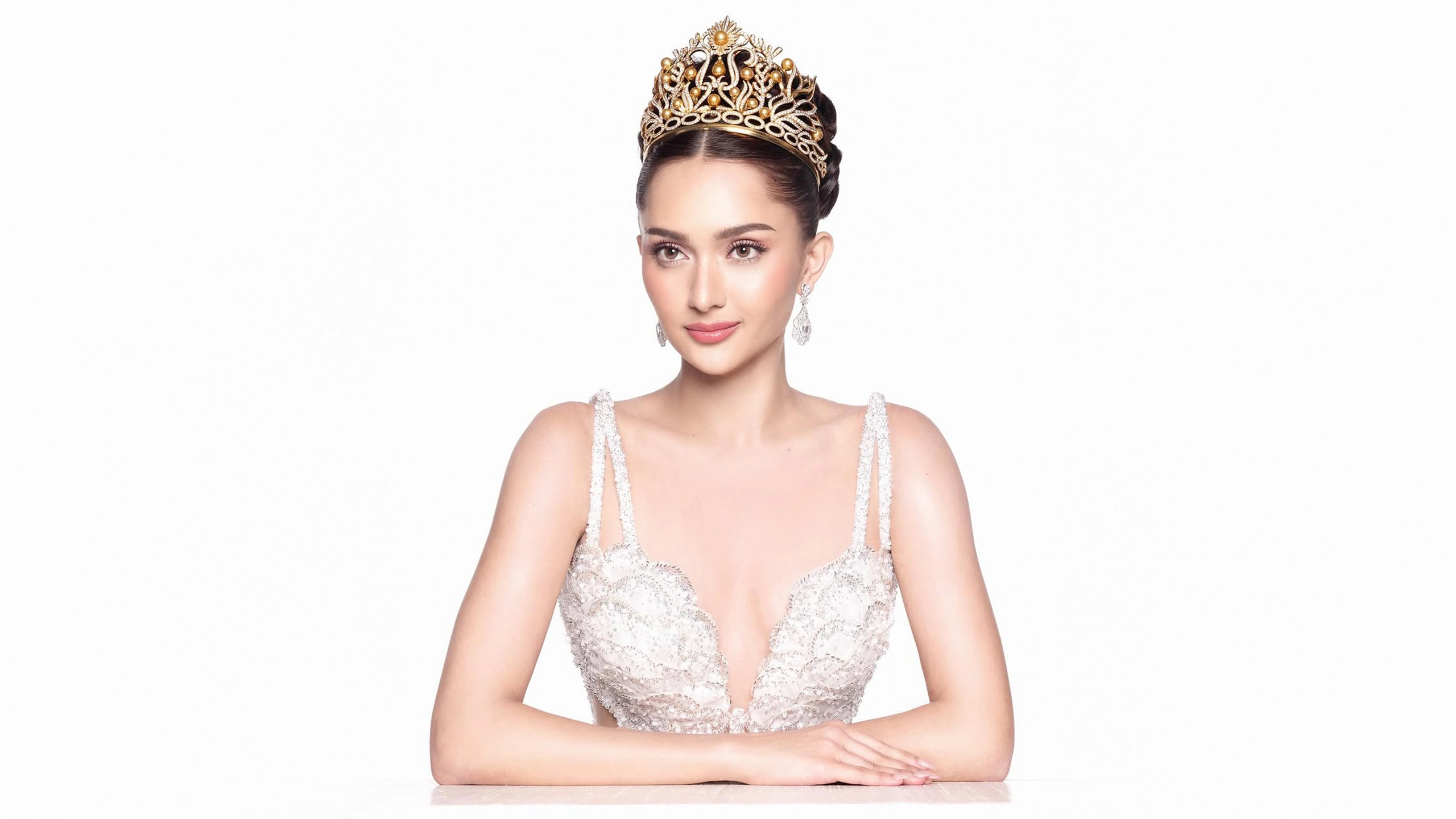
Ahtisa Manalo, Miss Universe Philippines 2025. Courtesy of JP Ilagan
When you win the crown, you inherit the gaze.
For Miss Universe Philippines 2025Ahtisa Manalo, the title came not only with applause but with the cold, ever-scrolling eye of the internet. Suddenly, everything was public. Not just the speeches and gowns, but the moments in between. The fancams she didn’t know were being taken. The comments from people who only knew the edited version of her life.
“All of a sudden, there are people who take videos of me, photos of me, without me even knowing about it,” she says. “Surprisingly, there are a lot of fancams, and I’m like—I didn’t know I’d be subjected to this. I thought that was just for K-pop fans.”
In a conversation with Allure Philippines, Manalo speaks with the calm confidence of someone who’s had to grow into resilience. She’s unflinching when asked what she’d tell a younger woman experiencing public humiliation for the first time.
“Girl, don’t think of what other people are saying. They don’t really know who you are, first off,” she says. “It’s always easy to comment or ridicule someone when you’re not in their place. But it’s always the spectators who comment. These are not your friends. These are not your family. The only opinion that matters is from the people you care about. So if you’re embarrassed or they humiliated you, please don’t listen to them. You know yourself best.”
It’s a reminder that strength doesn’t always mean speaking louder. Sometimes it means knowing who gets to speak into your life at all.
The numbers game
Public scrutiny, the 5’8” stunner admits, has grown sharper since winning the crown. “Oh yes, definitely,” she says. “Just because there are more eyes on you, there are more people to comment. It’s really just a matter of numbers.” And while the volume can feel overwhelming, she insists the pressure hasn’t changed her sense of self.
“As long as I make sure that my boundaries are there, I think there’d be no problem,” she adds. “It comes with the territory.”
Still, that boundary-setting has evolved over time. Interestingly, Manalo says she was less affected by criticism when she was younger. “I didn’t care at all back then,” she reflects. “But lately I’ve noticed, sometimes I start to read comments now. And I don’t know if it’s because I’ve been in this industry so long, but I care a little bit more now.”
On curated selves
Manalo sees her social media not as a diary, but as an extension of her job. “It’s like 98 percent work, 2 percent personal,” she says. For her, showing her most unfiltered self is an intimacy reserved for people who matter. “I’m a private person. For me, it is a privilege for my family and friends to see me as just me: no makeup, naka-pangbahay, all these things.”
She’s quick to clarify that what happens online isn’t fake—it’s just not the whole story. And that’s true for everyone. “Whatever life you have on social media, that’s not 100 percent real. As much as a big part of it is real—and you do feel things—it’s still only part of you,” says the beauty queen. That’s why you need to be out there in the world. Actually meet people. Spend time with your family and friends. Real presence feels different. It feels much more human.”
Advice for the quiet scroll
When asked what advice she’d give not just to pageant queens, but to young women navigating digital life, Manalo doesn’t hesitate.
“Be careful what you put out there,” she says. “If you’re not a public figure, you have the luxury of control. Use it. And remember—social media can feel like everything, but it isn’t. It’s not the full picture. Protect the parts of you that don’t need to be seen.”
In a world that rewards oversharing, Ahtisa Manalo is proof that power can also look like silence. Not withdrawal, but discernment. Not being invisible, but being intentional about when—and to whom—you show up fully.
Frequently Asked Questions
Manalo says scrutiny has grown sharper since winning the crown, with more people commenting simply because there are more eyes on her. She describes it as “a matter of numbers” but insists it hasn’t changed her sense of self as long as her boundaries stay in place.
Manalo advises not to internalize opinions from strangers, noting that spectators who comment aren’t friends or family and don’t truly know a person’s story. She emphasizes that only the opinions of people you care about should matter.
Manalo describes her social media as roughly 98 percent work and 2 percent personal, treating it as an extension of her job rather than a diary. She reserves her fully unfiltered self for close family and friends.
Manalo believes social media captures only part of a person’s reality, not the full picture, even when what’s shown is genuinely felt. She stresses the importance of real-world presence, like spending time with family and friends, over online representation.
Manalo advises being careful about what’s shared online and using the privilege of privacy if you’re not a public figure. She encourages protecting the parts of yourself that don’t need to be seen, since social media isn’t the complete story.