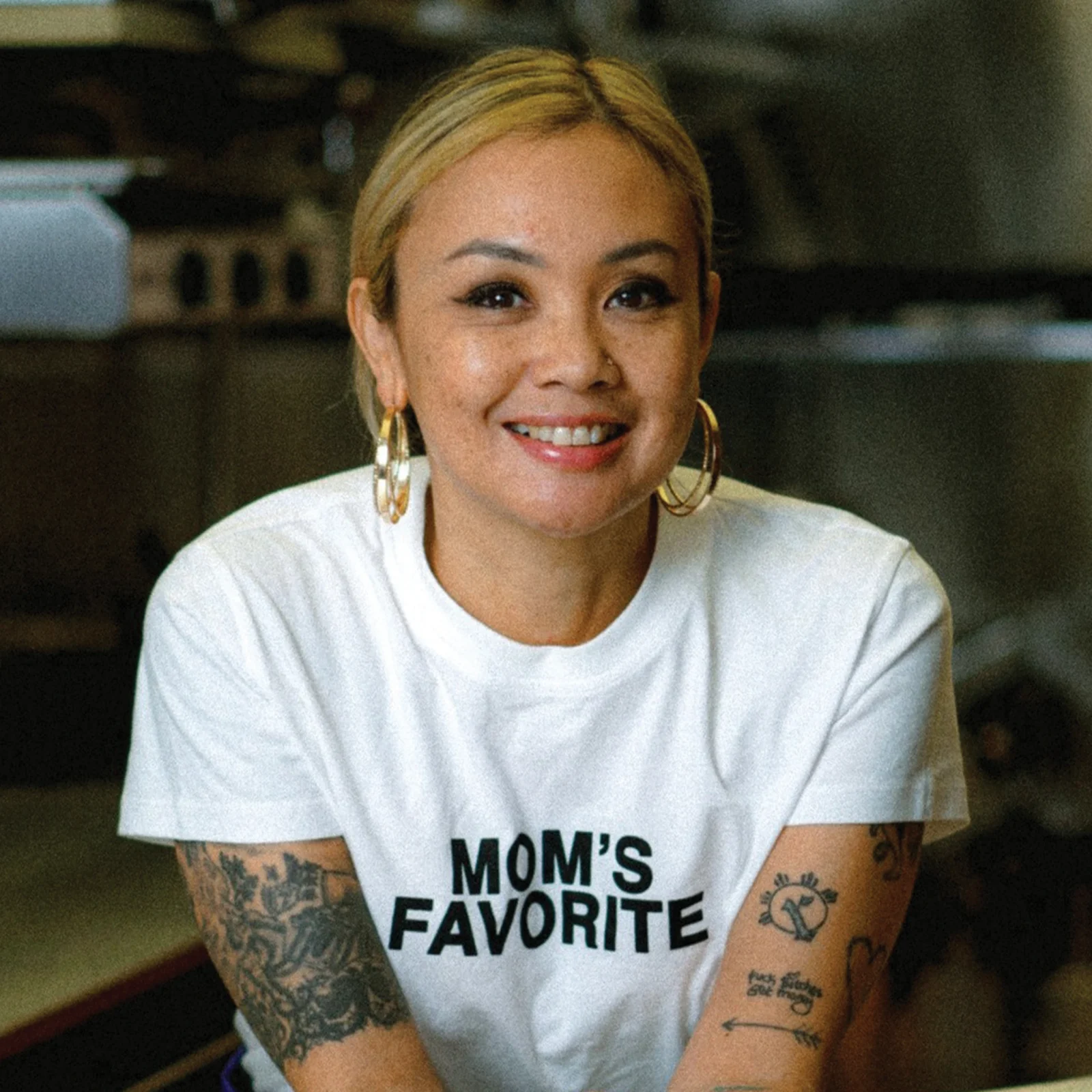


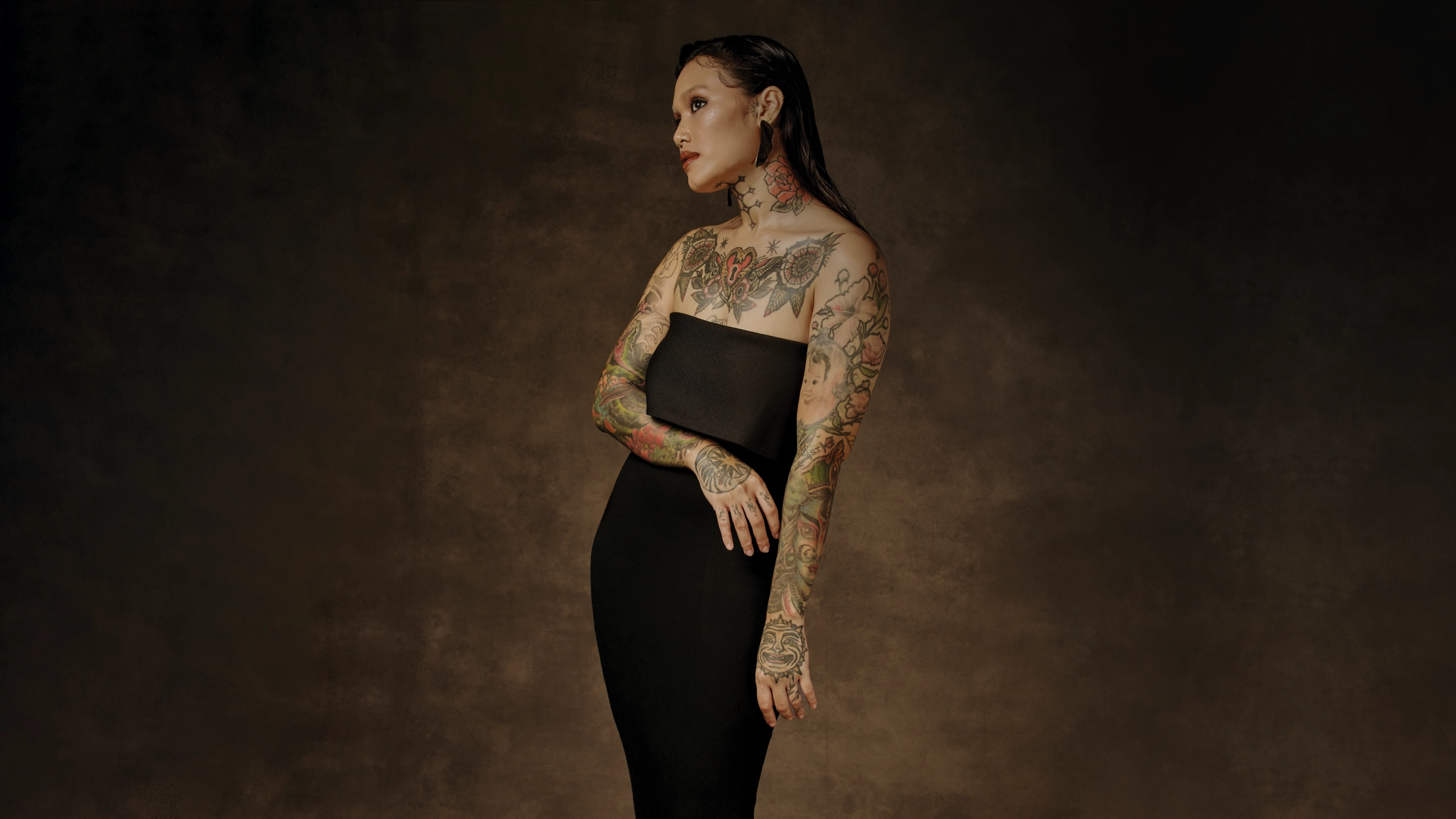
“May favorite pa ba ‘ko? Ang dami na e,” Annie Concepcion, probably one of the most sought after tattoo artists in Manila, laughs when asked which tattoo on her body she loves most.
She pauses for a moment before landing on an answer: “I think my favorite is the portrait of my daughter,” she says, pointing to the baby tattoo on her left arm, a sweet reminder of her daughter at six months old, and of why she does what she does.
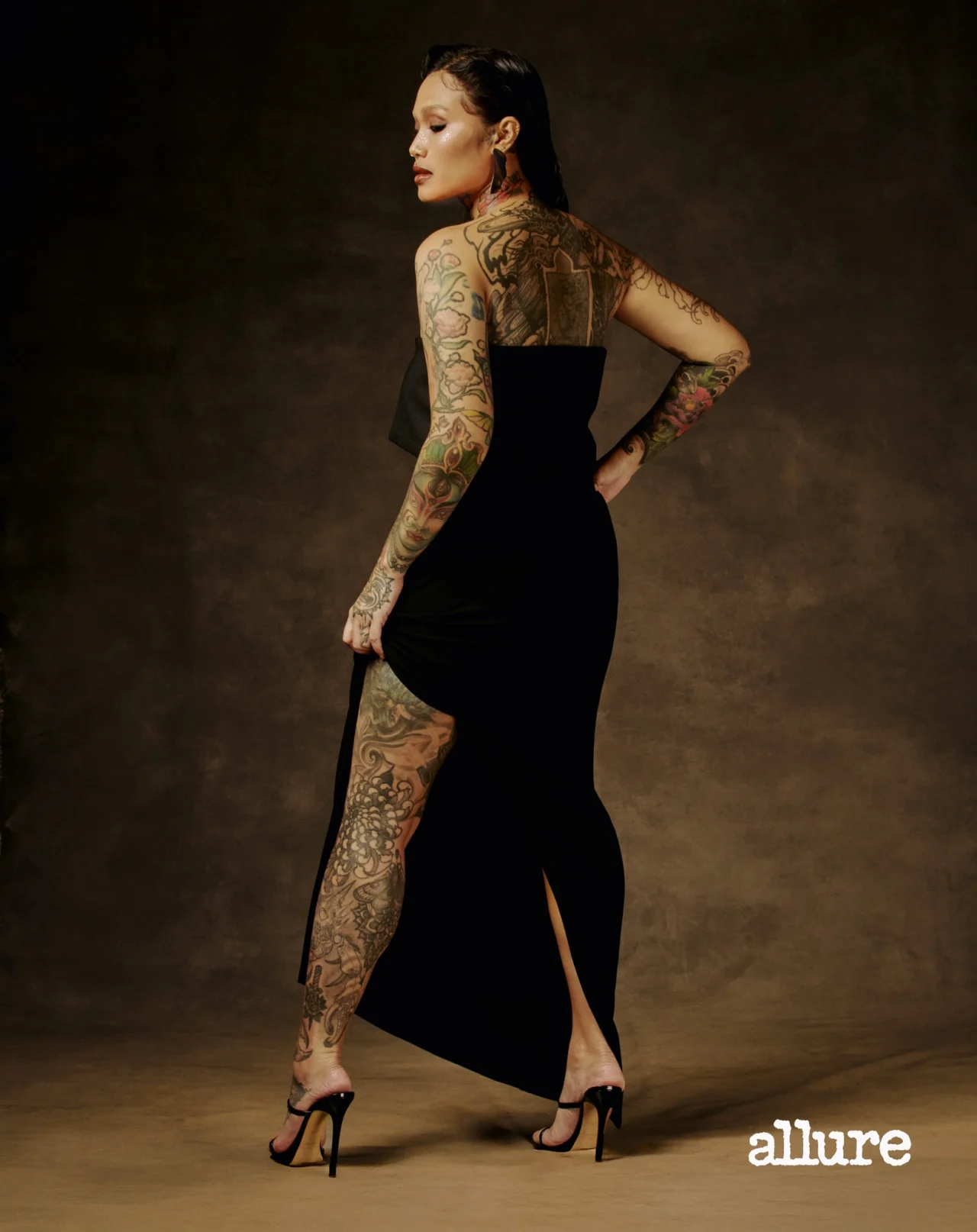
Concepcion, who has a background in painting, wears tattoos (some inked by herself, some by friends) proudly on her skin, and although she still encounters the old-school mindset that “bad people get tattoos,” she acknowledges that times are finally changing. “Younger generations get more tattoos. More women get tattoos,” she observes.
The craft, for her, has always carried depth and sentiment. “It’s not just cool,” she says. “It’s like it’s a memorabilia of that person – that this is what’s important to [them].”
Art direction by Nicole Almero. Beauty direction by Leira Aquino. Makeup by Lala Flores. Hair by JA Feliciano. Styling by Geno Espidol and Jermainne Lagura of Qurator. Nails by Extraordinail.
Frequently Asked Questions
Annie Concepcion is among the most sought-after tattoo artists in Manila, with a background in painting that informs the depth and detail of her work. She tattoos both herself and collaborates with fellow artists, and is known for approaching the craft as a form of personal storytelling rather than purely decorative art.
Concepcion’s favorite is a portrait of her daughter tattooed on her left arm, depicting her at six months old. She describes it as both a personal memorial and a reminder of the deeper purpose behind her work — a piece that captures why tattooing, for her, carries genuine emotional weight.
Concepcion trained in painting before moving into tattooing, and the two practices remain connected in her approach. Her fine arts foundation informs the compositional and narrative quality of her work, allowing her to treat skin as a canvas for portraiture and personal storytelling.
Concepcion acknowledges that an older stigma — associating tattoos with criminality or moral failure — still exists in the Philippines but is fading. She observes that younger generations and more women are getting tattooed, reflecting a broader cultural shift toward accepting body modification as personal expression rather than social deviance.
For Concepcion, a tattoo is a form of memorabilia — a permanent record of what matters to a person at a specific point in their life. She distinguishes tattooing from purely aesthetic decoration, framing each piece as a carrier of individual meaning that outlasts the moment it was made.