This Is What It’s Like Being a Filipina in STEM, According to a World-Renowned Filipina Scientist
It was never an easy road for women in science, technology, engineering and mathematics. On the occasion of Women’s Month, Filipina astrophysicist Reina Reyes, Ph.D. gives Allure Philippines an inside look on what it’s like being a woman in STEM.


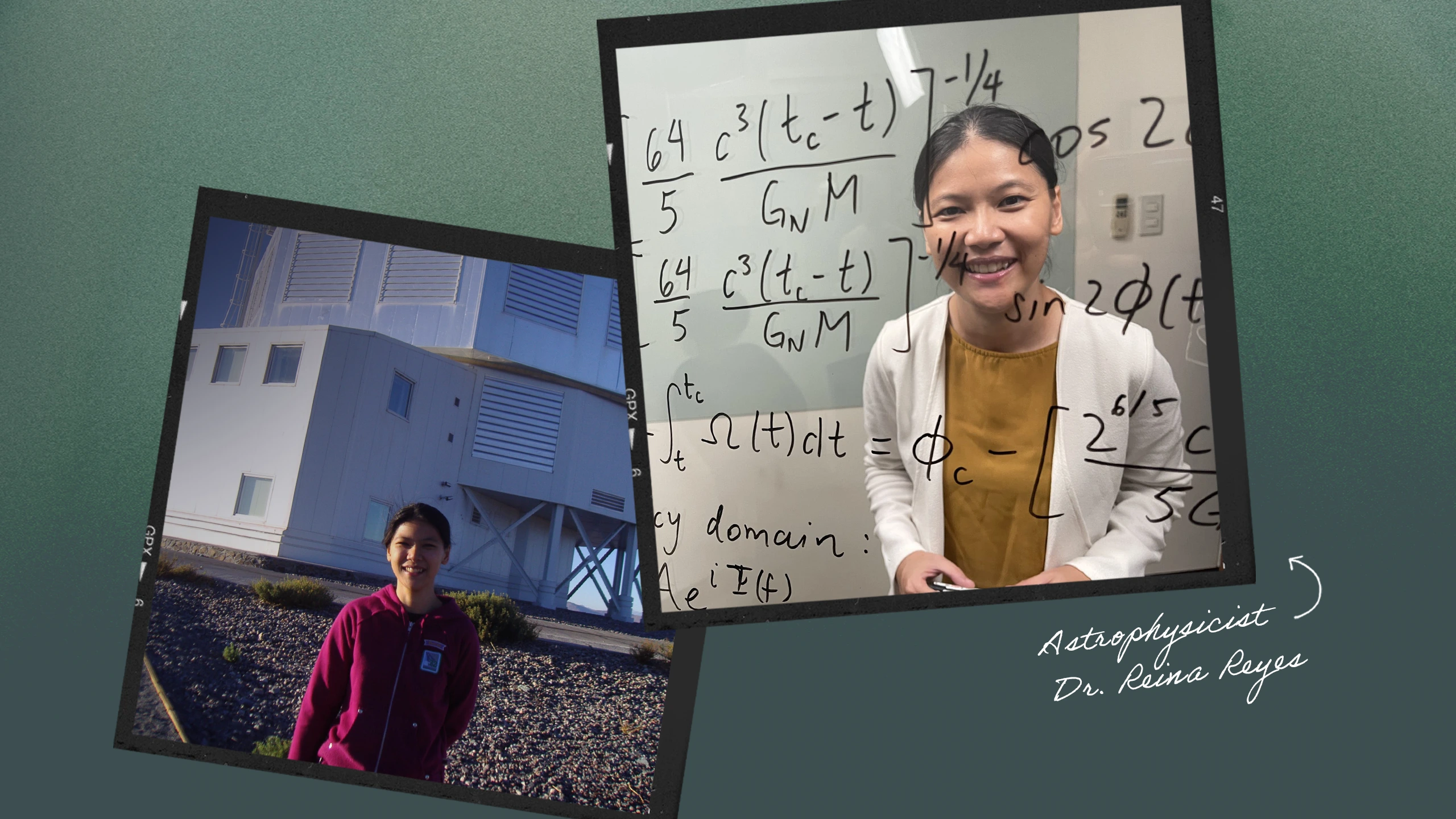
March is a special month for me—it is when I celebrate another orbit around the sun on my birthday—and though I still sometimes find it hard to believe, I am very grateful to be on my forty-second one this year. As a Filipina scientist carving my own path in a male-dominated field, for the past decade or so, March is also when I happily entertain interviews and features in celebration of Women’s Month. This year, I am fortunate to be part of Allure Philippines’ profiles of women in STEM, together with my good friends, educator Sabrina Ongkiko and the first Filipino analog astronaut Kristine Atienza, among others.
As we celebrate and share our stories and successes to inspire others and garner support, let us also be mindful not to fall into the trap of “survivorship bias”, where we incorrectly assume that a visible successful subgroup makes up the entire group, because of the invisibility of those who did not succeed or stay on.
For every successful woman in science we read about, there are many others, equally talented and deserving, who ended up leaving the field, because they encountered barriers that proved too high. Echoing Anne Curtis, who issued a public statement in early March 2026, in the wake of lewd comments made about her by Quezon City Representative Bong Suntay during House committee proceedings, let us not forget that “women’s month is not just a celebration, it’s a reminder of how far we have to go…”
The truth of being a woman in STEM
In the fields of science, technology, engineering and mathematics (STEM), the hard truth is that many women are unnecessarily driven away from the field—as early as childhood and the formative years in elementary and high school, while taking up STEM majors in college and graduate school, and during early professional careers in universities, research institutions, and industries.
According to UNESCO, only one out of three scientific researchers are women globally—and the same under-representation is reflected in the Philippines’ STEM workforce. While gender balance has been achieved in some fields—notably, in the life sciences and health—many specializations remain heavily male-dominated, including the physical sciences, engineering, and computer science. Though we have made great strides since the time of two-time Nobel Laureate Marie Curie, only 17 women have won a Nobel Prize in physics, chemistry or medicine since she did in 1903, compared to 572 men.
The reasons behind this huge disparity are both myriad and systemic. Here, we unravel some of these through the collective experiences and perspectives of Filipinas in STEM, from students to professionals, illuminated by their own words.
Dubart / Pexels
Girls are discouraged from STEM from an early age
For many who choose to pursue a career in STEM, interest in science is sparked at a young age. Unlike with boys, for girls, this is persistently countered by hindering factors from gender stereotypes (“boys play with trucks, girls play with dolls”) and misconceptions (“boys are innately better in science and math than girls”), social norms and expectations (“STEM studies and careers are masculine”), and biased opinions of peers, parents, and teachers. Surveys have shown that girls appear to lose interest in STEM subjects with age, particularly between early to late adolescence. By college, only 35% of students enrolled in STEM-related fields are women globally.
It takes courage and determination to go against the grain—as in the case of Hana (not her real name), who shares: “Since I was in elementary school, I had a profound interest in STEM courses. I would often talk about wanting to pursue the hard sciences or an engineering degree. It was to my surprise that my own mathematics teacher told me not to choose such programs, since employers would ‘definitely favor men over you.’ I wondered, why should I reduce myself to only what society thinks women can do? Why should I stick to the ‘status quo?’ I knew I could forge my own path, and so I did.”
Unsafe spaces drive away women from STEM
Despite the Safe Spaces Act (RA11313) or “Bawal Bastos Law”, it remains very difficult to report and speak about gender-based violence–including sexual harrassment, sexual assault, rape, and grooming– because of the prevailing culture of silence and victim-blaming. These are rooted in fear of retaliation, power imbalances, and institutional betrayal, especially in male-dominated fields and institutions. The hard truth is that it is happening in our schools, labs, and workplaces—and it is not uncommon for those in power to sweep it under the rug, to protect their own interests and the perpetrators’ reputations.
Vanessa (not her real name) recalls: “In lieu of appropriate institutional response to address and prevent sexual harassment, women were ‘jokingly’ advised not to have relationships with their male colleagues—infantilizing them and, pervertedly, placing the blame for sexual harassment on those most likely to be its targets. Much-needed steps for reform—in line with the Safe Spaces Act—were not taken and efforts to extend support to those who needed it were thwarted, blocking the path towards restorative justice. Many who were affected left the institution, and in some cases, left the field altogether.”
Women in STEM are forced to make hard choices between personal life and career
Studies have shown that women are more likely than men to leave their academic or professional STEM careers, a phenomenon known as the “leaky pipeline”. Reported reasons include sexism, lack of advancement, lack of work-life balance, and high-pressure, non-flexible work environments. Substantial attrition has been found for new mothers, with almost half of women (43%) seen to leave their jobs after having their first child compared to 23% of new fathers. Many female students become acutely aware of the difficulties that lie ahead and weigh them seriously in their decision on whether to continue onto careers in the field.
As Anne (not her real name) astutely reflects: “For a woman in science aiming for a competitive position, she is often forced into an unnecessary dichotomy: choosing between her career and her personal life. Take motherhood, for example. Our systems were never designed to account for the physical and emotional transitions it requires. Instead, current academic structures reward an uninterrupted, high-output trajectory. When the tenure clock doesn’t pause, or when pausing it is seen as a setback, it sends the message that a woman’s career and her personal life are in conflict. True equity means updating these systems to value long-term contributions over constant, short-term output. This ensures that a woman’s career doesn’t have to be compromised by her decision to start a family.”
Edward Jenner / Pexels
Lessons from the past, to create a better future
In the face of these struggles, I have to admit that I sometimes get disheartened and frustrated, but ultimately, I am emboldened by the young women who are taking up space and aspiring for change in our community. In the past, I have been caught off guard when calls for concern and change were met with arrogance, vindictiveness, and obstruction–ranging from snubbing, delaying tactics, to outright rejection– sadly, even from fellow women in the field. In hindsight, I now realize that resistance is par for the course when existing power structures are threatened–and my reaction merely reflects how naive and unequipped I had been to face the situation effectively at that time. I learned hard lessons–and I am writing this piece, so I can grow to learn more.
For one, I’ve learned that to co-create a more equitable future, we need more men to step up as alllies—to recognize the unspoken privileges that are bestowed on you, simply by virtue of being men, to listen to understand, rather than assume that you know what’s best for women, and to realize that we are not in a zero-sum game, that the changes we seek will improve conditions not only for women, but for men, as well.
Change will not come overnight, but I believe that today we are ready to have more open, critical, and constructive conversations about these important matters for our community– let us have them, in our labs and classrooms, and outside them. There is a long way to go, but the good news is, we can start right here, where we are.
Disclaimer: Views and opinions expressed in this article are solely those of the author and do not represent the views of any organizations with which she is affiliated.
Frequently Asked Questions
Women in STEM face compounding barriers including gender bias, lack of institutional support for mothers, unsafe workplace environments, and limited advancement pathways. Studies show 43% of women leave full-time work after their first child, compared to 23% of men — a phenomenon researchers call the “leaky pipeline.”
Survivorship bias occurs when visible success stories — like celebrated Filipinas in science — obscure the larger number of equally talented women who left the field due to systemic barriers. Focusing only on those who stayed creates a false impression that the path is more accessible than it actually is.
Yes. According to UNESCO, only one in three scientific researchers worldwide are women. In the Philippines, the same underrepresentation holds — particularly in the physical sciences, engineering, and computer science — despite gender balance in some life science and health fields.
The Bawal Bastos Law covers workplaces, schools, and public spaces — including laboratories and universities. However, fear of retaliation, power imbalances, and institutional silence remain significant barriers to reporting gender-based harassment in STEM environments.
Structural reforms include pausing the tenure clock for new mothers, building flexible high-output environments, addressing sexual harassment institutionally rather than deflecting it, and actively recruiting men as allies who recognize systemic privilege in male-dominated fields.
- This World-Renowned Filipina Astrophysicist Forges Ahead On a Difficult Path—So That Other Women May Find Their Way
- The First Filipino Analog Astronaut Wants to Bring Adobo to Space
- Coach Mau Belen Is Still Changing the Game
- In the Depths of the Ocean, This Filipina Marine Biologist Feels Most Like Herself