

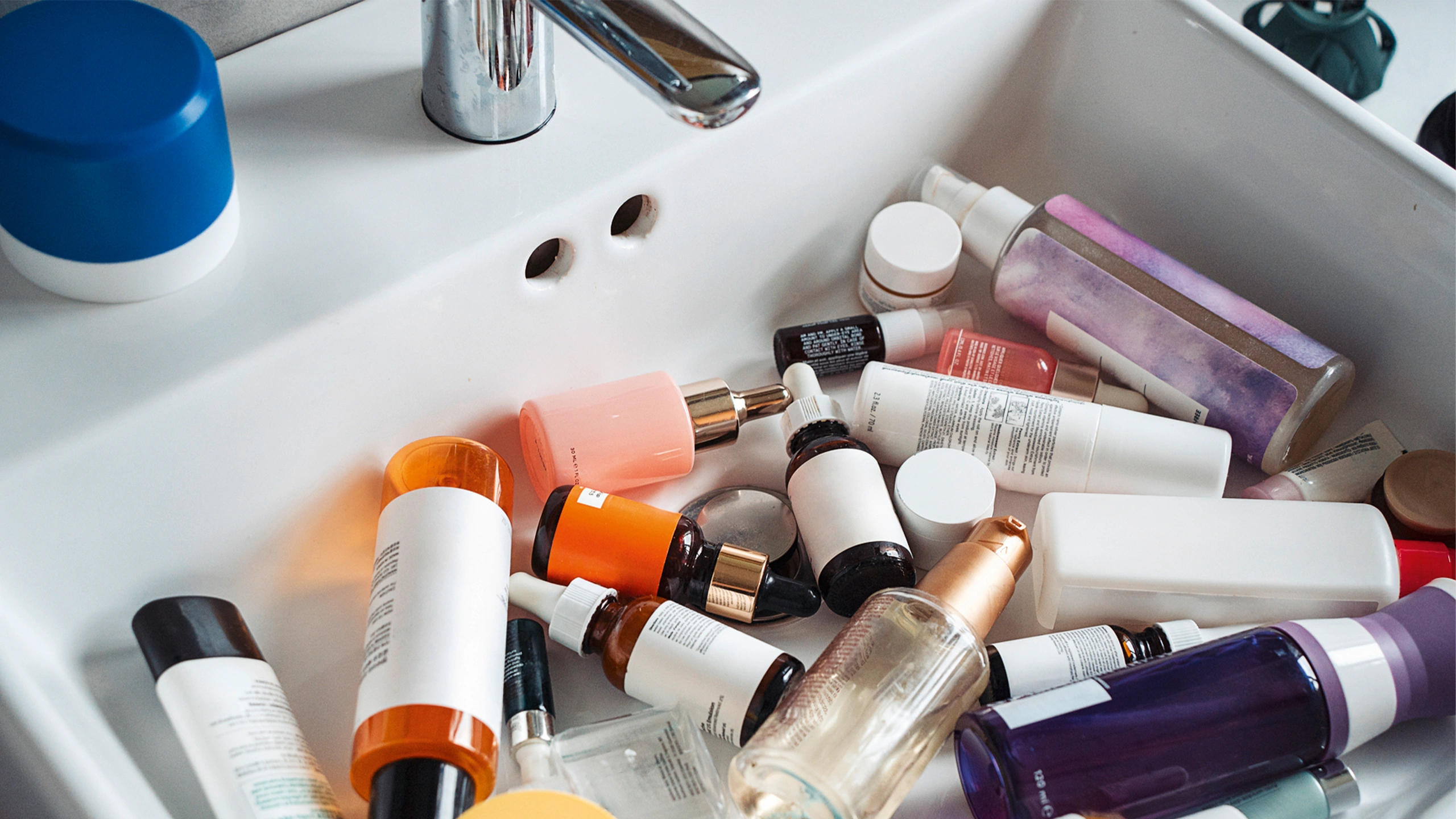
Take a look at your vanity shelf. It’s a collection of promises: serums for radiance, moisturizers for repair, and lipsticks for a pop of color, all housed in shiny, glass-like packaging. But behind every pump and jar lies a hidden cost. Long after the last drop is used and the trends have faded, the packaging carries a story of permanence and pollution.
The beauty industry is responsible for an estimated 120 billion units of packaging produced annually worldwide, with the majority of it plastic. There’s the plastic that we see: the bottles, jars, tubes, and sachets, plus the additional layers of packaging like bags, bubble wraps, and laminated boxes. Then there’s the plastic that we don’t easily see: the microplastics that serve as physical exfoliants in toothpaste, facial wash, and body wash. Once washed down the drain, they’re almost impossible to remove from our waterways.
Plastic once made beauty effortless—products became light enough to bring in our everyday bags, durable enough to toss in our luggage, and glossy enough to photograph well. As a material, plastic’s biggest benefit is its low cost, as cardboard tubes can cost 60 times more than mass-produced plastic options. In an archipelagic nation like the Philippines, ease of transport and affordability are major considerations for packaging decisions.
But the same material that protects our serums and scrubs now litters our streets and seas. Plastic is non-biodegradable, so the moisturizer jar used by our mothers and grandmothers could still be intact in a canal, landfill, or seafloor today. The plastic waste crisis is further amplified by the sachet economy, prevalent in the Philippines and much of the Asia-Pacific region. Along the shores of coastal communities, these discarded sachets dot the sand like confetti. Underwater, they’re wedged in between colorful corals, polluting the very oceans that inspired our “sea salt” sprays and “marine blue” palettes.
A reality check on recyclability
Adrian Rodd/Stocksy
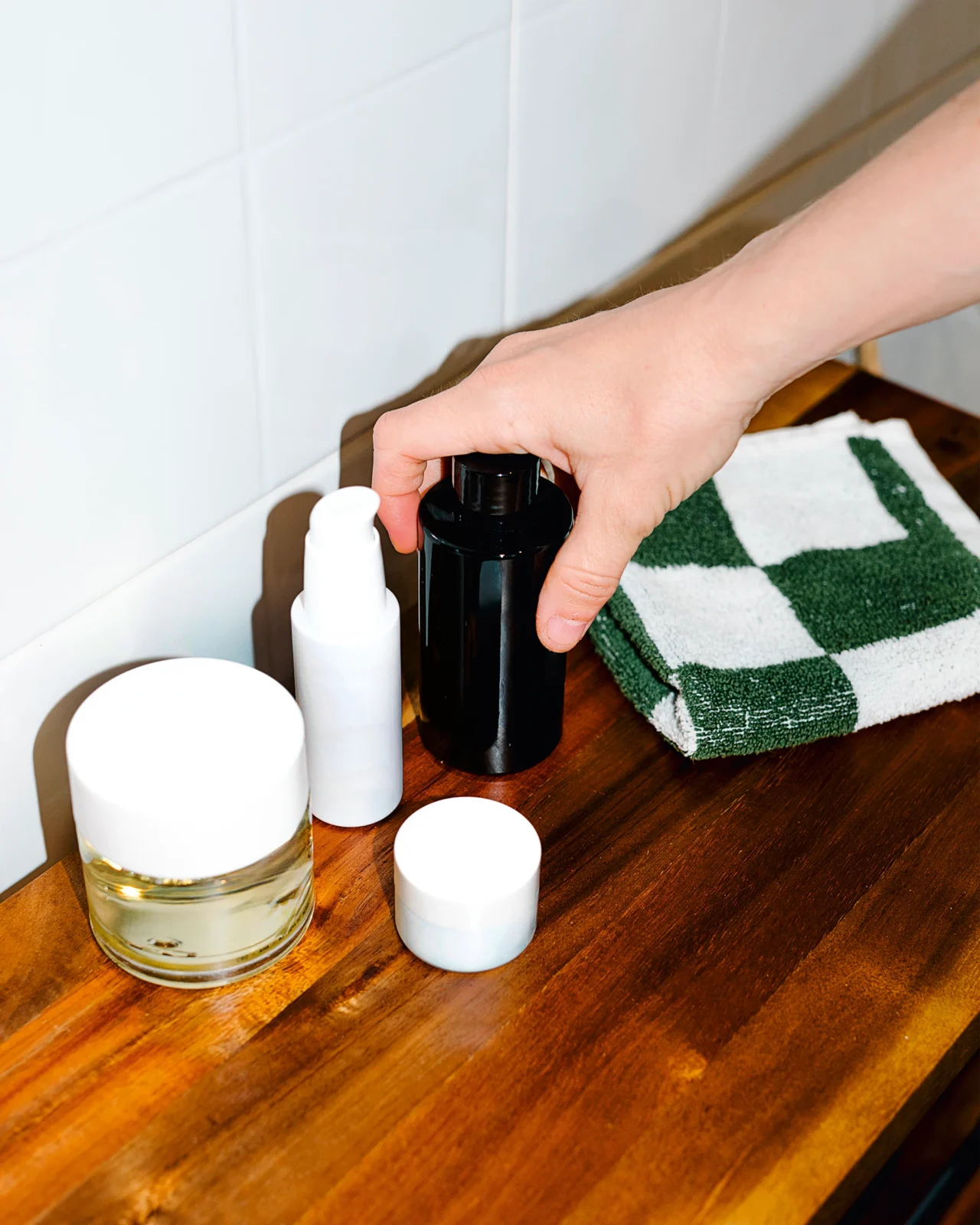
Flip one of your bottles and you’ll find the tiny “chasing arrows” symbol, often mistaken for a universal recycling badge. In reality, it identifies the type of plastic. #1 (PET) and #2 (HDPE) bottles and #5 (PP) caps are among the few that have a high chance of being recycled in the Philippines. Everything else—pumps, sprays, droppers—often ends up in landfills or the environment. “[These] often contain a mix of materials like plastic, metal, and springs that make them non-recyclable,” explains Zed Avecilla, program director of Philippine Alliance for Materials Recycling and Sustainability. And our beloved travel-sized minis? “They are often too small to be effectively sorted and recycled in conventional facilities,” Avecilla adds.
Alternatives have their own challenges. “Some sustainable packaging has a shorter shelf life than our actual product. For example, paper tubes fray and turn yellow in storage before the product expires,” shared Anna Meloto-Wilk, co-founder of Human Nature, a social enterprise that manufactures and sells personal and home care products. “There are some fixes, such as laminating paper, but then that’s also plastic and makes it harder to biodegrade the paper packaging and recycle due to the mix of materials.”
According to a 2020 study commissioned by WWF Philippines, only about 9 percent of plastic in the Philippines is recycled, while a staggering 35 percent leaks into the open environment. Contamination from product residue, a lack of waste management infrastructure, and poor waste segregation from the household level until the landfill or recycling facility are additional factors that cripple the system.
With recycling rates low and waste infrastructure still fragile, the responsibility often shifts to consumers—and their choices. There was an unprecedented shift seen in consumer preference after the COVID-19 pandemic. “We saw consumers going back to prioritizing aesthetics and efficacy of products over sustainability features,” observed Meloto-Wilk. “Sustainability has become a nice-to-have instead of a necessity.”
Designing for circularity
Alice Nerr/Stocksy
The solution requires a fundamental shift from a linear “take-make-dispose” model to a circular economy, where products and services are designed to eliminate waste and keep materials in use. This transformation must be brand-led, as companies hold the most power and resources over design and material choices.
“Use recycled content to reduce demand for virgin materials and design for recyclability by prioritizing the use of one type of material,” recommends Avecilla. “Simplify packaging by reducing unnecessary layers, elaborate designs, and mixed materials.”
“Sustainable packaging still comes at a premium, although it’s steadily been going down over the years,” Meloto-Wilk also points out.
Circularity is slowly growing roots in the Philippines. The Extended Producer Responsibility (EPR) Act of 2022 mandates large companies to reduce their plastic footprint by 80 percent in 2028, formalizing the principle that manufacturers must take responsibility for the plastic waste they create.
In response, brands are exploring alternative materials and establishing collection programs with incentives for consumers. Kiehl’s, a luxury personal care brand, started offering refill pouches for some of their best-selling skincare products prior to the EPR Act. These use 61 percent less packaging than the jars.
“Consumers who care about the environment feel an affinity to the brand when they see our efforts towards plastic reduction,” shares Bea Morales, senior product manager of Kiehl’s Philippines. To close the loop, the brand’s Recycle and Be Rewarded program has collected over 30,000 empties in just two years. Consumers are given Kiehl’s freebies and their clean and empty packaging are turned over to a recycling partner.
Brands also carry the responsibility to communicate the benefits of their sustainable programs to their audience. “Consumers may have anxieties about the hygiene of refilling a container at home. Questions like ‘Is my jar clean enough?’ or ‘Could I contaminate the product?’ can be significant deterrents to purchasing the refills,” Morales said. “This is why we’ve taken the time to educate consumers on the benefits of using a refill and how these valid concerns are outweighed by the amount of plastics we are able to significantly reduce.”
The power of consumers
Consumers are essential drivers for change. By shifting our spending and using our voices, we can accelerate the beauty industry’s shift towards circularity. “Choose products that prioritize sustainable packaging, and demand more sustainable options from brands and retailers,” urges Avecilla.
The advocacy, he notes, starts at home by segregating wastes and cleaning containers to remove residue. Prioritize brands with package-free formats like shampoo bars, and if budget allows, opt for larger sizes, which are more cost-effective and use less packaging per milliliter. Check the ingredients list for microplastics, often listed as PET or PP, and go for products with natural exfoliants like sugar or salt instead.
“What’s encouraging is that more Gen Z consumers are valuing practicality and saving money, so refills and products with less packaging but have more product are becoming more appealing,” Meloto-Wilk says.
The products on our shelves are part of our daily rituals, and through our personal, repeated use, they hold the potential for a promise other than glow and radiance: to be a force for a sustainable future. By championing enforceable policies, supporting innovative packaging, and making informed choices, we can collectively ensure that our beauty routines protect our skin and our planet.
Frequently Asked Questions
While many bottles feature the “chasing arrows” symbol, most components are not actually recyclable. Complex items like pumps, sprays, and droppers often contain a mix of plastic, metal, and springs that cannot be processed together. Additionally, travel-sized “minis” are frequently too small for conventional sorting facilities to handle, and contamination from leftover product residue further prevents successful recycling.
The sachet economy refers to the prevalence of single-use, small-format plastic packets used for affordability and convenience, particularly in the Philippines and Asia-Pacific. Because these sachets are non-biodegradable and often not recovered by waste systems, they frequently end up as litter in streets and oceans. They are a major contributor to the plastic crisis, often found wedged in coral reefs or washed up on coastal shores.
Consumers can drive change through several specific actions:
Opt for Refills: Purchase refill pouches or large-format bottles, which use significantly less plastic than standard jars.
Choose Package-Free Formats: Look for products like shampoo bars that eliminate plastic housing entirely.
Practice Proper Waste Habits: Clean empty containers to remove residue and segregate waste at home to improve its chances of being recycled.
Check Ingredients: Avoid products containing microplastics (often listed as PET or PP) and choose natural exfoliants like sugar or salt instead.
The Extended Producer Responsibility Act of 2022 is a Philippine law mandating large companies to reduce their plastic footprint by eighty percent by 2028.
Microplastics serve as physical exfoliants in skincare products. Because they do not dissolve, they easily pass through filtration systems and permanently contaminate aquatic ecosystems.