

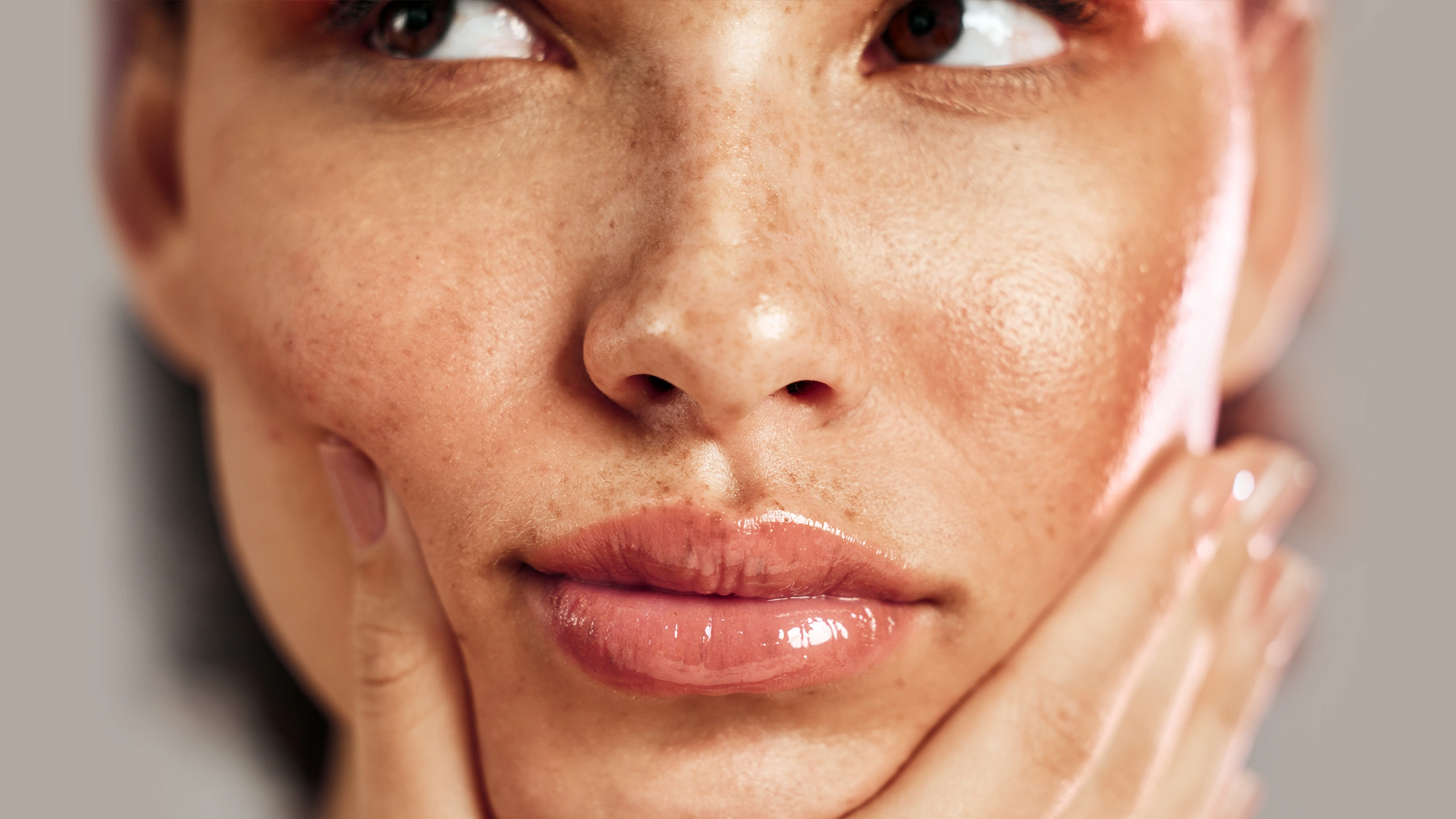
Many people have talked my ears off saying that if you have oily skin, you don’t need a moisturizer, because the assumption is that excess oil already means your skin has enough moisture. I personally used to skip moisturizer because many of the ones I’ve tried made my skin feel greasy, and with the weather in the Philippines, the last thing I want is that hot, slick layer on my face.
But experts have been pushing back against that idea, clarifying that moisturizer is still essential—yes, even for oily skinOily SkinSkin that produces excess sebum, leading to shine, enlarged-looking pores, and a higher chance of breakouts. Oily skin still needs hydration, so lightweight gels, niacinamide, and oil-free sunscreen help balanceGo to Oily Skin Glossary, because oily skin is not a sign of excess moisture. It may actually signal a lack of it.
To find all the answers, I reached out to board-certified dermatologists to understand the misconceptions and how I should approach my relationship with moisturizer.
Getting the wrong idea
According to board-certified dermatologist Francesca Sy-Alvarado, MD, FPDS, “Moisturizer isn’t just about adding oil to the skin. It’s about maintaining a good balance of oil and water to maintain a healthy skin barrier.”
In addition, fellow board-certified dermatologist Raissa Francisco-Passion, MD, FPDS shared in a previous Allure Philippines interview that moisturization is vital. “Moisturization means lubricating the skin, thereby reducing dryness and transepidermal water loss.”
This is why moisturizers come in different forms, each serving a specific function. Dr. Alvarado-Sy explained that emollients help fill in the gaps between skin cells, smoothing the skin and helping prevent water loss. Occlusives, on the other hand, create a physical barrier on top of the skin that seals everything in.
Even oily skinOily SkinSkin that produces excess sebum, leading to shine, enlarged-looking pores, and a higher chance of breakouts. Oily skin still needs hydration, so lightweight gels, niacinamide, and oil-free sunscreen help balanceGo to Oily Skin Glossary relies on this balance to function properly. “So when your skin barrier is intact, it means that your skin is better at doing its natural processes, regulating oil production,” says Dr. Sy-Alvarado. It also becomes more resilient—better able to tolerate active ingredients and defend against environmental stressors like UV exposure, pollution, and even bacteria.
Can moisturizing oily skin really worsen breakouts?
One of the biggest concerns around moisturizers for oily skinOily SkinSkin that produces excess sebum, leading to shine, enlarged-looking pores, and a higher chance of breakouts. Oily skin still needs hydration, so lightweight gels, niacinamide, and oil-free sunscreen help balanceGo to Oily Skin Glossary is the fear of breakouts—because with that extra layer, I feel like my pores get clogged by moisturizers too.
However, Dr. Sy-Alvarado debunks that, saying it depends on the type of moisturizer you use. Heavier, more occlusiveOcclusiveAn ingredient, such as petrolatum, shea butter, or dimethicone, that forms a protective layer over the skin to prevent water loss. Occlusives are the last step in a routine, andGo to Occlusive Glossary formulations can feel greasy and, in some cases, contribute to clogged pores. This is where the term “comedogenic” often comes in, referring to ingredients that can induce the formation of comedones under testing conditions.
When breakouts do occur, they are often linked to other underlying factors such as acne-prone skin, uncontrolled acne, or conditions like seborrheic dermatitis—not moisturizers themselves. Seborrheic dermatitis typically presents as red, scaly patches in oil-rich areas such as the T-zone, eyebrows, sides of the nose, and nasolabial folds.
“I want to clarify that moisturizers aren’t the main culprit in skin breakouts,” she says.

Envato Images
What would happen if I skip moisturizer?
Skipping moisturizer might seem like the move to stop adding oil on the face, but according to experts, it can have the opposite effect.
“The skin can actually become dehydrated because there’s still water loss, even if your skin looks oily. So your skin can actually produce more oil to compensate for the lack of hydration. And over time, if you overproduce oil it can lead to congestion of the pores, and even more sensitive skin,” explains Dr. Sy-Alvarado.
This becomes more pronounced when using active ingredients like retinoids or benzoyl peroxide, which can further compromise the skin barrier if not properly supported.
How can I tell if my skin is actually dehydrated?
Oily skin and dehydration can coexist. “Signs of dehydration in oily skin can translate into sensitivity. You can have tightness or discomfort, even if you are visibly oily,” says Dr. Sy-Alvarado.
Other indicators include dullness, uneven texture, flakiness, or rough patches. Increased sensitivity—such as stinging when applying products—can also point to underlying dehydration. In some cases, worsening oiliness throughout the day may signal that the skin is overcompensating.
What type of moisturizer is suited for oily skin?
“We suggest that you get the right formulation of moisturizer that can help balance your skin. And again, I emphasize, it’s not about avoiding moisturizers, but more of choosing formulations that suit your skin type,“ reminds Dr. Sy-Alvarado.
In a tropical climate like the Philippines, where heat and humidity can make skin care feel heavier, choosing the right moisturizer becomes especially important.
“Our tropical weather could be a deterrent for some when it comes to applying moisturizers, but we should still give our skin the hydration it deserves,” says board-certified dermatologist Jella Mercado-Garcia, MD, FPDS in a previous Allure Philippines interview.
“For oily skinOily SkinSkin that produces excess sebum, leading to shine, enlarged-looking pores, and a higher chance of breakouts. Oily skin still needs hydration, so lightweight gels, niacinamide, and oil-free sunscreen help balanceGo to Oily Skin Glossary, I recommend gel-based moisturizers that are non-comedogenic to help prevent acne,” she says. “For drier skin, a light lotion or cream can help address dehydration without that heavy, sticky feel.”
Letting go of outdated beliefs
Moisturizers sometimes get all the blame, becoming the scapegoat for breakouts and being entirely shunned by those with oily skinOily SkinSkin that produces excess sebum, leading to shine, enlarged-looking pores, and a higher chance of breakouts. Oily skin still needs hydration, so lightweight gels, niacinamide, and oil-free sunscreen help balanceGo to Oily Skin Glossary—something I’m guilty of as well. But with expert advice, they still need to be in our vanity drawers, now that we better understand what works for our skin and how it behaves.
For those with oily skinOily SkinSkin that produces excess sebum, leading to shine, enlarged-looking pores, and a higher chance of breakouts. Oily skin still needs hydration, so lightweight gels, niacinamide, and oil-free sunscreen help balanceGo to Oily Skin Glossary, letting go of moisturizers is not the solution; it’s about letting go of the old idea that moisturizers have no place in our routines.
Frequently Asked Questions
Yes. Oily skin is not a sign of excess moisture — it may actually signal a lack of it. Moisturizer maintains the balance of oil and water needed for a healthy skin barrier, which helps regulate oil production and build resilience against environmental stressors like UV exposure and pollution.
Moisturizers are not the main cause of breakouts. Heavier, comedogenic formulations can contribute to clogged pores, but breakouts are more often linked to acne-prone skin, uncontrolled acne, or conditions like seborrheic dermatitis. Choosing a lightweight, non-comedogenic formula significantly reduces the risk.
Skipping moisturizer can dehydrate the skin, causing it to overproduce oil to compensate — which can lead to clogged pores and increased sensitivity over time. This effect is worsened when using active ingredients like retinoids or benzoyl peroxide, which further compromise the skin barrier without proper moisturization.
Oily skin and dehydration can coexist. Signs include tightness, discomfort, dullness, uneven texture, flakiness, and stinging when applying products. Worsening oiliness throughout the day may also signal that the skin is overcompensating for an underlying lack of hydration.
In a tropical climate, gel-based, non-comedogenic moisturizers are recommended for oily skin — lightweight enough to prevent that heavy, greasy feeling in heat and humidity. For drier skin types, a light lotion or cream addresses dehydration without the sticky finish that heavier formulations can leave behind.