From Shelf Space to Screen Time: How Beauty Retail in the Philippines Is Being Rewritten
With consumers’ shopping habits changing, and the local beauty industry constantly evolving, how do Filipino beauty brands adjust? Reese Fernandez-Ruiz investigates.


After nearly two decades building a fashion brand in the Philippines, I have learned to watch beauty closely—not as a consumer, but as a business case study in resilience.
Beauty’s reputation as recession-resistant is fascinating. The lipstick effect, first observed during the Great Depression and validated through many economic downturns since, tells us that consumers who cut back on spending will still reach for small, affordable luxuries. Beauty products are exactly that. When times get hard, the industry doesn’t collapse. It becomes an essential—a source of comfort during periods of uncertainty. For an entrepreneur looking for ways to keep a business standing through uncertainty, that makes beauty one of the most instructive industries to follow.
Right now, Philippine beauty retail is in the middle of an era worth learning from. The way consumers find products, decide to buy them, and choose who to trust has shifted significantly. The beauty industry players navigating this well are writing a playbook that goes far beyond the beauty aisle.
I spoke with a few experts who are experiencing this shift in real time: a homegrown Filipino beauty brand navigating both physical retail and digital commerce, and a platform sitting at the intersection of content and commerce—alongside industry observations and platform data. Their experiences on the ground paint a picture that is both specific to beauty and useful far beyond it: how Filipino consumers are changing, what the new rules of discovery and shopping look like, and what any entrepreneur building a brand in the Philippines today can take from it.
No straight line from discovery to purchase
Envato Images
Macky Samaco, brand owner of Vice Cosmetics and commercial growth officer of M Commerce, a full-service e-commerce company helping brands grow on digital platforms, has built his work around understanding this. Filipino consumers are searching for specific solutions, and they are searching everywhere. “All of them need to exist together because the discovery happens on TikTok. And sometimes the purchase happens on Shopee. And then also all your retail channels. So you need everything,” he says. The customer journey no longer follows a straight line from awareness to purchase—someone might discover a product on TikTok, research it on another site, and eventually buy it in-store or on another platform entirely.
For brands, this means that having a good product is no longer good enough. You also have to be a highly discoverable one: across TikTok, Shopee, Lazada, other online channels, and physical retail. The brands that win are the ones that show up wherever their customer happens to be looking.
Discovery has become the new shelf space
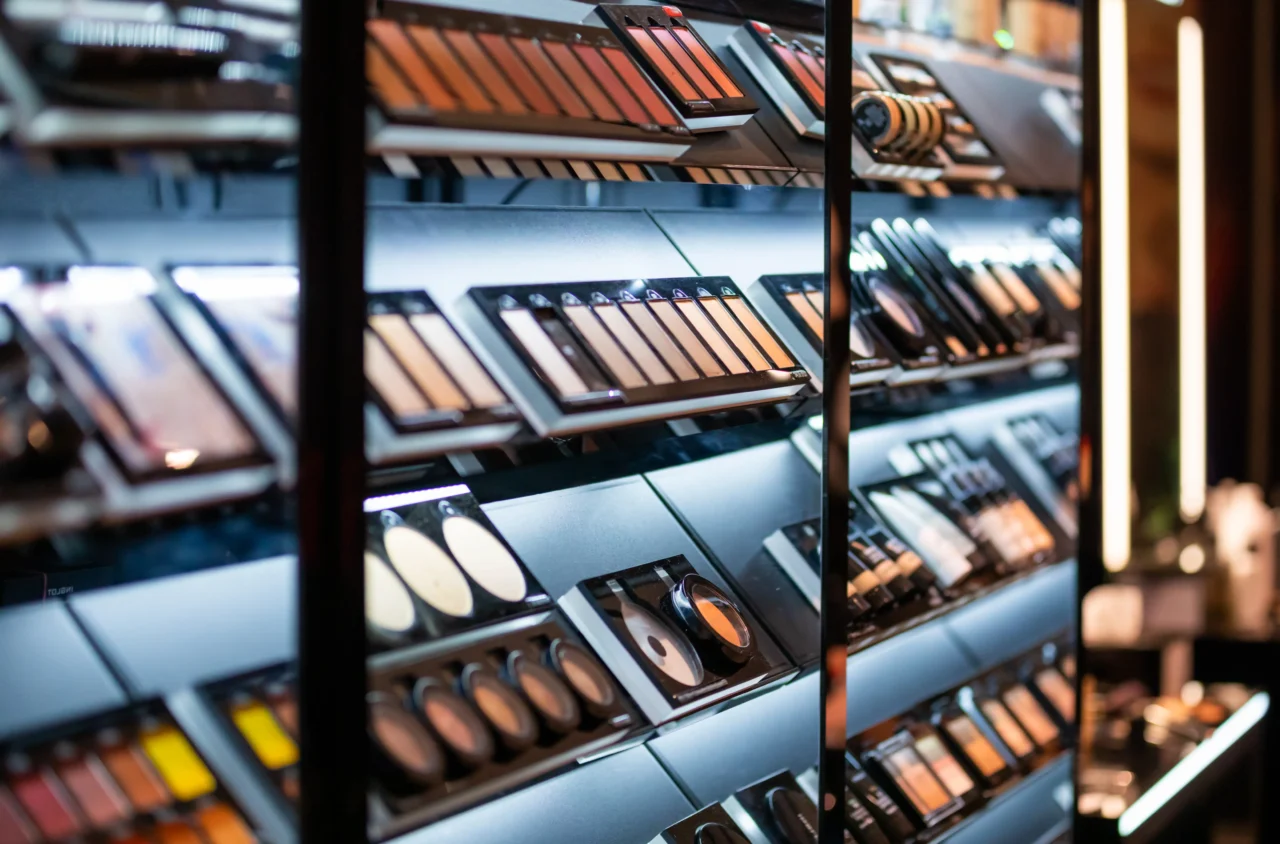
When you walk into any store that carries beauty products, you are actually looking at a curated collection that requires brands to go through long application processes, category reviews, and distribution agreements just to earn a spot. Getting onto those shelves historically costs brands time, resources, and patience.
That gate is now much wider, with e-commerce, social commerce, and social media each opening new entry points for brands to reach consumers directly. While TikTok Shop accelerates discovery, established platforms like Shopee and Lazada continue to dominate conversion-driven behavior, particularly for price-sensitive consumers. Shopee and Lazada search and price comparison features continue to shape purchase decisions. Physical retail, meanwhile, remains relevant beyond just a point of sale, it is where consumers experience a brand in person and make decisions that algorithms cannot fully replicate.
“Filipino users have been searching in growing numbers for specific ingredients like niacinamideNiacinamideA form of vitamin B3 that helps regulate oil, minimize the look of pores, strengthen the skin barrier, and fade dark spots. It is well tolerated and pairs easily withGo to Niacinamide Glossary, hyaluronic acid, and PDRN, alongside trending terms like ‘long-lasting make-up’ and ‘bebot beauty,’ with sustained interest in local, Korean, and Thai beauty brands,” says a TikTok Shop Philippines representative. Whether these searches are driving trends or reflecting them, or both, is hard to say cleanly. What seems more likely is that it is a bit of all of it: a trending ingredient gets picked up by a content creator, their audience searches for it, brands respond with products, more creators review those products, and the cycle continues. Consumer feedback, content consumption, peer recommendations, and platform algorithms all feed into each other.
What this suggests is that brands with products that solve problems and stories that feel personal rather than promotional can, in many cases, achieve results comparable to or even exceeding traditional campaigns. Social proof also plays a significant role here. Micro-influencers and verified product users showing real results on real skin, for a Filipino audience navigating real Manila humidity and commute stress, may do more for a product’s credibility than a polished commercial campaign.
But visibility alone is not what drives growth—execution is.
The shift, in practice
Envato Images
For Vice Cosmetics, the change is concrete and measurable. Samaco watched the brand grow from a predominantly brick-and-mortar retail business, with less than 5 percent of sales coming from online before the pandemic, to one where online shopping now accounts for the majority of sales across all digital platforms.
For Issy, another local cosmetics brand that has built its presence through LIVE shopping events, creator partnerships, and shoppable short videos, the results tell a similar story: consistent quarter-on-quarter growth, according to the same TikTok Philippines representative, driven by showing up repeatedly in the places their community was already gathering.
The experiences of both brands tell us that succeeding through this shift is less about which platform to choose and more about understanding how your specific customer moves. Where do they discover? Where do they research? Where do they finally decide to buy? Depending on a brand’s target market and growth ambitions, some choose to be present across all platforms. Others concentrate their energy and resources on the channels that best fit their customer and category. Both can work. What is no longer viable, however, is treating online as optional.
What smart brands are doing with this
The brands finding traction on social commerce are not all operating at the same scale, and the strategies reflect that.
For established brands like Vice Cosmetics, success at scale required professionalizing the entire operation behind the content. Samaco is candid about this: Vice initially tried to manage it in-house and encountered the challenge of navigating all the moving parts. “Social media and social commerce are totally different,” he says. “By the time you learn the platforms, the algorithm has already changed.” The solution was finding a specialist partner, in Vice’s case M Commerce, to handle the backend: ads management, affiliate marketing, creator partnerships, logistics, among others.
Samaco is also candid about what it takes to survive a viral moment. Going viral without being ready is its own kind of crisis. “You need to plan and be ready when something becomes viral,” he says. “You need the right stocks, the right customer service, the right backend team.” The operational side of social commerce has to be as solid as the content side.
For brands earlier in their journey, TikTok Shop’s OnTrend program offers a practical starting point, tracking emerging search trends and popular keywords so that even a smaller brand can enter the conversation knowing what their community is already curious about.
The thing that does not change
Running businesses across different industries has taught me that the ones who build lasting businesses arrive at the same realization, eventually. The technicals are learnable. What is harder to hold onto but essential to hold on to, especially when something is working, is the brand underneath all of it.
“You cannot lose your brand,” Samaco says. “Sometimes you’re tempted to do some crazy things online just to get sales. But still, you need to stay true to the brand.”
The conviction underneath all of it: trust is the most important asset a brand holds, regardless of where it shows up.
In a market saturated with affiliate links, sponsored content, and algorithm-driven recommendations, consumers are becoming more discerning about what—and who—they trust.
Where Philippine beauty is heading
Samaco sees a lot of runway ahead, especially for independent Philippine brands. These, he says, “can compete side-by-side with multinational brands.” Retailers are also increasingly making room for local independents, and the e-commerce platforms have accelerated that access.
Physical retail is not disappearing, though. People will still want to touch a product, experience a brand in person, and find the Instagrammable moment. But the starting line has shifted, and it is one that startups and independent brands can actually access without a massive distribution budget or a costly shelf space. Social media opened the door. Social commerce widened it further.
This brings us back to why beauty has always been worth watching. Even in hard times, people make room for small purchases that make them feel good. But when budgets are tighter and decisions are more intentional, that is where trust becomes the deciding factor. The platforms, the content, the commerce, the community, the fulfillment—all of it is in service of one thing: giving your customer a reason to choose you when choosing matters more. The brands that get this, whether they have been around for 18 years or 18 months, are the ones that last. And in a market defined by access, the brands that win will not be the most visible—but the most trusted. Distribution can be scaled. Trust cannot.
Frequently Asked Questions
Filipino beauty consumers typically discover products on TikTok, research them across multiple platforms, and complete purchases on Shopee, Lazada, or in physical retail. The discovery-to-purchase journey is fragmented across channels, meaning brands must maintain presence at every stage rather than optimizing for one platform alone.
Social commerce platforms — particularly TikTok Shop, Shopee, and Lazada — have substantially lowered the barrier to brand visibility that previously required costly distribution agreements and retail shelf placement. Independent Filipino brands can now reach consumers directly through content, affiliate partnerships, and live shopping events without traditional gatekeeping.
Filipino TikTok users have shown sustained and growing search interest in niacinamide, hyaluronic acid, and PDRN, alongside trend-driven terms like “long-lasting make-up” and “bebot beauty.” Korean and Thai beauty brands alongside local Filipino brands are among the most consistently searched categories on the platform.
Vice Cosmetics shifted from under 5% online sales before the pandemic to a digital-majority revenue model — a trajectory that reflects the broader Philippine beauty retail transition. The brand’s experience suggests that success required not just platform presence but professional back-end operations: ads management, creator partnerships, logistics, and inventory readiness for viral demand.
Yes — the evidence from Philippine social commerce suggests independent Filipino brands can compete directly with multinational brands on platforms like TikTok Shop, Shopee, and Lazada, where discovery is driven by content relevance and community trust rather than distribution budget. Physical retail access is no longer the primary competitive advantage it once was.