

The next time you find yourself suffering through the Philippines’ scorching heat, remember this: you are not alone.
And I don’t mean just everyone else living in this already hot country made even hotter by climate change.
Generations of Filipinos have had to contend with oppressive heat and humidity—and each era found ways not just to survive it but to stay fresh and beautiful through it all.
Early Filipinos kept cool by bathing in rivers and springs multiple times a day. Spanish missionary and historian Pedro Chirino, who arrived in the Philippines in 1590, took note of this practice in his book “Relacion De Las Islas Filipinas,” writing, “They bathe at all hours indiscriminately, for pleasure and cleanliness, and not even women who have just delivered avoid bathing or fail to immerse a newly born infant in the river itself or in the cold springs… The most usual hour for the bath is at sunset, for since they cease their work then they take to the river for a restful and cooling bath, taking back for their daily needs a vessel of water on their way home.”
It was common for men and women to grow their hair all the way down to their ankles, cutting it only as punishment or while in mourning. They kept their hair clean by shampooing with the bark of a native woody vine called gugo and they applied oils and aromatics to smell good after bathing. They kept their hair tied up in big buns.
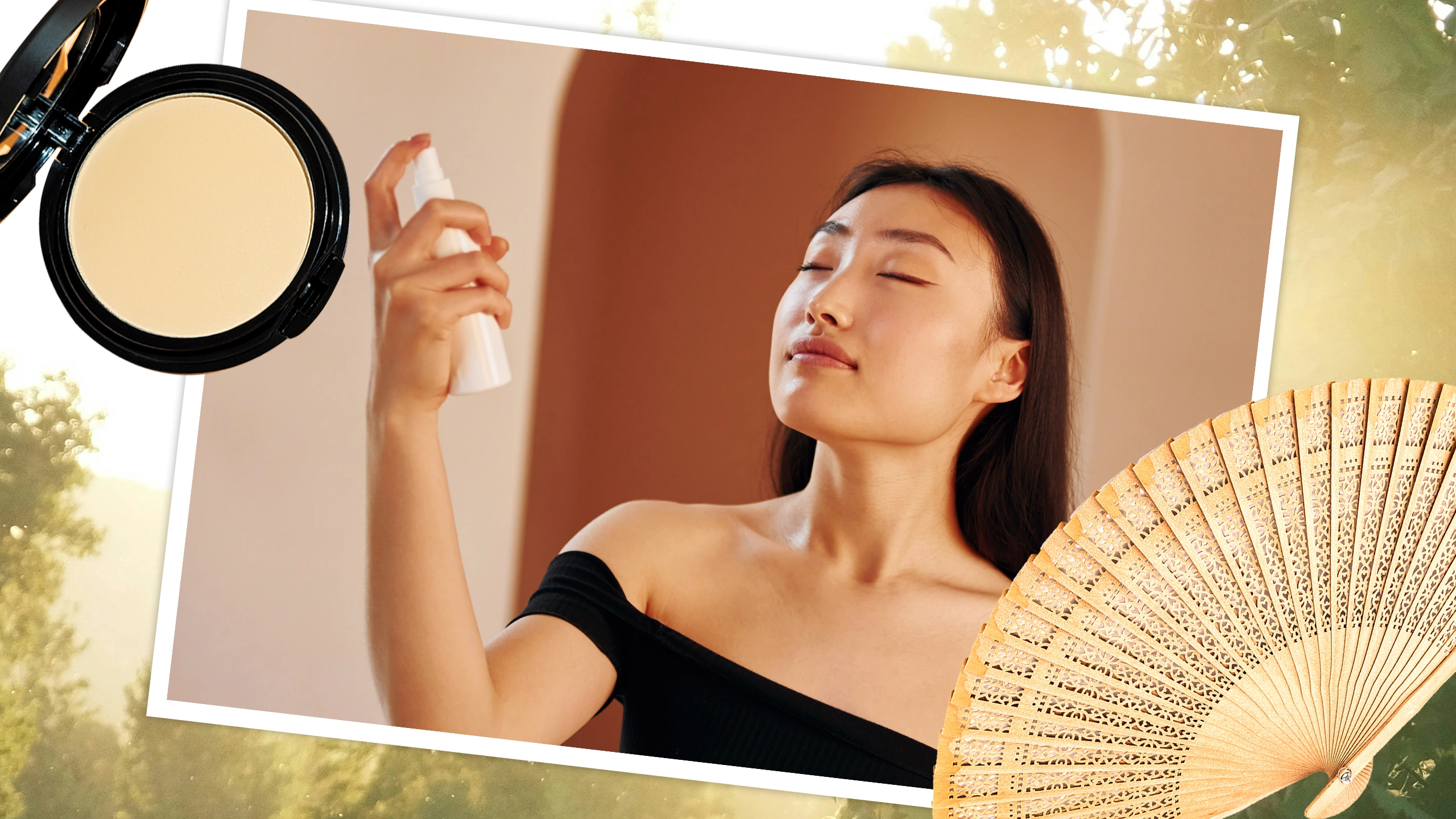
Women in pre-colonial Luzon applied pulpol to their faces. The powder, made with crushed pearls and dried rice, helped them achieve a smooth, matte complexion despite the humidity.
Salakot and pamaypay
Many people used the salakot, a native hat made from bamboo or palm leaves, to shield themselves from the sun (or the rain). Indigenous communities wore woven garments like the bahag and the patadyong which were made with breathable local fibers. Historical accounts suggest that people living in Cebu and Butuan during pre-colonial times had access to silk and cotton from China and India.
A pamaypay—or woven handheld fan—was also an effective tool in combating heat. During the Spanish colonial period, fancier foldable versions made with materials like lace and mother-of-pearl were used by women not just to stay cool but also as fashion accessories and means of communicating with their suitors.
It was also during this time that Filipinos adapted the habit of siesta—the afternoon naps were a great way to escape the sweltering heat.
During the centuries-long Spanish occupation, fair skin became associated with status—if a person had light skin, it meant they didn’t have to labor under the sun. This beauty ideal reshaped sun habits, with Filipinos avoiding direct sun exposure even more, seeking shade and carrying parasols to maintain a fair complexion.
Women wore more layers during this period—modesty was highly valued and closely tied to social expectations and status. They styled their hair in updos, looking refined while keeping their necks cool.
Electricity first became available in Manila in 1894 through La Electricista, the Philippines’ first electric company. Electric fans arrived in the country in the early 1900s, during the early years of American colonial rule.
Back then, they were a luxury reserved only for affluent households. The rest warded off the heat by splashing water from a timba using their tabo.
Modern beauty products
Modern beauty products entered the Filipino market around the early 1900s. Face powder was popular, helping with sweat and oil control. Talcum powder, cold cream, and pomade became part of the daily grooming routine.
Both men and women carried handkerchiefs, yet another tool in staying fresh.
During the 1920s, short hair became popular for women, thanks to the introduction of the bob. During the 1950s, Audrey Hepburn popularized the pixie cut by debuting the look in the film “Roman Holiday.” In the ‘60s, British supermodel Twiggy redefined the crop with a sharper, sleeker version. Since then, short hair has remained a mainstay in women’s fashion.
It wasn’t just hair that got shorter—hemlines did too, first during the flapper era of the 1920s and then in the 1960s when British mod fashion became popular, bringing with it shift dresses and mini skirts.
While air-conditioning arrived in the Philippines in the early 1930s, it wasn’t until the ‘70s and ‘80s that they became common in households. Air-conditioning was one of the reasons shopping malls became a favorite place for escaping the heat.
More products became part of people’s arsenal for life in the tropics: deodorants or antiperspirants, prickly heat powder, products for oil control and yes, umbrellas for shielding themselves from the sun.
Sunscreen and setting sprays
The use of sunblock and sunscreen became common in the ‘80s—but only when going to the pool or heading to the beach.
Sleeveless tops, oversized shirts, shorts and breathable fabrics were—and continue to be—part of every wardrobe.
In the ‘90s, oil blotting paper became a beauty essential in the Philippines. These thin, absorbent sheets were effective in removing excess oil from the skin without disturbing makeup. Oil-free and long-wear foundations became popular and translucent setting powders became a staple.
In the 2000s, setting sprays became common for locking makeup. Promises of all-day wear became standard for the beauty industry.
The 2010s were a time for mastering locking it in—making sure your makeup can endure the heat and your activities, through a mixture of science and techniques like baking and choosing products that are made to last.
Today, sunscreen is no longer a seasonal item. It has become a staple in the daily skincare routine of Filipinos. Many local brands now offer their own specialized UV protection products.
Those who want makeup that doesn’t sweat off have learned to engineer a system—a combination of skincare prep, lightweight layers and modern formulas that are designed to move with sweat instead of cracking or sliding off. Skin prep controls oil, primers create grip, lightweight foundations stay flexible, powders are used only where shine breaks through and a final setting spray locks everything in place.
The goal is no longer to fight the heat with heavy coverage, but to build a breathable, adaptable finish that holds up in humidity while still looking like skin. Beauty has become less about enduring heat gracefully and more about adapting authentically and comfortably.
More and more people are embracing their natural curls and morena skinMorena SkinA celebration of natural brown Filipina skin tones, central to Allure Philippines' Morena Manual. Morena skin has distinct needs, including protection from hyperpigmentation, foundation shades that match its undertones, andGo to Morena Skin Glossary, celebrating them as expressions of identity rather than features to be altered.
Beauty in the Philippines has always been shaped by the sun, sweat, and the realities of tropical life—and every generation found its own answers to the same challenge: how to look good despite the relentless heat and humidity.
This generation, with its portable handheld fans, cooling mists, clean-girl aesthetic and ever-present water bottles, has figured it out—comfort is beautiful.
Frequently Asked Questions
Early Filipinos bathed in rivers multiple times daily, washed their hair with gugo bark, and applied aromatic oils after bathing. They wore breathable woven garments, used salakots for shade, and carried pamaypay fans. Women applied pulpol — a crushed pearl and rice powder — to maintain a matte complexion.
Shorter hair and hemlines offered practical relief from humidity. The bob in the 1920s, Audrey Hepburn’s pixie cut in the 1950s, and Twiggy’s crop in the 1960s made short hair a heat-friendly staple. The flapper era and British mod fashion later popularized shorter hemlines and breathable silhouettes.
Sunscreen was once used only at the beach or pool. Today it is a non-negotiable daily skincare staple, with many local Philippine brands developing specialized UV protection formulated for tropical humidity and year-round sun exposure.
Modern tropical makeup relies on layering rather than heavy coverage. Skincare prep controls oil, primers create grip, lightweight foundations stay flexible, and powder is applied only where shine breaks through. A setting spray locks everything in place for an adaptable, breathable finish that moves with sweat rather than cracking.
More Filipinos today are embracing morena skin and natural curls as expressions of identity rather than features to be altered. The modern beauty ideal has shifted from enduring the heat gracefully under heavy coverage toward adapting authentically — prioritizing comfort, breathability, and confidence in one’s natural appearance.