Too Cool for School? How Rigid School Rules About Appearance Really Affect The Youth
School standards are often meant to teach discipline, but some approaches can inadvertently teach students that individuality is something to correct. When does it become too much?


As a young woman, Nez Villar was the kind of student who brought music, drama, and imagination into almost everything she did. When assigned to present a story she had read for homework, she came to class with cassette tapes for background music and sound effects, dry ice for a smoke machine effect, and old curtains she borrowed from her parents’ room.
But her teacher and classmates did not appreciate it. As a matter of fact, she got sent to the principal’s office for being disruptive. In her small town in Pangasinan, Villar quickly learned that drawing attention to one’s self had negative consequences.
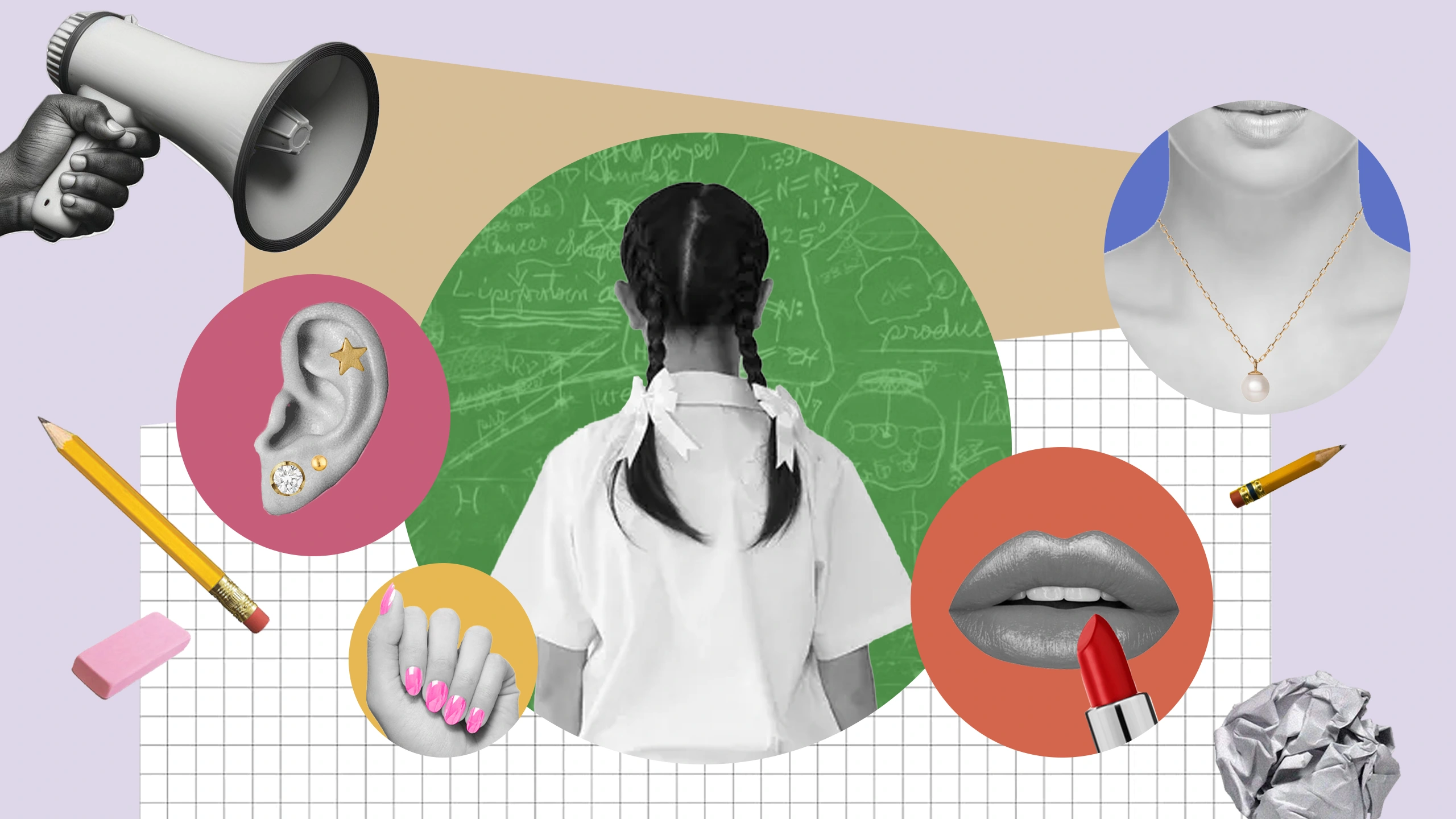
School is one of the first places many young people learn the difference between belonging and standing out. Rules about proper uniform and grooming often stem from the intention to teach discipline, simplicity, professionalism, and respect for school culture. But for some students, especially those who came from traditional schools, these rigid rules can also inadvertently create an environment that rewards conformity but penalizes anything that deviates from the norm.
Villar’s experience affected not only how she performed in class, but how she presented herself. Inspired by her Barbie dolls, she wanted to experiment with her hair and dreamed of dyeing it in vibrant colors like pink, green, and purple. She also wanted multiple ear piercings, like Dolores O’Riordan of The Cranberries, and admired girls who wore ripped jeans.
Since many of those forms of self-expression were not allowed in school, she found small ways to feel more like herself. She stacked multiple rings and bracelets on her wrists and fingers. She even bedazzled her spoon and fork for lunch, and then pretended that her yaya had done it.
Eventually, however, the constant correction she got from her teachers, combined with derogatory comments from her classmates, eventually changed the way she moved through school. “I began to shrink myself,” she says. “I changed my entire personality just to please them.” Around one group, she behaved one way. Around another, she became someone else. The constant self-policing and adjustment left her feeling fragmented. “I completely lost my real identity,” she says. “Ironically, because of this personality-shifting, I was labeled as ‘plastic’ because I was a different person with different groups.”
How Appearance Rules Shape the Way Teenagers See Themselves
Envato Images
Licensed psychologist Lizzie Garilao, MA, RPsy says appearance and self-expression matter deeply during adolescence because they are tied to the central developmental question of the teenage years: “Who am I?”
“As children enter adolescence, they experience many changes,” she says. “Often we talk about physical changes in the body, but we don’t acknowledge enough the changes in how people think, understand, and seek to discover things.”
For teenagers, asking why is not always defiance. It can be part of identity formation. “Teens generally ask questions not to be defiant but to build a better understanding of why things are done a certain way,” Garilao explains. “They are building an identity that they can commit to.”
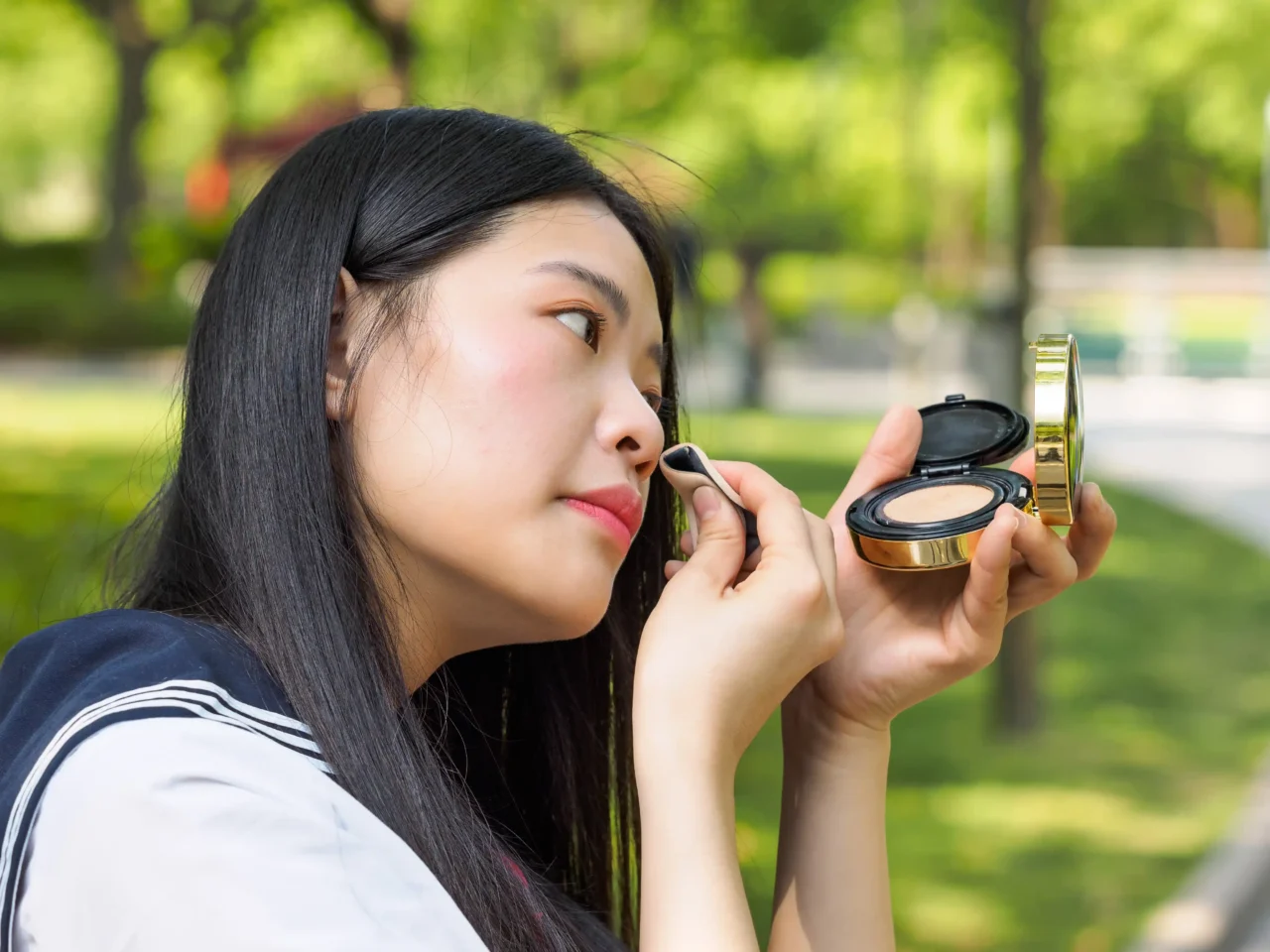
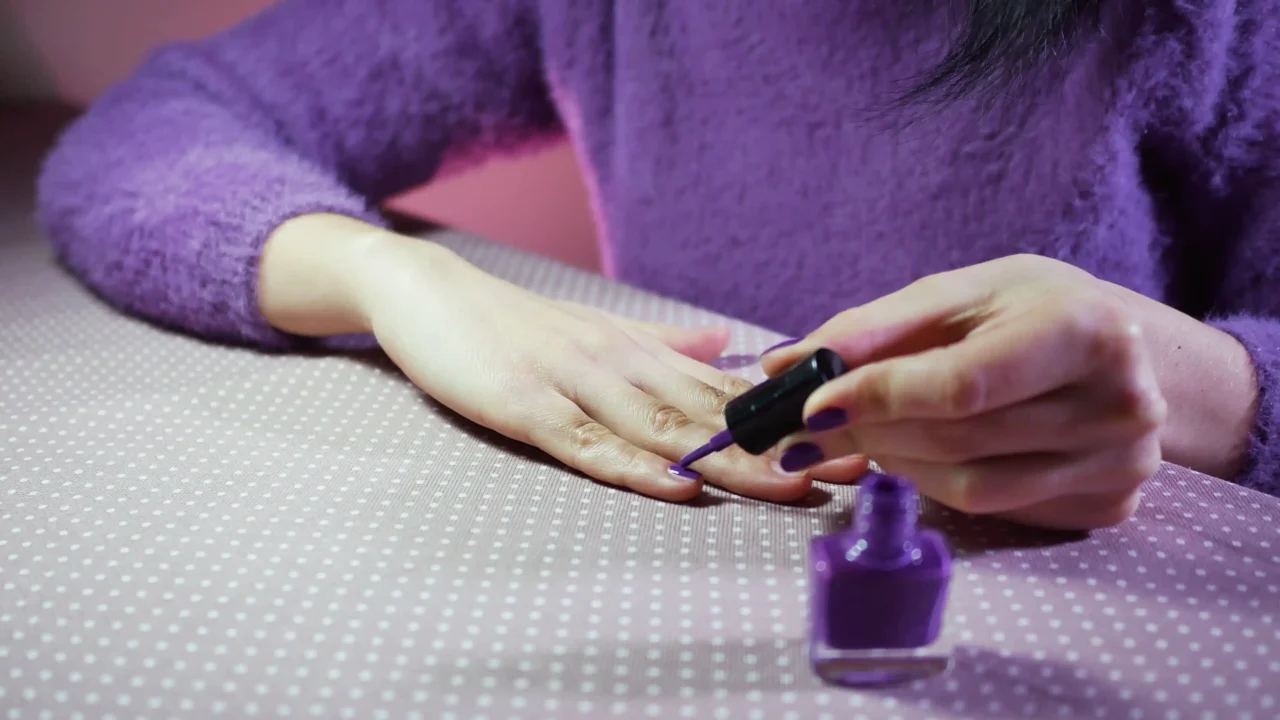
Appearance, then, becomes more than surface. It can reflect how young people understand themselves, how they want to be perceived, what peer groups they want to belong to, and what values or influences they are beginning to explore. Rules about hair color, nail polish, skirt length, or accessories may seem minor. But for a child or teenager still forming a sense of self, repeated comments that they are “too much,” can become a lesson in self-erasure.
Lawyer and Women’s empowerment advocate Atty. Giselle Muñoz, remembers how early these appearance-based messages were taught by the all-girls Catholic school she attended. Ran by a Benedictine order, she recalls specific lines from the student handbook that stayed with her: “Slavery to style is not Benedictine. Excess is not Benedictine. Ostentation and pretension and fads are not Benedictine.”
“So very early on, we were taught that simplicity is one of the important values of being upright Catholic students,” she says. The restrictions, however, sometimes had the opposite effect. “Because we were so repressed in school, we had a stronger urge to express ourselves outside school or bend the rules as much as we can.”
She also remembers a defining moment from grade school when her appearance influenced how she was perceived by her teachers. She had auditioned for a role in a school play and prepared carefully, memorizing and practicing her lines. Although her audition went well, she says she was told she could not be cast because she was “too morena and tall.” According to the adults making the decision, fairies were supposed to be mestiza and petite.
“At the time, I was disappointed, but instead of simply accepting their decision, I began to question the standards behind it,” Atty. Muñoz says. “Why should a role look only one way? Who decides what beauty, magic, or worth should look like?”
That moment, she says, helped her understand that many assumptions children grow up with are not necessarily hard truths, but expectations that can and should be challenged.
The Students School Dress Codes Leave Behind
Envato Images
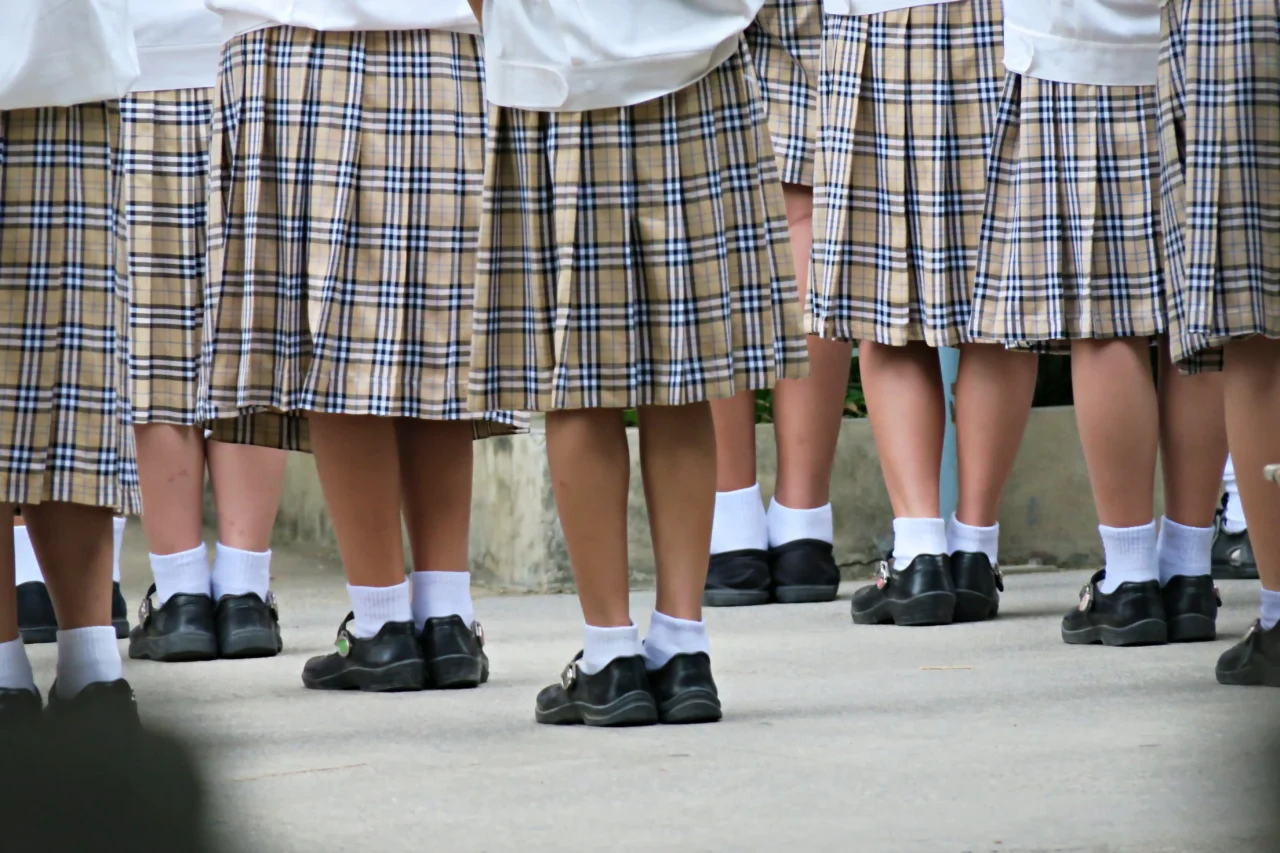
Garilao acknowledges that appearance-based rules serve an important purpose. They can help young people understand that different spaces and situations call for different forms of presentation. There are times, she says, when people dress in particular ways to honor or show respect for certain occasions, people, or places. She also explains that these guidelines can help level the playing field so that those who may not be able to afford certain things “don’t feel pressured to keep up and feel bad when they cannot conform to the norm.”
But rules can become harmful depending on what they demand and how they are enforced. Garilao notes that for students struggling with issues such as gender dysphoria, rigidly forcing appearance-based rules can harm self-esteem, body image, and even worsen mental health concerns.
She also adds that the guidelines often lean heavily toward girls being told to “cover up,” placing the burden of safety and appropriateness on them. Coming from an all-girls school herself, Garilao shares that one of the things she had to unlearn was the interplay between modesty and self-expression, and the idea that dressing in a way that makes you feel good and confident about yourself is somehow at odds with being proper or respectable. “We live in the tropics,” she reflects, “but somehow, what is considered appropriate often feels disconnected from the reality of our climate.”
There is also the question of how schools respond to differences in student personalities and circumstances. “Educators can sometimes think of students as needing to be in the same box,” Garilao says. “Discipline likewise may not always fit in a one-size-fits-all frame.”
A child who seems rude may need extra support with emotional regulation, while a child who fidgets may need movement to help them concentrate or manage their emotions. Garilao shares that this is why discipline should not automatically mean punishment. “Correction and guidance go hand in hand with understanding what is going on,” she says, “not as a way to excuse behavior, but as a way to create meaningful opportunities to guide individuals.”
How One Filipino Educator Built a School Around Individuality and Strength
Envato Images
When Villar became an educator, she began meeting students who reminded her of her younger self.
In 2009, she started a childcare and learning center. Parents came to her with children that had been described as ‘unruly,’ ‘disrespectful,’ or children who ‘hated school.’ Villar used their supposedly ‘disruptive’ behavior as entry points for learning. “Instead of focusing on their weaknesses, I wanted to focus on their strengths,” she says. A year later, she opened MAV School, a progressive school built around the theory of multiple intelligences, and with the goal of nurturing a child’s creativity and leadership skills.
Villar has also fully embraced the forms of self-expression she had once only imagined. She first colored her hair blonde. Over time, she tried green, blue, purple, and eventually full pink. When her students saw her, they called her a “beautiful unicorn.” Some wanted to touch her hair. Parents, she says, did not react negatively—something that meant a lot to Villar.
“It shows that school can really be a safe space to be exactly who you are,” she says. “It also redefines how students should look. Their neatness, compliance, or intelligence is not measured by a cookie-cutter dress code, but by how they treat others and how they grow.” The anchor, she says, is mutual respect. “Respect for people, and respect for school policies. Children can be kind and compliant while still being different,” she says.
Atty. Muñoz shares a similar view. Schools, she says, can balance discipline and creativity by providing clear structure while still encouraging students to explore their interests, express ideas, and develop their identities. This balance, she adds, is especially important in the age of social media, where young people need guidance to discern and make responsible choices.
But as a mother of boys, Atty. Muñoz also hopes schools will help challenge narrow expectations of gender. “Too often, messages associated with toxic masculinity teach boys to suppress emotions, avoid vulnerability, or equate strength with dominance,” she says. “I want my sons to learn that true strength includes empathy, emotional intelligence, respect for others, and the confidence to stand up for what is right.”
Villar recently decided to publicly share that she has ADHD. Some people close to her advised against it, worrying that it might affect her credibility as a school leader. But this time, instead of shrinking, she chose to be visible and embrace her uniqueness as a strength.
Rather than the backlash she was fearing, school enrollment and applications grew. She also began receiving more invitations to speak at schools and events. The girl who was once reprimanded for being “too much” is now a respected educator creating a safe and encouraging learning environment where every child can thrive.
Garilao hopes that every school leader would take the time to reflect on their values and beliefs behind discipline, as well as the kind of culture they’re creating. “Discipline in its deeper sense isn’t about forcing compliance,” she says. “It’s about teaching people how to value themselves and their impact on those around them. It’s about teaching responsibility, accountability, self-control, and yes— how to bounce back from mistakes.”
And for the girls whose teachers and peers have made them feel like they are ‘too much,’ Villar has this advice: “You were never an ugly duckling. You were just a swan growing into her wings.”
Frequently Asked Questions
Psychologists link rigid appearance-based enforcement to suppressed identity development in adolescence. When students face repeated correction for how they look or express themselves, they learn to self-police — often fragmenting their personality to meet different expectations, which erodes authentic self-concept over time.
Adolescence is the primary stage of identity formation. Licensed psychologist Lizzie Garilao explains that teenagers ask questions — including through appearance — not to defy authority, but to build a coherent sense of self they can commit to as they grow.
Yes, according to psychologists. Garilao notes that rigidly enforced appearance rules — particularly those affecting students with gender dysphoria or nonconforming identities — can damage self-esteem and worsen existing mental health concerns. Gendered enforcement, which disproportionately burdens girls, compounds this effect.
Discipline teaches responsibility, accountability, and self-regulation. Conformity demands sameness. Educators and psychologists increasingly argue that Philippine schools conflate the two — using appearance-based rules as proxies for good character, when true discipline focuses on conduct, respect, and how students treat one another.
Educators like Nez Villar of MAV School advocate anchoring school culture in mutual respect rather than appearance compliance. Clear behavioral standards can coexist with space for individual expression — treating neatness and intelligence as defined by how students engage with others, not by what they wear.