


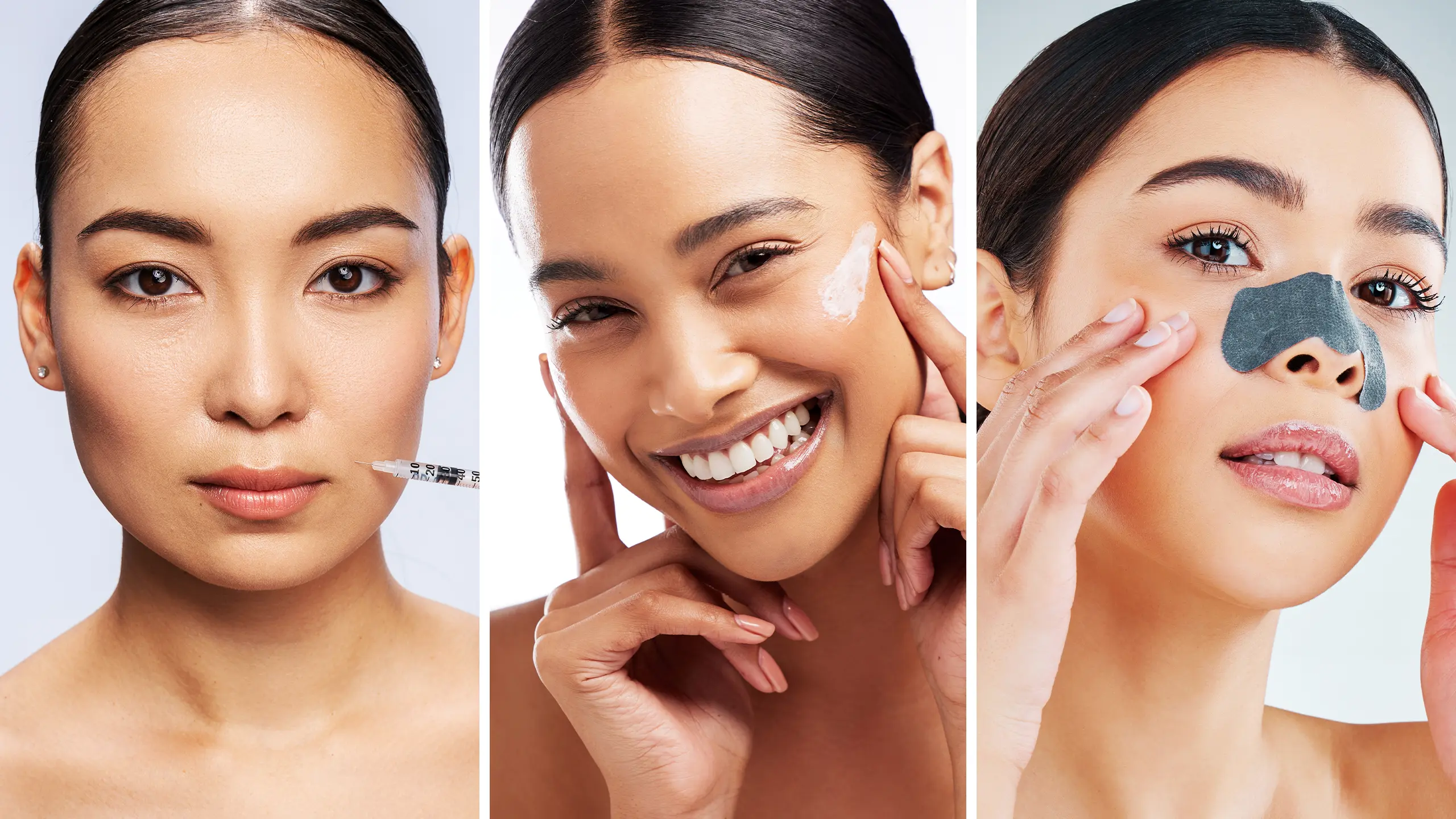
The beauty industry is more energetic than ever before—products are churned out at breakneck speed, flying off shelves or, today, selling out in our online carts. But here comes the challenge of the attention economy. Brands are competing for everyone’s attention, and now there are all sorts of confusing terms that, admittedly, sound smart and scientific. But do they actually hold any evidence to back these claims?
For board-certified dermatologists Francesca Sy-Alvarado, MD, FPDS, and Tricia Pontejos-Canivel, MD, DPDS, these are the beauty marketing claims they are pushing back against—for the lack of scientific basis at best, or for using fear as a marketing tactic at worst.
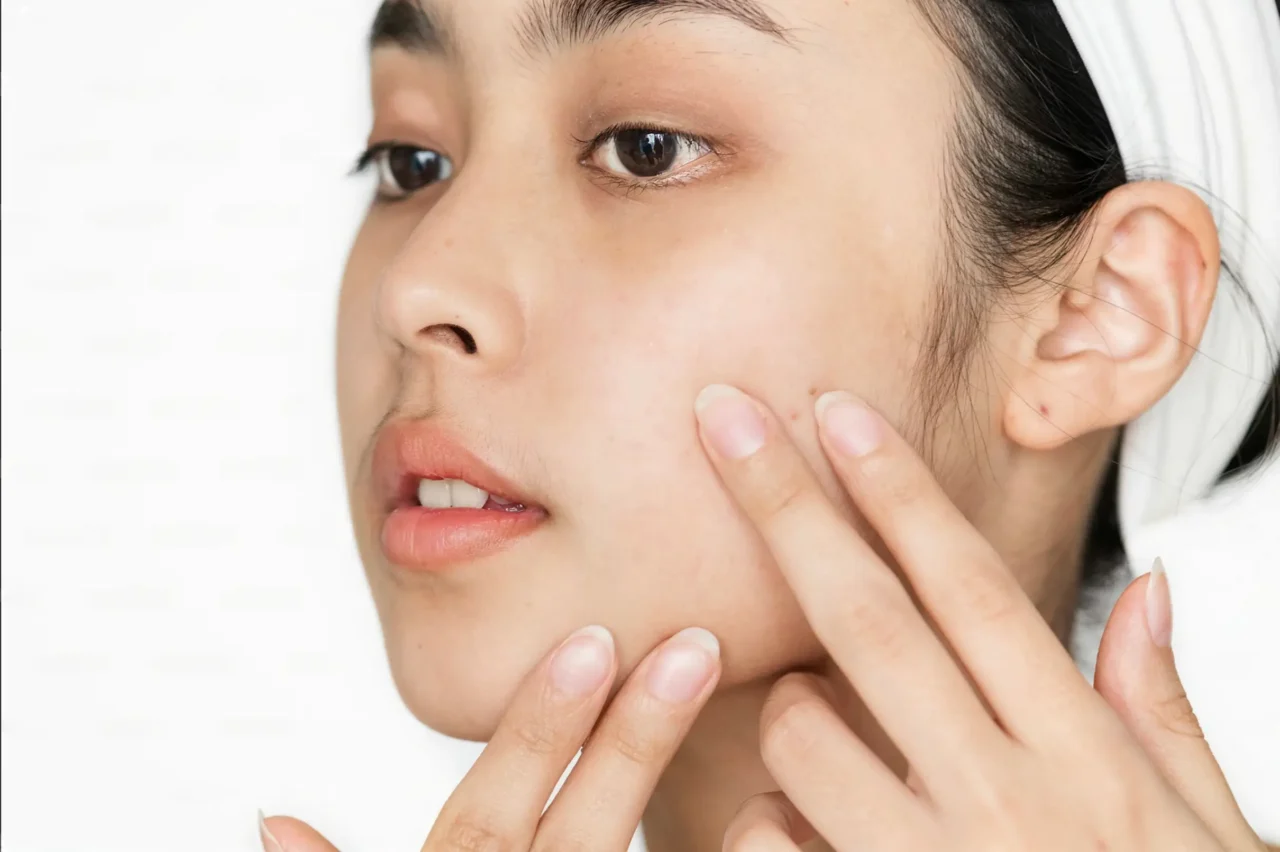
Pores don’t close and open
Dr. Sy-Alvarado debunks the idea that pores can open or close, or that products can control this. “They’re actually just open. Our pores don’t have muscles, so they are not capable of physically closing and opening.”
The appearance of pores is a common cosmetic concern, and it’s largely tied to genetics. She clarifies that “pores are not the enemy,” because they serve an essential function in the body, helping release natural oils and sweat.
“People go through so much effort trying to open and close their pores. Sometimes they steam their faces or buy all these devices to improve the appearance of pores, which don’t really work—or at best, only work temporarily.”

Envato Images
The myth of the 10-step skin care routine
For Dr. Pontejos-Canivel, elaborate ten-step skincare routines—recently popularized as a beauty trend—are driven more by marketing than science.
“Stacking multiple active ingredients without proper guidance frequently leads to barrier dysfunction, sensitization, and chronic irritation—outcomes that are entirely counterproductive to skin health,” she says.
She emphasizes that a curated, evidence-based regimen tailored to your skin type—and guided by experts—will outperform overly complex skincare routines.
Clean beauty is an unregulated term
“It’s more of a marketing term, but it doesn’t guarantee safety or effectiveness,” Dr. Sy-Alvarado shares.
She notes that the use of buzzwords like “natural” and “clean” can fuel fear-based marketing around chemicals, implying they’re harmful. “In fact, everything is a chemical—even water.”
Dr. Sy-Alvarado adds that natural ingredients can also trigger irritation, burns, or allergies. “What matters more in a product is that it’s stable and well-formulated.” Beyond the promise of natural ingredients, she emphasizes that products tested for safety and effectiveness are what truly matter—even if their ingredients are synthetic.
There’s no such thing as instant results
You’ve probably seen countless creams marketed as “anti-aging,” promising “instant,” “dramatic,” or “overnight” results. For Dr. Sy-Alvarado, these claims are misleading because they overpromise what topical products can realistically achieve.
She explains that improving wrinkles, glow, or overall radiance takes time, as the skin needs to renew itself. Skin cell turnover typically takes about 28 to 40 days—roughly one full cycle—before fresh skin reaches the surface. In other words, visible results won’t happen overnight; it takes at least a month to start seeing changes.
Some wrinkles aren’t even treatable with topicals alone. “Sometimes what the patient needs is procedural intervention,” she says. “For example, wrinkles that appear when we make facial expressions—like frowning, raising our foreheads, or smiling, such as crow’s feet—are caused by the attachment of muscles to the skin. Procedures like Botox, not creams, are more effective in addressing these fine lines.”
Envato Images
Unregulated products promoted online
“The proliferation of influencer-marketed skin care products—many without FDA approval—is a growing patient safety issue,” says Dr. Pontejos-Canivel.
She explains that some formulations contain potentially harmful concentrations of regulated substances, including hydroquinone, which at uncontrolled levels can lead to paradoxical hyperpigmentation and ochronosis. Paradoxical hyperpigmentation occurs when the long-term use of skin-lightening products produces the opposite effect, causing the skin to darken instead. Ochronosis then manifests as blue-black pigmentation in the skin.
She calls for greater transparency, emphasizing that consumers deserve clear information about product safety. For consumers, she advises purchasing only from verified, FDA-compliant sources.
Self-administration of injectables and oral supplements
But beyond products, concerning practices are also being promoted. “Perhaps most alarming is the normalization of self-injecting peptides and GLP-1 receptor agonists outside of a clinical setting,” says Dr. Pontejos-Canivel. She stresses that pharmaceutical-grade interventions require proper medical evaluation, individualized dosing, and sterile administration. “The risks of unsupervised use—infection, adverse reactions, and incorrect dosing—can lead to harmful consequences,” she says.
“Every patient presents differently, and a personalized approach guided by a board-certified dermatologist remains the safest and most effective path to lasting skin health.”
Sifting through the noise
The over-inflation of language in the beauty industry often leaves consumers more confused, even misled than informed. This makes it essential to cut through the noise by making science the backbone of our decisions. Skin care should not rely on lofty promises, but on evidence-based outcomes—less about buzzwords, and more about transparency.
Frequently Asked Questions
No. According to dermatologists, pores do not have muscles, so they cannot physically open or close.
No. “Clean beauty” is a marketing term with no standardized definition or regulatory oversight.
Skin improvement takes time because of the natural skin cell turnover cycle, which is about 28–40 days. Claims of “instant” or “overnight” transformation are often baseless.
No. Some types of wrinkles—particularly expression lines—are caused by muscle movement beneath the skin, and medical interventions not creams can address these fine lines.
It is a condition where prolonged or improper use of skin-lightening products causes the opposite effect—darkening of the skin instead of lightening.