How to Take Care of Your Hair Like a Pro, According to a Hair Expert
Filipina hairstylist Cats Del Rosario breaks down how to elevate your hair routine and achieve salon-like results at home.
By Liam Sanchez


There are times I wish I had a standing appointment with a hairstylistHairstylistA beauty professional who specializes in cutting, coloring, styling, and caring for hair, combining technical expertise and creativity to enhance individual style, confidence, and self-expression.Go to Hairstylist Glossary every time I head out of the house because there’s just something terrific about hair done at the salon though I can never quite pinpoint what it is. Maybe it’s the luxurious scent of the shampoo, or the soft bounce resulting from a much-needed professional blowout.
Whatever it is, salon hair simply feels different, and a great hair day instantly boosts my confidence. It’s smoother, shinier, and somehow falls perfectly into place without much effort. In fact, it often looks so nice that I find myself wanting to postpone my next shower just to keep the results a little longer. But as much as I’d love to live in that fantasy, daily salon visits aren’t exactly practical, and most of us have to make do with our own routines at home. So rather than guessing, we sought out expert advice.
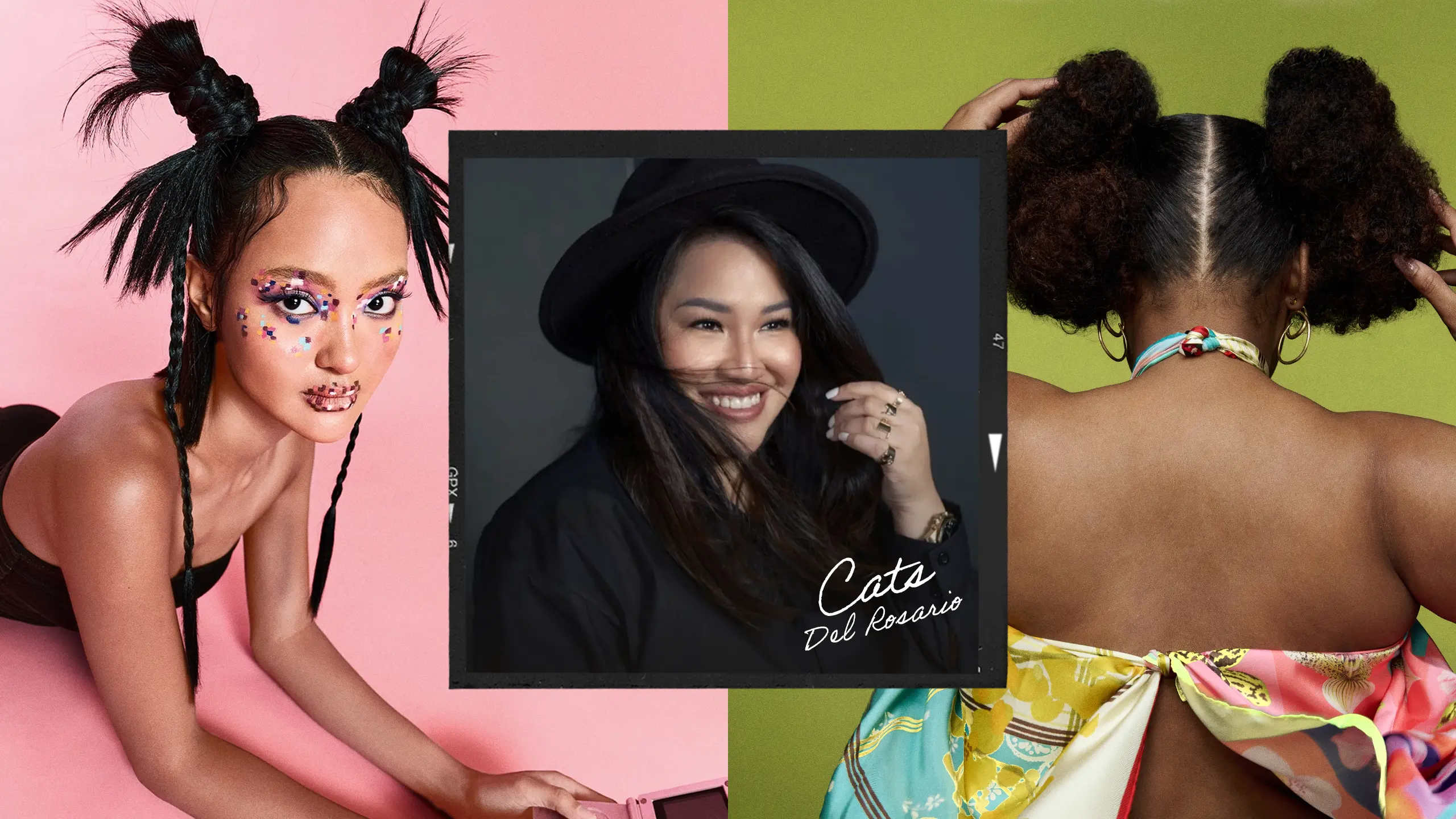
In an exclusive interview with Allure Philippines, professional hairstylist Cats Del Rosario breaks down how to recreate that same professional-level of experience at home. From smarter hair care to styling techniques that make a difference, she shares how everyday routine can be elevated, because great hair shouldn’t only happen in the stylist’s chair, but in your own practice too.
What’s the most common hair mistake you’ve seen people make?
Normally, when you use a curling iron, the barrel, what you do is you do it downwards, so the curls actually start nearest the roots. Sometimes, also, when you start curling, you start from the bottom. So what happens is, since the hair in the bottom is actually the driest, it’s the curliest. So you don’t get the even heat for all of the curls.
Start from at least nearest the roots. That’s the best way to do it.
Which is better for our hair: air drying or blow drying?
To be honest, if you have really nice hair and you can just air dry, like for me, I just did a rough dry. But if you have super damaged hair, frizzy hair, you need to put on the heat. You need to blow-dry to have a smooth finish and a better hairstyle. In general, the heat isn’t as important as the tension.
The heat shouldn’t go as high because you don’t want to damage the hair, and you need a heat protectant.
How do professional hairstylists define healthy hair?
Honestly, when you have a healthy scalp, it also means healthy hair. So you need to take care of your scalp.
It’s like shampooing and conditioning, but you have to really shampoo the roots, and then the conditioner is really for the mid-part and the ends. I think it starts from being able to shampoo and condition properly, using the right tools and using the right products. If you don’t know how to use it, please read the labels. It’s very important. Watch videos. It’s good to be knowledgeable about these things.
How can you achieve a healthy scalp at home?
I mean, if you do a microscope of those things, and then you see there’s dirt, there’s dandruff, there’s other issues, skin diseases: you need to take care of it with treatment.
Everybody has different hair textures and fineness, whether it’s thick [or thin] . But then, if you have healthy hair and a healthy scalp, it goes hand in hand because your hair is bouncier, it’s cleaner. You have to clean properly. You have to shampoo properly. And if, for example, you use a lot of hair products, you can use a clarifying shampoo maybe once a week. If not, you can shampoo twice, and then that’s about it.
Frequently Asked Questions
Starting curls from the bottom of the hair rather than near the roots. This causes uneven heat distribution — the driest, most damaged ends receive the most curl while the roots stay limp. Starting near the roots produces more consistent, even results.
Blow drying is recommended for damaged or frizzy hair because it allows controlled tension and heat — which, at a moderate setting with a heat protectant, produces a smoother finish than air drying. For healthy hair, a rough dry followed by air drying is sufficient.
Shampoo is applied at the roots to clean the scalp; conditioner is for the mid-lengths and ends only. Keeping both products in their correct zones prevents scalp buildup, maintains natural oils, and supports healthier hair growth from the root.
Yes — a clean, healthy scalp directly supports stronger, bouncier hair. Scalp buildup from product residue or inadequate cleansing can lead to dandruff and other scalp concerns. Regular shampooing, and a clarifying shampoo once a week for heavy product users, is the baseline.
Once a week is sufficient for those who use styling products regularly. For light product users, double-shampooing with a regular shampoo on wash days achieves the same result without stripping the scalp of its natural moisture balance.
Liam Sanchez
Liam Sanchez is a registered medical technologist and Wellness Writer at Allure Philippines. Combining training in laboratory medicine with experience in science journalism, he specializes in evidence-based reporting on wellness, nutrition, longevity, and beauty trends. A Cum Laude graduate of the University of Santo Tomas, he previously served as Science and Technology Editor of The Varsitarian. At Allure Philippines, he translates complex health and beauty science into accessible, reader-first stories that help consumers make more informed decisions about their well-being.
Latest Stories


You might also like



To provide a customized ad experience, we need to know if you are of legal age in your region.
By making a selection, you agree to our Terms & Conditions.