
How To Tell If You Have Sensitive Skin—Or If Your Skin Is Just Really Irritated, According to an Expert
World-renowned board-certified dermatologist and dermatopathologist Vermen Verallo-Rowell, MD, FPDS, FDPS-PDS, FAAD, FASDP, HIM-ADA, explains the difference between sensitive skin and skin sensitivities.
By Lia Cruz


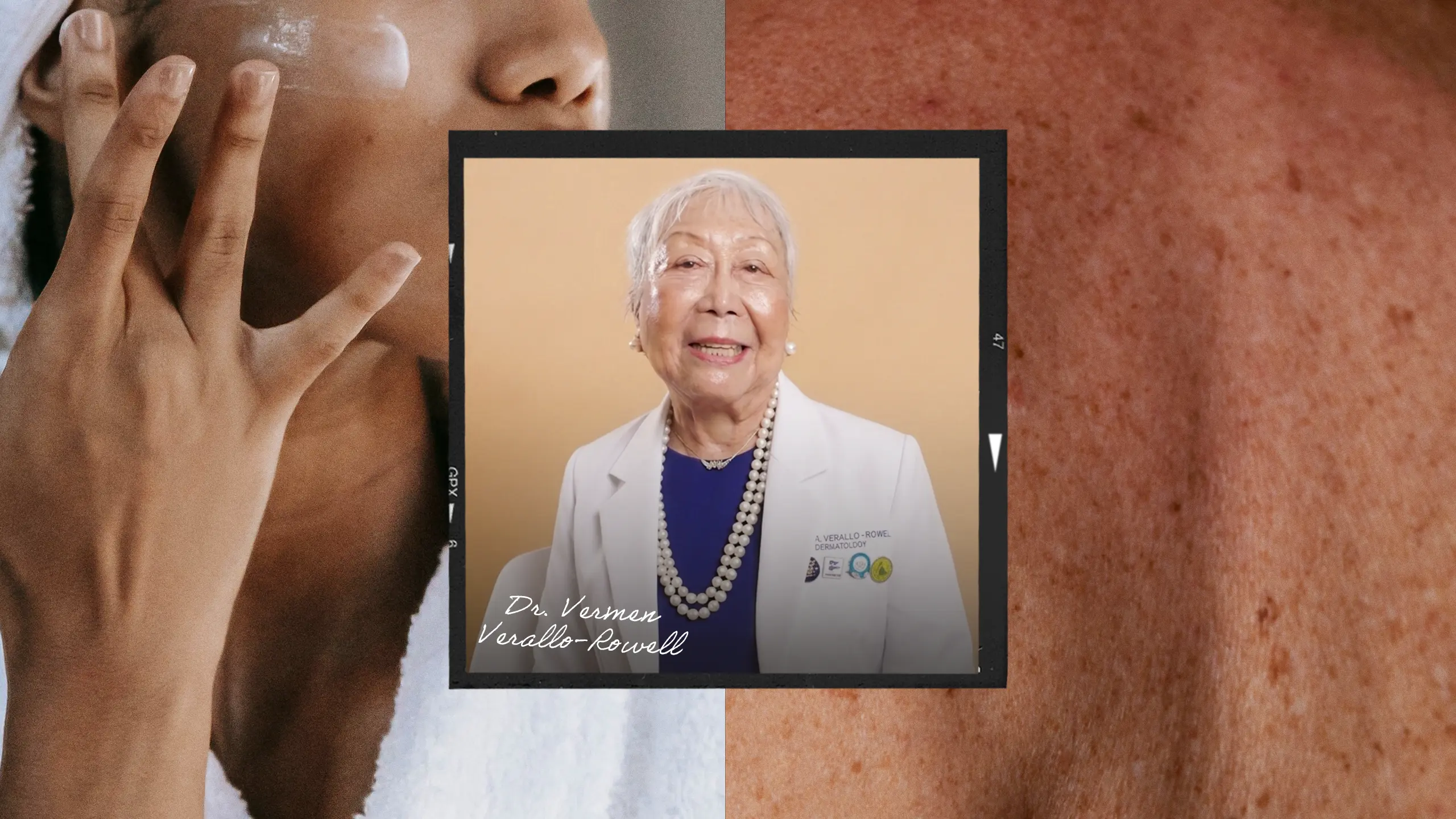
We know an awful lot about skin care nowadays. In this day and age, when everyone is a skin care enthusiast with ten times more skin care knowledge than they had twenty years ago, when scientific ingredients such as niacinamide and hyaluronic acid jump at you from marketing materials in the supermarket aisle, and when your average Maria and Juan each have a multi-step skin care routine to look their best, it’s pretty easy to be able to tell what your skin type is, right?
Or is it?
For those of us who think that we have sensitive skin—you know, the type that seems to react all the time to everything—life isn’t easy. The itching, burning, rashes, and redness are proof of that. But here’s some food for thought: how do you really know if you have sensitive skin as a skin type, or if your skin is just reacting or having sensitivities to something?
There’s a marked difference between the two, which is why here at Allure Philippines, we always urge you to head to your board-certified dermatologist to work out skin issues. And to explain the difference between true sensitive skin and skin sensitivities to us, we approached none other than world-renowned board-certified dermatologist, dermatopathologist, and photodermatologist Vermen Verallo-Rowell, MD, FPDS, FDPS-PDS, FAAD, FASDP, HIM-ADA.
What’s the difference between a sensitive skin type and experiencing sensitivity of the skin?
Sensitive skin as it is now considered is overdiagnosed, but sensitivity of the skin is common because sensitive skin to us dermatologists has a certain meaning to it. It’s the kind of skin that somehow, without any particular reason, is immediately recognized as just sensitive.
That’s what we call sensitive skin, whereas when people say, I irritate by this, or I itch from this, or I sting from this, or I burn from this or whatever—that’s sensitivity. There’s a difference. Sensitive skin is a dermatological condition.
How do you know if your skin is truly sensitive, or is just irritated from overdoing skin care?
When you have sensitivity, you either itch, feel a stinging, burning, irritated sensation of the skin. Sometimes it’s hot. Sometimes it becomes pale or very red—and that’s it, you’re scratching it, and next thing you know, it’s dry and rough to the touch. That’s skin that has become sensitive—very likely to the environment, to the products you’re using, or your lack of sleep, using the wrong food, not taking care of the stress situations in your life, not meditating before sleep, and not sleeping properly. Those are the usual things that contribute towards a sensitivity of the skin.
If your skin care stings, burns, or suddenly stops working, that’s not your imagination. That’s your skin barrier trying to tell you something. Your skin is an amazing organ of the body. It’s the biggest organ in the body, and it actually tells you what’s happening not just to your skin, but inside your body.
Are we creating sensitive skin by using too many actives in our skin care routines?
Have you ever tried to look at the complete ingredients list in products? You’ll be surprised at how long they are. If you look at the ingredients list, the number one would probably be water, because there’s a lot of water.
As you go deeper down into the lower part, you’ll actually see a lot of ingredients which are actually more irritating. Those include emollients, preservatives, fragrances, other additives that are supposed to make it more acid or more alkaline. You’ll see things like linalool, limonene, chamomile. There are different kinds of fragrance ingredients that they add as well. Those can be irritating.
Many of them are even photo allergens. In other words, they react to the visible light from long hours of looking at your computer, your iPad, your telephone, and then as well as being out in the sun. So photosensitivity, especially for those people living in tropical countries, or exposed outdoor sun plus the indoor visible light, gives them the red spots here and there, you know. And then after that, if they’re a little bit on the dark side, hyperpigmentation. Not just melasma, but actual pigmentation changes in the skin due to those chemicals that are in those bottles.
So be careful. Read well. Ask.
Frequently Asked Questions
Sensitive skin is a recognized dermatological condition in which the skin reacts without an identifiable external cause. Skin sensitivity, by contrast, refers to reactive symptoms — itching, burning, stinging, or redness — triggered by specific products, environmental factors, lifestyle habits, or disrupted sleep.
Signs of skin sensitivity include itching, burning, stinging, redness, dryness, and roughness to the touch. These reactions are typically triggered by skin care products, environmental exposure, lack of sleep, dietary factors, or unmanaged stress — not by an underlying dermatological condition.
Overuse of skin care products containing fragrances, emollients, preservatives, and other additives can trigger sensitivity reactions. Ingredients such as linalool, limonene, and certain fragrance compounds are common irritants, and some function as photo allergens when combined with sun or extended screen exposure.
Dermatologist Vermen Verallo-Rowell identifies fragrances — including linalool and limonene — as well as certain emollients and preservatives as common irritants in skin care formulations. Some of these ingredients also act as photo allergens, triggering reactions when skin is exposed to sunlight or prolonged visible light from screens.
Vermen Verallo-Rowell, MD, FPDS, FDPS-PDS, FAAD, FASDP, HIM-ADA is a world-renowned board-certified dermatologist, dermatopathologist, and photodermatologist based in the Philippines, recognized for her expertise in skin barrier science, photodermatology, and the clinical diagnosis of dermatological skin conditions.
Lia Cruz
Lia Cruz is a broadcaster, presenter, and writer whose expertise spans lifestyle, travel, climate, and women’s issues. Drawing on nearly two decades of experience in television and live media, she brings thoughtful storytelling and a people-first perspective to every feature. At Allure Philippines, she writes profile features that uncover the stories behind the people shaping beauty, culture, and society.
- KEYWORDS
- Sensitive Skin
- skin
Latest Stories


You might also like

To provide a customized ad experience, we need to know if you are of legal age in your region.
By making a selection, you agree to our Terms & Conditions.