



There’s a specific kind of disorientation that has nothing to do with being lost. You know exactly where you are but your body is somewhere else entirely, still running on the time zone you left, confused by the light, resistant to sleep, processing everything slower than usual.
Jet lag can make you feel disoriented because your body’s internal clock (or circadian rhythm) is out of sync with your new location. “Deep in the middle of our brain sits a tiny control center, the suprachiasmatic nucleus, that is our main clock that helps coordinate our other ‘sub-clocks’ that dictate when you feel awake, sleepy, hungry, sharp, sluggish, or oddly emotional over airplane food,” Dr. Daffy Morales, cardiologist at Manila Doctors and Makati Medical Center, explains. “It mainly tracks light and darkness while helping regulate sleep, hormones, body temperature, digestion, metabolism, and alertness. Your body is not just asking, ‘What time is it?’ It is recommending, ‘What should we be doing right now’?”
Jet lag, Dr. Morales adds, is biological confusion. “The brain clock resets gradually, often through light exposure, while other systems catch up more slowly.” Simply, it is what happens when you move faster than your mind and body can follow.
The Mayo Clinic defines it as a temporary sleep condition triggered by rapidly crossing multiple time zones. But more recent studies and personal experiences show that jet lag is more than just a sleep problem. It’s a signal disruption that touches your gut, your immune system, your hormones, your mood, and your mind. Understanding what’s actually happening inside your body when it occurs changes how you think about travel entirely.
More than lost sleep
Pexels
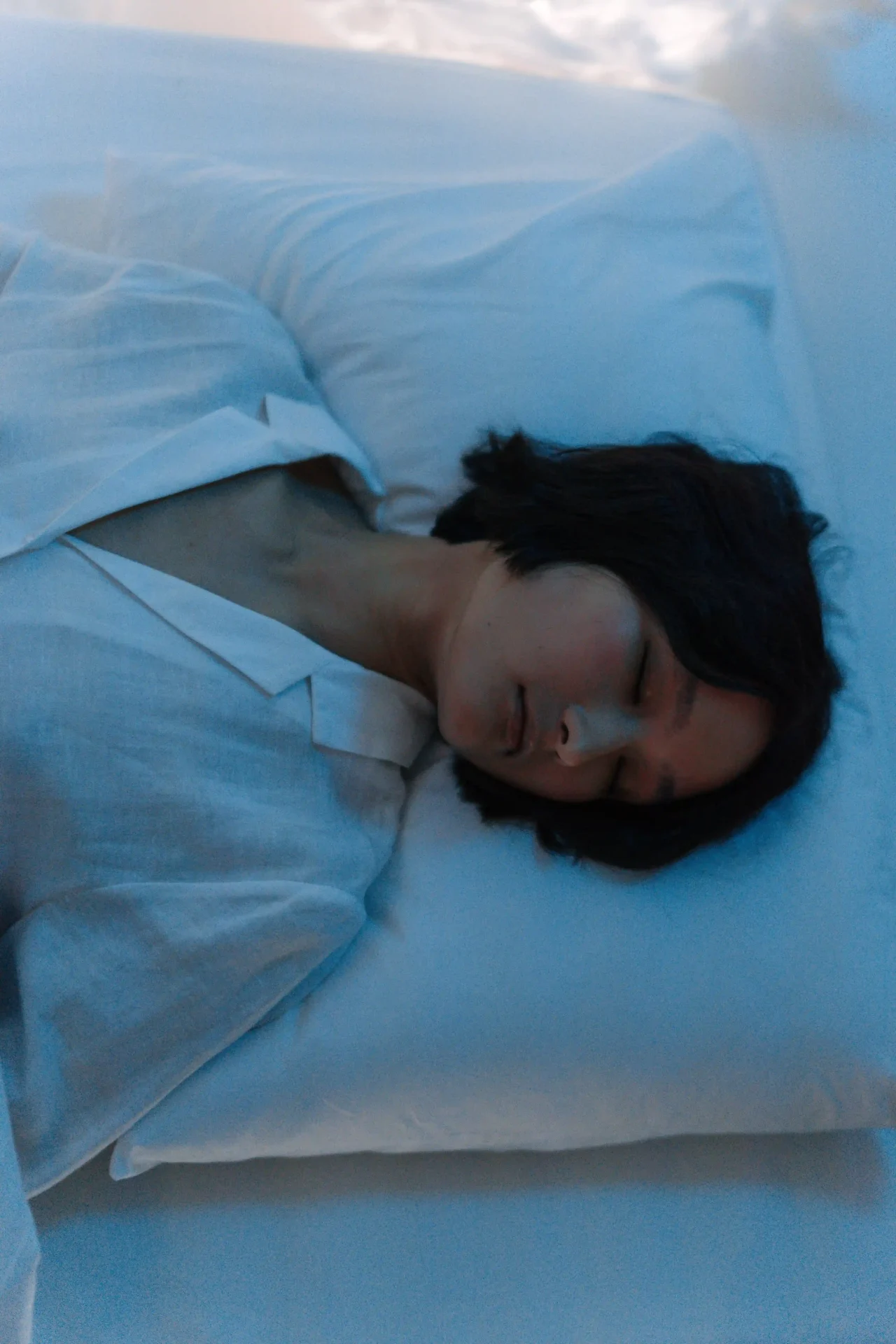
Jet lag is a whole-body event, one that starts in the brain, moves through the gut, agitates the immune system, and destabilizes your mood.
Because circadian rhythms don’t instantaneously reset, they may remain anchored to your original time zone for several days causing disturbed sleep, daytime fatigue, hormonal disruption, and gastrointestinal issues that may have nothing to do with what you’ve just eaten.
Your gut keeps its own clock. Research shows that the bacteria in your digestive system follow their own circadian rhythms, becoming more or less active depending on the time of day to manage digestion, metabolism, immune function, and mood. Cross enough time zones fast enough, and those microbial rhythms can fall out of sync, rippling outward to affect cognitive clarity, mood regulation, and inflammation throughout the body.
Your immune system runs on a schedule, too. Different immune cells are more or less active at specific times of day, and a sudden time zone shift scrambles that schedule entirely, leaving the body stuck in high-alert mode. Inflammatory molecules called “cytokines” cross into the brain and interfere with neurotransmitter function, producing brain fog. The gut lining becomes more permeable under inflammatory stress.
As a cardiologist, Dr. Morales finds jet lag more annoying than dangerous. “The body clock does influence things we hardly think about during a trip: blood pressure, heart rate, hormone release, and even how alert or stressed we feel during the day.”
When sleep gets disrupted, he says that people notice their heart feels slightly off where one may experience mild palpitations, a faster resting heart rate, or that vague feeling where your body seems out-of-sync. “Usually, this settles as sleep normalizes,” he notes.
The bigger concern during long-haul travel isn’t just the jet lag itself, he emphasizes. The surrounding conditions, persistent dehydration, physical inactivity, disrupted rest, and the overconsumption of stimulants or alcohol, often compound the exhaustion more than the time zone change.
Especially for a pilot like Lea, the physical manifestations of jet lag can’t be ignored. “Jet lag usually shows up physically first: fatigue, feeling unusually sleepy at odd hours, difficulty sleeping even when I’m exhausted, and sometimes brain fog. Mentally, I can feel slower than usual. Not unable to function, but there’s a difference in focus, reaction time, and overall sharpness.”
What Lea shares about the effects of jet lag to the mind have been backed by several studies. A UC Berkeley controlled trial, the first of its kind on jet lag and brain function, found that cognitive impairment didn’t just show up during jet lag but was still measurable a month later. “Whether you are a flight attendant, medical resident, or rotating shift worker,” noted lead researcher Lance Kriegsfeld, “repeated disruption of circadian rhythms is likely going to have a long-term impact on your cognitive behavior and function.” Studies of flight attendants with chronic jet lag exposure have documented impairments in reaction time and measurable neuroanatomic changes, with performance errors recorded in pilots, athletes, and diplomats all attributed in part to a body clock consistently out of sync with the world.
The mood effects are just as serious. Research published in Translational Psychiatry confirms a bidirectional relationship between circadian disruption and mood disorders, each worsening the other. Jet lag has been linked to exacerbating major depressive disorder, dysphoria, and bipolar disorder. “Jet lag is not just sleepiness,” Dr. Morales explains further. “It can feel like temporary emotional sabotage.”
He cites a classic sleep research by Dinges and colleagues that showed how sleep disruption quickly impairs mood, attention, and cognitive performance. “You may feel irritable, anxious, foggy, impatient, or oddly emotional for no obvious reason. Suddenly your travel companion’s heavy perfume feels deeply offensive.”
Sleep and mood are tightly-linked, Dr. Morales says. Circadian rhythms help regulate stress hormones, attention, and emotional processing and when sleep gets disrupted, patience shrinks and decision-making goes awry.
For most people, this resolves. The body recalibrates, sleep returns, the fog lifts. But for frequent flyers who cross time zones before the last ones have fully cleared, the disruption can have more significant, long-term effects.
Why it hits everyone differently

Pexels
Your Trip
Jet lag severity scales with the number of time zones crossed, and research suggests a useful rule of thumb: roughly one day of recovery per time zone, though this varies by person and direction of travel. Mild jet lag typically kicks in after crossing three or more time zones; north-south flights that don’t cross time zones don’t trigger it at all.
Layovers can help, but aren’t a guaranteed fix. Dividing a long trip into segments may reduce the impact, though a short flight across many time zones can be just as disruptive as a long one with more rest opportunity in between.
Angely Dub, owner of Access Travel PH and a seasoned traveler, would add that the trip length itself is worth reconsidering. “I genuinely don’t recommend very short trips: two nights, three days. You spend more energy being exhausted than actually enjoying yourself. You escape, and then you come back with even more to process.”
Direction of travel: the east vs. west
Direction matters more than distance. A 2016 University of Maryland study published in Chaos journal found that our internal clocks run slightly longer than 24 hours, making us biologically better at extending our days than shortening them. Traveling west works with that rhythm. East works against it. There’s also a counterintuitive finding: a nine-hour eastward shift is harder on the body than a 12-hour one in either direction. This means a shorter eastern trip can hit harder than a longer one.
Lea Yosalina, a Filipina pilot for Delta Air Lines who crosses these routes professionally, knows this firsthand. “Jet lag is especially pronounced on long-haul trips or when my body clock has to rapidly adjust crossing time zones on a transcontinental flight or ocean crossing,” she says. The largest study of its kind, using 1.5 million nights of de-identified data from Oura ring wearables across 60,000 trips, found that while sleep duration recovers quickly after travel, sleep timing can take significantly longer to realign, particularly when headed east.
Your arrival time
Your body doesn’t reset the moment the wheels touch down. Light is the brain’s primary cue for knowing when to be awake and when to wind down. Arriving somewhere east of home in the early morning floods your system with daylight at what your body still reads as the middle of the night, pushing the internal clock further out of sync. According to the Centers for Disease Control and Prevention (CDC), intentional light exposure (or deliberate avoidance of it) at the right times of day is a standard clinical tool for circadian realignment.
Your age
The older you get, the more rigid your body clock becomes; not weaker, but less flexible. A simulated jet lag study published in the National Library of Medicine found that older adults adjusted their circadian temperature rhythm comparably to middle-aged subjects, but sleep disruption and daytime sleepiness lasted significantly longer, with far less recovery over time.
Your gender
This is an emerging area of research, and what’s already there is significant. A 2024 review in Sleep Medicine Reviews, led by Dr. Renske Lok of Stanford, with Harvard and the University of Southampton, found that women’s circadian periods are shorter than men’s by around six minutes. Melatonin is also secreted earlier in women, and that the misalignment between the central body clock and the sleep/wake cycle is approximately five times larger in women than in men.
Research published in the International Journal of Endocrinology links circadian disruption in women specifically to menstrual irregularity, difficulty conceiving, increased risk of miscarriage, and higher breast cancer risk. The field is still catching up: most animal studies on circadian disruption have historically used only male subjects, a gap researchers are only now beginning to close. Dr. Morales offers a more cautious read of the data, sharing that while gender differences are a possibility, it’s not as significant as the other determining factors. “The factors that can affect sleep quality in women would be the hormonal shifts during menstruation, pregnancy, perimenopause, or menopause, but there is little evidence women universally experience worse jet lag than men.
“Lifestyle matters more than people think. Starting a trip sleep-deprived, dehydrated, alcohol-infused, stressed, or over-caffeinated can make jet lag worse,” adds Dr. Morales, highlighting that our body’s state pre-flight also determines how hard jet lag hits, and how long it takes to recover.
Can you adapt?
Many travelers wish they could do away with jet lag. “Some people adapt faster because their body clock shifts more easily,” Dr. Morales shares. “Circadian rhythms differ: some people are morning types, others night owls, and some bodies simply tolerate schedule disruption better.”
For frequent travelers like Angely, jet lag is something that her mind and body has already adjusted to. “I’ve been traveling since I was 16, so it’s become part of my normal. I think you feel it more when you only travel once or twice a year. When it’s been your whole life, your body learns to adjust. What I notice more is missing my routine, not so much the physical effects.”
She highlights that even without the effects of jet lag, travelers carry an emotional toll. “When you arrive somewhere new, you’re processing so many emotions at once: curiosity, excitement, anxiety, stress, worry about the responsibilities you left behind. It’s a lot. I think that’s actually why some people don’t want to travel. It’s not just the body that needs to catch up. The mind does, too.”
Working with your body clock
A 2024 systematic review published in Cureus found that the most effective interventions for jet lag recovery combine melatonin supplementation, personalized light exposure, and what researchers call “chrono-modulation,” or aligning behavior with the body’s natural timing. Techniques like gradually advancing your sleep schedule by one hour per day for three days before an eastward flight, combined with morning bright light exposure, can shift your circadian rhythm enough to arrive already partially adjusted to the new time zone. Dr. Morales’ rule of thumb is to “follow the light” as the body clock listens to sunlight more than determination. “Morning light can help reset the body after eastbound travel, while later daylight exposure can help when traveling west.”
Gradually shifting your personal schedule is a practical strategy, he adds. “Begin when you set foot in the airport: eat, sleep, and time caffeine roughly according to where you are headed rather than where you came from. Some may wish to include adjusting their maintenance medication timing as well.” Your gut clock responds to food timing, and eating at the right local hours sends a powerful signal to your body about where it is.
Melatonin is likely already in your carry-on, and experts support this. A Cochrane review found that melatonin taken close to target bedtime at the destination decreased jet lag for flights crossing five or more time zones, with daily doses between 0.5mg and 5mg found to be similarly effective. But as Dr. Morales puts it, it’s not a miracle cure. “Research suggests it may help shift sleep timing in some situations, especially when crossing multiple time zones, but timing matters and it works best as a sleep-initiator.” Take it at the wrong time, like too early in the day, and it can cause daytime drowsiness and actually delay your adaptation to local time rather than accelerating it.
Frequent travelers like Angely and Lea stress the importance of being proactive and mind the fundamentals to curb jet lag’s effects.
Angely has made a deliberate choice to travel less. After years of crossing time zones as a way of life, she now moves through the world more slowly and more purposefully. “In my 20s and 30s, travel was a coping mechanism. Now I travel because I want to be present. A clear mind, good decision-making, being actually there for the people I’m with, that’s what I’m protecting.”
“Eat well, sleep and protect your gut at all costs,” she says. “That’s where everything shows up first: the breakouts, the bloating, the constipation, the stress. It sounds simple, but that’s genuinely my secret.”
Dr. Morales supports Angely and Lea’s personal experiences on jet lag, sharing that while no one can be immune to jet lag, frequent flyers may learn how to negotiate with it. “Pilots, flight crews, executives, and frequent flyers are not magically immune to crossing time zones. They just have very flexible body clocks. What these frequent travelers often develop is not immunity but strategy that eventually becomes their practice. Our bodies just eventually become slightly more willing to cooperate. They become natural life hackers.”
For Lea, crossing time zones isn’t something she’s stepping back from. It’s the career she’s built, and she meets its demands with discipline. “I try to be proactive rather than waiting for jet lag to hit me. Sleep is the biggest factor. I adjust my schedule slightly before trips when I can, stay very hydrated, avoid overloading on caffeine, and prioritize movement after flights, even just walking.”
The body has its own clock, its own rhythm, its own stubborn sense of time and it will not be rushed. Seasoned travelers share the same insight: the goal isn’t to beat jet lag. It’s to understand your body, stop fighting with it and start working with it.
We cross time zones for a reason: for adventure, for connection, for work that matters, for the kind of joy that only new destinations can give you. All of it requires you to actually show up and be fully present. Jet lag is the tax and, while it can’t always be avoided, it can be prepared for, which is just another way of saying that the trip worth taking is always worth a little planning before you go.
Frequently Asked Questions
Jet lag happens when the suprachiasmatic nucleus, the brain’s master clock, falls out of sync with a new time zone’s light-dark cycle, disrupting sleep, hormones, digestion, and alertness until it gradually resets.
Recovery roughly follows one day per time zone crossed, though this varies by age and direction. Eastward travel typically takes longer to adjust to than westward travel, even across fewer time zones.
Yes—eastward travel is generally harder because the body’s internal clock naturally runs slightly longer than 24 hours, making it easier to extend a day than shorten one. A nine-hour eastward shift can feel worse than a 12-hour shift in either direction.
Research, including a Cochrane review, shows melatonin taken close to the destination’s target bedtime can reduce jet lag on flights crossing five or more time zones. Timing matters most — taken too early in the day, it can cause drowsiness and delay adjustment instead.
Experts point to “chrono-modulation”: aligning light exposure, meals, and sleep to the destination’s local time as early as possible, sometimes starting before departure. Morning light helps after eastbound travel, while later daylight exposure helps after westbound flights.