
Fragrance Is the New Status Symbol for Gen Z Filipinos
For a generation raised online, scent is becoming the most personal flex.
By Leira Aquino


I’ve always thought of fragrance as something intimate–something you wear more for yourself than for anyone else. But somewhere between spritzing my way through a growing mini collection of perfume bottles and watching TikTok fragrance reviews at 2 a.m., it started to feel like a language. One that, it turns out, an entire generation (my generation) is now fluent in.
Scan any beauty counter or store today and you’ll notice it immediately: fragrance is no longer an afterthought. It’s front and center, curated, almost museum-like. And according to insights from Rustan’s Head of Marketing Jackie Avecilla, who has been working with the leading upscale department store chain for almost 10 years and in the retail industry for nearly two decades now, that shift isn’t accidental.
“Fragrance [has become so] big. It’s really [been] booming in the last couple of years,” Avecilla shares. “We see a lot of ‘frag heads,’ as they’re called.”
But this isn’t just about smelling good. For Gen Z Filipinos, fragrance has evolved into something far more layered: part identity, part emotional anchor, and increasingly, a status symbol.
The rise of the fragrance collector
Unlike makeup, which thrives on experimentation, or skin care, which demands loyalty, fragrance occupies a unique space in the beauty ecosystem. It invites both curiosity and commitment, and Gen Z is leaning into both.
“Perfumes or fragrances [are] something that you can collect,” Avecilla explains. “I know of friends who have closets, shelves, hundreds of bottles of these fragrances.”
That instinct to collect is something I recognize all too well. Each bottle I own feels tied to a version of myself. Of who I was, or who I wanted to be at the time, and that emotional pull is exactly what’s driving the category forward.
“Fragrance is something very personal, and it shifts with your mood,” she adds. “Like you wear something today because you feel strong, powerful, and you want to feel independent, but the next day, maybe you’re feeling a bit more dainty and feminine and girly, then you wear something else,” she expounds.
More than any other beauty product, fragrance becomes memory. Identity. Even aspiration.
“I feel fragrance is really an emotional,” she says. “[It] has the most emotional benefit of all, because as they say, fragrance is like a memory, or it hinges on your memory. So when you smell it, it reminds you of whether it’s your childhood or your mother or maybe a friend.”
TikTok, taste, and the new luxury
What’s perhaps most surprising is who’s driving the demand for ultra-luxury scents, and how.
“A lot of our really niche ultra luxury fragrances are doing so well,” Avecilla says. “And it’s amazing because what I’m very surprised about is it’s the younger generation who are looking for these fragrances, and they know of these fragrances.”
The source? Not traditional advertising, but the algorithm.
“My son, who was 15, 16 at that time, knew all the top luxury fragrances, the niche fragrances. I asked him, ‘How do you know of that?; And then he said, ‘Oh, mom, it’s all on TikTok,’” she shares.
That access has fundamentally reshaped how Filipino consumers engage with luxury. No longer gated by geography or exclusivity, niche perfumery is now just a scroll away, and Gen Z is paying attention.
And as demand accelerates, Rustan’s has been quietly but deliberately expanding its fragrance universe to match the shift. Beyond creating dedicated fragrance spaces, the retailer has strengthened its curation of niche houses that once felt almost impossible to access locally.
Today, shoppers can explore a growing portfolio that includes houses like Diptyque, Maison Francis Kurkdjian, Bond No. 9, Clean Reserve, and Acca Kappa among others.
“They save their money, whether their allowance or whatnot, just to buy that bottle of fragrance, even if it’s more than 20,000 pesos,” she continues. “It’s amazingly crazy. But I think it’s because when they wear the fragrance, it gives them that satisfaction that… that feeling that, ‘Hey, I’m wearing something that nobody else has.’”
In a generation that values individuality above all else, that sense of uniqueness is priceless.
Scent as social currency
If logos once defined status, today it’s far more subtle, and far more personal. A signature scent, especially one that isn’t easily identifiable, carries a different kind of prestige.
At Rustan’s, this shift is shaping everything from brand curation to retail spaces. The introduction of a dedicated “fragrance library,” an entire section devoted to scent, signals not just growth, but also transformation.
“I think perfumery will be even stronger,” the expert predicts. “We built an entire section just all on fragrances, which we never had before.”
And as demand grows, so does discernment. Today’s fragrance consumer is not just buying into a scent, but into a story, one that includes sustainability, craftsmanship, and brand values.
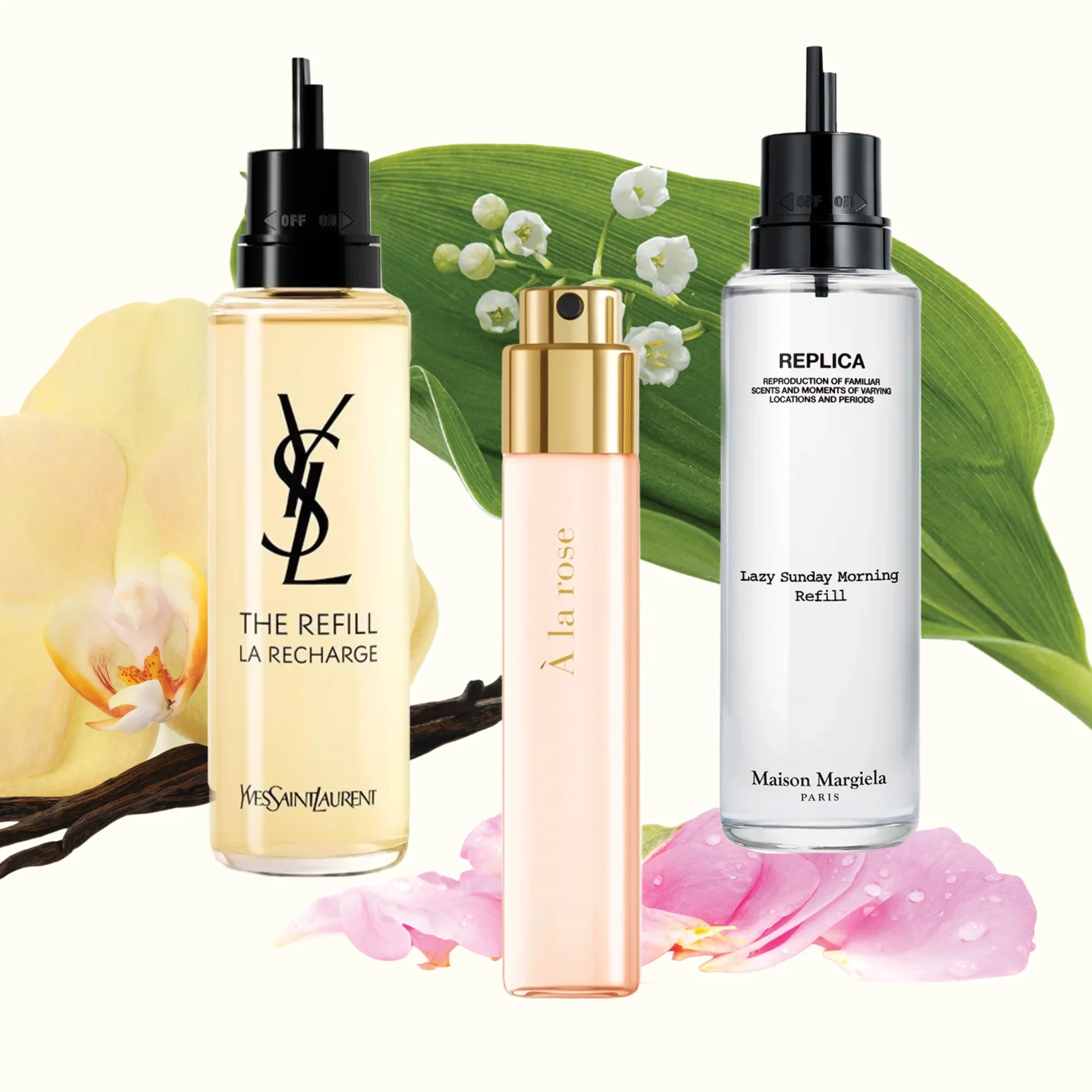
“We noticed also [that] a lot of brands right now are very much into sustainability. They take pride in less packaging,” she explains. “And now more and more, we see a lot of fragrance refills. Ultra luxury perfumes that cost so much for a bottle. You can buy a refill for maybe half or maybe three quarters of the price.”
This, according to her, makes it feel good to keep buying, knowing that in some way you’re helping minimize the harm to the environment.
Global trends, local tastes
What’s striking about the Filipino fragrance market today is how closely it mirrors global trends. Gone are the days of delayed launches and limited access.
“We are very much influenced by the global trends,” the expert says. “Before they even become trends, I think the market already knows.”
This real-time awareness has created a more sophisticated, more experimental consumer. One who moves seamlessly between scent profiles like gourmand in the summer, woody and long-lasting by year’s end.
“Last year, [in the first half], a lot of our brands had very sweet or vanilla scents,” she notes. “But towards the second half, a lot of our EDPs or stronger scents were the ones that were really selling,” she explains.
And perhaps most importantly, one who is no longer confined by traditional labels.
“There’s also so many fragrances now that are gender-fluid,” she adds. “So, there’s no more distinction. You can use anything. [My husband and I] can actually share.”
Beyond the bottle
In the same way skin care has become an investment in self, fragrance is emerging as an investment in identity. It’s intimate, invisible, and yet deeply expressive, arguably more so than a designer bag or a trending lipstick.
And maybe that’s why it resonates so strongly now. In a hyper-visible and digital-first world, scent remains one of the few luxuries that feels truly personal.
As I look at my own mini collection, I understand the appeal a little better. Each bottle isn’t just a purchase, but also a feeling I wanted to hold onto. A version of myself I wanted to remember.
And if Gen Z Filipinos are any indication, that invisible luxury is only just beginning to define what status really smells like.
Frequently Asked Questions
According to Rustan’s Head of Marketing Jackie Avecilla, Gen Z Filipinos are drawn to niche and ultra-luxury fragrances because of the exclusivity and identity they confer — the sense of wearing something few others have. TikTok has played a central role in democratizing awareness of these scents, giving younger consumers direct access to fragrance knowledge that was previously gated by geography and retail exclusivity.
TikTok has fundamentally reshaped how Filipino Gen Z consumers discover and engage with luxury fragrance. Niche perfume houses that were once difficult to access locally are now widely known through algorithm-driven content — with teenage consumers demonstrating detailed knowledge of ultra-luxury brands before even visiting a physical counter. This real-time awareness has accelerated both demand and consumer sophistication.
Rustan’s has expanded its fragrance curation to include niche and luxury houses such as Diptyque, Maison Francis Kurkdjian, Bond No. 9, Clean Reserve, and Acca Kappa, among others. The retailer has also dedicated an entire section to fragrance — a move that reflects both the category’s growth and the increasing discernment of Filipino fragrance consumers.
Based on retail insights from Rustan’s, Filipino fragrance consumers have moved between gourmand and sweet scents in earlier seasons toward stronger EDPs — eau de parfums with woody and long-lasting profiles — by year’s end. Gender-fluid fragrances are also gaining traction, with consumers increasingly crossing traditional scent categories regardless of how products are marketed.
Yes. Ultra-luxury fragrance refills are becoming more widely available in the Philippines, including at Rustan’s. Refills for high-end bottles are typically priced at roughly half to three-quarters of the original bottle cost — making continued purchase more accessible while also addressing growing consumer interest in reduced packaging among premium fragrance brands.
Latest Stories


You might also like
To provide a customized ad experience, we need to know if you are of legal age in your region.
By making a selection, you agree to our Terms & Conditions.