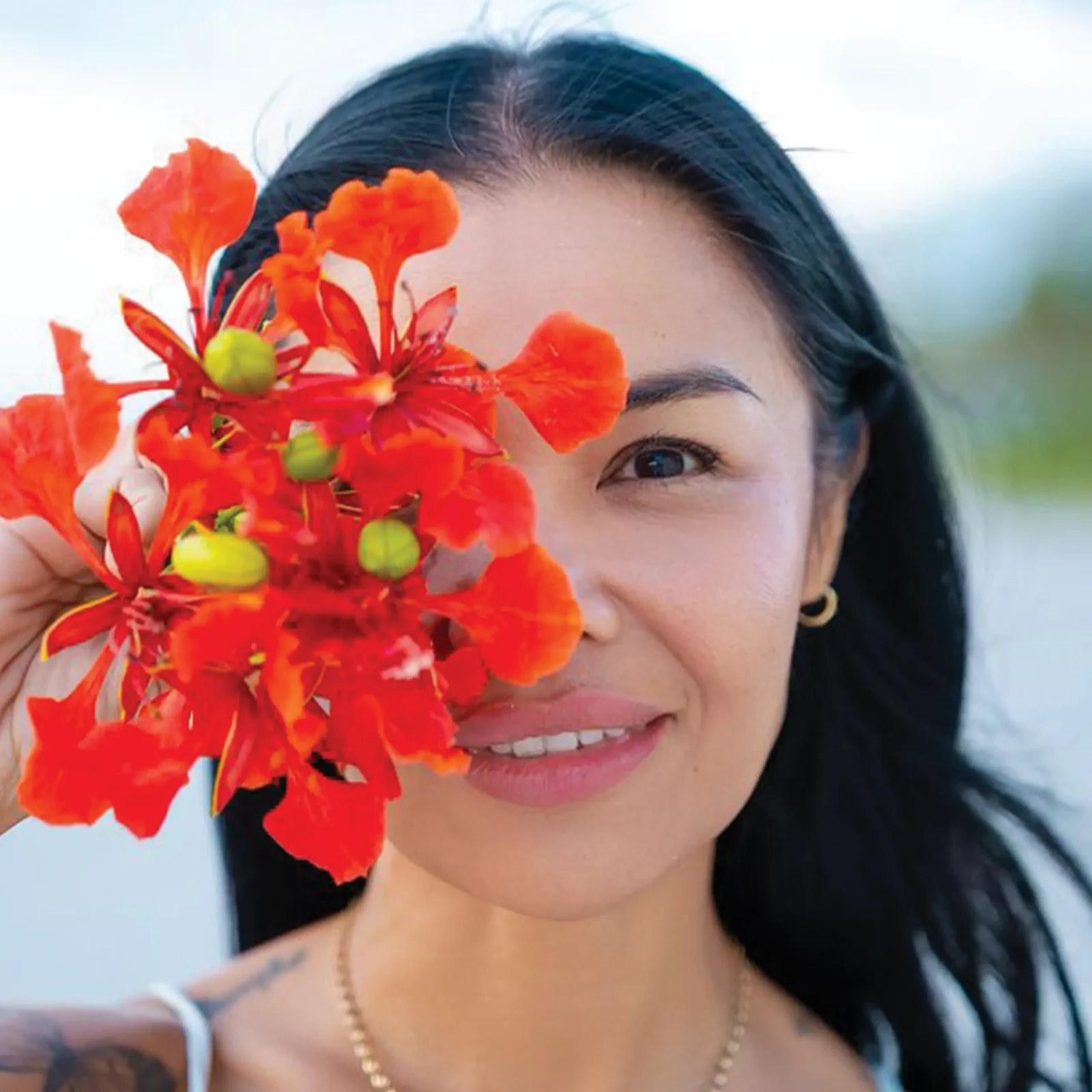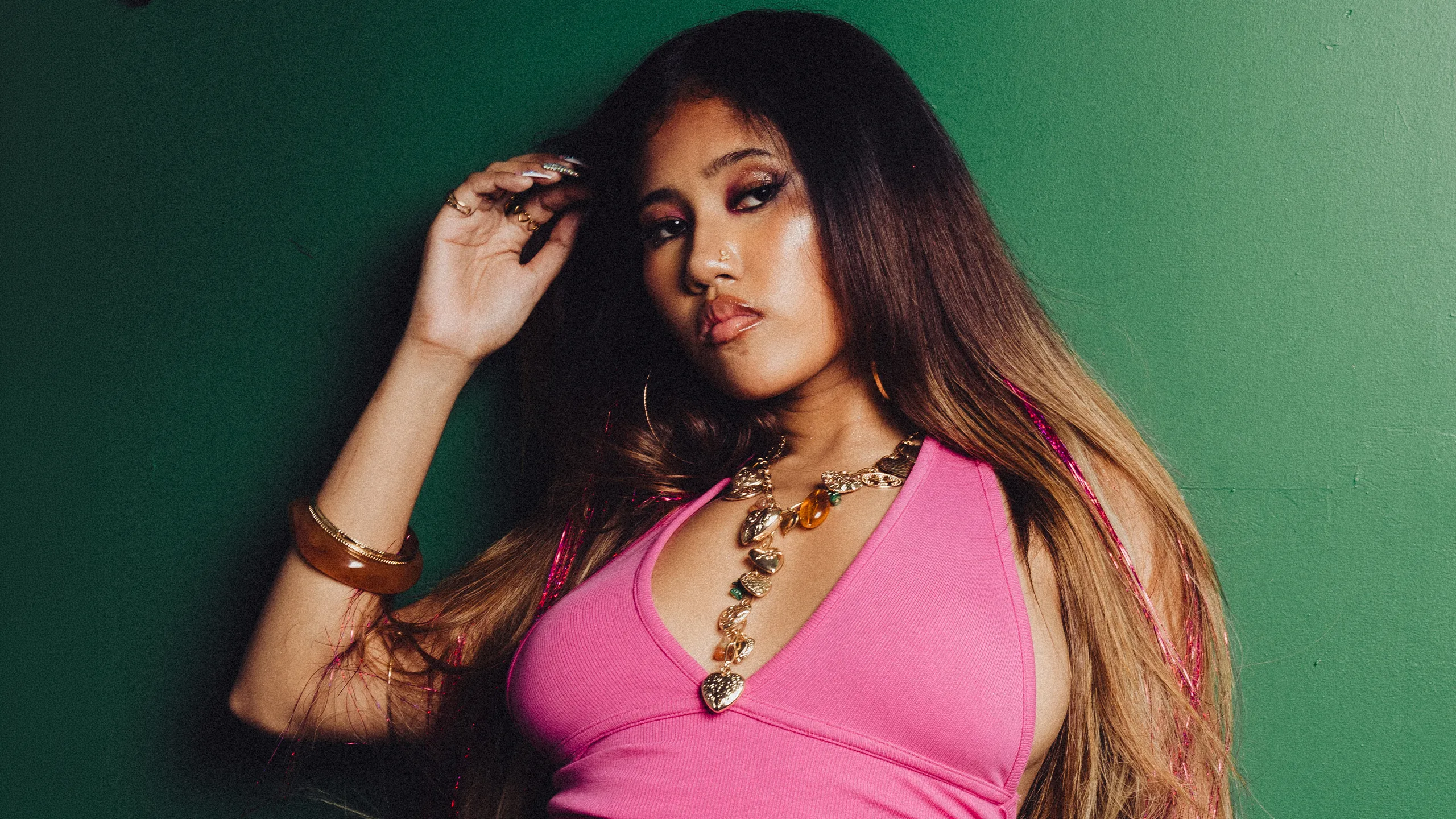
Morena Spotlight is a digital series from Allure Philippines that highlights the stories of morenas from all over the country and the Filipino diaspora. Know a morena who deserves the spotlight? Send us an email at [email protected].
Illest Morena, born Angelica Layague, is a 25-year-old rapper and songwriter from Mandaluyong City. Once bullied for her deeper skin, she created the alter ego Illest Morena at 16 as a foundation of her artistic identity.
Few things offer the same escape music does. Its greatest gift may be the reprieve it offers from the world, if only briefly. In the words of Addison Rae, I put my headphones on, and in the space of three minutes, the sting of a gut-wrenching line, an experimental beat, some synths, or even a familiar melody transports us to an ether à la Lily Chou Chou. Music, then, becomes a place to dream, a reckon with our emotions, or a manifestation of possibilities beyond the everyday life.
And for artists, the desire to escape can be its own creative impulse, whether they work through themes of pain, desire, love, and the long, often complicated journey of self-expression. We’ve seen it, we’ve felt it, time and time again, across genres.
For Angelica Layague, however, better known as Illest Morena, that escape began with her relationship with the skin she was born with. The 25-year-old rapper and songwriter from Mandaluyong City is best known to listeners for her baddie anthems celebrating brown skin, among her eclectic, earworm-y discography that houses tracks like “Faded (Raw),” “Slowburn,” and “Morenita.”
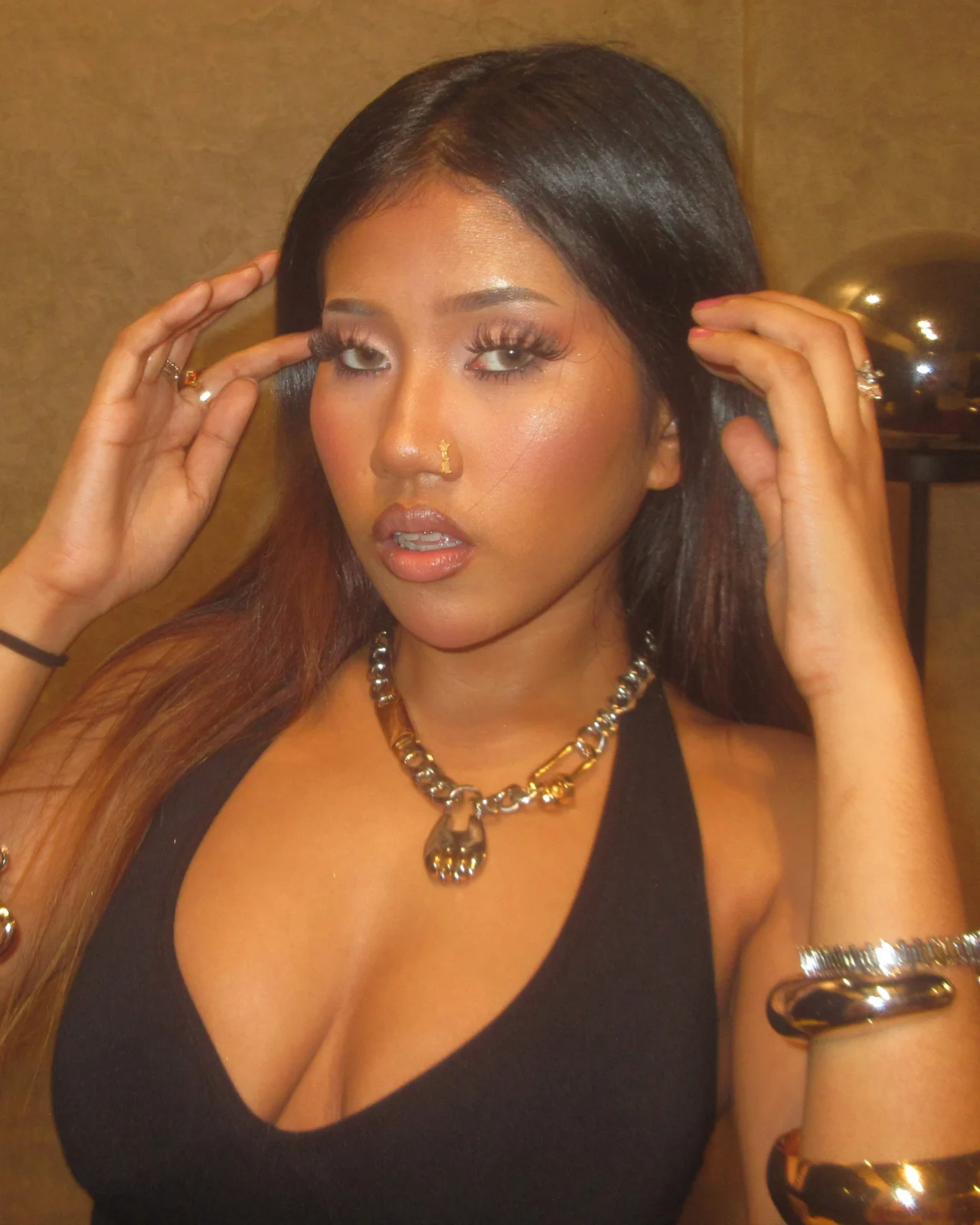
Photo courtesy: Illest Morena
I first watched Illest Morena live in April 2025, as she performed in front of a crowd of a thousand or so on the gardens of the University of the Philippines. She was decked in a mini skirt and white top, with voluminous, golden hair. Despite being a solo performer, her presence carried an assured ferocity to her—fierce, she was, as one of the only female rappers on the lineup. She owned the midnight stage as she sung lines from the opening track of Morenita: “This is brown skin domination / Southeast Asian, baddie from the Islands.” It’s another story, being a woman in hip-hop and finding your footing in a scene largely shaped by men, all while navigating scrutiny and misogyny. Still, as an artist in her own right, Illest has always seemed intent on doing things on her own terms, unbound by the noise of it all.
And in an exclusive interview with Allure Philippines, she affirms that idea. Layague, simply, is a born artist. She explains: “As a kid, my family couldn’t take me away from karaoke machines because of how obsessed I was with singing. In high school, I was very—still am—passionate about dancing and drawing. But I was meant to write. Writing is where I harness all of my energy and emotions, and it’s where I feel myself the most.”
And beyond this strong display of artistic character, she tells a more personal story, one shaped by growing up morena in a culture where fair skin is still held as the ideal. “Most of my teen years were unpleasant due to my classmates bullying me for my skin color,” she shares. Bullied and ridiculed, at age 16, Layague shaped her alter ego, Illest Morena, amid her own friction with colorism. Beyond a stage name Morena, it has transformed what was once a source of alienation into the very spine of her artistry.
Today, being morena is more than a name she performs under; it is part of the perspective she brings to her music, and a story she gets to tell on her own terms.
What was it like growing up morena in the Philippines? How has your relationship with your skin changed over the years?
Growing up morena had its difficulties. For the first part of my life, I struggled with my confidence because of how Filipinos considered my skin color unattractive. Right now, I’m really confident with how I look because I took the time to correct those imposed beliefs and decided that I will not let colorism stop me from seeing the beauty that I possess.
Did you ever feel pressure to lighten your skin or fit a certain beauty ideal? Was there a moment when that changed for you?
I admit that there were times in my childhood [when] I wished my skin were lighter. It even came to a point where I had to use skin-bleaching products just so I could feel beautiful. It was awful for my younger self to experience that amount of insecurity because, for the longest time, I thought it was a curse to be darker.
Most of my teen years were unpleasant due to my classmates bullying me for my skin color. It wasn’t until I turned 16 [that] I created an alter-ego for myself, Illest Morena, to sort of reclaim my “flaws” and turn them into my greatest asset. I fell in love with my skin color the moment I realized that there was nothing wrong with it.
How do you think the way we see morena beauty in the Philippines has changed—and what still needs to change?
It’s changed so much during the last couple of years.
I remember being a teen, struggling to find foundation shades that would match my skintone. I’m happy that it’s no longer a problem for young morenas to find makeup that would match them. Beauty brands in the Philippines are now very inclusive to Filipinos, because most of us have dark skin. Morena beauty is being celebrated, not frowned upon.
Although I still get comments like “Mas maganda sana kung maputi ka,” or “Kahit morena ka ang ganda mo,” from time to time, I feel like slowly, we are ending harsh beauty standards for morenas like me.
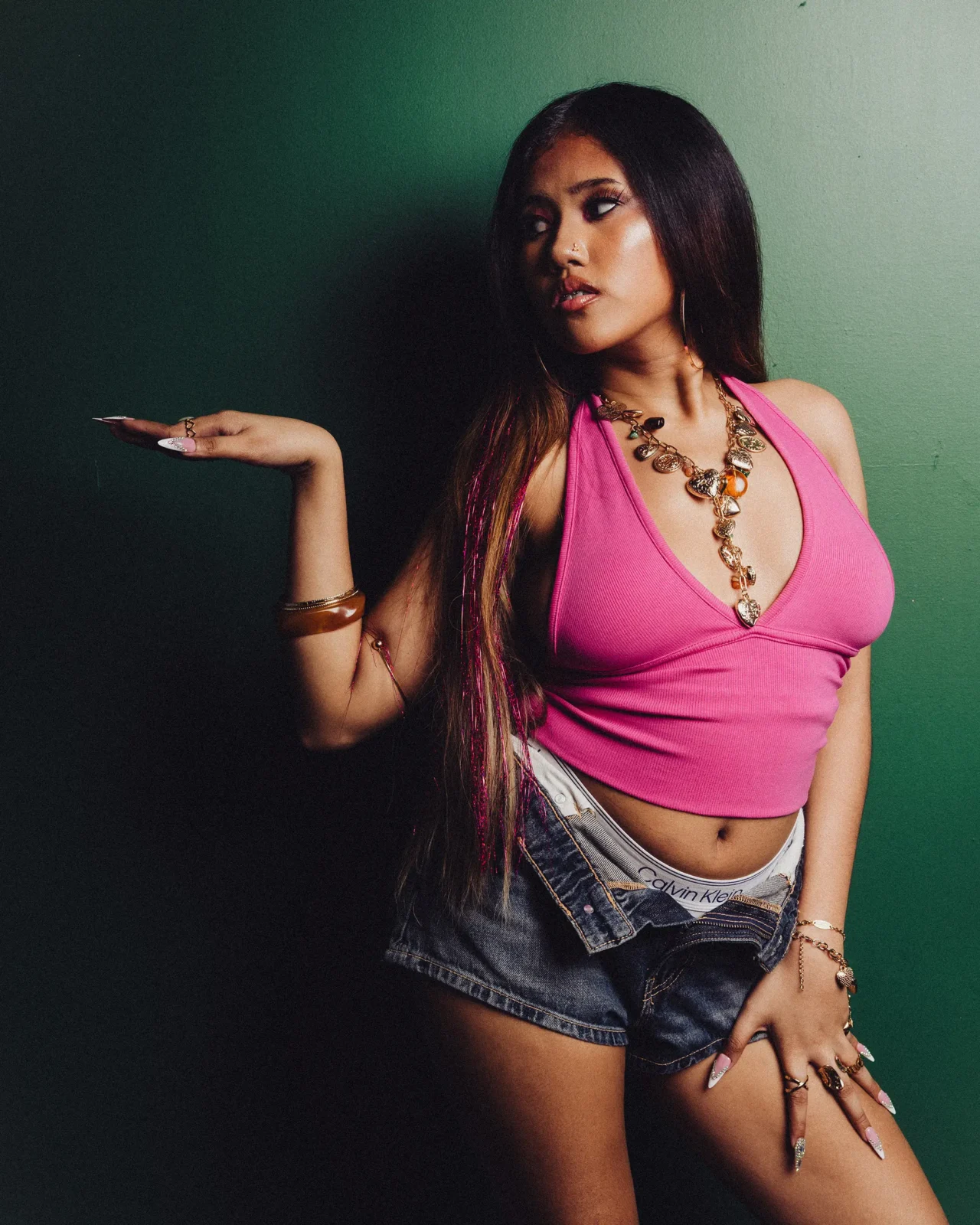
Photo courtesy: Illest Morena
What does your beauty routine look like today?
I always swear by using sunscreen. Just because you’re brown doesn’t mean your skin doesn’t need protection. So, I make sure that I never neglect SPFSPFSun Protection Factor, a measure of how well a sunscreen protects against UVB rays that cause sunburn. Dermatologists recommend a broad-spectrum SPF 30 or higher, applied generously every morning andGo to SPF Glossary. I also use a face moisturizer and body oil because I noticed that it makes my skin glisten, especially when I perform on stage. [When] the lights hit my skin, it makes me glow.
What makes you feel most beautiful and most like yourself?
This is such a Gen Z answer, but honestly, I feel most beautiful when I make thirst trap TikToks to my songs. Aside from that, it’s looking at the mirror and loving the reflection no matter what I look like during that moment. Because after years of hating myself, I finally reached a point where I’m secure about what’s within me.
Finish this sentence: “Morena beauty is ______.”
Morena beauty is magical.
Frequently Asked Questions
Illest Morena is the stage name of Angelica Layague, a 25-year-old rapper and songwriter from Mandaluyong City known for tracks like “Faded (Raw),” “Slowburn,” and “Lagabog.” She created the name at 16 to reclaim her morena skin.
Yes. As a teen, she felt pressure to lighten her skin and used skin-bleaching products to feel beautiful after being bullied for her complexion. She fell in love with her skin once she realized nothing was wrong with it.
After years of being bullied for her morena skin, Layague created the persona at 16 to turn what she once saw as a flaw into her greatest asset, anchoring both her artistic identity and her message of self-acceptance.
She never skips sunscreen, since she says morena skin still needs SPF protection. She also uses a face moisturizer and body oil, which she says make her skin glisten and glow, especially under stage lights when she performs.
She says it has changed significantly, with Filipino beauty brands now offering more inclusive foundation shades and morena beauty being celebrated rather than frowned upon. She still hears colorist remarks occasionally, but feels standards are slowly shifting.