
Why “Salo-Salo” Still Matters: How Shared Meals Improve Emotional Health
From family dinners to late-night ihaw with friends, the Filipino salo-salo proves food is only half the story—it’s also about connection.


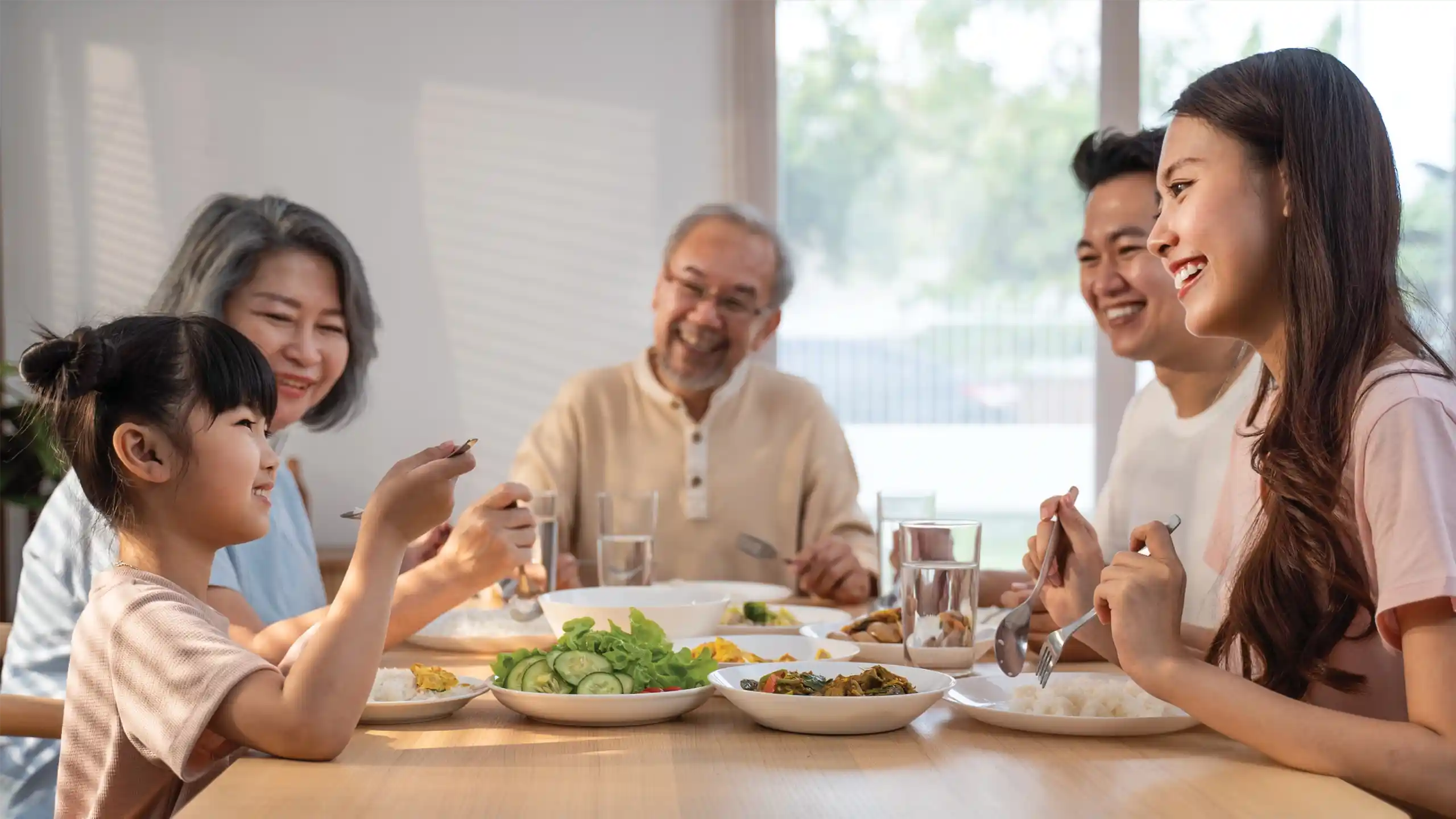
We only have one rule in the family: We must have dinner together, at least once a week. That’s it. There’s no long list of expectations and whatnot, just one sit-down meal. Either we eat out at one of our family’s favorite restaurants (always Chinese food, by the way), or our parents cook our favorite dishes.
Sometimes, there are inevitable last-minute obligations that throw everything off. Still, we try. If this week’s dinner isn’t happening, then next week, it’s non-negotiable. Because we know that shared meals are not just about food. It’s about the conversations that come with it and about being surrounded by the people who matter most to you.
From fiesta to family dinner
Mary Grace Yuen S. Laguting, RPm, RGC, a registered psychometrician and licensed guidance counselor with MindNation explains that eating together transcends cultural and social barriers because “it offers people a space to connect, communicate, and find common ground.”
In Filipino culture, salo-salo (or communal eating) has been more than a mealtime routine. It’s less about food, and more about identity and belonging. It’s also why we have lots of traditions centered around food and eating together, like fiestas and kamayan. Think about it: How many of our most vivid childhood memories happened around the dinner table?
Salo-salo happens with friends, too. It’s those late-night ihaw-ihaw sessions by the street, coffee dates during weekends, or spontaneous get-togethers when the group craves Korean food. “Whether through fiestas, birthdays, or casual get-togethers, meals are often at the center of how we nurture relationships,” Laguiting says.
Meals as emotional reset
After a salo-salo, there’s an emotional reset that stays with us even after the dishes are cleared. A study reveals that sharing meals frequently can improve nutrition, family relationships, and mental health. “At its heart, communal eating is not just about nourishment of the body, but also nourishment of the mind, heart, and soul,” Laguiting affirms.
Over time, the routine of eating together builds something deeper: emotional safety. Eating together as a family has been found to be a crucial part of a child’s development. It can help enhance a child’s communication and problem-solving skills, and can have a positive impact on children’s overall health and happiness.
When gadgets are set aside and presence is prioritized, the dining table transforms from a place to eat into a space for building support, strengthening familial ties, and replenishing the sense of belonging we all need to thrive, Laguting says.
The table as a safe space
The 2025 World Happiness Report also echoes this, with meal sharing being one of the strongest predictors of well-being, standing shoulder to shoulder with factors like income and employment. So whether it’s a simple dinner at home or a lunch out with friends, these matter more than we might think.
So maybe it’s time we make salo-salo a part of our routine, intentionally. Not just for birthdays or holidays, but for no reason at all. You don’t need to wait for a perfect schedule, set up a huge table, or make a spread worthy of Instagram. You just need to show up. Reheat last night’s adobo, order out, or make pancit for two. What matters is who’s at the table, not what’s on it.
Because in a world that constantly pulls us in different directions, a shared meal is one of the few things that still brings us back to each other. It’s a small act, yes, but one that says: You matter. I’m here. Kain na tayo.
And honestly, that’s more than enough reason to make time for it.
Frequently Asked Questions
Salo-salo is the Filipino tradition of communal eating — sharing a meal with family, friends, or community as an act of connection and belonging rather than mere nourishment. It underpins many Filipino cultural practices centered on food, from fiestas and kamayan to casual street-side ihaw-ihaw sessions, and is understood as a primary way Filipinos nurture relationships and reinforce shared identity.
A peer-reviewed study found that frequent shared meals improve nutrition, family relationships, and mental health outcomes simultaneously. Licensed psychologist Mary Grace Laguting of MindNation describes communal eating as nourishment for the mind, heart, and soul — not just the body — noting that the routine of eating together over time builds emotional safety and a sustained sense of belonging.
Research published in peer-reviewed literature identifies family meals as a crucial component of child development. Regular shared meals have been associated with improved communication skills, stronger problem-solving abilities, and positive effects on children’s overall health and happiness — outcomes attributed to the presence, engagement, and emotional attunement that structured family mealtimes create.
The 2025 World Happiness Report identified meal sharing as one of the strongest predictors of individual well-being — ranking it alongside income and employment as a factor that significantly influences happiness. The finding positions communal eating not as a social nicety but as a measurable contributor to quality of life, supporting its treatment as an intentional wellness practice rather than an incidental routine.
Laguting and the article’s author both suggest prioritizing shared meals regularly — not only on birthdays or holidays, but as a standing, non-negotiable routine. The emphasis is on presence over production: reheating leftovers, ordering in, or cooking a simple dish matters far less than showing up consistently and setting aside devices so that the dining table functions as a space for connection, communication, and emotional replenishment.
Latest Stories


You might also like




To provide a customized ad experience, we need to know if you are of legal age in your region.
By making a selection, you agree to our Terms & Conditions.