

What does it really mean to feel your best? For Solenn Heussaff, the answer lies in discipline, self-awareness, and being consistent when it comes to her health.
A true multi-hyphenate, Solenn is talented at a lot of things—she acts, she sings, she paints. And she’s also great at another thing: taking care of herself.
Solenn has long embraced a balanced lifestyle and now, with husband Nico Bolzico and daughters Tili and Maë, she’s continued to nurture that same sense of harmony—making space for both her passions and her family life.
In this Q&A, she gets real about confidence, post-pregnancy changes, and why feeling strong matters more than looking a certain way.
Where are you on your health journey, and what has it been like for you?
I’ve been on my health journey for a very long time, and I’ve tried a lot of things. Sometimes things worked, sometimes they didn’t. For me, [if there was anything I wanted to change], it was more about firming my belly. I’m very healthy, I would say, lifestyle-wise, I have a very balanced lifestyle. But I’ve always had problems with my belly area because of my two pregnancies. No matter how much I work out, no matter how balanced my lifestyle is or my food intake, I always have that loose area in my front belly and my love handle.
How do you separate empowerment from pressure when you’re constantly in the public eye?
I really don’t listen to what others have to say anymore. Before, I was very conscious about people’s thoughts. But the older you get, the more you find out that you’ll be happier if you just listen to yourself and don’t mind all the noise around. So empowerment for me is just listening to your body and listening to the things you want and not the people around you.
What’s the hardest part of the process that people didn’t see?
Being consistent. It’s the little wins. Sometimes a lot of people, when they see us, they’re like, “Oh, kasi payat naman yun” or “She’s fit naman.” It’s not about that. Anyone can become fit. Anyone can work out. It’s just about being consistent. A lot of people say, “Oh, I’m not motivated.” But motivation is not what drives people because motivation is excitement, and excitement never lasts. For me, it’s really about being consistent. The people who win in life are really the people who just show up no matter what. I think that’s a motto I’ve had for a long time. Even if I’m tired, even if I’m not in the mood, even if I’ve had a long day, I will show up for that 30-minute walk. It’s just about small daily wins, not big wins.
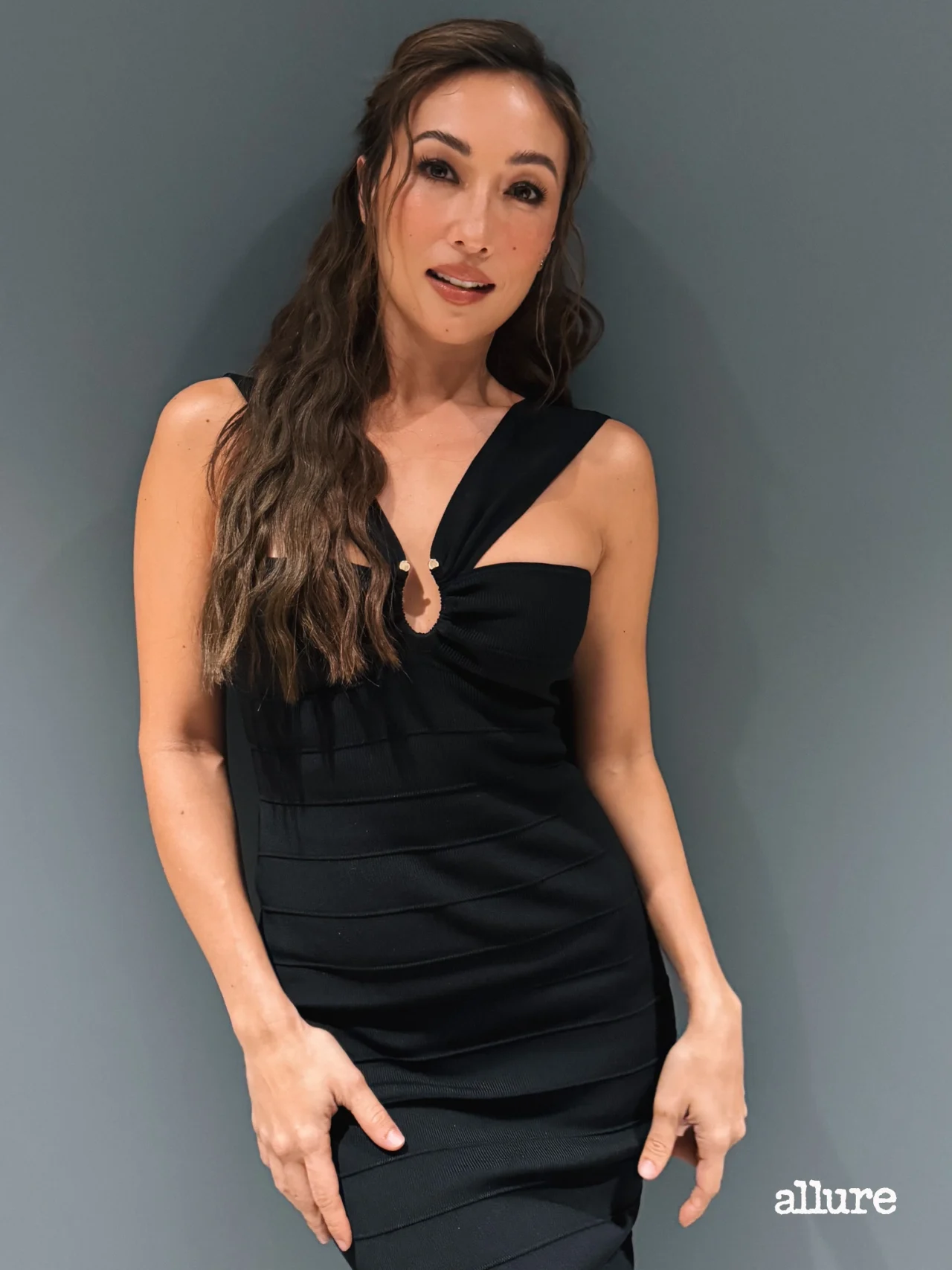
How do we talk about weight loss in a way that doesn’t reinforce harmful beauty standards?
First, I think we should disassociate beauty and weight loss. I don’t think it fits together. And I don’t think it’s a nice thing for the youth because you get pressured. You just need to know yourself, know your body, and where you’re happiest at. I don’t think being thin is being beautiful. I just feel like when you feel strong, that’s when you are beautiful, when you feel beautiful. For me, it’s just about feeling good about yourself in your skin.
Is wanting to change your body an act of self-control or self-care?
It’s definitely an act of self-care. Health is wealth. Health is longevity. Nowadays with all the information out there, we are very aware of the things we need to do to be able to live a long, healthy life. Working out, exercising is one of them. And I also like to work with treatments that complement my lifestyle.
Is progress about how you look or how you feel?
Progress is definitely about how you feel. I feel good when I feel my best, not when I look my best. And I don’t even know what looking your best is, because beauty is subjective. Beauty is in the eye of the beholder. What’s beautiful to me is probably not beautiful to other people. It’s just about really feeling your best so that you can show up every day.
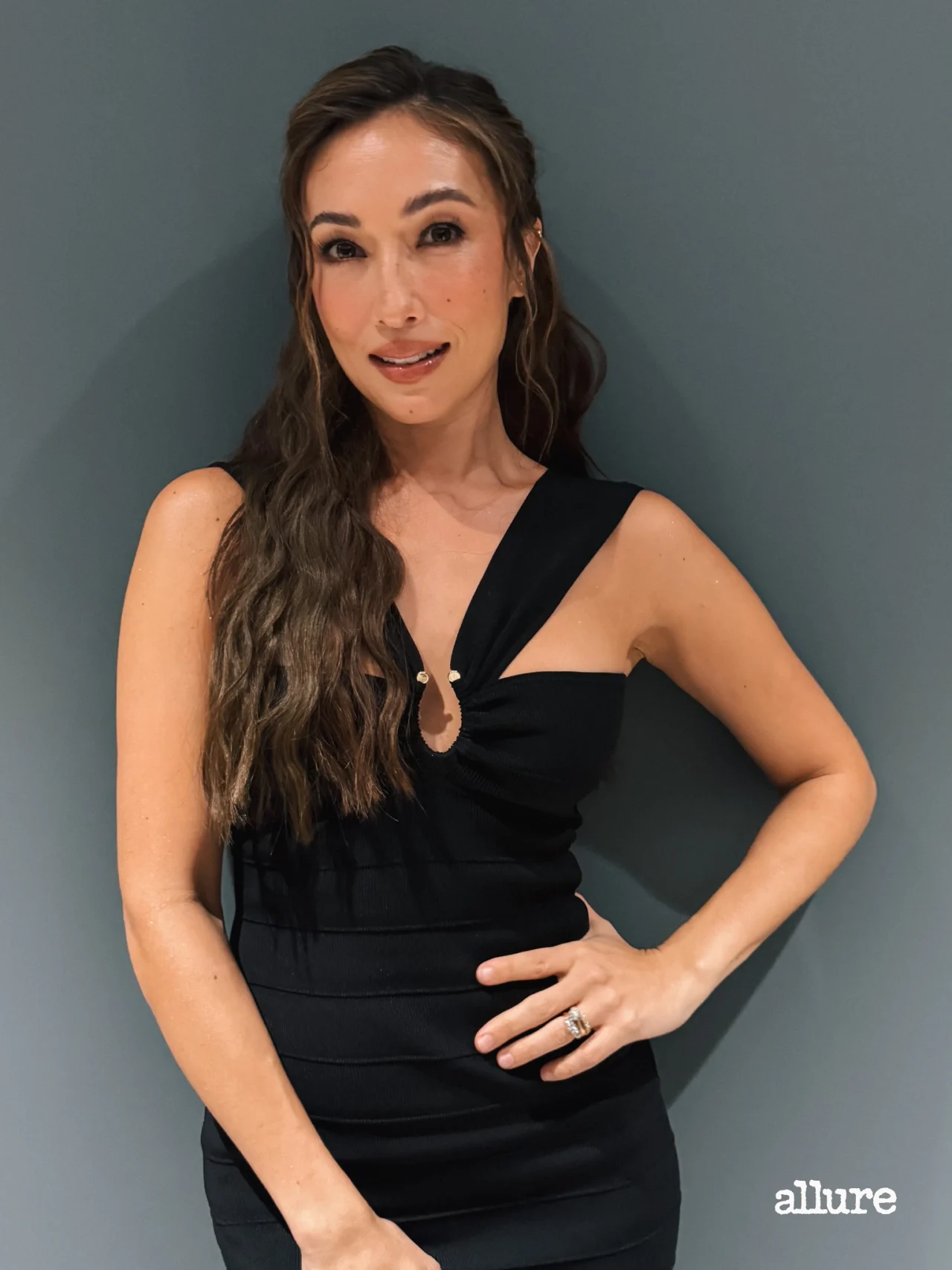
Is wellness a private journey or a public conversation?
It’s a mix. When you go on your wellness journey, it’s something that you want to work on for yourself. You don’t need to tell people what you’re doing. You don’t have to divulge all your secrets or all your workouts or your diet. But it is also public in the sense that if someone does ask me, I’m not going to be like, “Oh, this is just mine.” I am willing to share the information and willing to share what’s worked for me. But what’s worked for me probably won’t work for others. So it’s really finding that personalized journey that works with your lifestyle.
Is long-term health about consistency or commitment?
Definitely consistency, because you can be committed today and not committed tomorrow. But if you’re consistent, it’s just really making those small efforts every day—doable efforts instead of setting a massive goal and then going all out and then all of a sudden being tired. I think anyone can commit to small, consistent changes.
Frequently Asked Questions
Solenn Heussaff describes her approach as built on consistency over motivation, a balanced lifestyle, and listening to her own body rather than external opinions. She emphasizes small daily efforts — such as a 30-minute walk regardless of energy levels — as more sustainable than large, short-lived fitness goals. Post-pregnancy body changes have also shaped how she thinks about progress and body confidence.
Heussaff is direct in decoupling the two: she argues that associating beauty with weight loss creates harmful pressure, particularly for younger audiences. Her position is that feeling strong is what makes a person feel beautiful — not achieving a specific appearance — and that beauty is inherently subjective and cannot be reduced to a body shape or size.
Heussaff distinguishes motivation as excitement — a short-lived emotional state — from consistency, which she defines as showing up daily regardless of mood or energy. In her view, the people who sustain long-term health outcomes are those who commit to small, repeatable actions rather than those who pursue intense but irregular effort. This framing aligns with behavioral research on habit formation and sustainable fitness.
Heussaff has spoken openly about persistent loose skin and changes to her belly and love handle area following her two pregnancies, which she says remain regardless of her workout routine and balanced diet. Rather than treating this as a failure, she contextualizes it as part of her health story — one she addresses through a combination of consistent exercise and complementary treatments aligned with her lifestyle.
Heussaff describes wellness as primarily a personal journey — one that does not require public disclosure to be valid. She is willing to share what has worked for her when asked, but is careful to note that personalized approaches differ and that what works for her may not translate to others. Her overall position is that each individual’s wellness journey should be tailored to their own lifestyle rather than modeled on someone else’s routine.