Refill, Reuse, Rethink: How These Beauty Brands Are Cutting Waste
Actions speak louder than words for these brands.


“Sustainability” is a word that used to get thrown around a lot in the beauty industry—slapped on packaging, taglines, and campaign names. These days, consumers now expect more than a nice word on a label; they want to know what’s actually behind it and if they’re paying for what their money is worth.
No beauty brand is perfectly sustainable, but many are taking meaningful steps to reduce their environmental footprint and embrace more ethical promises. From homegrown names to global labels available in the country, these brands are making a difference—one initiative at a time.
Human Nature
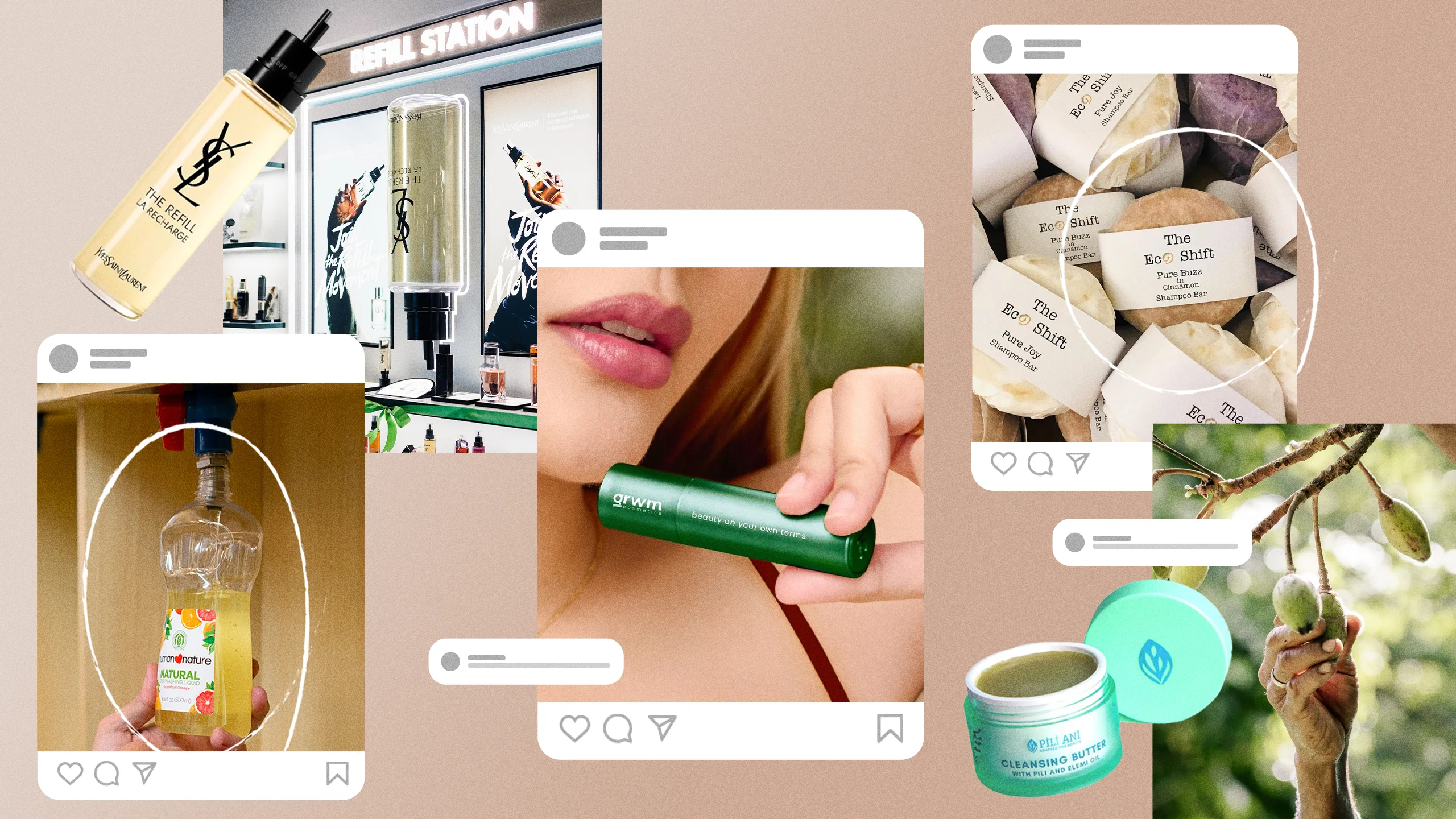
Long before “refill stations” were a thing in the beauty industry, Human Nature had already begun building a more circular approach to everyday essentials. In 2019, the homegrown social enterprise introduced refill stations for its home-care line—beginning with dishwashing liquid and liquid detergents in three branches. That same year, the brand entered the waterless category with its shampoo bar, which the brand says uses up to 98.5% less plastic than a regular shampoo bottle.
One of its past initiatives was the Balik Bote program, which was first launched in 2020 in partnership with Holcim Philippines, collected Human Nature bottles, and repurposed them as alternative fuel for cement manufacturing.
With brands like this, it’s not always glamorous, but it’s the kind that deserves to get noticed—especially if what they’re doing is all rooted in giving back to the community and the environment.
Pili Ani
Pili Ani’s journey to becoming a globally recognized luxury Filipino skin-care brand was never glamorous—it all started with the Pili tree and a mission to uplift the farmers who harvest its Pili and Elemi oils. In a previous interview with Allure Philippines, Rosalina Tan and Mary Jane Tan-Ong—the founders of the brand—shared that everything started with an advocacy.
“We started [Pili Ani] not as a business. Just as an advocacy to help the farmers,” shared Rosalina. Mary Jane later said, “But I told her, if you want to help them, you have to make it into a business. It has to be sustainable.”
Since 2017, the mother-daughter duo has set up the Happy Pili Tree Farm to protect the livelihoods of farmers and later partnered with the Philippine government to plant 20,000 trees. As of writing, Pili Ani has planted 250 trees.
Notable products from Pili Ani include the refillable Cleansing Butter, as well as the Volcanic Pili Butter scrub, which is made with leftover pili nut shells rather than letting them go to waste.
GRWM Cosmetics
Your empties can make a difference beyond just staying in the bin. GRWM Cosmetics is giving empty makeup pans and capsules a second life through its GRWM x Envirocycle initiative, where they have partnered with DENR-accredited recycler HMR Envirocycle for an empties take-back program.
Customers can return the products they’ve hit pan on in selected locations around the metro, in exchange for a limited product or two. Just visit any of their locations, drop the empties in their respective categorized bin (Plastics, Papers and Fabrics, or Glass), and receive a goodie for your efforts!
Plus, the brand has also introduced its first refillable lipstick line, the Lip Couture, in May 2026, with a magnetic refill system that allows you to just replace the bullet once you’ve emptied it. It may be a newer and smaller effort compared to the others on the list, but it’s a welcome shift for brands like these.
The Eco Shift
Launched in 2018, local personal care brand The Eco Shift built its entire catalog around avoiding the use of single-use plastics, owing to a frustration with the lack of plastic-free options available at the time.
Now, with a line of shampoo, conditioner, body bars, and pet-friendly products, the brand has introduced its newest packaging option, the Vivomer Tubby—an advanced bio-based material created through a natural fermentation technology that looks like plastic, but is fully compostable, breaking down in home compost or garden soil once emptied out.
L’Oréal Group
The L’Oreal Group may be a multinational company on a whole different scale from the rest in the list, but its approach to sustainability is just as important.
Its #JoinTheRefillMovement campaign highlights refillable beauty across four divisions, 18 brands, and 28 products globally. In the Philippines, the campaign brings the spotlight to four locally available luxury brands: YSL Beauty, Lancôme, Kérastase, and Kiehl’s. From skin care and hair care to fragrances and makeup, the campaign is proof that sustainability isn’t limited to one category or price point.
Beyond the refill campaign, L’Oreal has also partnered and pledged to recover, upcycle, and recycle 100% of its plastic packaging with Plastic Credit Exchange, and launched a “Recycle for Rewards” program with Watsons, where consumers can get a discount after collecting emptied bottles, dropping them off at the Recycle for Rewards bins at select Watsons locations, taking a photo of them, and showing the picture to the cashier.
The work doesn’t stop here
Sustainability is more than just a trendy buzzword, and no single initiative can solve the beauty industry’s waste problem all on its own. Still, it’s clear that each brand has its own take on it: refill stations, take-back programs, reusable packaging—each one carries its own meaningful way forward.
There’s no perfect, one-size-fits-all solution to a more conscious beauty routine. But what matters is that there are brands out there thinking of how long their products last after it reaches a consumer’s hands.
Frequently Asked Questions
Human Nature pioneered refill stations for home-care essentials in 2019, starting with dishwashing liquid and detergent. L’Oréal Group has since extended refill access locally through YSL Beauty, Lancôme, Kérastase, and Kiehl’s under its global #JoinTheRefillMovement campaign.
Balik Bote, launched in 2020 with Holcim Philippines, collects used Human Nature bottles for shredding and processing by Geocycle, which repurposes them as alternative fuel for cement manufacturing. The program is currently on hold according to Human Nature.
GRWM x Envirocycle, run with DENR-accredited recycler HMR Envirocycle, lets customers return used makeup pans and capsules at select locations. Empties are sorted by category — plastics, papers and fabrics, or glass — in exchange for a small product reward.
The Vivomer Tubby is made from a bio-based material produced through natural fermentation technology. Unlike standard plastic, it fully composts in home compost or garden soil once emptied, offering a plastic-free alternative to conventional beauty packaging.
No single brand has achieved complete sustainability. Each takes a different approach — refill stations, empties take-back programs, farmer-focused sourcing, or compostable packaging — representing incremental progress rather than one comprehensive solution to the industry’s waste problem.
Gelene Peñalosa
Gelene Peñalosa is a Beauty Writer at Allure Philippines. With a background in lifestyle journalism, she covers emerging beauty trends, industry developments, and the cultural conversations influencing how consumers engage with beauty today. Before joining Allure Philippines, she wrote for The Beat Asia and INQUIRER.net, covering lifestyle, entertainment, and culture.
Latest Stories


You might also like



To provide a customized ad experience, we need to know if you are of legal age in your region.
By making a selection, you agree to our Terms & Conditions.