
How to Wear Halloween Makeup Without Wrecking Your Skin, According to Experts
From glitter to prosthetics, a Filipino dermatologist and two makeup artists share tips to help reduce the risk of irritation, from application to removal.
By Liam Sanchez



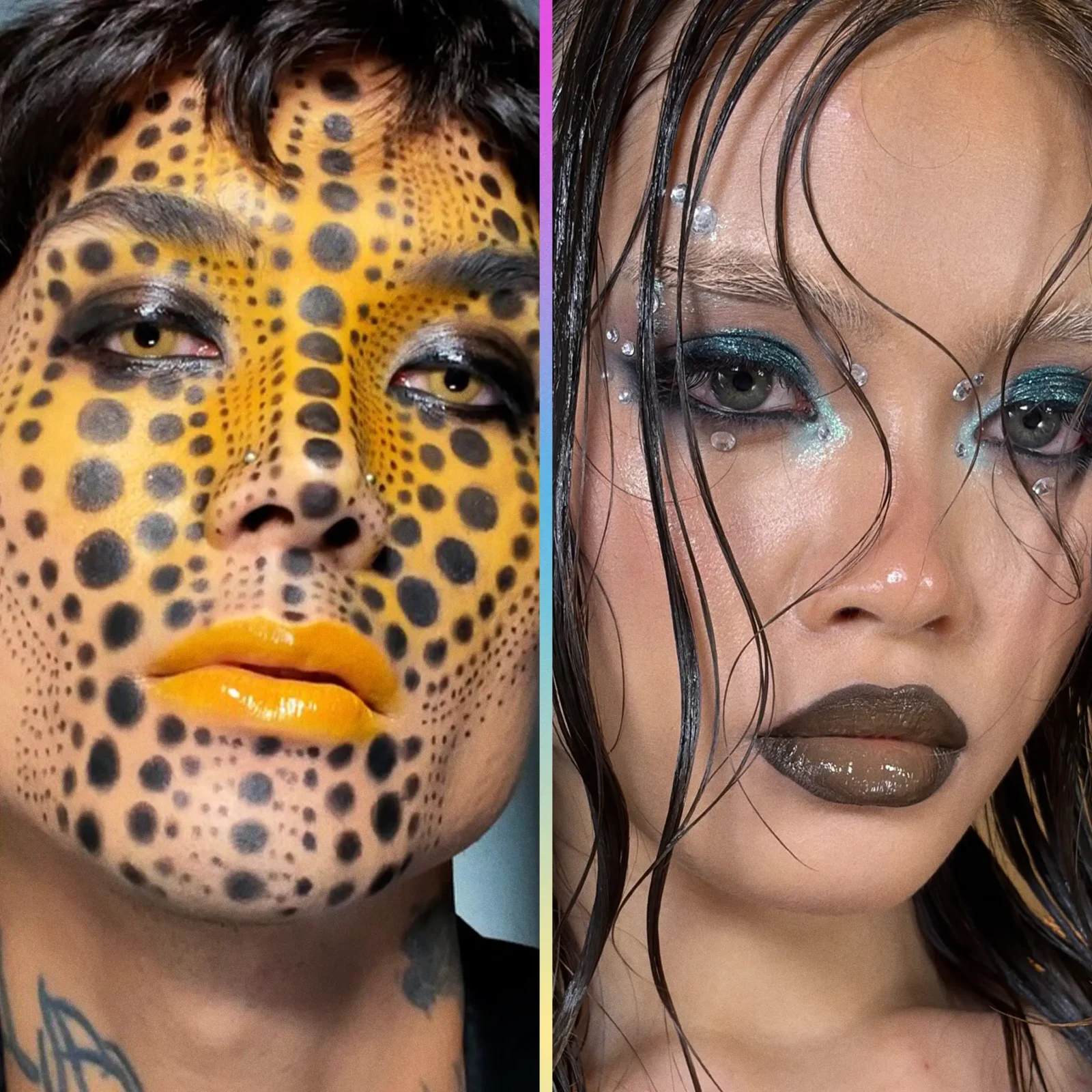
Halloween is the one night of the year when you can get away with looking like a scary gothic pumpkin, showing up to trick-or-treat as Snow White, or wearing prosthetics and special effects makeup to transform into a worm for the day, just like Heidi Klum.
Fortunately, you can be as spooky as you want—your skin does not have to pay the price. To find out how to wear Halloween makeup without ruining the skin, Allure Philippines asked board-certified dermatologist Francesca Sy-Alvarado, MD, FPDS, and professional makeup artists Kenric Carpio and Ida Siasoco to share their expert advice on choosing skin-friendly products, applying special effects safely, keeping your makeup in place, and removing it without irritating your skin.
Francesca Sy-Alvarado, MD, FPDS
Board-certified dermatologist
What ingredients or types of Halloween makeup can trigger skin irritation, allergic reactions, or breakouts?
I love a good Halloween transformation, but not every product made for a dramatic look is necessarily skin-friendly! Fragrances, certain preservatives, adhesives, and some pigments can trigger irritation or allergic reactions in susceptible people. Heavy, long-wearing makeup can also contribute to clogged pores, especially when combined with sweat, oil, and inadequate removal.
For oily or acne-prone skin, I recommend looking for lightweight products when possible. If you have sensitive skinSensitive SkinSkin that reacts easily to products, weather, or stress with redness, stinging, itching, or tightness. Fragrance-free formulas, a short routine, and soothing ingredients like panthenol and centella asiatica help, andGo to Sensitive Skin Glossary, stick to formulas you already tolerate. Make sure to remove the makeup completely, which we can often achieve by double cleansing with an oil-based product first, followed by a mild cleanser.
And please, never use craft paint as face paint! Products should be specifically intended for cosmetic use in the area where you plan to apply them.
How should people patch-test Halloween makeup and special-effects products? Which products require extra caution, and what signs of irritation should prompt someone to stop using them?
My rule is simple: don’t let Halloween night be the first time your skin meets a new product! Test unfamiliar makeup, face paint, and adhesives on a small area of skin beforehand, ideally following the product’s instructions. For leave-on products, we (dermatologists) commonly recommend repeated application to a small area on the forearm or neck for a week when evaluating possible contact allergy, although a single test cannot rule out every reaction.
Be extra careful with liquid latex, prosthetic adhesives, and products containing fragrance if you have sensitive skin or known allergies. Stop using a product if you experience persistent itching, burning, redness, swelling, or blistering. A negative home test does not guarantee that a reaction won’t occur, especially after prolonged wear.
What should people know about applying glitter, prosthetics, and cosmetic adhesives safely?
The biggest rule: use products made specifically for cosmetic use, and follow their instructions. Craft glitter is not interchangeable with cosmetic glitter, particularly around the eyes, where particles can scratch or irritate the eye. Even cosmetic glitter should only be used in areas approved by its label.
For prosthetics, use skin-safe adhesives and their recommended removers. Never pull off glued-on pieces or use harsh solvents to remove them. If you have a latex allergy, avoid latex-based products. And please keep adhesives and loose glitter away from the eyes and inside the mouth.
How can people prevent clogged pores and skin irritation when wearing heavy Halloween makeup for several hours?
Prep your skin with a gentle cleanser and your usual moisturizer. You don’t need to scrub, exfoliate aggressively, or use a strong retinoid just to make your makeup last. In fact, irritating your skin beforehand can make a dramatic look much less comfortable.
Choose makeup suited to your skin type, avoid layering more products than necessary, and take breaks from touching your face. If you’re acne-prone, less occlusiveOcclusiveAn ingredient, such as petrolatum, shea butter, or dimethicone, that forms a protective layer over the skin to prevent water loss. Occlusives are the last step in a routine, andGo to Occlusive Glossary products are a good starting point, although labels like “non-comedogenic” do not guarantee that a product will never trigger breakouts.
And remember: long-wearing makeup doesn’t have to mean wearing it to bed! Even the most elaborate Halloween look deserves a proper removal routine.
What is the safest way to remove elaborate Halloween makeup and contact lenses at the end of the night, without compromising the skin barrier?
After a long Halloween party, I’m all for an efficient routine—but never sleeping in a full face of makeup! Use a makeup remover suited to your products, let it dissolve stubborn pigments first, then cleanse gently. Follow the manufacturer’s instructions for removing prosthetics and adhesives rather than scrubbing or pulling. Pat gently to dry with a clean towel. When drying, do not rub your face—your skin doesn’t need an aggressive exfoliation session as punishment for having fun. Finish with a gentle moisturizer.
For contact lenses, wash and dry your hands before handling them, then remove them according to your eye care professional’s instructions. Clean and store reusable lenses only with the recommended contact lens solution—never tap water or saliva. Don’t sleep in decorative lenses unless specifically prescribed for overnight wear, and never share them.
When it comes to Halloween beauty, protecting your vision and skin barrier is always part of the look!
Kenric Carpio
Professional makeup artist
What precautions should people take when using glitter, cosmetic adhesives, and prosthetics, especially around the eyes?
One thing you have to keep in mind when using glitter, cosmetic adhesives, and prosthetics, especially around the eyes, is to always use precise tools, like small brushes, for better control and application. This helps prevent product fallout, keeps the makeup neat and clean, and minimizes the risk of getting products into your eyes. Most importantly, always make sure that the products you’re using are specifically designed to be safe for the face and the delicate eye area.
What skin prep techniques help makeup last longer without excessive product layering?
My skin prep technique, especially for creative makeup that needs to last throughout the day, is to keep it minimal but never skip the routine. I focus on using just the right amount of skin care to properly hydrate the skin without overloading it with too many products. This helps prevent the makeup from slipping and sliding on the face, allowing the foundation and other products to adhere better to the skin and stay intact for longer.
What hygiene practices should people follow when using makeup brushes, sponges, and shared products?
Hygiene is always a priority, especially when working with multiple clients in one day. I make sure to prepare separate sets of clean brushes for each client whenever possible. If I need to reuse brushes, I have my assistant thoroughly clean and sanitize them between clients. For sponges, I prefer using individual ones for each person, and when it comes to shared products, I make sure to use a clean spatula or disposable applicator instead of applying products directly to the skin. These practices help prevent cross-contamination and ensure a clean and safe makeup experience.
How should people remove heavy Halloween makeup and special-effects products without excessive rubbing or pulling at the skin?
Personally, I love using a cleansing balmCleansing BalmA solid-to-oil cleanser that melts into a silky oil when massaged onto dry skin, dissolving makeup, sunscreen, and sebum, then rinses clean with water. It is a popular first stepGo to Cleansing Balm Glossary to remove my creative and special-effects makeup because it helps melt down even the heaviest products without having to rub or pull too hard on my skin. I gently massage it in and let the balm do the work instead of forcing the makeup off. The key is to be patient and let the product break everything down first.
Ida Siasoco
Professional makeup artist
What skin prep techniques help makeup last longer without excessive product layering?
Contrary to popular belief, excessive product layering does not really equate to or guarantee for makeup to last longer. What is very important is skin prep, product compatibility, and product fixing or setting.
So for skin prep, make sure your skin is really clean, oil-free, but moisturized. That way, you have a really clean canvas. The moisture or the hydration and the healthiness of your skin really matters because if your skin is healthy and hydrated, the products won’t slip and it would really adhere properly. Also, for primers, if you prefer makeup that really lasts longer than usual, a [strong] grip primerPrimerA base product applied before foundation or eyeshadow to smooth skin, blur pores, control oil, or help makeup last longer. Choosing a primer based on your skin concerns, such asGo to Primer Glossary or a tacky primer would be good to use.
What hygiene practices should people follow when using makeup brushes, sponges, and shared products?
For me, when doing makeup on clients, I always make sure that in between steps, I do cleansing on my hands, like alcohol 75% or butter 99%. But 99% is usually for brushes.
For ethyl alcohol 75%, you can cleanse your hands and your products in between steps. And then for sharing makeup brushes, sponges, and shared products, you can as long as there’s alcohol [within] reach. [But] you should be cautious. It’s a risk to share products. It’s better to have disposable sponges. There are [also] disposable products such as spoolies, lip applicators, eyebrow brushes, and eye shadow brushes.
How should people remove heavy Halloween makeup and special effects products without excessive rubbing or pulling at the skin?
I would suggest a really good oil cleanser. It breaks down most makeup products and makeup materials, including special effects and adhesives on the face. Oil cleanser or micellar waterMicellar WaterA no-rinse cleanser containing tiny cleansing molecules called micelles that lift away makeup, oil, and dirt. It is convenient for travel and quick removal, though many dermatologists recommend following withGo to Micellar Water Glossary with oil or a cleansing balm, something that really has slip or an oily consistency. That way, you can apply it to your skin and then let it sit for a while to break down the chemicals in the makeup. And then, you can wash that with water, wipe it with tissue, and then continue with your facial wash.
It’s called double cleansing. Wash it with oil cleanser and then wash it with your facial wash. If you want to be sure, you can do facial wash twice, so it’s triple cleansing. You are assured that it’s really clean.
Frequently Asked Questions
Fragrances, certain preservatives, adhesives, and some pigments can trigger irritation or allergic reactions in Halloween makeup. Dermatologist Francesca Sy-Alvarado also warns that heavy, long-wearing makeup combined with sweat and oil can clog pores, and that craft paint should never be used as face paint.
Apply unfamiliar makeup, face paint, or adhesives to a small area of the forearm or neck before Halloween. For leave-on products, dermatologists commonly recommend repeated application for about a week. Stop if itching, burning, redness, swelling, or blistering persists, since a negative test is not a guarantee.
Craft glitter is not safe for the face because its particles can scratch or irritate the eyes. Dermatologists recommend only cosmetic glitter, used in the areas its label approves. Makeup artist Kenric Carpio adds that small, precise brushes help control fallout around the delicate eye area.
The safest way to remove Halloween makeup is double cleansing: an oil cleanser or cleansing balm first, left to break down pigments and adhesives, then a gentle facial wash. Experts advise against rubbing or pulling prosthetics off, and recommend patting skin dry before applying moisturizer.
Halloween makeup lasts longer with good skin prep, not extra layers. Makeup artists Kenric Carpio and Ida Siasoco recommend clean, hydrated skin with just enough skin care, plus a grip or tacky primer and proper setting, so foundation and pigments adhere without slipping.
Liam Sanchez
Liam Sanchez is a registered medical technologist and Wellness Writer at Allure Philippines. Combining training in laboratory medicine with experience in science journalism, he specializes in evidence-based reporting on wellness, nutrition, longevity, and beauty trends. A Cum Laude graduate of the University of Santo Tomas, he previously served as Science and Technology Editor of The Varsitarian. At Allure Philippines, he translates complex health and beauty science into accessible, reader-first stories that help consumers make more informed decisions about their well-being.
Latest Stories


You might also like



To provide a customized ad experience, we need to know if you are of legal age in your region.
By making a selection, you agree to our Terms & Conditions.