
Viktoria Salazar Wore Drag Makeup to Chemotherapy and Found Strength in Self-Expression
The classical Hodgkin lymphoma survivor and founder of local bag brand CarryOm shares how makeup and beauty rituals helped her maintain her identity, confidence, and sense of self throughout cancer treatment.
By Liam Sanchez


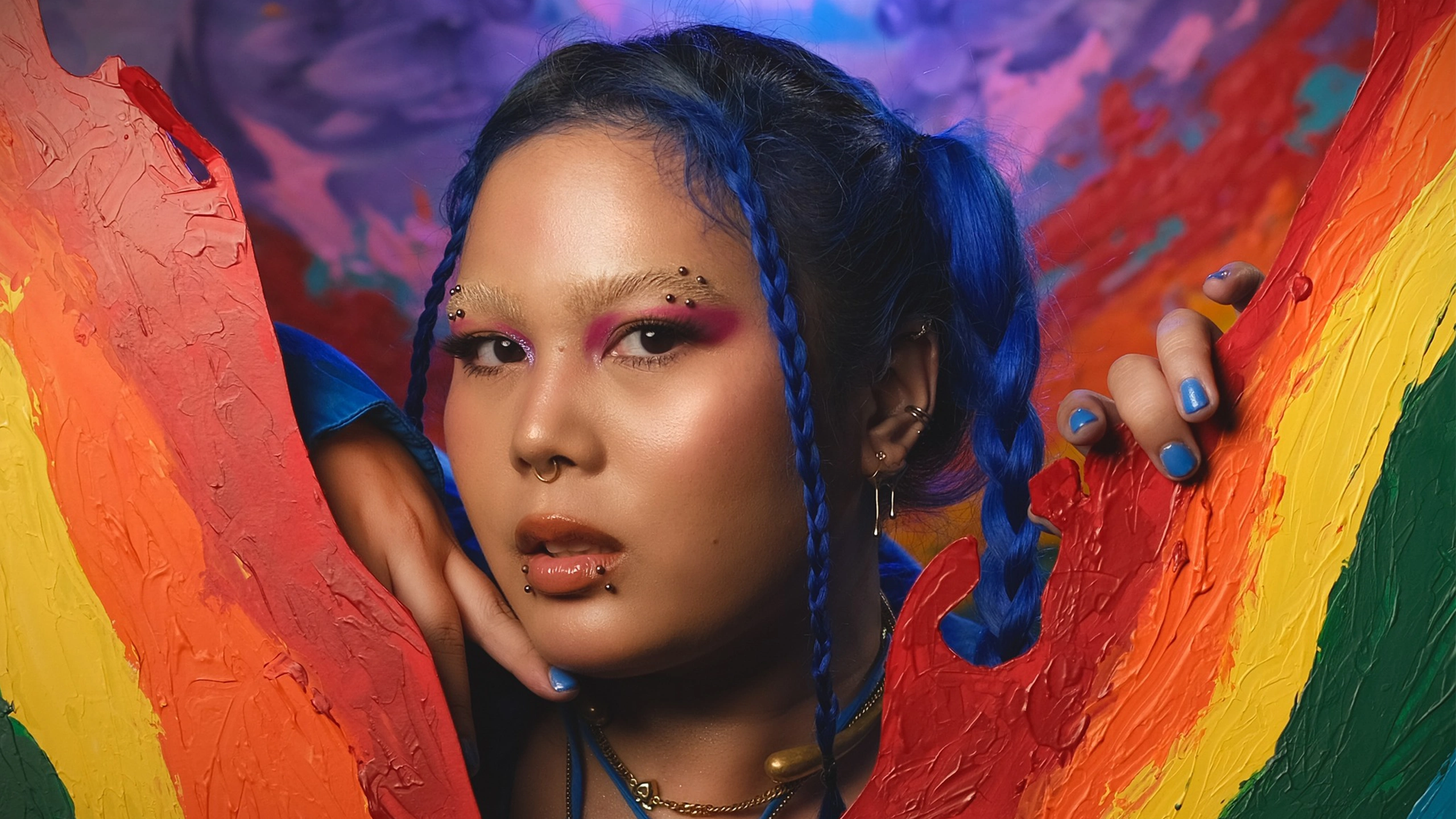
Before shaving her long purple hair, Viktoria Salazar, who was diagnosed with classical Hodgkin lymphoma, chose to dress up for the occasion. She put on colorful makeup, picked out an outfit she loved, and prepared to document the moment.
Her husband, children, and best friend were there as they took turns cutting her hair before her husband finally shaved it off. There were a lot of feelings, but also a determination to meet a difficult change on her own terms. “During that process, we were very emotional,” she shares with Allure Philippines. “Because it’s something that is reminding us that this is really happening. I really have cancer. And that the future is uncertain.”
For Salazar—an industrial designer by profession, mother of two, and co-founder of Filipino bag brand CarryOm—beauty was one of her outlets of self-expression. But after her cancer diagnosis, beauty took on a new meaning. She made sure that hair loss was not something to endure, but an experience she’s in charge of. “I made content about it because it was a life-changing thing,” she explains. “I made sure that after I shaved, I looked badass.”
When cancer changes the way you see yourself
Salazar’s cancer journey began with a persistent cough that lasted for months. “And then every time I just go to the doctor, they would just say that it’s asthma,” she says. When a doctor eventually felt a lump in her neck, she underwent further examinations and biopsies. She recalls already fearing the possibility of cancer before receiving the diagnosis. When the results confirmed classical Hodgkin lymphoma, her thoughts turned immediately to her children, who were only two and four years old at the time.
Having lost her father when she was nine, Salazar knew what it was like to grow up without a parent. “I was sad. I was anxious for my kids,” she says. “It wasn’t about me, but it was more for me, my emotions were towards what my kids would feel and would experience if they ever lose a mom.”
She then had to explain to her children how her treatment would affect their everyday lives, in the best way she knew: “This means that I won’t be able to read to you every night. This means that I won’t be able to play with you all the time. Mommy will be in bed. I won’t be able to give you a bath sometimes. I won’t be able to spend time with you. I won’t be able to go to the park with you.”
The beauty of feeling like yourself
Despite the physical changes brought about by cancer, Salazar found beauty to be a fountain of strength. By the time she received her diagnosis, she had already been posting creative makeup videos where she talked about mental health. Looking at herself in the mirror and the videos she edits made her happy. “My makeup really helped me boost my confidence,” she says.
Dealing with cancer made Salazar more adventurous. She began exploring fashion and makeup on her own terms, experimenting with different looks even when her choices attracted attention. “At the end of the day, if I am happy with how I look, and if it is something that I have curated myself, if it is something that I have done myself, I am proud of myself for doing that,” she says. For someone dealing with something as uncertain as cancer, choosing her makeup and clothes became an exercise in autonomy. She could not dictate every part of her treatment, but she could decide how she wanted to show up for it.
Salazar also remembers a principle she learned from industrial designer Kenneth Cobonpue: “In order to create beautiful things, surround yourself with beautiful things.” She applied the thought to her own life, finding that taking the time to beautify herself helped cultivate confidence and self-worth.
Going to chemotherapy in drag
Perhaps the clearest example of Salazar’s relationship with beauty came during her chemotherapy sessions. Rather than treating treatment days as appointments she simply had to get through, she began approaching them as occasions to prepare for. “I would put on editorial makeup. It was drag for me. It was me trying to make the situation something eventful because it’s not me mourning myself. It was me rejoicing that one chemotherapy is one step closer to healing,” she explains. “It was me celebrating that moment of being in chemotherapy because there’s a solution. There’s a way for me to heal. And there’s a way for me to go back to my kids and be a mother to them. So there was hope.”
Putting on a bold eye shadow hue or rhinestones on the face did not make the difficult parts of cancer disappear. But it was a way to face the disease head-on, without surrendering the parts of herself that made her feel alive. When asked whether she considered beauty a form of armor, Salazar agrees. “It was hope for me. It was gratitude,” she adds.
Creativity as a lifeline during cancer
During the financially difficult period surrounding her treatment, Salazar and her husband, Dhanvan Saulo, also built CarryOm, a local bag brand. The couple started the brand in their basement, which they converted to a factory. “It was built out of love. It was built out of my husband’s love and desperation for my treatment, to make sure that I will live,” she shares.
Despite her ongoing cancer treatment, Salazar worked with her husband on CarryOm. “Even if I was going through chemotherapy, I would hustle with making colors because I’m an industrial designer,” she says. “We were also the ones to issue orders. We went to pop-ups, even if I was in radiation. So we really hustled.”
CarryOm then became an important part of Salazar’s cancer journey. “If we tell Carry Om’s story, it will forever be tied to my cancer because that’s how we started.” While Salazar gets sentimental in telling the origin story of CarryOm, she gets equally fierce when it comes to protecting her creative identity and brand—evident in the now-viral post of her and her husband calling out a major conglomerate on allegedly copying their bag designs.
“I think the lesson here is no matter how big a company is, no matter how big [what] we are facing, we take a stand with our principles,” she says with fervor. “And we take a stand not just for what we worked hard on, but with what our artisans worked hard on. This was a team effort.”
Today, aside from working passionately in building her bag brand, Salazar, who has learned how cancer can take away time from her loved ones, is determined to make her kids the top priority. “My priorities right now are actually making sure that I have time for my kids. Making sure that I go home and spend time with them,” she says. “Because our kids have more priority than our business.”
The work of healing beyond treatment
Salazar’s understanding of recovery also extends beyond the physical experience of cancer. Long before her diagnosis, she had recognized the importance of looking after her mental health. She began therapy after realizing that her relationship with anger was affecting her and her family. “I realized I needed to go to therapy when I wasn’t able to treat anger as an emotion that comes and goes.”
Wanting to create a healthier environment for her children became one of her reasons for seeking help. “Therapy really saved me,” she explains. “Not just me, my family, my entire family.” Her experience has made her particularly mindful of having a safe environment in which to process difficult emotions and overcoming circumstances.
She also recognizes that access to support is not always easy for everyone. For those still figuring out how to heal, her advice is simple: “Give yourself some grace.” It is a lesson that resonates with the complexities of survivorship. Recovery is not always a straightforward transition from illness to wellness. There are relationships to rebuild, changes to accept, and parts of yourself that may take time to understand again.
Through beauty, motherhood, therapy, and the creative work she continues to build with her brand, she has found ways to regain parts of her life that cancer once threatened to take away. If anything, the experience deepened her relationship with her body, and it has strengthened her desire to create, express herself, or show up for the people she loves.
And perhaps that is what giving herself grace looks like: allowing herself to keep living, creating, and finding beauty as she does the things that make her feel like herself.
Frequently Asked Questions
Viktoria Salazar wore editorial drag makeup to chemotherapy sessions to reframe treatment as something to celebrate rather than endure. She describes it as a way to express hope and gratitude, treating each session as one step closer to healing.
Classical Hodgkin lymphoma is a type of cancer affecting the lymphatic system. Viktoria Salazar’s diagnosis followed months of a persistent cough initially misattributed to asthma, until a doctor found a lump in her neck that led to further testing.
Viktoria Salazar explained chemotherapy to her young children in simple, concrete terms—telling them she wouldn’t always be able to read to them, play with them, or go to the park, so they could understand the changes ahead.
CarryOm is a homegrown Filipino bag brand co-founded by Viktoria Salazar and her husband, Dhanvan, built in their basement during her cancer treatment. Salazar continued working on the brand through chemotherapy and radiation sessions.
Therapy helped Viktoria Salazar manage anger and process difficult emotions, both for herself and her family. She credits therapy with helping her create a healthier environment for her children and describes it as something that “saved” her entire family.
Liam Sanchez
Liam Sanchez is a registered medical technologist and Wellness Writer at Allure Philippines. Combining training in laboratory medicine with experience in science journalism, he specializes in evidence-based reporting on wellness, nutrition, longevity, and beauty trends. A Cum Laude graduate of the University of Santo Tomas, he previously served as Science and Technology Editor of The Varsitarian. At Allure Philippines, he translates complex health and beauty science into accessible, reader-first stories that help consumers make more informed decisions about their well-being.
Latest Stories


You might also like

To provide a customized ad experience, we need to know if you are of legal age in your region.
By making a selection, you agree to our Terms & Conditions.