This Morena Artist Turns Her Filipino Heritage Into Colorful Works of Beauty
Through Filipinta Beauty, New York-based illustrator Hana Acabado transforms Filipino food, folklore, and childhood memories into makeup. Her own experience growing up morena, however, tells a more complicated story about the beauty standards she has since learned to question.


Morena Spotlight is a digital series from Allure Philippines that highlights the stories of morenas from all over the country and the Filipino diaspora. Know a morena who deserves the spotlight? Send us an email at [email protected]
At 34, Hana Acabado wears several creative hats: packaging designer, author, illustrator, and founder of Filipinta Beauty, a cosmetics brand that brings Filipino art and cultural references into the world of makeup.
Color, arguably, is one of life’s greatest pleasures.
Red, yellow, blue. These basic colors are at the heart of the paintings bedecking the walls of the museums around the world. It lives within the vivid patterns of handwoven designs that carry rich communal histories, even when outside, it greets the sky and in the greens of the earth. It is also in the pigments we sweep across our eyelids, the blushes we layer, and the plenty of other ways we adorn ourselves.
Color, too, carries the imprint of where we come from. For Hana Acabado, it is both a creative instinct and a way of keeping close to home. The New York-based artist, illustrator, and author is also the founder of Filipinta Beauty, a makeup brand whose name is a portmanteau of “Filipina” and “pinta,” or face paint for Filipinas.
This brain child of hers began rather unexpectedly. In 2019, while living in the United States and caring for her first born, Acabado found herself looking for a new way to exercise her creativity. A packaging designer by profession, she initially imagined Filipinta as a fictional makeup brand that would give her portfolio more room to grow, then referred to as Pinta Cosmetics. But the project soon took on a life of its own: she began developing actual products, shared her concepts online, and found an audience among Filipinos who connected with what she was making. When the brand’s first release unexpectedly sold out, what had started as a design exercise prompted Acabado to develop Filipinta beyond the original idea.
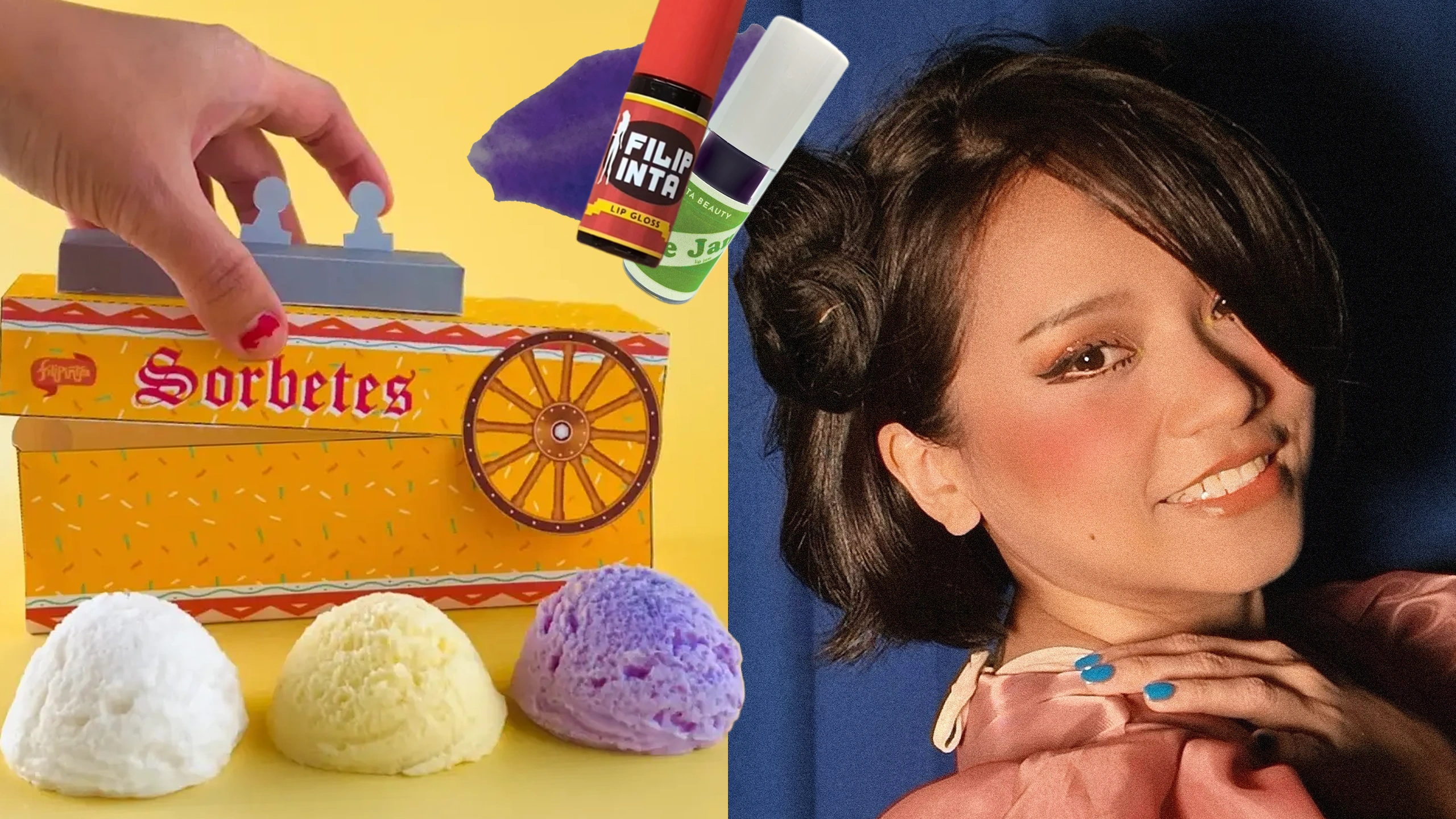
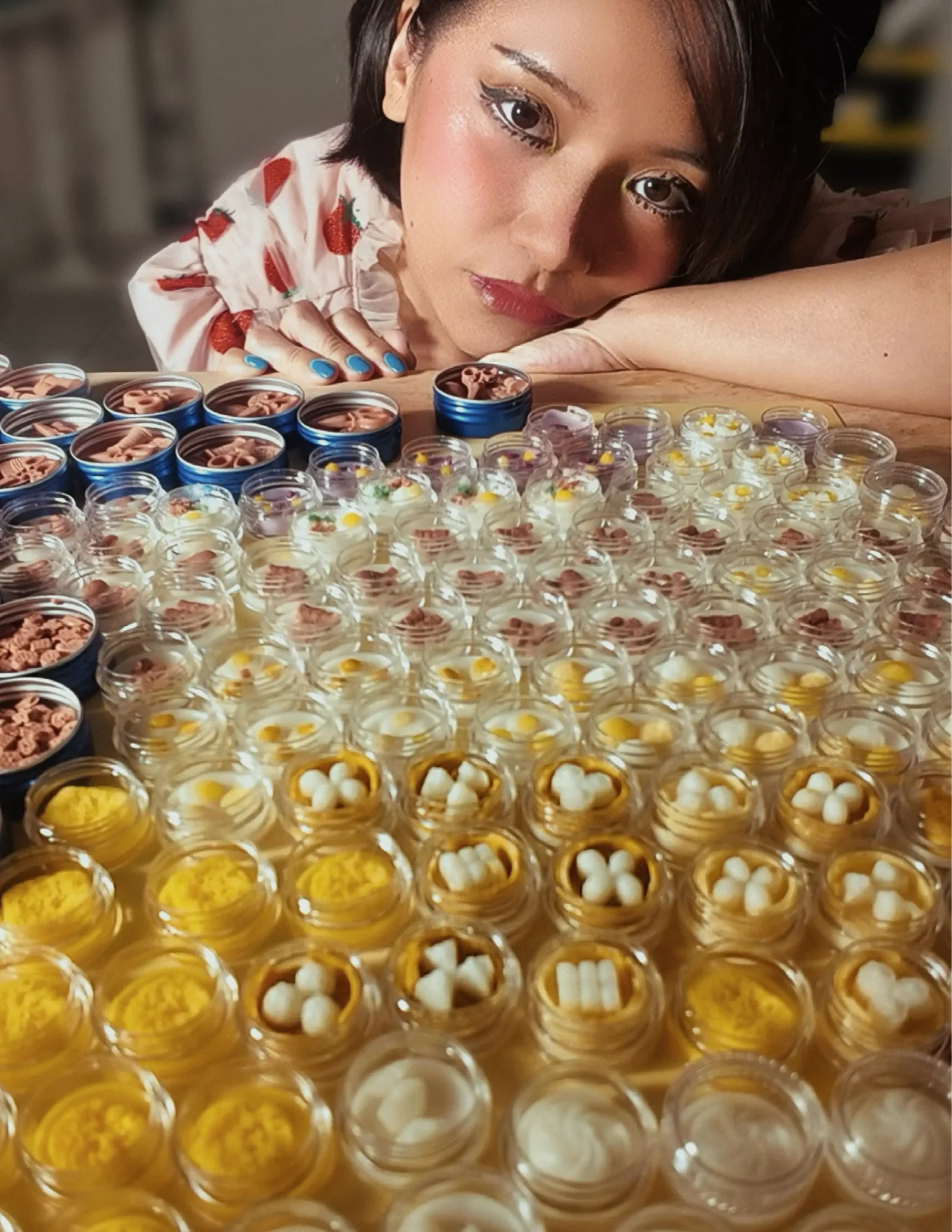
Today, Acabado has built her homegrown brand into an imaginative world shaped by her upbringing. She draws heavy inspiration from the archipelagos; the sights, flavors, and textures of Filipino nostalgia: eyeshadow palettes modeled after Filipino favorites like Jollibee and sorbetes, ube jam lip gloss, lippies that recall the bright, familiar packaging of banana ketchup, and other familiar objects that shaped her everyday surroundings before she moved to New York in her mid-twenties.
Through Acabado’s eyes, the everyday becomes a colorful catalogue of Filipino life, and of the many ways beauty can take shape.
However, while the world has made room for every imaginable color, it once upon a time did not extend to the color of deeper skin, including those of morenas.
Growing up morena in the Philippines, Acabado recalls being called names: “shadow,” “negra,” and “coal,” while relatives suggested she use whitening soaps.
And for a time, it was an internalized insult. While Acabado found it difficult to let go of other people’s perceptions of her complexion, it was, deep down, something she loved—and growing wiser brought a more personal understanding of beauty, one that no longer hinged on meeting someone else’s ideal. “I personally love my complexion despite what other people think of it. I learned to fully embrace it after a while and I’m very proud of it. It took time to fully embrace her skin, she says, but she eventually arrived at a certainty that no whitening product could offer: “I am indeed beautiful whatever my skin color is.”
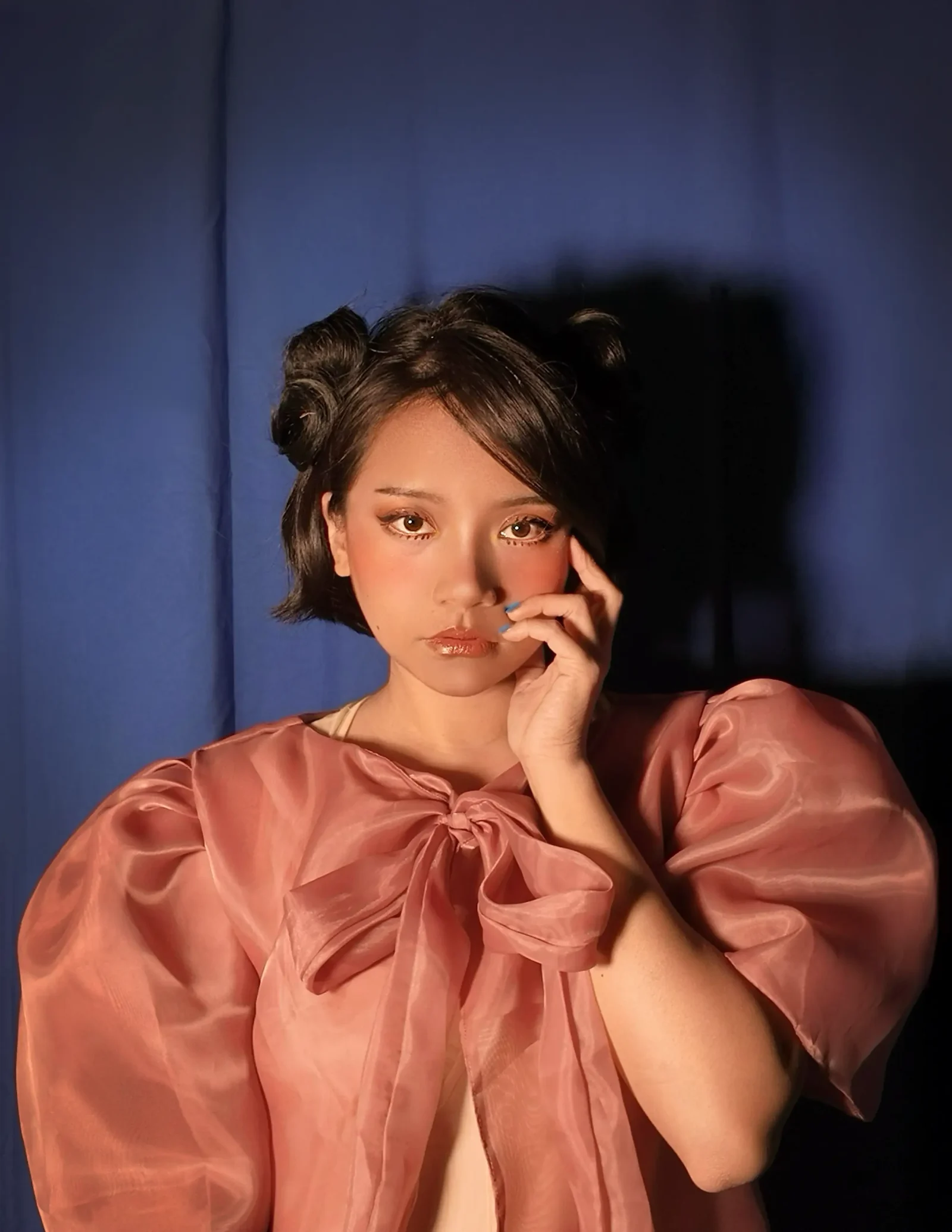
Tell us a little about yourself—what you do, what you love, and what matters to you right now.
I’m a packaging designer, author and illustrator! I love creating new things, going to music shows and galleries and creating new makeup looks! What matters to me right now is my health, my advocacy and my kids.
What was it like growing up morena in the Philippines? How has your relationship with your skin changed over the years?
To be honest it wasn’t pleasant. I got called names constantly like shadow, negra and coal, and my relatives would often tell me to use whitening soaps. For a while it made me feel like being morena was an insult, but I personally love my complexion despite what other people thought of it. I learned to fully embrace it after a while and I’m very proud of it.
Did you ever feel pressure to lighten your skin or fit a certain beauty ideal? Was there a moment when that changed for you?
Absolutely! Everywhere I looked there was a reminder for me to lighten my skin. Stores, commercials and malls were riddled with whitening products that pretty much told the story of “whiteness” as the end goal, or the preferred beauty standard. I did a lot of self-reflection during these years and ultimately came to a conclusion that I am indeed beautiful whatever my skin color is.
How do you think the way we see morena beauty in the Philippines has changed—and what still needs to change?
I’m so amazed at how much the Philippines has shifted in terms of morena beauty! It’s celebrated in a way I never saw when I was growing up. Unfortunately when I go to the stores there are still loads of whitening products, and sometimes hear people say “you’re pretty for a morena.” I think that needs to change.
What does your beauty routine look like today? Share the skin care, makeup, products, shades, or tricks you swear by.
I have a very minimal skincare routine. I use Cerave everything: facial oil cleanser, moisturizer, and some days I’ll use their tonerTonerA liquid step used after cleansing to rebalance, hydrate, or prep skin for the products that follow. Modern toners often focus on hydration or gentle exfoliation rather than stripping alcohol,Go to Toner Glossary. I found that the less products I use, the less breakouts I have! For my everyday makeup I always draw on my eyebrows (’cause I shave half of it off), use [Filipinta’s] sold-out FLAMES palette for my blush (I love a pink blush!), and I always have to add my signature winged eyeliner.
What makes you feel most beautiful and most like yourself?
I feel the most beautiful when I’m happy.
Finish this sentence: “Morena beauty is ______.”
Morena beauty is something to be celebrated!
Frequently Asked Questions
Hana Acabado is a New York-based artist, illustrator, author, and founder of Filipinta Beauty. She draws on Filipino food, folklore, and childhood memories to create makeup, and moved to New York in her mid-twenties. She also describes herself as a packaging designer.
Acabado says she was constantly called names like “shadow,” “negra,” and “coal,” while relatives told her to use whitening soaps. For a time it made her feel being morena was an insult, but she later learned to embrace her complexion and says she is proud of it.
Filipinta Beauty is a makeup brand founded by Hana Acabado that turns Filipino food, folklore, and childhood memories into products. A childhood memory can become a palette and a local delicacy can inspire a product. Acabado uses the brand’s sold-out FLAMES palette as her blush.
Acabado says morena beauty is celebrated in ways she never saw growing up. She notes whitening products remain widespread in stores and that people still say “you’re pretty for a morena,” a remark she believes needs to change. She calls morena beauty “something to be celebrated.”
Acabado keeps a minimal routine of CeraVe facial oil cleanser, moisturizer, and sometimes toner, noting she finds fewer products mean fewer breakouts. For makeup, she draws on her eyebrows, uses the Filipinta FLAMES palette as a pink blush, and always wears signature winged eyeliner