This Beauty Photographer Built Her Career On Treating Every Shoot Like It Matters
For Charisma Lico-Santos, the artist behind some of the most memorable editorials, covers, and billboards in the country, industry breakthrough and success comes from disciplined consistency.


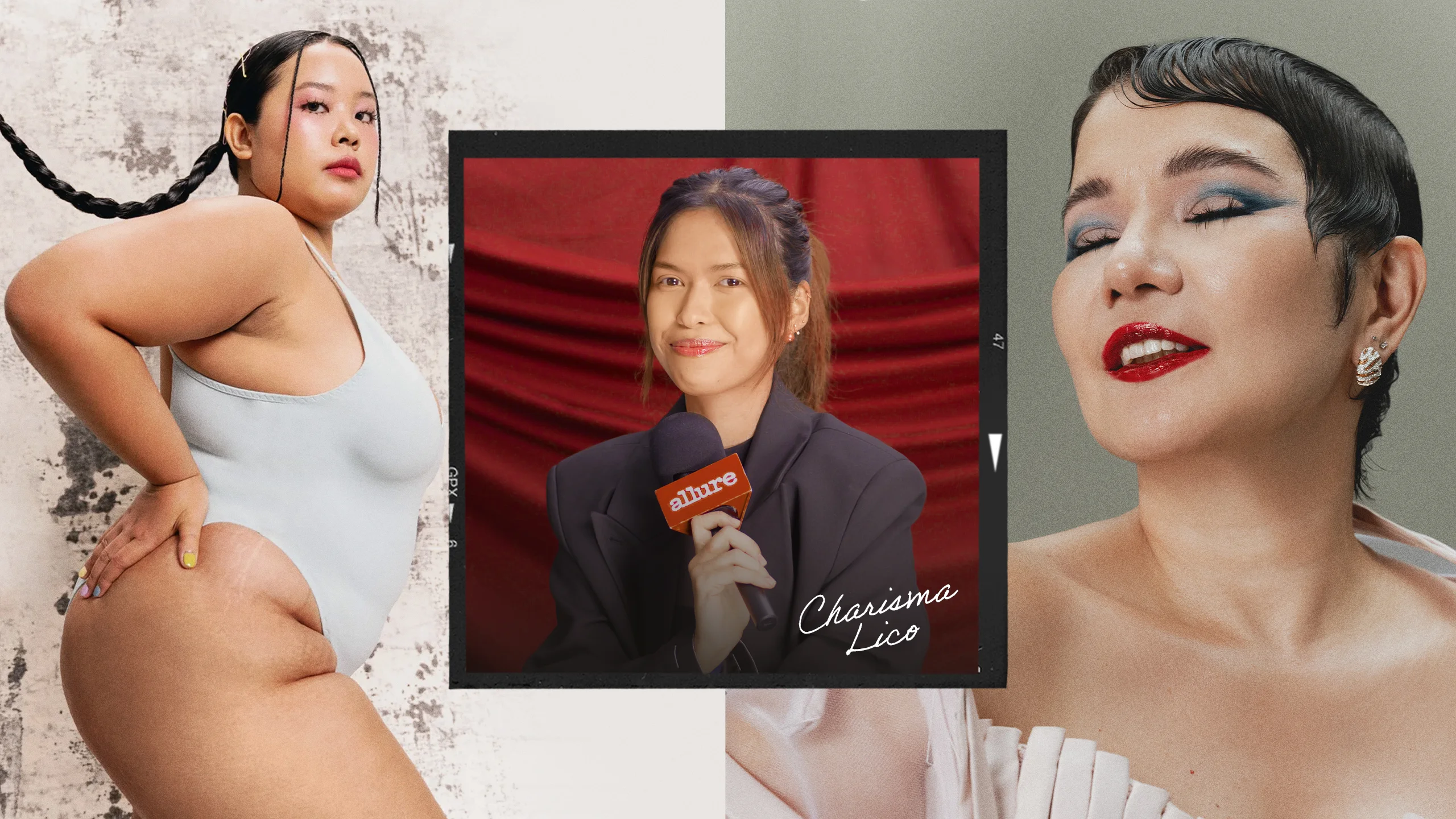
Since she was 13 years old, Charisma Lico-Santos was never without a camera. The beauty and fashion photographer, whose work can be seen across advertising campaigns and media publications (including these viral Allure Philippines editorials that dissected real skin and deepfake AI), started with a disposable camera, producing shoots for fun with her classmates and friends.
The interest became strong enough that it compelled Lico-Santos to eventually learn photography more formally by studying advertising arts in the University of Santo Tomas, taking inspiration from her brother, who was also in the advertising industry. “I was exposed to different types of art media, like painting, sculpture, illustration, and graphic design,” the image-maker shares. “But photography was still my favorite.”
After university, Lico-Santos recalls “having a lot of dreams.” “Iniisip ko noon, kailan kaya ako magkakaroon ng first published work? Kailan kaya ako magkakaroon ng cover? Or billboard? At the same time, I was also nervous. Because of the reality that I didn’t know anybody from the industry.”
So Lico-Santos set out to make those connections through an apprenticeship with photographer Xander Angeles. “Ngayon, hindi na masyado nag-a-apply for an apprenticeship kasi you can easily get booked through social media,” she explains. “But before, [your] credibility would be based on [having] published work. It really mattered during that time. So I was absorbed by the team of Xander.”
From earning PHP 3,000 for her first paid assignment to photographing trailblazing P-pop girl group BINI for a magazine cover, Lico-Santos shares in this Allure Philippines exclusive that her success as a photographer is rooted in believing no project is ever too small.
Not everyone finds stability or success as a photographer. Throughout your career, did you ever feel or think that this path was not for you?
For me, difficult ‘yung starting out. I didn’t know anybody from the industry. I didn’t know how to sell myself. I don’t talk. I was shy. And ‘yun, it was hard. Even if I was getting booked paminsan-minsan, it’s not a guarantee. Until now naman, there’s uncertainty as long as you’re freelancing. But before kasi, since I wasn’t established yet, it was harder. Like there were times na inisip ko, if mag-apply na kaya ako for a day job. But I think I was just also blessed with my parents. They did not pressure me to earn kaagad. And they just supported me.
I remember telling my mom a few years ago, “Buti hindi mo ako finorce to apply somewhere else.” And she said, “Kasi you’re really happy with what you’re doing and I see that you’re passionate about it.” They believed na I will get rewarded someday.
What kept you going while you were waiting for that “someday” to arrive?
Like I would always say, this industry that we’re in, it’s highly exclusive. It’s hard to penetrate. But once someone from the industry notices you, and you’re committed to delivering quality work, there will always be work for you. It will be very helpful if you’re someone who doesn’t give up easily. Kailangan persistent.
May mga moments din ako before na feeling ko, “May mangyayari pa ba?” I had to wait for a long time. But during those times I was waiting, I wasn’t doing nothing. I would always do test shoots.

What’s your advice for photographers still waiting for their big break?
Remember that everyone’s journey is different. Don’t compare your timeline with someone else’s timeline, kasi they might have some qualities that you don’t have, and you might have something that they don’t.
With everyone having the capability to take photos now through camera phones, how can an aspiring photographer set themselves apart from everyone else?
Focus on what’s in front of you and make the most out of it. If you’ve done something in the past na maganda, the challenge is outdoing yourself, or making things better. There’s always something to improve on.
What work ethic guides you throughout your projects?
There’s a verse in the Bible that says, “Do everything in love.” In the context of work, this isn’t just for newbies in the industry. It’s for everyone and I still apply this in my own work, until now.
Do everything in love, meaning whatever it is that is given to you, may it be a big shoot or a small shoot, you just need to do it in love. Because when you do it in love, hindi ka papayag na so-so lang ‘yung output mo. You will really try your best to make the most out of it. It’s hard to fail when you do things in love.
Frequently Asked Questions
Charisma Lico-Santos is a Filipino beauty and fashion photographer whose work spans advertising campaigns and editorial publications, including Allure Philippines. She studied advertising arts at the University of Santo Tomas and began her career through an apprenticeship with photographer Xander Angeles before establishing herself as a working editorial photographer.
Lico-Santos entered the industry through a formal apprenticeship at a time when published work — not social media presence — determined a photographer’s credibility. Starting with a PHP 3,000 first assignment, she built her portfolio through consistent test shoots during slow periods, treating every project as an opportunity regardless of scale or pay.
She advises against comparing timelines with other photographers, noting that each person brings a different set of qualities and opportunities. She also emphasizes staying active during waiting periods — using downtime for test shoots rather than inactivity — and maintaining persistence as the baseline requirement for freelance survival in a highly exclusive industry.
Lico-Santos argues that the standard is no longer access to equipment but the quality and intentionality brought to whatever is in front of you. The real challenge, she says, is not entry-level differentiation but continuous self-improvement — consistently outdoing your own previous work rather than benchmarking against others.
Lico-Santos frames her approach around the principle of doing everything in love — a standard she applies equally to large campaigns and small assignments. Her reasoning is practical: genuine investment in a project makes it psychologically difficult to accept mediocre output, which drives consistent quality regardless of the job’s perceived prestige or pay.