


As artificial intelligence (AI) began to reshape the voice acting industry, Joyce Buen experienced the uncertainty firsthand.
Buen says work slowed as some companies turned to AI-generated narration, particularly for commercials, corporate videos, and explainer content. Like many voice actors, she watched opportunities disappear almost overnight. But then something unexpected happened. Clients began returning.
“They’d lost the connection part of it,” she says. “Humans are smarter than companies think. People can identify whether it’s AI or human.”
For Buen, that shift reaffirmed something she had always believed: performance has never been about sounding perfect. It has always been about making people feel something.
Melanie Guil
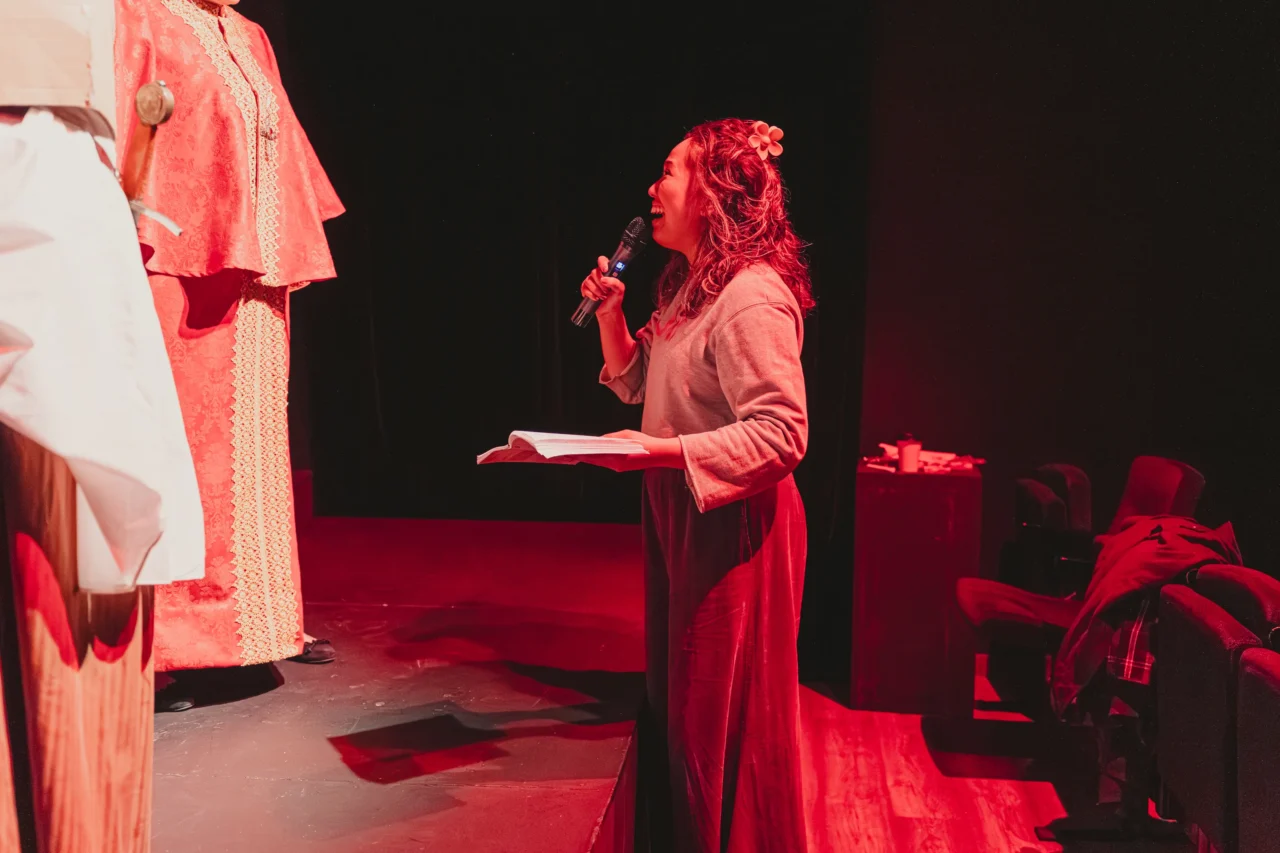
As an actor, voice artist, theater performer, and director based in Madrid, Buen has built a career that refuses to fit neatly into one discipline. Her creative life stretches across voice booths, rehearsal studios, live stages, and directing rooms, each role revealing another dimension of what it means to communicate authentically. In an era increasingly defined by automation, she believes the qualities that matter most remain profoundly human.
“I’ve never thought about whether something sounds pretty,” she says. “I always ask, ‘How do I want the person to feel?'” That philosophy extends far beyond voice acting.
For Buen, identity isn’t defined by titles but by the act of creating itself. Earlier in her career, she struggled to call herself an actor, despite regularly performing. Constant comparison to more established performers made her hesitate to claim that identity.
It wasn’t until she moved to Madrid that her perspective shifted.
“I realized I identify more as a performer simply because I do it,” she says. “Not because I do it more or less than anyone else. It’s just because I do it. And I love it.”
Distance from the highly competitive environment she once associated with creative work allowed collaboration to replace comparison. Rather than measuring herself against others, she began embracing every opportunity to create, whether performing, directing, helping backstage, or lending her voice to new projects.
“I think the fact that I’m available to collaborate with different creators is very important.”
That openness has also reshaped how she thinks about beauty. As someone whose work often exists beyond the camera, Buen believes beauty isn’t confined to appearance. Instead, she defines it through health, happiness, and confidence, qualities that ultimately influence how people experience her work.
“The way I present myself through emails with clients or through my voice matters,” she says. “I want to feel beautiful when I’m doing these things.” Feeling confident, she explains, allows her to focus entirely on the work instead of her insecurities.
Ironically, the rise of AI has only strengthened her belief that audiences are increasingly drawn to authenticity over perfection. “If something is too perfect now, we’re skeptical,” she says. “We look for mistakes. We look for blemishes because we’re looking for something human.”
That search for authenticity also mirrors her experience of starting over abroad.
Melanie Guil
Buen initially planned to stay in Madrid for only a year. Years later, she still calls the Spanish capital home, describing it as the place where she has felt most like herself. Rather than finding belonging by fitting in, she found it by embracing what made her different. Living in Spain also introduced her to a slower pace of life and a different understanding of success.
“My friends identify themselves through their passion, not through their job,” she says. “Their work is just the means that allows them to pursue what they love.” It was a mindset that encouraged Buen to stop defining herself by her profession alone and instead define herself by the creative life she wanted to build. The cultural shift also transformed her confidence.
While she credits Filipino culture for instilling excellence, discipline, and artistry, Spain taught her something equally valuable: self-advocacy.
“People here aren’t afraid to speak up,” she says. “I’m still finding a balance between the two cultures, but now I can say, ‘I can do this. I want to do this show. Can we make it happen?'”
That balance has become especially meaningful as her career expands into directing.
Unlike performing, directing requires surrendering complete control. Every rehearsal demands adaptability, listening, and trust. “You come in with a vision,” she explains. “But most of the time you realize it can’t happen exactly the way you imagined because every actor is different. Every audience is different.”
Rather than forcing perfection, she has learned to embrace unpredictability.
That philosophy reaches its fullest expression in theater, the medium she once tried to leave behind. For years, Buen avoided pursuing theater professionally after being told it wasn’t practical. But today, she considers it the one creative space AI can never replace.
“Theater demands connection,” she says. “It demands collaboration.”

Jackson Miles
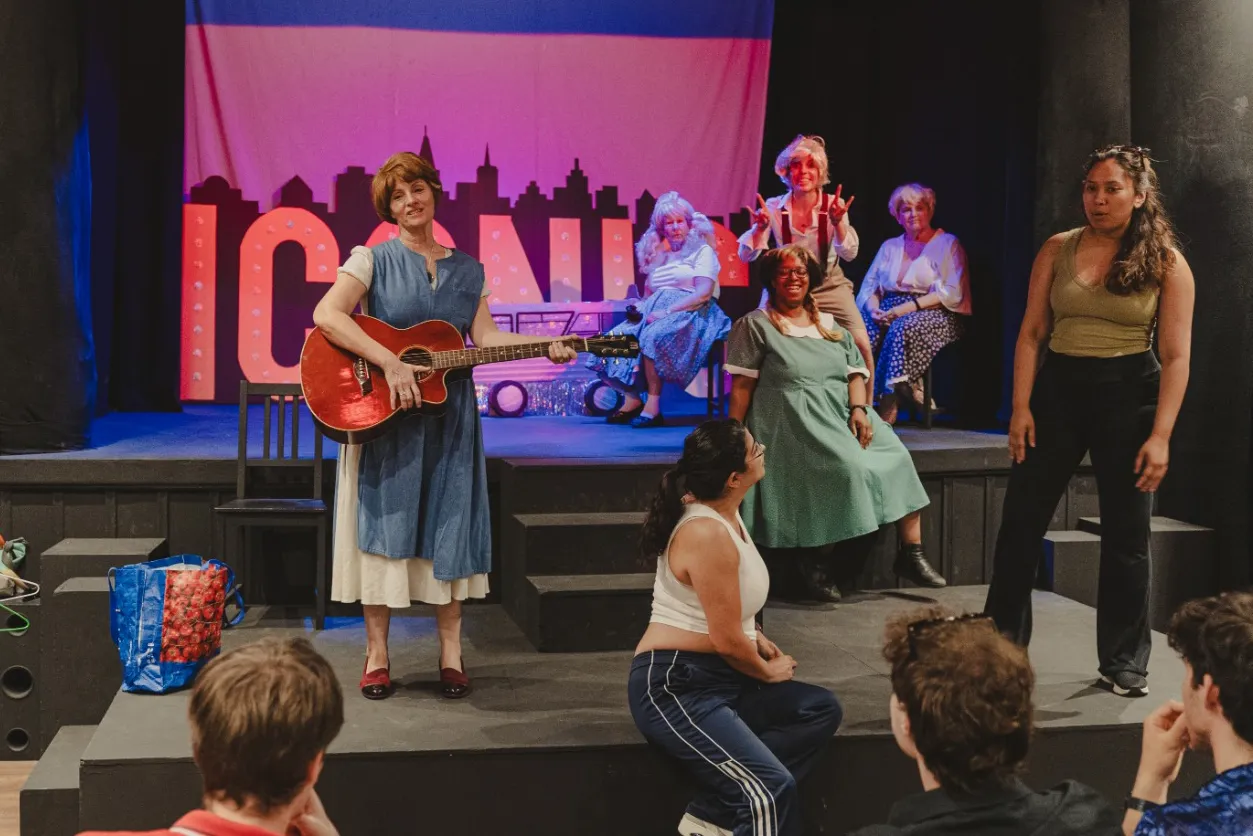
She recalls directing Top Girls in Madrid, where one of her favorite moments wasn’t scripted at all. “I love it when somebody spills wine or drops something on stage,” she says, laughing. “I could never ask for that. I didn’t plan it, but it happens, and it’s beautiful.”
Those unexpected moments force actors to respond to one another in real time. They create reactions no algorithm could predict and no machine could manufacture. For Buen, those imperfections are precisely what make live performance unforgettable.
As she prepares to enter a new decade, she describes this stage of her life not as reinvention but as rediscovery. The past four years have allowed her to return to passions she once set aside, transitioning from voice actor to actor, performer, and director with greater confidence than ever before.
“I feel like the last few years have been about rediscovering everything I love,” she says. “Now I’m entering reinvention.”
In many ways, that reinvention is rooted in the same belief that has guided her career all along: the work that lasts is never the most technically perfect. It’s the work that carries humanity.
“The works of art that still matter today aren’t the most technical,” Buen says. “They’re the ones with humanity. That’s what people connect with.”
In an age when artificial intelligence can imitate voices, write stories, and generate performances, she believes the future still belongs to artists willing to reveal something unmistakably human.
“It doesn’t stick,” she says of AI-generated work. “Real human experiences and real human creations do.”